Pope Nicholas IV
head of the Catholic Church
Years: 1227 - 1292
Pope Nicholas IV (Latin: Nicholaus IV; September 30, 1227 – April 4, 1292), born Girolamo Masci is Pope from February22, 1288 to his death in 1292.
He is the first Franciscan to be elected pope.
Related Events
Filter results
Showing 10 events out of 11 total
San Marino in the Lombard age, had been a fief of the dukes of Spoleto, but the free comune dates to the tenth century.
The original government structure was composed of a self-governed assembly known as the Arengo, which consisted of the heads of each family (as in the original Roman Senate, the Patres).
The positions of Captains Regent (Capitani Reggenti) had been established in 1243 to be the joint heads of state.
The state's earliest statutes date back to 1263.
Rabban Bar Sauma: Kublai Khan’s Emissary to Christian Europe
Rabban Bar Sauma, a Nestorian Christian of Turkic origin, embarked on a remarkable diplomatic mission to Europe in the late 13th century, serving as an emissary of the Ilkhanate, a Mongol state established in Persia under Hülegü Khan, a grandson of Genghis Khan. His journey was part of a broader Mongol effort to forge alliances with Christian monarchs against the Muslim rulers of the Holy Land, particularly the Mamluks of Egypt, who posed a significant threat to both Mongol and Christian interests.
Originally a monk from China, Bar Sauma had risen to prominence within the Nestorian Church before being entrusted with this diplomatic endeavor by Ilkhan Arghun (r. 1284–1291). His travels took him to the courts of Pope Nicholas IV, King Philip IV of France, and King Edward I of England, where he relayed Mongol proposals for a coordinated military campaign. Although well received, his mission ultimately failed to secure a formal alliance, as Europe remained preoccupied with its own political conflicts and internal struggles.
Despite its diplomatic shortcomings, Bar Sauma’s journey remains historically significant as a rare instance of east-to-west travel and diplomacy, providing a fascinating counterpoint to the more widely known expeditions of Marco Polo. His detailed account of European customs, courtly life, and religious practices stands as an invaluable record of late 13th-century cross-cultural exchange.
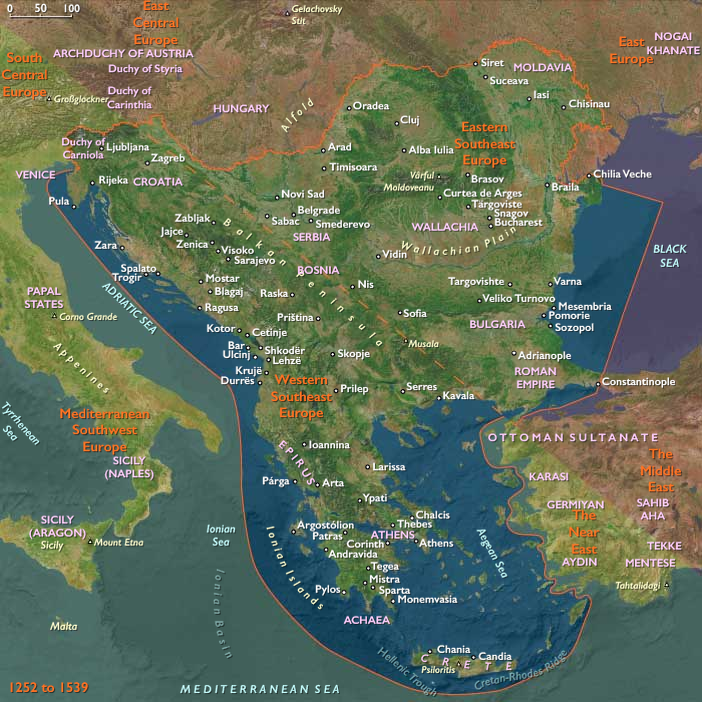
The Bogomil “heresy” has dominated Bosnian society from the late twelfth century through the thirteenth century.
Hungary-Croatia has mounted occasional efforts to eradicate the Bogomils, whom Bosnia's hereditary bans, the Kotromanic family, have defended.
Pope Innocent III, with the aid of the King of Hungary in 1203, had forced an agreement of Kulin, Ban of Bosnia, to acknowledge Papal authority and religion: in practice this was ignored.
On the death of Kulin in 1216 a mission had been sent to convert Bosnia to Rome but failed.
Pope Gregory IX had In 1234 removed the Catholic Bishop of Bosnia for allowing heretical practices.
In addition, Gregory had called on the Hungarian king to crusade against the Bogomils.
Bosnian nobles had been able to expel the Hungarians, however.
It is not until Pope Nicholas' Bull Prae cunctis in 1291 that the Franciscans-led inquisition is imposed on Bosnia.
Bogomilism has been eradicated in Bulgaria and the East Roman Empire in the thirteenth century, but will survive in Bosnia and Herzegovina until the Ottoman Empire gains control of the region in 1463.
Girolamo Masci, born at Lisciano, near Ascoli Piceno, had been a pious, peace-loving friar with no ambition save for the Church, the crusades and the extirpation of heresy.
Originally a Franciscan friar, he had been legate to the Greeks under Pope Gregory X in 1272, succeeded Bonaventure as Minister General of his religious order in 1274.
He was made Cardinal Priest of Santa Prassede and Latin Patriarch of Constantinople in 1278 by Pope Nicholas III, Cardinal Bishop of Palestrina by Pope Martin IV.
He succeeds Pope Honorius IV in February 1288 at the end of a papal election that has taken ten months to conclude, and, as Pope Nicholas IV, becomes the first Franciscan pope, from an order established only seventy-nine years earlier.
John of Montecorvino was born at Montecorvino Rovella, in what is now Campania.
As a member of a Roman Catholic religious order which at this time is chiefly concerned with the conversion of unbelievers, he had been commissioned in 1272 by the East Roman emperor Michael VIII Palaiologos to Pope Gregory X, to negotiate for the reunion of the 'Greek' (Orthodox) and Latin churches.
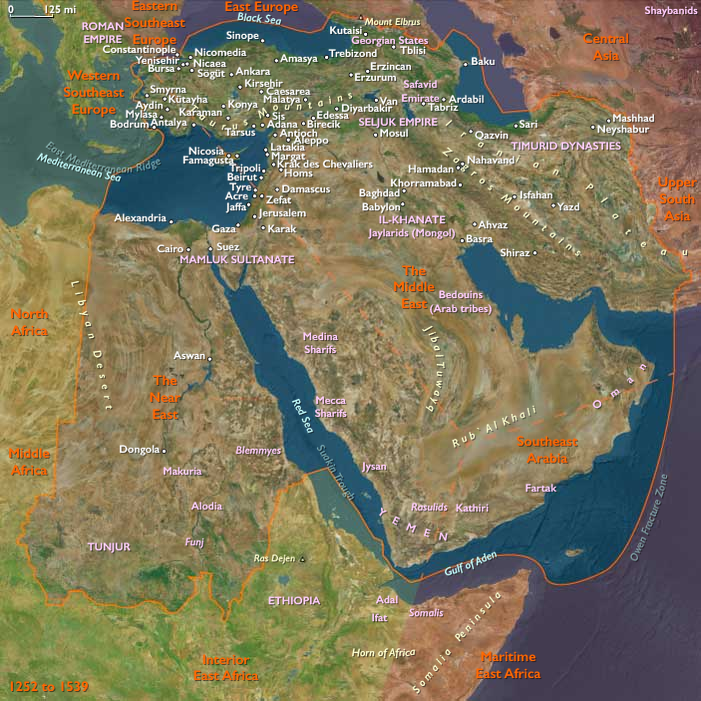
Commissioned by Pope Nicholas IV to preach Christianity in the Nearer and Middle East, especially to the Asiatic hordes then threatening the West, he had devoted himself incessantly from 1275 to 1289 to the Eastern missions, first that of Persia.
In 1286 Arghun, the Ilkhan who rules this kingdom, had sent a request to the pope through the Nestorian monk, Rabban Bar Sauma, to send Catholic missionaries to the Court of the Great Khan (Mongol emperor) of China, Kúblaí Khan (1260–94), who is well disposed towards Christianity.
About that time John of Montecorvino had come to Rome with similar promising news, and Pope Nicholas had entrusted him with the important mission to Farther China, where about this time Marco Polo, the celebrated Venetian lay traveler, still lingers.
John had revisited the Papal Court in 1289 and had been sent out as Roman legate to the Great Khan, the Ilkhan of Persia, and other leading personages of the Mongol Empire, as well as to the Emperor of Ethiopia.
He started on his journey in 1289, provided with letters to the Khan Argun, to the great Emperor Kublai Khan, to Kaidu, Prince of the Tatars, to the King of Armenia and to the Patriarch of the Jacobites.
His companions are the Dominican Nicholas of Pistoia and the merchant Peter of Lucalongo.
He reaches Tabriz (in Iranian Azerbeijan), at this time the chief city of Mongol Persia, if not of all Western Asia.
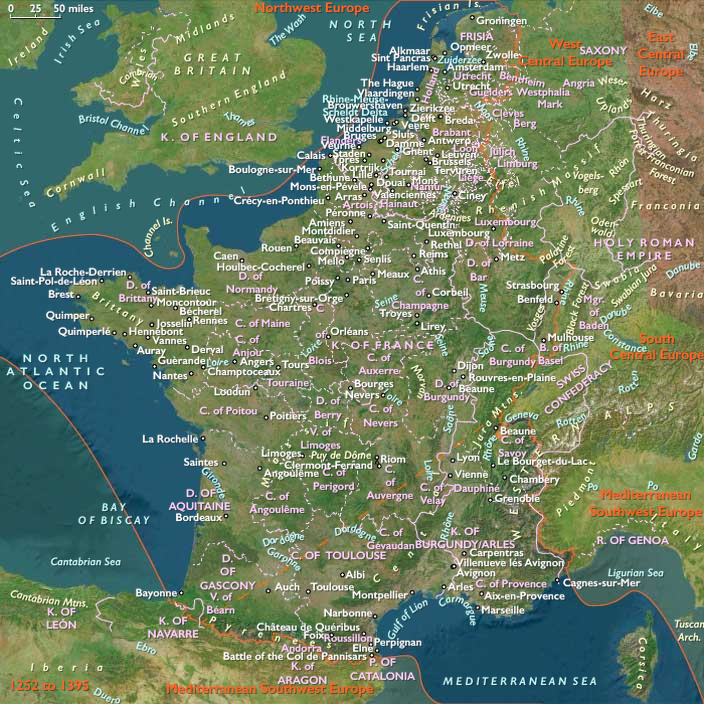
The University of Montpellier is considerably older than its formal founding date, associated with a bull issued by Pope Nicholas IV in 1289, combining all the long-existing schools into a university.
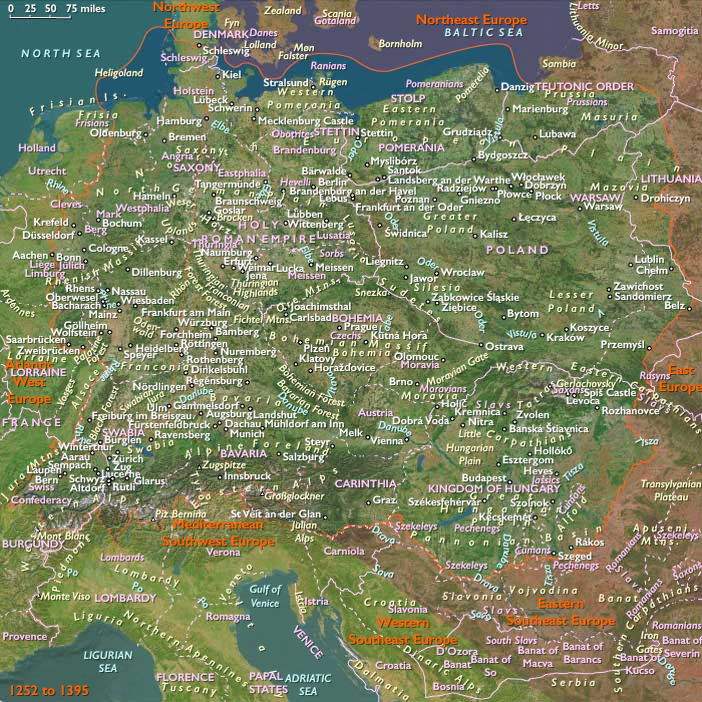
A new Western-style feudal socioeconomic system has emerged in Hungary but it has yet to take root.
During the last third of the thirteenth century, Hungarian assimilation into Europe is threatened by the ongoing conflicts between various baronial factions.
Moreover, Hungary is still the destination of migrating pagan tribes and the focus of barbarian attacks, and it continues to exhibit the features of a country on the borders of Christian feudal Europe.
The already shaky prestige of the royal house of Hungary had declined further under Ladislas IV the Cuman, who is assassinated in 1290 with no legitimate heir; claims to the throne are made through the female line of the Árpáds.
A male heir is found in Italy: a grandson of Andrew II of Hungary (reigned 1205-35), being the only son of that monarch’s youngest and posthumous son (possibly illegitimate) who was born of the old king's third marriage with Beatriz D'Este.
Although his claim to the throne is impugned, he succeeds Ladislas IV as Andrew III and is married hastily with a Polish princess, Fenenna of Kujavia.
Pope Nicholas IV, in league with Hungary’s ecclesiastical party, had set another prince, Andrew's cousin's grandson Charles Martel d'Anjou, as candidate for the throne; the eighteen-year-old Charles is the eldest son of King Charles II of Naples and Maria of Hungary, the daughter of King Stephen V of Hungary.
His partisans attempt, without success, to oust Andrew.
King Denis and the Church-Crown Settlement: The Concordats of 1289 and 1290
By the late 13th century, the long-standing struggle between the Portuguese Crown and the Church over land ownership, legal authority, and taxation was finally resolved during the reign of King Denis (r. 1279–1325).
- In 1289 and 1290, Denis negotiated concordats with the papacy, securing an agreement that balanced royal and ecclesiastical power.
- These concordats ended the direct confrontation that had begun under his grandfather, Afonso II, and continued under Afonso III, both of whom had seized Church lands and defied papal authority.
- By reaching a compromise, Denis ensured that Portugal remained in good standing with the Holy See, while also preserving royal authority over secular governance.
Portuguese Replaces Latin in the Judiciary
As a patron of culture and learning, Denis was the first Portuguese king to mandate the use of Portuguese instead of Latin in official judicial proceedings.
- This decision strengthened Portuguese as a national language, reinforcing cultural unity and administrative efficiency.
- It also ensured that legal matters became more accessible to the population, since Latin was primarily understood only by clerics and scholars.
- Denis’s linguistic reforms laid the foundation for Portuguese to evolve as a literary and legal language, further solidifying the identity of the kingdom.
Legacy of Denis’s Reforms
By resolving Church-State tensions and elevating Portuguese as the language of law, King Denis strengthened the monarchy, unified the administration, and reinforced national identity, ensuring Portugal’s stability and development in the centuries to come.
The Founding of Portugal’s First University: The Studium Generale (1290)
In 1290, King Denis of Portugal established the first university in Portugal, known as the Studium Generale (Estudo Geral), marking a significant step in the intellectual and educational development of the kingdom.
The Royal Charter: Scientiae Thesaurus Mirabilis
- On March 1, 1290, Denis issued the royal charter Scientiae Thesaurus Mirabilis, officially founding the university in Lisbon.
- This document emphasized the importance of higher education for the advancement of knowledge, governance, and legal affairs in Portugal.
- The establishment of the university followed at least two years of preparatory efforts (since 1288), as Portugal sought to compete with other European centers of learning.
Papal Confirmation and Academic Structure
- On August 9, 1290, Pope Nicholas IV granted papal confirmation for the new university, recognizing it as a legitimate institution of higher learning.
- The Papal Bull authorized the teaching of all "licit" faculties, with the exception of Theology, which remained under exclusive Church jurisdiction at this time.
- The university began with four faculties:
- Arts (Liberal Studies) – Providing foundational education.
- Law – Training scholars in civil and customary law.
- Canon Law – Specializing in ecclesiastical legal matters.
- Medicine – Advancing knowledge in health and healing practices.
Legacy: The University of Coimbra
- Originally based in Lisbon, the university was moved to Coimbra in 1308, then alternated between the two cities before permanently settling in Coimbra in 1537.
- Today, the University of Coimbra remains Portugal’s premier institution of higher learning and one of the oldest universities in Europe.
The foundation of the Studium Generale by King Denis marked a transformative moment in Portuguese history, securing Portugal’s place in the intellectual and academic traditions of medieval Europe.
John of Montecorvino and his companions had moved from Persia down by sea to India, in 1291, to the Madras region or "Country of St. Thomas" where he has preached for thirteen months and baptized about one hundred persons; his companion Nicholas dies.
From here Montecorvino writes home, in December 1291 (or 1292), the earliest noteworthy account of the Coromandel coast furnished by any Western European.