Qara Yusuf
ruler of the Kara Koyunlu dynasty
Years: 1350 - 1420
Abu Nasr Qara Yusuf Nuyan (died 1420) was the ruler of the Kara Koyunlu dynasty (or "Black Sheep Turkomans") from c.1388 to 1420, although his reign is interrupted by Tamerlane's invasion (1400–1405).
He is the son of Qara Muhammad.
Related Events
Filter results
Showing 10 events out of 15 total
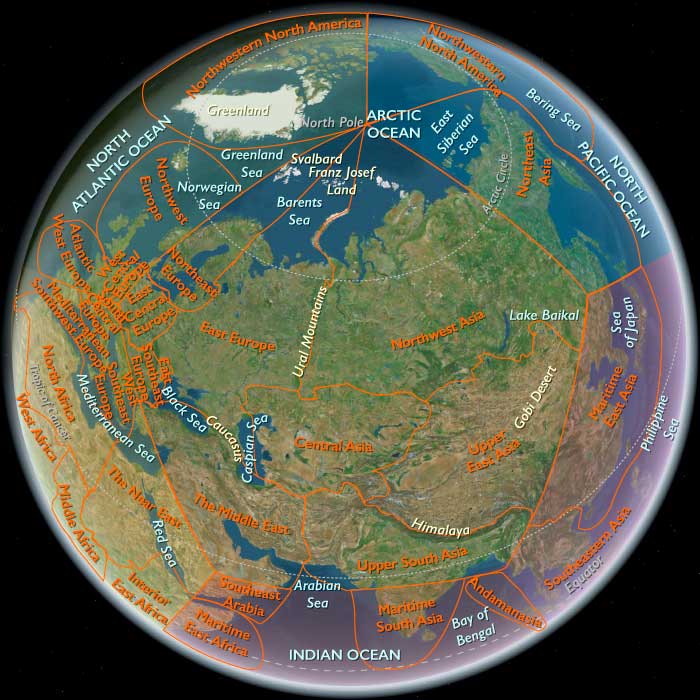
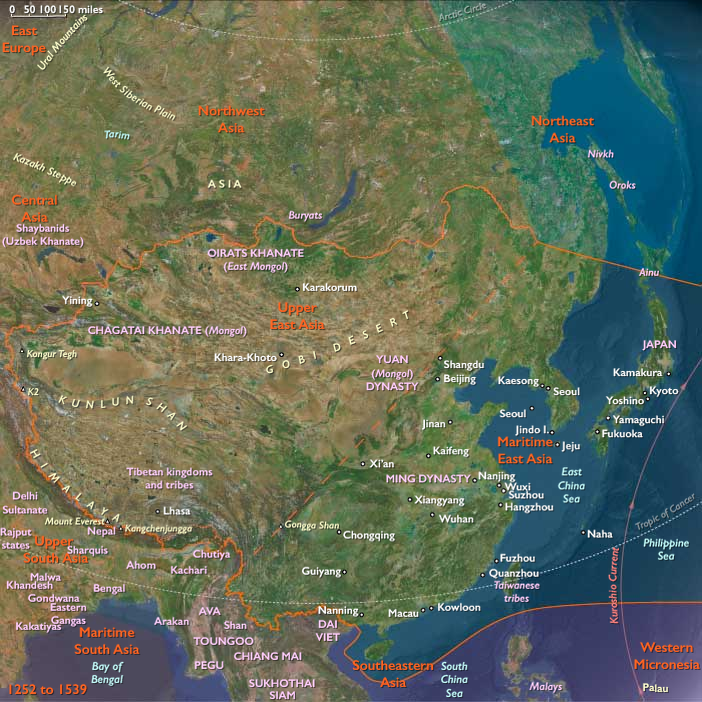
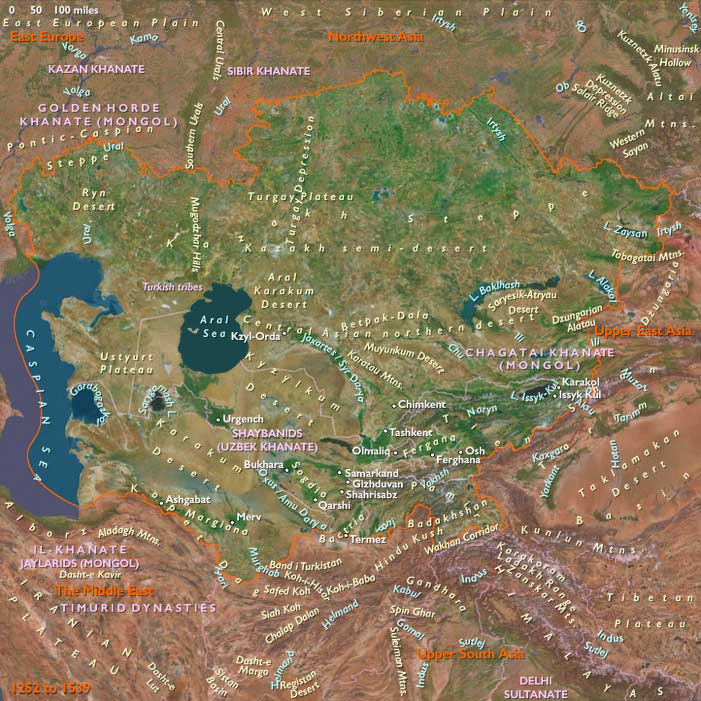
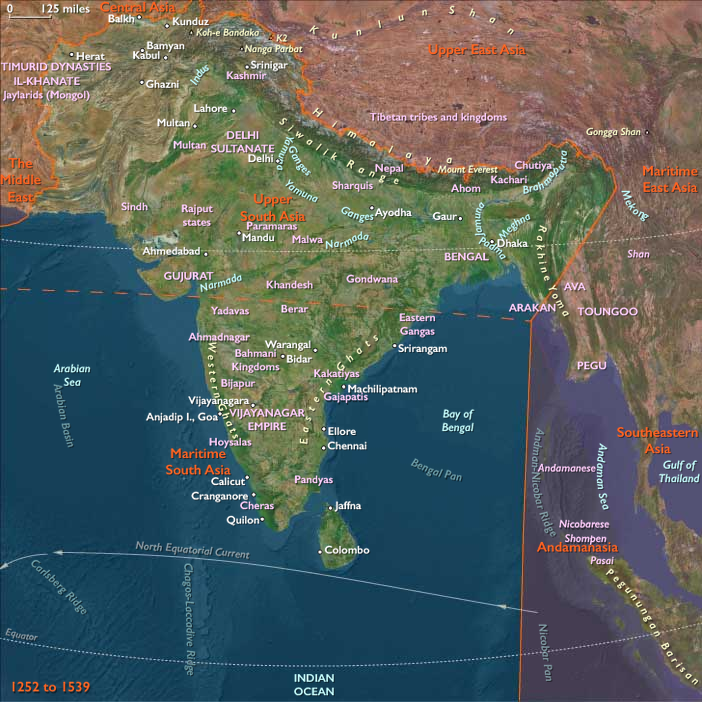
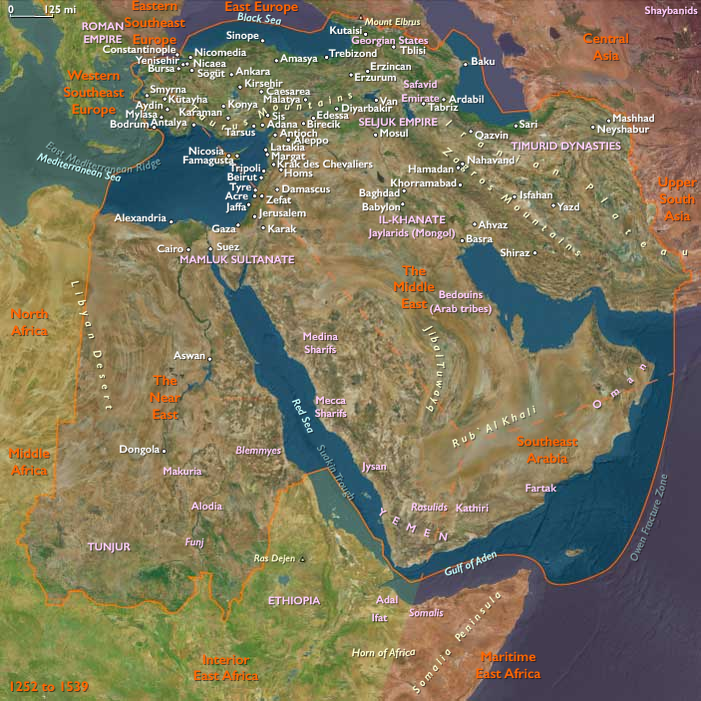
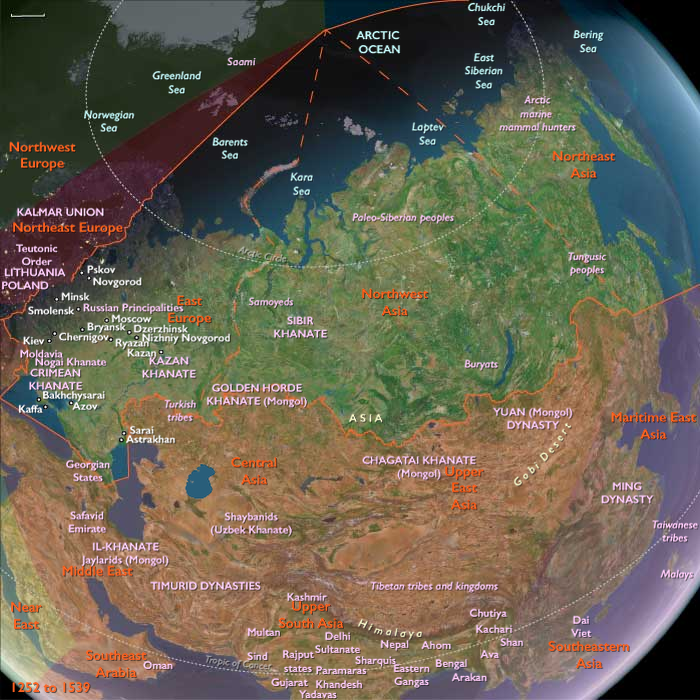
The Near and Middle East (1396–1539 CE)
Timur’s Shadow, Ottoman Rise, and the Safavid–Mamluk Eclipse
Geography & Environmental Context
The Near and Middle East stretched from the Nile and Red Sea to the Tigris–Euphrates, the Iranian Plateau, and the Persian Gulf, spanning the holy cities of Mecca and Jerusalem, the imperial capitals of Cairo, Baghdad, and Isfahan, and the trading ports of Aden, Hormuz, and Muscat.
Highland belts—the Zagros, Caucasus, and Yemeni terraces—bordered steppe, desert, and floodplain worlds. This vast region, joining the Mediterranean, Indian Ocean, and Central Asian corridors, formed the hinge between Europe, Africa, and Asia.
Climate & Environmental Shifts
The Little Ice Age introduced harsher winters and irregular rainfall:
-
In Mesopotamia, fluctuating river courses alternated between prosperity and famine.
-
On the Iranian Plateau, drought decades strained qanat irrigation and transhumant flocks.
-
Across the Caucasus, heavy snows caused floods that replenished vineyards and orchards.
-
The Nile Valley and Yemeni terraces maintained productivity through hydraulic control.
-
The Persian Gulf and Red Sea saw storms and shifting monsoons that tested coastal settlements.
Subsistence & Settlement
Agriculture, trade, and pastoralism overlapped:
-
Nile Valley & Delta: Wheat, barley, sugarcane, flax, and dates fed the Mamluk metropolises.
-
Mesopotamia & Iran: Wheat, barley, cotton, and rice (in Khuzestan, Gilan); orchards in the uplands.
-
Yemen & Hejaz: Sorghum, wheat, fruit, and qat; date groves and oasis farming along pilgrimage routes.
-
Caucasus & Anatolia: Vines, olives, and cereals thrived beside pastoral uplands.
-
Nomadic worlds: Turkoman, Kurdish, Arab, and Lur herders grazed mixed flocks across seasonal pastures.
-
Urban centers: Cairo, Damascus, Baghdad, Tabriz, Isfahan, Aleppo, and Hormuz served as nodes of scholarship, trade, and craft.
Technology & Material Culture
-
Hydraulic systems: Qanats, canals, and terrace walls sustained agriculture; norias turned on the Euphrates.
-
Crafts: Persian carpets (Tabriz, Kashan), glasswork, textiles, and metalware.
-
Architecture: Timurid domes, tile mosaics, and madrasas in Herat and Samarkand; Ottoman mosque architecture in Aleppo and Damascus; coral-stone mosques in Yemen.
-
Military: Composite bows and cavalry remained dominant; firearms and cannon spread after Ottoman adoption.
-
Navigation: Dhows and lateen-sailed ships from Hormuz to Aden connected with Indian Ocean monsoon circuits.
Movement & Interaction Corridors
-
Caravan routes: Linked Tabriz to Anatolia, Baghdad, and the Caucasus; Isfahan and Shiraz to Hormuz.
-
Persian Gulf trade: Hormuz, Muscat, and Basra handled Indian Ocean commerce in textiles, spices, and horses.
-
Silk routes: Crossed Gilan, Shirvan, and the Caucasus, reaching Black Sea markets.
-
Pilgrimage: Caravans to Najaf, Karbala, Mashhad, Mecca, and Medina reinforced religious networks.
-
Ottoman conquests: Redirected Syria and Iraq’s caravan trade to Istanbul after 1517.
-
Portuguese intrusion: Raids on Hormuz (1507) and the Red Sea disrupted long-standing routes.
Cultural & Symbolic Expressions
-
Timurid legacy: Centered in Herat and Samarkand, radiating Persianate art, literature, and architecture.
-
Safavid transformation: Shah Ismail I (r. 1501–1524) unified Iran under Shiʿism, reshaping identity through shrines, mosques, and processions.
-
Ottoman Islam: Extended Sunni orthodoxy across Syria, Egypt, and Iraq, building mosques and tekke (Sufi lodges).
-
Caucasian Christianity: Armenian and Georgian monasteries survived amid imperial flux.
-
Sufism: Orders like the Naqshbandiyya and Qadiriyya linked countryside to city, crossing sectarian lines.
-
Yemen & Oman: Scholars and merchants blended trade, piety, and maritime expansion; Socotra’s hybrid traditions bridged worlds.
Environmental Adaptation & Resilience
-
Irrigation management: Collective upkeep of qanats, terrace walls, and flood canals sustained agriculture.
-
Nomadic mobility: Seasonal herding buffered climatic extremes; shifting routes mitigated drought loss.
-
Urban import systems: Grain shipments from fertile belts fed capitals through caravan and river transport.
-
Long-lived crops: Date palms, vineyards, and olive groves stabilized regional economies across drought cycles.
Technology & Power Shifts (Conflict Dynamics)
-
Timur’s conquests (late 1300s–early 1400s): Ravaged Syria, Iraq, and Iran, yet catalyzed a Persianate artistic renaissance.
-
Turkoman confederations: The Qara Qoyunlu and Aq Qoyunlu dominated Iran and Iraq before the Safavids.
-
Safavid ascendance: Shah Ismail I established a Shiʿi state; defeat at Chaldiran (1514) by Ottoman firearms defined imperial frontiers.
-
Ottoman triumphs: Selim I conquered Syria and Egypt (1516–1517); Süleyman the Magnificent annexed Iraq (1534).
-
Mamluk collapse: Ended centuries of rule; Cairo became an Ottoman provincial capital.
-
Caucasian buffer wars: Armenia and Georgia alternated between Ottoman and Safavid control.
-
Portuguese footholds: Hormuz, Socotra, and Red Sea raids marked Europe’s first sustained intrusion into the region’s trade.
Transition (to 1539 CE)
By 1539, the Near and Middle East had entered an age of imperial duality:
The Ottoman Empire held Syria, Iraq, and Egypt, commanding the holy cities and Mediterranean gateways; the Safavid Empire ruled Iran and the Caucasus, anchoring Shiʿi identity; and the Portuguese dominated Hormuz, diverting Indian Ocean trade.
Across deserts, deltas, and highlands, caravan roads and monsoon ports endured, sustaining a cosmopolitan world born from Timur’s devastation, renewed by Safavid charisma, and unified—if uneasily—under the expanding Ottoman crescent.
The Shi'ite Turkmen tribal federation known as the Kara Koyunlu, also called the Black Sheep Turkmens, who at one point had established their capital in Herat in eastern Persia, had been vassals of the Jalayirid dynasty in Baghdad and Tabriz from about 1375, when the chief of their leading tribe ruled over Mosul.
However, they had rebelled against the Jalayirids, and secured their independence from the dynasty with the conquest of Tabriz by Qara Yusuf.
By collaborating on equal terms with the Jalayirid Sultan Ahmad against the Timurids, Qara Yusuf has effectively secured the independence of the Kara Koyunlu.
The Jalayirid sultanate, a Mongol descendant dynasty that has ruled over Iraq and western Persia since the breakup of the Mongol Khanate of Persia (or Ilkhanate) in the 1330s, has been disrupted by the conquests of the Chagatai amir Timur and the revolts of the "Black sheep Turks" or Kara Koyunlu.
In 1393, Timur had renewed the war with Sultan Ahmad, arrived at Baghdad, where Ahmad was residing, near the end of August.
Deciding that defending the city was impossible, Ahmad had fled and traveled to Mamluk Syria, and had been granted asylum by Sultan Berquq.
Although Baghdad had been forced to pay a ransom and many captives, including Ahmad's son Ala al-Daula, had been taken with Timur when he left the city, most of the citizenry had been left unharmed.
A Sarbadar, Khwaja Mas'ud Sabzavari, had been given control of the city with his three thousand troops.
In 1394, Ahmad had returned to Baghdad and Khwaja Mas'ud had withdrawn his forces to Shushtar rather than fight.
As a result, Ahmad has able to regain control of the city for the past six years.
He has grown increasingly unpopular, however, and in 1397 or 1398 an unsuccessful conspiracy had been hatched against him.
Feeling unsafe in Baghdad, he had left the city and requested the assistance of the Black Sheep under Qara Yusuf.
The Turkmen had arrived at the city, but Ahmad had had a difficult time in preventing them from plundering Baghdad, and he eventually turned them back.
In 1398, Timur's son and governor of Azerbaijan, Miran Shah, had attempted to take Baghdad but Ahmad had successfully resisted him.
Qara Yusuf, like Sultan Ahmad Jelair, flees from Timur and takes refuge with the Ottoman Sultan.
The Ak Koyunlu, also called the White Sheep Turkmens, an Oghuz Turkic tribal federation, had been present in eastern Anatolia since at least 1340, according to chronicles of the Eastern Roman Empire.
The White Sheep Turkmens first acquire land in 1402, when Timur grants them all of Diyarbakır, in present-day Turkey.
For a long time, the White Sheep Turkmens will be unable to expand their territory, as the rival Black Sheep Turkmens keep them at bay.
Sultan Ahmad, nearly captured by a contingent of Chagatais, returns to Baghdad a few months later in 1402 with the Black Sheep Turkmen ruler Qara Yusuf and begins to rebuild the city.
Once they have retaken control of Baghdad they quarrel, however, and Qara Yusuf expels Ahmad from the city.
Ahmad, the Jalayrid sultan expelled from Baghdad by Kara Koyunlu ruler Qara Yusuf, takes refuge with the Mamluks a second time, but they imprison him out of fear of Timur.
Qara Yusuf, too, seeks asylum with the Mamluks after the Timurids drive him of Baghdad again in 1403, and is imprisoned by them together with Ahmad.
Here, the two incarcerated leaders renew their friendship, making an agreement that Ahmad should keep Baghdad while Qara Yusuf is to have Azerbaijan.
The Mamluks release both Qara Yusuf and Sultan Ahmad Jelair when Timur dies in 1405.
The death of Timur and the weakness of Iran in the ensuing century will pit the Mamluks against the rising power of the Ottoman Turks for the control of western Asia.
Qara Yusuf returns from exile in Egypt to Azerbaijan, defeats the Timurid Abu Bakr, son of Miran Shah, near Nakhichevan, and …