
Ramiro I of Aragon
King of Aragon
1006 CE to 1063 CE
Ramiro I (bef.
1007 – 8 May 1063) is de facto the first King of Aragon from 1035 until his death.
Apparently born before 1007, he is the illegitimate son of Sancho III of Navarre by his mistress Sancha de Aybar.
Ramiro is reputed to have been adopted by his father's wife Mayor after he was the only of his father's children to come to her aid when needed, although there is no surviving record of these events and the story is probably apocryphal.
World
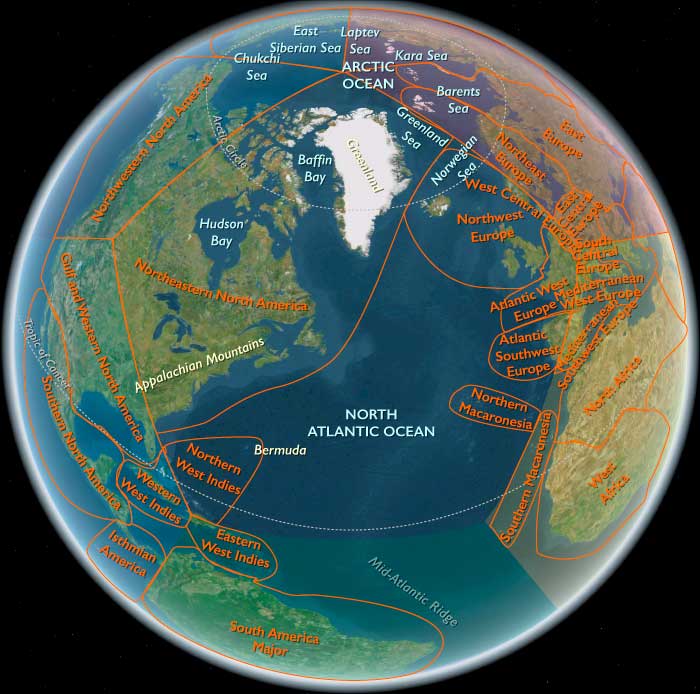
The Atlantic Lands
View →Related Events
Showing 10 events out of 17 total
...Aragon, ...
The Legacy of Sancho III "the Great" of Pamplona (r. 1004–1035)
Through marriage, politics, and military conquest, Sancho III of Pamplona expands his realm significantly. In 1029, he annexes Castile, and by 1034, he conquers León, assuming the title of Emperor over all the Christian kingdoms of Iberia.
Integration of Iberia into Christian Europe
Sancho plays a crucial role in bringing Christian Spain into closer alignment with European religious and cultural traditions:
- He encourages European pilgrims to travel to Santiago de Compostela, strengthening the Camino de Santiagoas a major pilgrimage route.
- He welcomes the Cluniac monks into his realm, fostering religious reform and increasing ties with the papacy and the wider Christian world.
- He introduces feudal concepts such as vassalage, suzerainty, and the use of "by the grace of God" (Dei gratia) in royal titles, influenced by French political customs.
- He begins the Navarrese currency system, minting deniers of Carolingian influence, as noted by the Encyclopædia Britannica.
The Division of the Empire and the Future of Iberia
Despite his unification of Christian Iberia, Sancho divides his empire upon his death in 1035, ensuring that his lands remain under Jiménez dynasty rule but also fragmenting his dominion. Each of his four sons becomes a king, and his empire is split into multiple kingdoms:
- Navarre
...
- León
…
- Castile
This division creates the political geography of Iberia that will persist until its unification under the Catholic Monarchs in the 15th century.
Sancho’s Enduring Influence
Sancho III strengthens and stabilizes the Kingdom of Navarre, ensuring its independence for the remainder of the Middle Ages. However, by dividing his realm, he isolates Navarre and limits its ability to expand southward against the Muslims, shifting the Reconquista’s momentum to León, Castile, and Aragón.
Despite the disintegration of his empire, Sancho III "the Great" leaves behind a powerful dynasty, and his reign defines the political and territorial structure of Iberia for centuries to come.
Burgos: The Capital of the Kingdom of Castile
Founded in the 9th century, Burgos is strategically located on a high plateau overlooking the Arlanzón River. Initially established as a frontier stronghold during the Reconquista, it gradually grows in importance.
Under King Ferdinand I of León and Castile, Burgos becomes the capital of the Kingdom of Castile, solidifying its role as a political, military, and economic center. Its strategic location and growing influence position it as a key city in the expansion and consolidation of Christian rule in Iberia.
Atlantic Southwest Europe (1036–1047 CE): Fragmentation after Sancho III, León-Castile Rivalries, and Portuguese Regional Consolidation
Between 1036 and 1047 CE, Atlantic Southwest Europe—including Galicia, northern and central Portugal, Asturias, Cantabria, and northern Spain south of the Franco-Spanish border (43.05548° N, 1.22924° W)—experienced significant political shifts and territorial fragmentation following the death of Sancho III Garcés ("the Great") of Pamplona in 1035 CE. The division of his territories among his sons profoundly reshaped regional dynamics, leading to emerging rivalries, notably between León and the newly independent Castile. Under Ferdinand I of Castile (1037–1065 CE) and his brother-in-law and rival Bermudo III of León (1028–1037 CE), these rivalries significantly influenced regional stability. Meanwhile, the County of Portugal maintained political cohesion and autonomy under Nuño Menéndez (1028–1050 CE) and Ilduara Mendes, continuing the steady path toward Portuguese distinctiveness and eventual independence. Collectively, these developments significantly shaped Iberian political structures, cultural vitality, and economic prosperity.
Political and Military Developments
Fragmentation of Sancho III’s Dominions
Following Sancho III’s death, his territories fragmented into separate political entities, each inherited by his sons. García Sánchez III (1035–1054 CE) retained Pamplona (Navarre), Ferdinand I (1037–1065 CE) took control of Castile, and Ramiro I (1035–1063 CE) received Aragón. This division significantly reshaped regional power balances, leading to intensified rivalries and shifting alliances.
León-Castile Rivalries and the Battle of Tamarón (1037 CE)
Conflict between the kingdoms of León and Castile intensified dramatically when Ferdinand I, previously Count of Castile, challenged Bermudo III of León. This rivalry culminated in the Battle of Tamarón in 1037 CE, where Bermudo III was killed. Ferdinand I subsequently claimed the Leonese throne, thereby uniting León and Castile under one ruler for the first time, significantly reshaping Iberian political boundaries and creating a powerful new political entity in north-central Iberia.
Stability and Continuity in Pamplona
Under García Sánchez III, Pamplona maintained internal stability and regional autonomy despite territorial fragmentation. García Sánchez carefully managed relations with Castile-León, Aragón, and neighboring Islamic taifa states, preserving Pamplona’s territorial integrity and cultural distinctiveness amid shifting political alliances.
Portuguese Regional Consolidation
The County of Portugal, governed effectively by Nuño Menéndez (1028–1050 CE) and his wife, Ilduara Mendes, retained regional cohesion and administrative autonomy. Stable governance structures, frontier security, and local economic prosperity reinforced Portuguese regional identity, laying essential groundwork for the region’s eventual national independence.
Economic Developments
Continued Regional Prosperity
Atlantic Southwest Europe maintained robust economic prosperity during this era, underpinned by resilient agricultural practices (grain, vineyards, olives), artisanal industries, mining (particularly gold and silver from Galicia and Asturias), and livestock husbandry. Economic stability continued supporting political resilience and local autonomy.
Expansion of Maritime and Overland Trade
Coastal settlements, particularly Bracara Augusta (Braga), and northern Portuguese ports expanded maritime commerce significantly, strengthening trade networks with Atlantic and Mediterranean markets. Overland trade along pilgrimage routes to Santiago de Compostela further boosted economic activity, enhancing regional prosperity.
Cultural and Religious Developments
Flourishing of Santiago de Compostela
Pilgrimage activity to Santiago de Compostela continued growing, further establishing its international prominence as a cultural and religious landmark. The influx of pilgrims from across Europe notably enhanced cultural exchanges, economic vitality, and regional cohesion.
Ecclesiastical Leadership and Community Stability
Influential bishoprics—including Braga, Lugo, Asturica Augusta, and Santiago de Compostela—maintained strong local governance, educational leadership, and moral authority. Ecclesiastical institutions significantly reinforced regional stability, cultural continuity, and community resilience during political transitions.
Monastic Scholarship and Cultural Vitality
Monastic communities actively continued scholarly preservation, manuscript production, educational endeavors, and agricultural innovation, significantly sustaining regional intellectual vitality, cultural heritage, and social cohesion.
Enduring Cultural Syncretism
Orthodox Christianity remained integrally blended with indigenous Celtic and Iberian traditions, especially in rural Galicia, Asturias, and northern Portugal, strengthening regional identities and fostering cultural resilience during political turbulence.
Civic Identity and Governance
Emergence of León-Castile Unity
Ferdinand I’s victory at Tamarón in 1037 CE and the subsequent unification of León and Castile significantly reshaped regional governance structures. This unification fostered stronger royal authority balanced by localized aristocratic autonomy, strengthening civic identity and territorial integrity within this newly consolidated kingdom.
Continued Basque Political Autonomy
Pamplona under García Sánchez III retained clear territorial coherence, political autonomy, and regional identity, decisively shaping governance structures and diplomatic relationships amid broader Iberian political shifts.
Solidified Portuguese Regional Identity
The County of Portugal under Nuño Menéndez and Ilduara Mendes firmly maintained territorial integrity, administrative autonomy, and local governance cohesion, further solidifying Portuguese identity and laying essential foundations for future political independence.
Notable Tribal Groups and Settlements
-
Astures and Cantabri: Continued providing critical military resilience, stable local governance, and cohesive regional identity, decisively shaping the united León-Castile’s frontier security and internal governance.
-
Galicians and Lusitanians: Played central roles in regional economic vitality, cultural resilience, and local autonomy, notably contributing to Santiago’s prominence and Portuguese regional consolidation.
-
Basques (Pamplona): Maintained robust political autonomy, cultural distinctiveness, and internal cohesion under García Sánchez III, decisively influencing regional diplomatic strategies and governance stability.
Long-Term Significance and Legacy
Between 1036 and 1047 CE, Atlantic Southwest Europe:
-
Witnessed crucial political realignments and territorial consolidations following Sancho III’s death, reshaping Iberian political boundaries and alliances.
-
Experienced the transformative unification of León and Castile under Ferdinand I, significantly influencing subsequent Iberian political structures, governance, and territorial dynamics.
-
Maintained Portuguese autonomy and strengthened local governance, decisively shaping the foundations for Portugal’s future national emergence.
-
Continued vibrant cultural vitality, economic prosperity, ecclesiastical leadership, and pilgrimage traditions, significantly shaping the medieval trajectory and regional resilience of Atlantic Southwest Europe.
This transformative era decisively shaped political unifications, regional identities, and economic stability, significantly influencing the historical trajectory and enduring legacy of Atlantic Southwest Europe.
Ferdinand I of Leon and Castile, after capturing the three northern fortresses along his route, proceeds toward Zaragoza through Santiuste, …
…Huermeces and Santamara as far as the Roman road that lies between Toledo and Zaragoza.
The success of Ferdinand’s campaign is made possible by the preoccupation of the Zaragozan emir, Ahmad al-Muqtadir, with attacking the neighboring taifa of Tortosa and defending his northeastern frontier from Ramiro I of Aragon and Raymond Berengar I of Barcelona.
The emir, up until then paying tribute to Sancho IV of Navarre, submits to Ferdinand and agrees to pay parias.
Although probably originally meant to be temporary, Ferdinand will manage to enforce the tribute until his death.
Ferdinand I’s Invasion of the Taifa of Zaragoza (1060 CE)
According to the Historia Silense, in 1060 CE, King Ferdinand I of León and Castile launches an invasion of the taifa of Zaragoza, advancing through the upland valley of the eastern Duero, in the highlands around Soria.
During this campaign, he successfully captures several key fortresses, including:
- San Esteban de Gormaz, ...