The brothers Anthony and Robert Shirley arrive in 1598 as envoys from the Earl of Essex to inquire about an anti-Ottoman alliance.
Various contacts have already taken place between the Persians and Europe, as with the embassy of Anthony Jenkinson from Queen Elizabeth I in 1562.
Anthony Shirley, the second son of Sir Thomas Shirley, educated at the University of Oxford, had gained some military experience with the English troops in the Netherlands and also during an expedition to Normandy in 1591 under Robert Devereux, 2nd Earl of Essex, who is related to his wife, Frances Vernon; about this time he had been knighted by Henry of Navarre (Henry IV of France), an event that had brought upon him the displeasure of his own sovereign and a short imprisonment.
He had in 1596 conducted a predatory expedition along the western coast of Africa and then across to Central America, but owing to a mutiny he had returned to London in 1597 with a single ship.
He had led a few English volunteers to Italy in 1598 to take part in a dispute over the possession of Ferrara; this, however, had been accommodated when he reached Venice, and he decides to journey to Persia with the twofold object of promoting trade between England and Persia and of stirring up the Persians against the Turks.
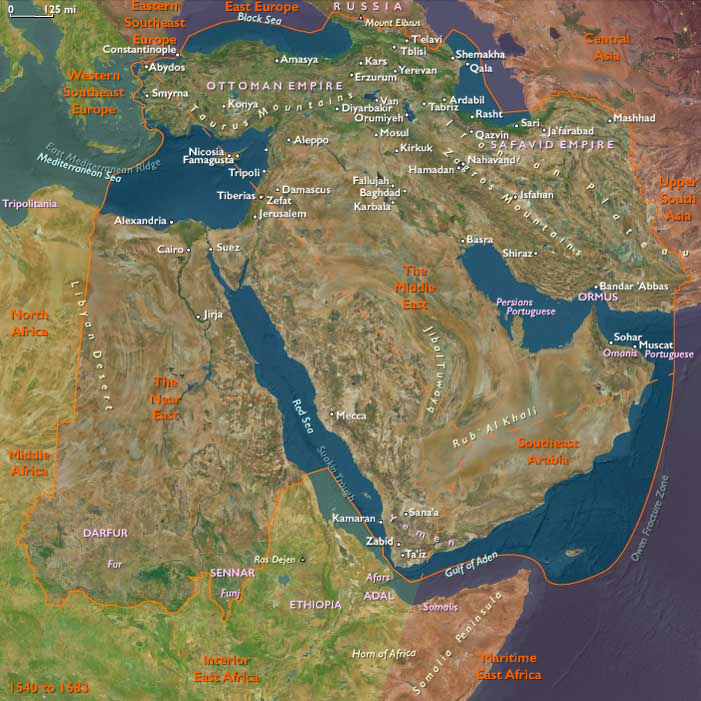
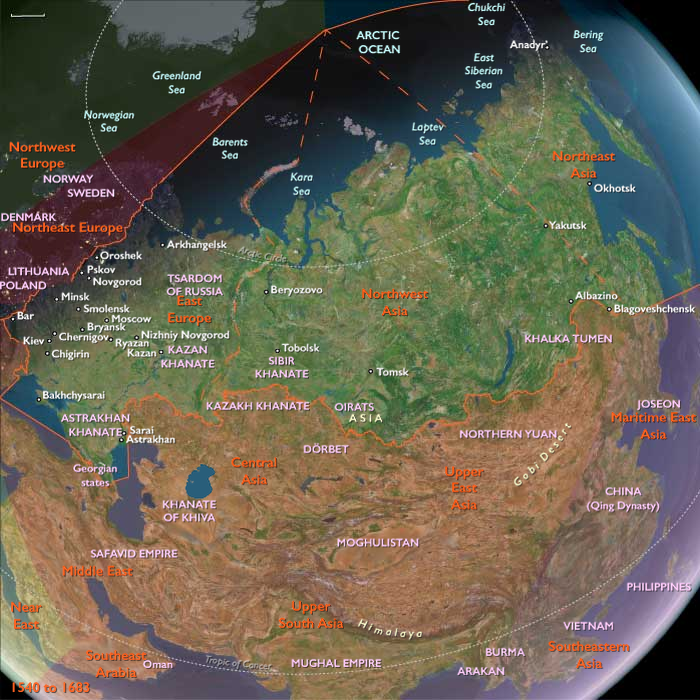
Sailing from Venice with twenty-five other Englishmen, he obtains money at Constantinople and at Aleppo, and in May 1599 is very well received by the Shah, who makes him a Mirza, or prince, and grants certain trading and other rights to all Christian merchants.
The Persians have been at intermittent war with the Ottoman Empire for more than a century.
Besides the territorial antagonism of the Ottoman and Persian realms, there is also strong religious antagonism, as the Persians proclaim Shiism against the Ottoman Empire's Sunnism.
Shirley persuades the shah to send an embassy to Europe, and plans to accompany it in its journey.
The objective of the mission is clearly to establish a Christian–Persian alliance against the Turks.