Saddam Hussein
fifth President of Iraq
Years: 1937 - 2006
Saddam Hussein Abd al-Majid al-Tikriti (April 28, 1937 – December 30, 2006) is the fifth President of Iraq from 16 July 1979 until April 9, 2003.
A leading member of the revolutionary Arab Socialist Ba'ath Party, and later, the Baghdad-based Ba'ath Party and its regional organization the Iraqi Ba'ath Party—which espoused Ba'athism, a mix of Arab nationalism and socialism—Saddam plays a key role in the 1968 coup (later referred to as the 17 July Revolution) that brings the party to power in Iraq.
As vice president under the ailing General Ahmed Hassan al-Bakr, and at a time when many groups are considered capable of overthrowing the government, Saddam creates security forces through which he tightly contros conflicts between the government and the armed forces.
In the early 1970s, Saddam nationalizes oil and foreign banks, leaving the system eventually insolvent mostly due to the Iran–Iraq War, the Gulf War, and UN sanctions.
Through the 1970s, Saddam cements his authority over the apparatus of government as oil money helps Iraq's economy to grow at a rapid pace.
Positions of power in the country are mostly filled with Sunni Arabs, a minority that makes up only a fifth of the population.
Saddam formally rises to power in 1979, although he has already been the de facto head of Iraq for several years.
He suppresses several movements, particularly Shi'a and Kurdish movements that seek to overthrow the government or gain independence, respectively, and maintains power during the Iran–Iraq War and the Gulf War.
Hussein's rule is a repressive dictatorship.
The total number of Iraqis killed by the security services of Saddam's government in various purges and genocides is conservatively estimated to be two hundred and fifty thousand.
Saddam's invasions of Iran and Kuwait also result in hundreds of thousands of deaths.
In 2003, a coalition led by the United States invades Iraq to depose Saddam, in which U.S. President George W. Bush and British Prime Minister Tony Blair erroneously accuse him of possessing weapons of mass destruction and having ties to al-Qaeda.
Saddam's Ba'ath party is disbanded and the country's first ever set of democratic elections are held.
Following his capture on December 13, 2003, the trial of Saddam takes place under the Iraqi Interim Government.
On November 5, 2006, Saddam is convicted by an Iraqi court of crimes against humanity related to the 1982 killing of 148 Iraqi Shi'a, and sentenced to death by hanging.
He is executed on December 30, 2006.

Related Events
Filter results
Showing 10 events out of 14 total
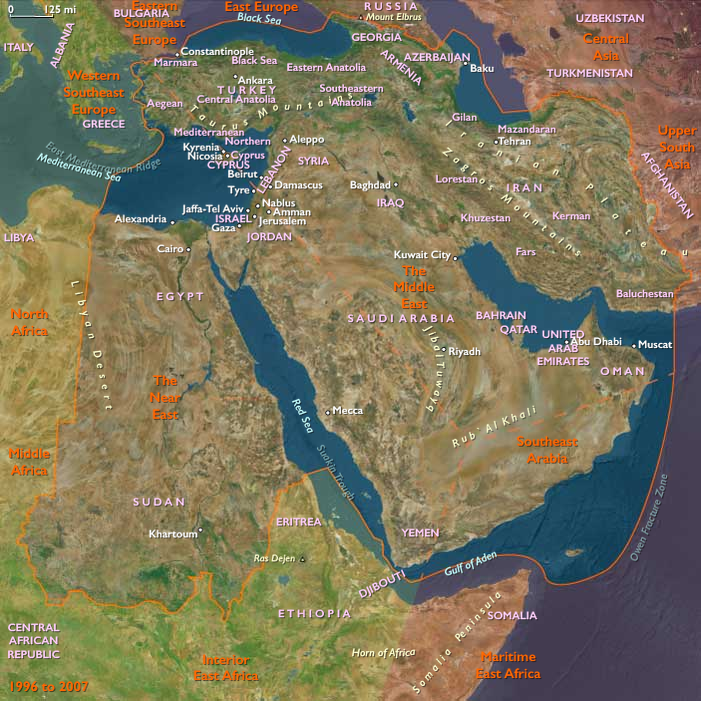
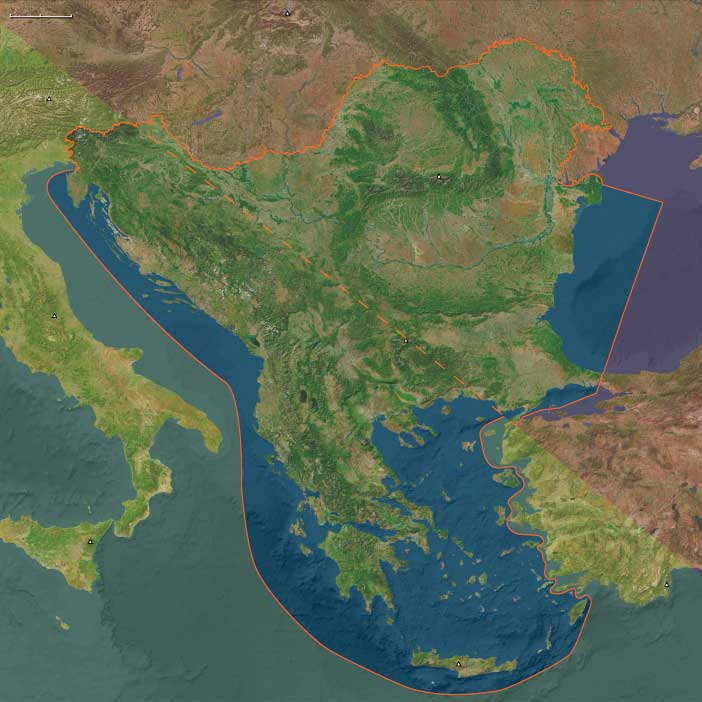
The Middle East (1960–1971): Regional Transformations and the Rise of Oil Politics
The era from 1960 to 1971 is pivotal for the Middle East, characterized by intense geopolitical struggles, rapid economic transformations driven by oil wealth, shifting regional alliances, and critical developments in Arab nationalism, culminating in profound long-term consequences for the region and beyond.
The Formation of OPEC and the Era of Oil Politics
In 1960, five oil-exporting nations—Iran, Iraq, Kuwait, Saudi Arabia, and Venezuela—form the Organization of Petroleum Exporting Countries (OPEC). This event marks a crucial turning point, as Middle Eastern nations begin asserting control over their natural resources and challenging Western dominance of oil markets. Initially, OPEC’s influence is modest, but the foundation laid during this era sets the stage for future global economic power shifts.
Oil wealth rapidly transforms the Arabian Peninsula. Saudi Arabia, Kuwait, Qatar, and the United Arab Emirates undergo significant modernization, investing in infrastructure, education, and healthcare. These states emerge as crucial economic hubs with growing international leverage.
Egypt under Nasser and Arab Nationalism
Egyptian President Gamal Abdel Nasser remains the region's leading figure in the early 1960s, advocating pan-Arab nationalism, socialism, and anti-imperialism. His influence peaks with the establishment of the United Arab Republic (UAR), initially a union of Egypt and Syria (1958–1961). However, the union collapses in 1961 due to Syrian dissatisfaction with Egyptian dominance.
Nasser's regional prestige endures despite setbacks. He supports revolutionary movements throughout the Arab world, notably in Yemen, where Egyptian troops intervene in a prolonged and costly civil war (1962–1967). This drains Egypt's resources and contributes to future vulnerabilities.
The Arab-Israeli Conflict and the Six-Day War (1967)
Tensions between Israel and its Arab neighbors escalate dramatically throughout the 1960s. A critical flashpoint occurs in June 1967 with the Six-Day War, when Israel launches preemptive strikes against Egypt, Jordan, and Syria, following months of escalating rhetoric and troop mobilizations.
The outcome is a resounding Israeli victory, dramatically altering the region’s geopolitical map. Israel captures the Sinai Peninsula and Gaza Strip from Egypt, the West Bank and East Jerusalem from Jordan, and the strategic Golan Heights from Syria. This devastating defeat deeply wounds Arab nationalism, humiliating Nasser and shaking Arab confidence.
In the war's aftermath, hundreds of thousands of additional Palestinian refugees are displaced. The occupied territories become focal points of bitter disputes, setting the stage for future conflicts and prolonged occupation.
Palestinian Nationalism and the Rise of the PLO
Following the 1967 war, Palestinian identity and resistance to Israeli occupation intensify. The Palestine Liberation Organization (PLO), founded in 1964 as a political body representing Palestinians, rapidly evolves into a prominent militant organization under Yasser Arafat’s leadership by 1969. Palestinian guerrilla operations against Israel increase significantly, particularly from bases in Jordan and Lebanon, drawing these countries deeper into regional conflict.
In Jordan, tensions between Palestinian guerrillas and King Hussein’s government culminate in the Black September crisis of 1970. Jordanian forces violently suppress Palestinian factions, resulting in thousands of deaths and driving the PLO leadership to relocate to Lebanon, further destabilizing that nation.
Syria and Iraq: Radical Regimes and Ba’athist Rule
In Syria, instability following the collapse of the UAR leads to several coups, culminating in the seizure of power by the Arab Socialist Ba’ath Party in 1963. By 1970, Defense Minister Hafez al-Assad consolidates his power through a military coup, establishing an authoritarian regime marked by socialist economic policies, repression of dissent, and strategic alignment with the Soviet Union.
In Iraq, instability persists throughout the 1960s. A Ba’athist-led coup in 1968 brings Ahmed Hassan al-Bakr and his deputy, Saddam Hussein, to power. The new Iraqi government pursues extensive modernization and social reform but also establishes a fiercely authoritarian system, marked by brutal suppression of opposition and increased militarization.
Iran and the Shah’s Modernization
In Iran, Mohammad Reza Shah Pahlavi launches ambitious economic and social reforms, known as the White Revolution (1963), aimed at rapid modernization, land redistribution, and industrialization. While the reforms stimulate economic growth and infrastructure development, they alienate religious leaders and large segments of Iranian society who view them as overly secular, authoritarian, and westernizing. Opposition to the Shah grows, planting seeds for future unrest.
Lebanon: Fragile Balance and Rising Tensions
Lebanon, traditionally viewed as a stable commercial center, becomes increasingly volatile as Palestinian refugees and PLO factions settle within its borders. By the late 1960s, Lebanese politics grow dangerously polarized, as Christians and Muslims diverge sharply over the Palestinian presence. Although full-scale conflict does not erupt until later, the foundations of Lebanon's subsequent civil strife are firmly laid during this period.
Turkey and Cyprus: Regional Conflict
Turkey, a strategic NATO member, experiences economic growth and stability under military-backed governments in the 1960s, but tensions with neighboring Greece escalate dramatically over Cyprus. Inter-communal violence on the island intensifies between Greek Cypriots and Turkish Cypriots, leading to increased regional instability and setting the stage for future Turkish intervention in Cyprus (1974).
Gulf States and British Withdrawal
Britain, weakened economically and politically by World War II and subsequent global commitments, announces its intention to withdraw military and political oversight from the Persian Gulf by 1971. This sparks anxiety among small Gulf sheikhdoms previously protected by British treaties. In response, the states of Abu Dhabi, Dubai, Sharjah, Ajman, Umm al-Quwain, and Fujairah establish the United Arab Emirates (UAE) in December 1971. Qatar and Bahrain opt for independence, becoming fully sovereign states in 1971. These new nations rapidly use burgeoning oil revenues to modernize and diversify their economies.
Oman’s Internal Conflict and Modernization
Oman experiences severe internal tensions during this period. Sultan Said bin Taimur’s repressive rule and resistance to modernization lead to significant unrest, notably the prolonged Dhofar Rebellion (1965–1975). In 1970, Sultan Said is overthrown by his British-backed son, Qaboos bin Said, who immediately embarks on a modernization program, ending Oman’s isolation and seeking regional cooperation and stability.
Legacy of the Era (1960–1971)
The period from 1960 to 1971 profoundly reshapes the Middle East. The Six-Day War significantly alters regional geopolitics, embedding long-lasting Arab-Israeli conflicts and the Palestinian issue deeply within regional and global politics. OPEC’s formation and increased oil wealth dramatically enhance the global influence of Middle Eastern states. Meanwhile, the emergence of authoritarian regimes in Syria and Iraq, the Shah’s modernization in Iran, and internal turmoil in Lebanon and Oman highlight the region's complexity and instability. These developments set the stage for intensified future conflicts, regional power shifts, and enduring strategic rivalries, profoundly influencing Middle Eastern politics into the twenty-first century.
The Middle East (1972–1983): Conflict, Revolution, and New Realities
Between 1972 and 1983, the Middle East experiences profound political transformations, marked by regional rivalries, revolutionary upheaval, and strategic realignments amid intensifying Cold War dynamics.
Oil and Power in the Gulf
In the Persian Gulf, the newly independent United Arab Emirates (UAE) rapidly consolidates its statehood following the inclusion of Ras al Khaymah in February 1972. The wealth generated by petroleum resources transforms Abu Dhabi and Dubai into dynamic economic hubs, attracting significant international investment.
Qatar and Bahrain, having declared independence in 1971, swiftly enter the United Nations and the Arab League, securing international recognition. Bahrain develops into a banking and financial center, while Qatar expands its petroleum and natural gas industries, establishing firm diplomatic ties with the West, particularly the United States and Britain.
Oman's Emergence from Isolation
Under the rule of Sultan Qaboos bin Said Al Said—who had assumed power in a British-backed coup in 1970—Oman emerges from decades of isolation. After suppressing the Dhofar Rebellion in 1975 with assistance from Britain, Iran, and Jordan, Sultan Qaboos initiates sweeping modernization. Oman invests heavily in infrastructure, education, and healthcare, gradually integrating into the broader Gulf Cooperation Council (GCC), established in 1981 alongside Saudi Arabia, Kuwait, Bahrain, Qatar, and the UAE, to bolster collective security and regional stability.
Iraq: Rise of Saddam Hussein
In Iraq, the Ba'ath Party tightens its grip on power. Saddam Hussein, as vice president from 1968 and formally ascending as president in 1979, embarks on ambitious modernization campaigns supported by oil revenues. His regime, however, is increasingly characterized by political repression, persecution of rivals, and aggressive regional ambitions, notably initiating a devastating eight-year conflict with Iran in September 1980. The Iran-Iraq War—fueled by territorial disputes, ideological differences between Saddam's secular Arab nationalism and Iran's revolutionary Shi'a Islam, and competition for regional dominance—inflicts catastrophic human and economic losses on both sides.
Iran: Revolution and Regional Shockwaves
In Iran, the political landscape dramatically shifts with the Iranian Revolution of 1979. The revolution, led by Ayatollah Ruhollah Khomeini, topples the pro-Western Pahlavi dynasty, ushering in a fiercely anti-Western Islamic Republic that profoundly alters regional and global geopolitics. The revolution's immediate aftermath includes the hostage crisis at the U.S. Embassy in Tehran, severely damaging Iran’s relationship with the West, particularly the United States.
The establishment of an Islamic revolutionary government ignites tensions throughout the region, emboldening Shi'a groups in Lebanon, Iraq, and the Gulf States, thereby heightening sectarian and geopolitical divides.
Lebanon: Civil War and Foreign Intervention
Lebanon descends into civil war in 1975, fueled by longstanding religious and sectarian tensions exacerbated by demographic shifts and Palestinian militant presence following the 1970 expulsion from Jordan (Black September). The war rapidly fragments Lebanon into militia-controlled enclaves, inviting repeated foreign interventions from Syria and Israel.
Israel's 1982 invasion—dubbed "Operation Peace for Galilee"—aims to drive out the Palestine Liberation Organization (PLO), headquartered in Beirut. The invasion culminates in a prolonged siege of West Beirut and the forced departure of PLO leader Yasser Arafat and thousands of his fighters. It also triggers horrific episodes of violence, notably the Sabra and Shatila massacres, in which Lebanese Phalangist militias murder hundreds of Palestinian civilians under the indirect oversight of Israeli forces.
Syria under Assad: Consolidation and Conflict
In Syria, President Hafez al-Assad (in power since 1970) consolidates a repressive, authoritarian regime underpinned by the Alawite minority. Assad positions Syria as a central player in Arab politics, maintaining close ties with the Soviet Union while supporting anti-Israeli resistance movements across the region. He firmly places Syria in opposition to Israel and Western-aligned Arab regimes, notably supporting Lebanese factions and the Palestinian cause.
Assad's rule faces significant internal challenges, climaxing in 1982 when Syrian government forces brutally crush an Islamist-led rebellion by the Muslim Brotherhood in the city of Hama, killing thousands in a move that cements Assad’s authoritarian grip but deeply scars Syrian society.
Turkey and the Cyprus Conflict
In 1974, Turkey invades Cyprus in response to a coup d'état by Greek Cypriot nationalists aiming to unite the island with Greece (enosis). Turkish military forces establish control over the northern third of Cyprus, leading to the island’s de facto partition. This military intervention triggers international condemnation but also reshapes Turkey’s strategic position in the Eastern Mediterranean. The partition remains unresolved decades later, deeply influencing regional diplomacy.
Soviet and U.S. Rivalry: The Middle East as a Cold War Front
Throughout this era, the Middle East is a crucial theater for the Cold War, with the United States and Soviet Union competing fiercely for influence. American support for Israel and pro-Western Gulf states contrasts sharply with Soviet backing for Syria, Iraq, and various Palestinian factions. Superpower rivalry exacerbates regional tensions, fueling proxy conflicts and facilitating massive arms transfers to regional actors, intensifying hostilities in Lebanon, the Iran-Iraq War, and the Arab-Israeli conflict.
The Gulf Cooperation Council (GCC)
The Gulf Cooperation Council, established in 1981 by Saudi Arabia, Kuwait, Bahrain, Qatar, the UAE, and Oman, underscores a growing Arab effort to manage regional security independently, responding to revolutionary instability in Iran, Iraq's aggression, and Soviet intervention in Afghanistan. The GCC solidifies diplomatic and economic collaboration, while reinforcing security partnerships with Western allies, particularly the United States.
Legacy of Revolution, War, and Re-alignment (1972–1983)
The years between 1972 and 1983 reshape the Middle East profoundly. The Iranian Revolution introduces a lasting ideological dynamic between revolutionary Islamism and secular nationalism. The devastating Iran-Iraq War entrenches bitter sectarian and national divides, whose consequences echo into future decades.
Lebanon’s civil war marks the beginning of sustained regional instability involving international actors, setting precedents for prolonged foreign interference. The creation of the GCC reflects an increasing sense of collective regional identity among Gulf monarchies, defining future political and economic strategies.
Finally, the entrenched presence of the United States and Soviet Union highlights the Middle East as a focal point of global Cold War tensions, laying the groundwork for continued external involvement and rivalry that profoundly impacts regional stability and security for decades to follow.
The Middle East (1984–1995): Shifting Alliances and New Confrontations
Between 1984 and 1995, the Middle East undergoes significant geopolitical shifts shaped by regional rivalries, superpower retrenchment following the Cold War, and changing internal dynamics within states. The era is defined by protracted conflict, evolving alliances, and critical peace initiatives.
The End of the Iran-Iraq War
The devastating Iran-Iraq War continues until 1988, concluding only after inflicting enormous human, economic, and environmental destruction on both sides. In August 1988, Ayatollah Ruhollah Khomeini reluctantly accepts UN Resolution 598, which mandates an immediate ceasefire. Neither country achieves its strategic objectives, leaving unresolved territorial disputes and lingering bitterness.
The conflict leaves Iraq heavily indebted, particularly to its Gulf Arab neighbors who had financed its war effort, creating tensions that quickly erupt into open hostility. Meanwhile, Iran remains politically isolated yet more resolutely committed to exporting its revolutionary ideals.
The Gulf War and its Aftermath
In August 1990, Iraqi President Saddam Hussein, seeking relief from economic pressures and claiming historical rights, invades and occupies Kuwait, prompting global condemnation. The United Nations swiftly imposes sanctions, and a U.S.-led international coalition assembles to reverse the occupation.
The Gulf War (Operation Desert Storm) begins in January 1991, resulting in the swift liberation of Kuwait and the decisive defeat of Iraqi forces. Iraq retreats, leaving catastrophic destruction behind, including widespread oil fires and environmental damage in Kuwait.
Despite Iraq's defeat, Saddam Hussein retains power, brutally suppressing Kurdish and Shi’a rebellions encouraged by the international community yet receiving limited external support. Subsequently, Iraq remains isolated, crippled by stringent international sanctions enforced under UN resolutions.
Rise of American Influence and the New Middle East Order
Following the collapse of the Soviet Union in 1991, American influence in the Middle East reaches unprecedented levels. The United States strengthens military alliances with Gulf Cooperation Council (GCC) countries, notably Saudi Arabia, Kuwait, Qatar, and the UAE, establishing permanent military bases to maintain regional stability and secure oil supplies.
However, the presence of American troops, especially in Saudi Arabia—home to Islam's holiest sites—provokes increasing resentment among local populations, fueling Islamist extremism that will later emerge violently in global politics.
Lebanon: The Taif Accord and a Fragile Peace
The protracted Lebanese Civil War, ongoing since 1975, reaches a negotiated resolution with the Taif Accord in 1989. Brokered with Saudi support, the accord redistributes political power, reducing Christian dominance, and increasing the political representation of Lebanon’s Muslim communities, especially Sunnis and Shi’as.
The accord, while ending major hostilities, institutionalizes Syrian influence, permitting a large Syrian military presence in Lebanon. Despite nominal peace, Lebanon remains politically fragmented, with Hezbollah consolidating influence in the Shi’a south and central government authority remaining weak.
Israeli-Palestinian Peace Efforts: Madrid and Oslo
In 1991, the United States and the Soviet Union convene the Madrid Conference, initiating direct negotiations between Israel and its Arab neighbors, including Palestinians. Although immediate results are limited, Madrid sets the stage for the historic breakthrough in 1993.
In 1993, Israel and the Palestine Liberation Organization (PLO) sign the Oslo Accords, leading to mutual recognition and the establishment of the Palestinian Authority in parts of the West Bank and Gaza. Yasser Arafat returns to Palestinian territory in 1994 as the head of the Palestinian Authority, symbolizing a historic step toward self-governance. However, unresolved issues—including the status of Jerusalem, refugees, and settlements—quickly stall momentum.
Jordan also formally ends its state of war with Israel, signing a peace treaty in October 1994, thereby significantly reshaping regional dynamics.
Iran after Khomeini: Pragmatism and Continued Revolution
Following the death of Ayatollah Khomeini in 1989, Iran undergoes a subtle internal realignment. Ayatollah Ali Khamenei succeeds Khomeini as Supreme Leader, while Akbar Hashemi Rafsanjani becomes president, advocating pragmatic economic policies and cautious international engagement. Despite Rafsanjani’s moderation, Iran remains ideologically committed to revolutionary Shi’a Islam, supporting Hezbollah in Lebanon, Palestinian militants, and various Shi’a factions throughout the Gulf.
Syria: Assad’s Grip Tightens
In Syria, President Hafez al-Assad remains a key regional player, especially in Lebanon and Palestinian affairs. Assad maintains stability through a ruthless security apparatus and continues to balance relationships with the West and Russia, skillfully navigating the post-Cold War diplomatic landscape.
Turkey’s Continued Evolution and Kurdish Conflict
In Turkey, political instability accompanies economic liberalization and rapid urbanization. Throughout the 1980s and early 1990s, Turkey grapples with the Kurdistan Workers' Party (PKK) insurgency, a conflict rooted in long-standing ethnic tensions and grievances. Despite harsh military responses, Kurdish demands for cultural and political rights intensify, influencing Turkish domestic politics and regional relations profoundly.
Caucasus: Georgia, Armenia, and Azerbaijan Post-Soviet Independence
With the collapse of the Soviet Union in 1991, Georgia, Armenia, and Azerbaijan achieve independence, facing significant internal and external challenges.
-
Georgia struggles with separatist conflicts in Abkhazia and South Ossetia, resulting in civil unrest and weak governance throughout the 1990s.
-
Armenia and Azerbaijan engage in a bitter conflict over Nagorno-Karabakh, an ethnic Armenian enclave inside Azerbaijan. A full-scale war erupts in 1988 and intensifies dramatically after independence. A ceasefire agreement in 1994 leaves Armenian forces in control of Nagorno-Karabakh and surrounding Azerbaijani territory, creating unresolved territorial disputes and animosity lasting decades.
These conflicts profoundly influence regional geopolitics, drawing in neighboring countries and global powers, complicating diplomatic efforts.
Legacy of Conflict, Diplomacy, and Transition (1984–1995)
The period from 1984 to 1995 significantly reshapes the Middle Eastern geopolitical landscape. The Gulf War realigns regional and global alliances, placing the United States as a preeminent external power with deepening involvement in Gulf security, a role bringing both stability and unintended consequences.
Peace efforts like the Oslo Accords raise hopes for an enduring Israeli-Palestinian settlement, yet unresolved core issues leave lasting uncertainty and frustration. Similarly, Lebanon’s Taif Accord achieves peace on paper but institutionalizes internal divisions and external influence.
Finally, the emergence of newly independent states in the Caucasus introduces fresh instability into the Middle East periphery, highlighting ethnic nationalism and territorial disputes that remain unresolved. Collectively, these events establish lasting dynamics that shape regional politics well into the 21st century.
Saddam Hussein attempts to stir up Arab antagonism against Israel.
He finds ready support among ...
As the United States dispatches troops to Saudi Arabia and organizes an international coalition against the Iraqi invasion, ...
...elsewhere, including an endorsement by PLO head 'Arafat.
By the 1990s, with the split in the PLO's ranks healed, 'Arafat had reclaimed his leadership of Fatah, which remains the largest constituent member of the PLO.
Most fall harmlessly, none contain the poison gas warheads Hussein had threatened to use, and after the first days many are destroyed in flight by American Patriot antimissile missiles.
Accepting the U.S. air-defense, Israel holds its fire while the coalition devastates the Jewish state's most dangerous Arab opponent.
Hussein's purpose in launching the Scuds at neutral Israel is not achieved.
He had hoped to provoke an Israeli counterstrike and thereby detach the Syrians and Egyptians from the enemy coalition.
The Israelis are understandably furious at the unprovoked attacks against defenseless civilian targets but understand President Bush's appeals to them not to respond.
The Arab-Western coalition hangs together.
The United States greatly fears that its focus on Iraqi aggression will be diverted by Arab grievances against Israel.
When the American-led coalition's attack is launched, Washington urges Israel not to respond to Iraqi provocations, even after ...