Saint Nicholas
Greek bishop of Myra
Years: 270 - 343
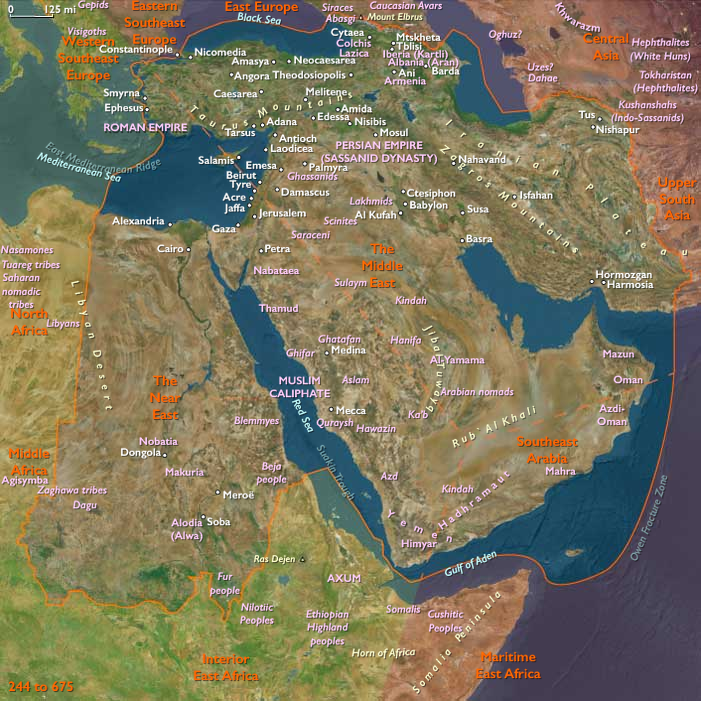
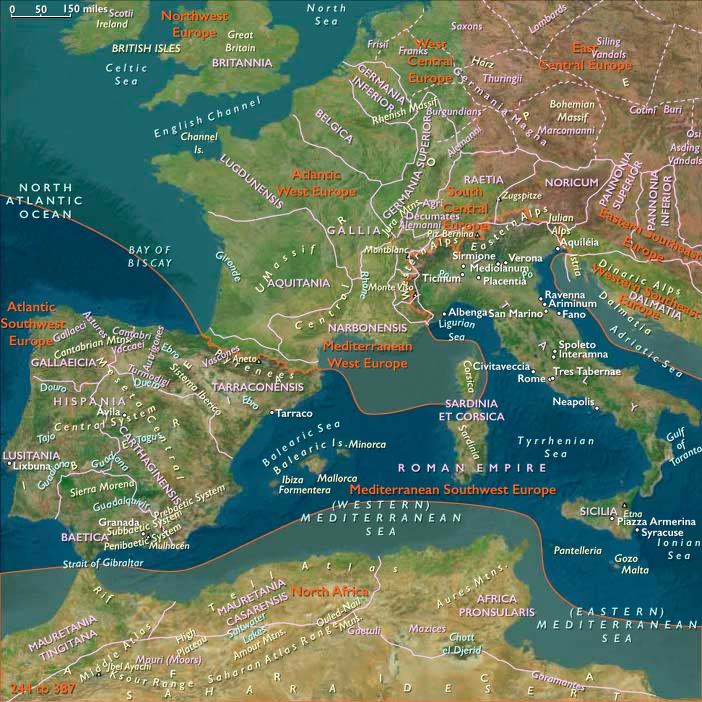
Saint Nicholas (270 – 6 December 343), also called Nikolaos of Myra, is a historic 4th-century saint and Greek Bishop of Myra (Demre, part of modern-day Turkey) in Lycia.
Because of the many miracles attributed to his intercession, he is also known as Nikolaos the Wonderworker.
He has a reputation for secret gift-giving, such as putting coins in the shoes of those who leave them out for him, and thus becomes the model for Santa Claus, whose modern name comes from the Dutch Sinterklaas, itself from a series of elisions and corruptions of the transliteration of "Saint Nikolaos".
His reputation evolved among the faithful, as was common for early Christian saints.
In 1087, part of the relics (about half of the bones) were furtively translated to Bari, in southeastern Italy; for this reason, he is also known as Nikolaos of Bari.
The remaining bones were taken to Venice in 1100.
His feast day is 6 December [O.S.
19 December].
The historical Saint Nicholas is remembered and revered among Catholic and Orthodox Christians.
He is also honored by various Anglican and Lutheran churches.
Saint Nicholas is the patron saint of sailors, merchants, archers, thieves, children, and students in various countries in the Balkans and Eastern Europe (Albania, Bulgaria, Croatia, Czech Republic, Georgia, Greece, Republic of Macedonia, Montenegro, Romania, Russia, Serbia, Slovakia), as well as in parts of Western Europe (Belgium, France, Netherlands, Portugal).
He is also the patron saint of Aberdeen, Amsterdam, Barranquilla, Bari, Beit Jala, Fribourg, Huguenots, Kozani, Liverpool, Paternopoli, Sassari, Siggiewi, and Lorraine.
He was also a patron of the Varangian Guard of the Byzantine emperors, who protected his relics in Bari.