
Salva Kiir Mayardit
South Sudanese politician and first President of South Sudan.
1951 CE to 2057 CE
Salva Kiir Mayardit (born 13 September 1951), commonly known as Salva Kiir, is a South Sudanese politician who has been the President of South Sudan since its independence on 9 July 2011. Prior to independence, he was the President of the Government of Southern Sudan, as well as First Vice President of Sudan, from 2005 to 2011. He was named Commander-in-Chief of the Sudan People's Liberation Army (SPLA) in 2005, following the death of John Garang.
Kiir was born to the Dinka ethnic group and joined Anyanya rebels fighting for Southern independence during the First Sudanese Civil War in 1967. Following the outbreak of the Second Sudanese Civil War in 1983, Kiir joined the new Sudan People's Liberation Movement (SPLM) rebel group led by John Garang as a member of its armed wing, the Sudanese People's Liberation Army (SPLA), eventually becoming the head of the SPLA. Following the Comprehensive Peace Agreement, the South gained autonomy under the leadership of Garang in July 2005. Following Garang's death at the end of the month, Kiir became the new President of the Southern Autonomous region, as well as First Vice President of the central government. Kiir won re-election as President following the 2010 South Sudanese general election. The following year, South Sudan gained independence after the 2011 South Sudanese independence referendum with Kiir as its inaugural President.
World
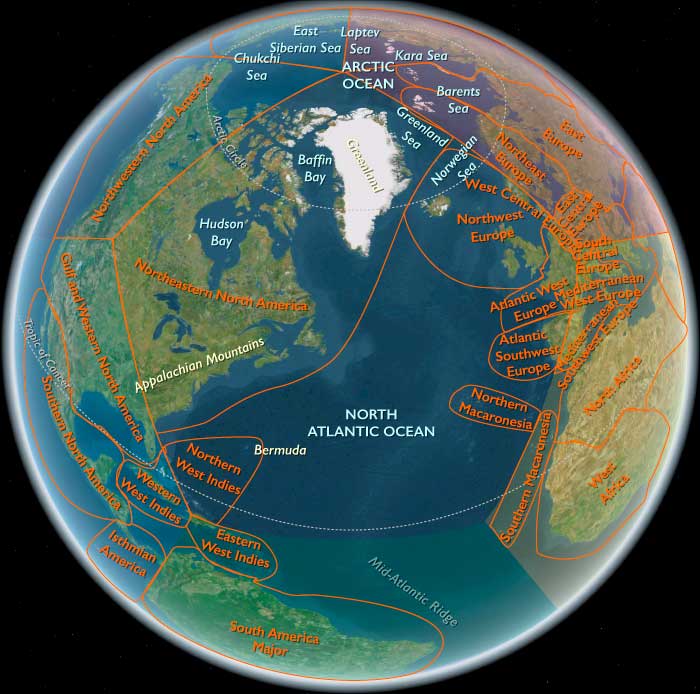
The Atlantic Lands
View →Related Events
Showing 1 events out of 1 total
Interior East Africa (2008–2019 CE): Independence, Conflict, and Challenges of Nation-Building
Between 2008 and 2019, Interior East Africa witnessed transformative political events marked by South Sudan's independence, persistent regional conflicts, and complex challenges in governance and economic development.
South Sudan: Independence and Immediate Conflict
After decades of civil war and a six-year transitional autonomy under the Comprehensive Peace Agreement (CPA), Southern Sudan held a referendum in January 2011, voting overwhelmingly for independence. On July 9, 2011, South Sudan officially became the world's newest nation, with its capital at Juba and Salva Kiir Mayardit as its first president. Sudanese President Omar al-Bashir initially accepted the outcome publicly.
However, independence quickly gave way to renewed violence, particularly in the oil-rich Abyei region, contested by both Sudan and South Sudan. In June 2011, fighting broke out in South Kordofan, as both sides moved forces into position ahead of the scheduled separation date. Under international pressure, Sudan and South Sudan agreed on June 20, 2011, to demilitarize Abyei, leading to the deployment of Ethiopian peacekeepers under a United Nations mandate.
Despite international interventions, South Sudan descended into internal conflict beginning in December 2013, as tensions between President Kiir and his former Vice President Riek Machar triggered ethnic violence and civil war. Repeated peace agreements and ceasefires throughout the decade failed to create lasting stability, resulting in severe humanitarian crises marked by famine, displacement, and international aid dependency.
Sudan: Continued Struggle and Bashir's Downfall
In Sudan, economic deterioration and political frustration continued, exacerbated by the loss of oil revenues after South Sudan's independence. Persistent unrest culminated in mass demonstrations against President Omar al-Bashir's authoritarian regime in late 2018 and early 2019. After months of sustained protests, Bashir was removed from power in a military coup in April 2019, ending his nearly three-decade rule and paving the way for a transitional government committed to civilian rule.
Ethiopia and Eritrea: Reconciliation and Reform
Ethiopia experienced profound change with Prime Minister Abiy Ahmed's rise to power in 2018. Abiy introduced political liberalization, freed political prisoners, and pursued economic reform. Notably, he brokered a historic peace agreement with Eritrea in 2018, formally ending two decades of hostility and reopening borders, a development recognized internationally, with Abiy receiving the 2019 Nobel Peace Prize.
However, internal tensions in Ethiopia persisted, with escalating ethnic conflicts and displacement affecting various regions, highlighting ongoing governance and integration challenges.
Uganda, Kenya, and Tanzania: Stability and Challenges
In Uganda, President Yoweri Museveni maintained control, facing increasing internal criticism over human rights and democracy, especially following the controversial 2016 elections. Meanwhile, Kenya experienced turbulent but ultimately peaceful elections in 2013 and 2017, strengthening democratic institutions despite tensions. Tanzania maintained relative political stability under President Jakaya Kikwete until 2015, when John Magufuli came to power, initiating populist reforms but increasingly suppressing political dissent.
Rwanda and Burundi: Divergent Paths
Rwanda continued to grow economically and strengthen its international profile under President Paul Kagame, despite ongoing concerns over authoritarian governance. Burundi, in contrast, faced escalating internal violence following President Pierre Nkurunziza's contentious third-term bid in 2015, leading to unrest, political repression, and a refugee crisis impacting neighboring states.
Zimbabwe: Political Transition and Economic Crisis
Zimbabwe saw the end of President Robert Mugabe’s 37-year rule in a military-led political transition in 2017, ushering in President Emmerson Mnangagwa. Despite promises of reform, economic instability, hyperinflation, and governance issues continued to plague the nation, prompting ongoing migration and humanitarian challenges in the region.
By the end of 2019, Interior East Africa was characterized by both significant milestones in peace and democracy, and continuing profound crises, highlighting the complexities of nation-building and governance in the modern era.