
Samuel Barrington
British admiral
1729 CE to 1800 CE
Admiral Samuel Barrington (1729 – August 16, 1800) is a British admiral.
Samuel is the fourth son of John Shute Barrington, 1st Viscount Barrington of Beckett Hall at Shrivenham in Berkshire (now Oxfordshire).
He enters the Royal Navy at the age of eleven, and by 1747 had been promoted to post captain.
World
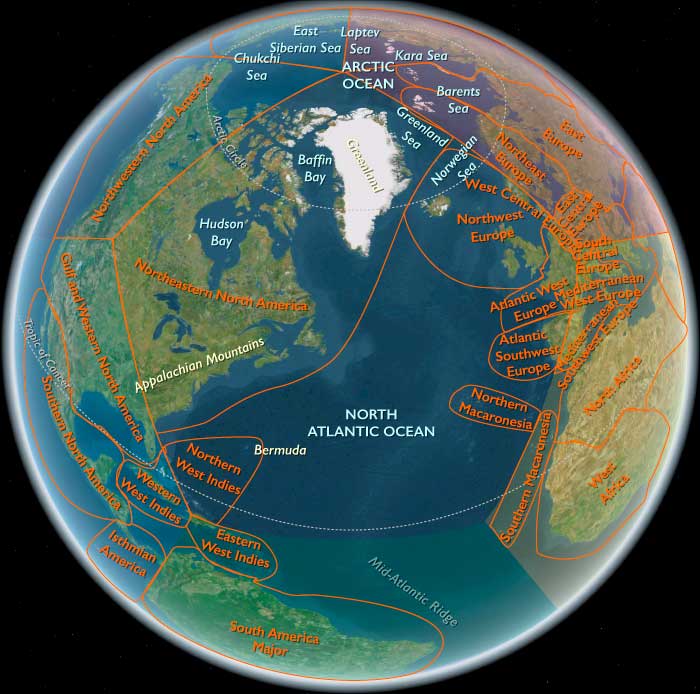
The Atlantic Lands
View →Related Events
Showing 6 events out of 6 total
Eastern West Indies (1768–1779 CE): Earthquakes, Warfare, and Revolutionary Tensions
Devastating Earthquakes and Their Aftermath
Between 1768 and 1779, severe natural disasters profoundly impacted the Eastern West Indies. A catastrophic earthquake struck Port-au-Prince on June 3, 1770, devastating the city and surrounding regions, including Lake Miragoâne and Petit-Goâve. The quake caused extensive soil liquefaction in the Plain of the Cul-de-Sac, leveling buildings and sinking the village of Croix des Bouquets below sea level. Approximately 200 people died in Port-au-Prince alone, with severe casualties elsewhere. The earthquake triggered a tsunami affecting the Gulf of Gonâve.
The quake's aftermath saw thousands of enslaved individuals fleeing in chaos, severely disrupting the local economy. Approximately 15,000 enslaved people died from subsequent famine, while another 15,000 succumbed to gastrointestinal anthrax contracted from tainted meat sold by Spanish traders.
Economic and Strategic Rivalries
In 1777, French botanist Nicolas-Joseph Thiéry de Menonville attempted to smuggle valuable cochineal insects from New Spain to Saint-Domingue. Although initially successful, this attempt ultimately failed, leaving Spain's monopoly on this lucrative dyestuff intact.
Grenada: Conflict and Reconstruction
The principal town of Grenada, St. George, faced destructive fires in 1771 and again in 1775, prompting reconstruction efforts in stone and brick. During the American War of Independence, French forces under Comte d'Estaing recaptured Grenada between July 2-4, 1779, with British naval forces defeated in the Battle of Grenada on July 6, 1779.
Sint Eustatius and the American Revolution
The small Dutch island of Sint Eustatius became pivotal during the American Revolutionary War. In 1776, it was the first foreign power to officially acknowledge American independence by saluting the brig Andrew Doria. Due to British blockades, Sint Eustatius became a crucial supply hub for the American forces, facilitated by Dutch, British colonial, and Jewish merchant networks.
French and British Conflicts
French and British forces clashed repeatedly throughout the Caribbean. The French captured Dominica in September 1778, led by Governor-General François Claude Amour, Marquis de Bouillé, capitalizing on weak British defenses. News of Dominica’s fall shocked Britain, leading to severe criticism of Admiral Samuel Barrington for inadequate naval defenses.
In response, Admiral William Hotham and Admiral Barrington launched an assault on French-held St. Lucia in December 1778, securing it as a strategic position. Reinforcements arrived for both sides in early 1779, shifting power dynamics. Admiral John Byron reinforced the British but departed in June 1779 to protect merchant convoys, leaving Admiral d'Estaing free to act.
D'Estaing and Bouillé captured Saint Vincent on June 18, 1779, and subsequently targeted Grenada, capturing it after fierce fighting on July 4, 1779.
Severe Weather Events
A devastating hurricane hit Guadeloupe on September 6, 1776, resulting in over 6,000 fatalities, highlighting the ongoing vulnerability of Caribbean islands to extreme weather events.
Conclusion
The period 1768–1779 witnessed significant upheaval in the Eastern West Indies, shaped by destructive earthquakes, the tumult of the American Revolutionary War, and severe weather disasters. The era demonstrated both the volatility and strategic significance of these colonial territories, setting the stage for continued geopolitical complexities.
Recapture of the island will improve communication among the islands, and deny the use of Dominican ports to privateers who prey on French shipping.
In August 1778, François Claude Amour, the marquis de Bouillé, the French governor-general of Martinique, receives word that war had been declared.
The French frigate Concorde reaches Martinique on August 17 with orders from Paris to take Dominica at the earliest opportunity, and Bouillé makes immediate plans for such an operation.
He had maintained contacts in the Dominican population, which had remained largely French during the years of British administration.
As a result, he has an accurate picture of the condition of the Dominican defenses, and knows that the island's garrison numbers fewer than "fifty soldiers fit for duty".
He is also concerned with the whereabouts of the British Leeward Islands fleet of Admiral Samuel Barrington, which significantly exceeds his in military power.
Unbeknown to Bouillé, Barrington, who has only recently assumed his post, is under orders to retain most of his fleet at Barbados until further instructions are received.
The British regular forces on the island, which in total number about one hundred, are distributed among defenses in the capital Roseau, the hills that overlook it, and at Cachacrou.
On September 2 he and Lieutenant Governor Stuart sign an agreement that formally prohibits privateering crews to plunder.
The next day Bouillé sends one of his officers to Dominica to see whether a Royal Navy frigate is still anchored in Prince Rupert's Bay (near present-day Portsmouth).
Stuart, suspicious of the man, has him questioned, then released.
On September 5 Bouillé is informed that the frigate has sailed for Barbados.
He strikes fast, defeating the British at Dominica in September 1778.
Bouillé leaves a garrison of eight hundred (seven hundred French regulars and one hundred free black militia) on the island, turns its command over to the Marquis de Duchilleau, and returns to Martinique.
These events are the first in a series of military actions resulting in the change of control of Caribbean islands during the war, in which Bouillé will often be involved.
Admiral Barrington is widely blamed for the loss, and criticized for adhering too closely to his orders.
French Admiral the comte D'Estaing arrives in the West Indies in early December 1778 in command of a fleet consisting of twelve ships of the line and a number of smaller vessels.
At about the same time a British fleet under Admiral William Hotham also arrives, augmenting the West Indies fleet of Admiral Barrington.
The orders and reinforcements whose late arrival had held Admiral Barrington at Barbados are to launch an attack on French-held St. Lucia, which the British capture in December 1778.
Despite d'Estaing's attempt at relief, the British use St. Lucia to monitor the major French base at Martinique, where d'Estaing is headquartered.
Throughout the first half of 1779 both fleets receive further reinforcements, after which the French fleet is superior to that of the British.
Furthermore, Byron departs St. Lucia on June 6 in order to provide escort services to British merchant ships gathering at St. Kitts for a convoy to Europe, leaving d'Estaing free to act.
D'Estaing and Bouillé seize the opportunity to begin a series of operations against nearby British possessions.
Their first target is the isle of Saint Vincent, south of St. Lucia.
It falls on 18 June, and d'Estaing turns his attention to other islands.
He had hoped to capture Barbados, a key British possession, but after making no progress against the prevailing easterly trade winds, he turns his attention instead to Grenada.
Terms of capitulation are agreed on the 4th.