Scipio Africanus
Roman general
Years: 236BCE - 183BCE
Publius Cornelius Scipio Africanus (236–183 BCE), also known as Scipio Africanus, Scipio the Elder, and Scipio the Great is a general in the Second Punic War and statesman of the Roman Republic.
He is best known for defeating Hannibal at the final battle of the Second Punic War at Zama, a feat that earns him the agnomen Africanus, the nickname "the Roman Hannibal", as well as recognition as one of the finest commanders in military history.
An earlier great display of his tactical abilities had come already at the Battle of Ilipa.
Related Events
Filter results
Showing 10 events out of 34 total
Quintus Fabius Maximus Verrucosus, of the Roman patrician gens Fabii, had become consul in 233, and is named consul again in 228.
Twice dictator in 221, Fabius Maximus again becomes dictator in 217, in the midst of Hannibal’s trans-Alpine invasion of Italy.
In the third in a string of unbroken victories, Hannibal defeats the Romans at Lake Trasimene.
Publius Cornelius Scipio, a prominent Roman general, had been consul in 218.
His son of the same name—whose mother is Amelia, daughter of consul Lucius Aemilius Paullus—serves with his father, allegedly saving his life in the battle.
Despite Hannibal’s victory, he is able to subvert few Roman allies in northern Italy, however, apart from his recruitment of the Gauls.
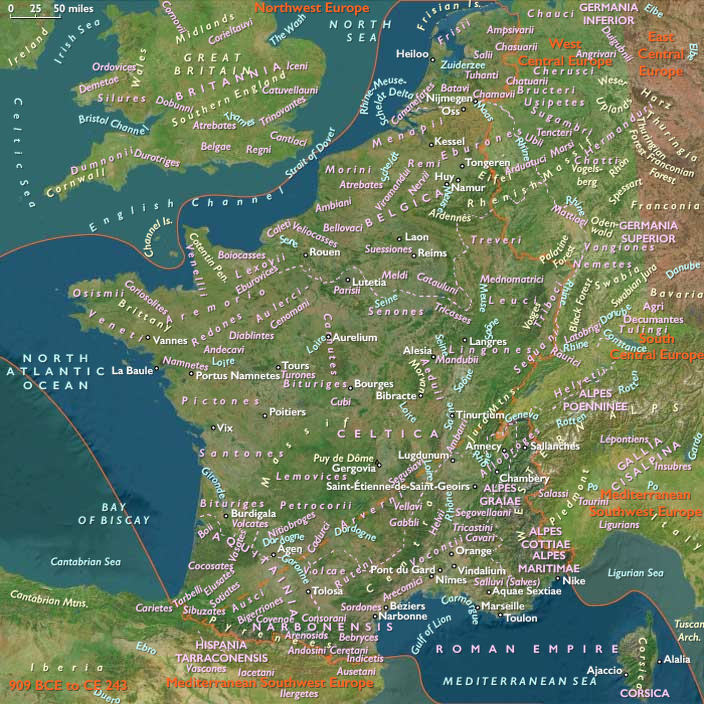
Mediterranean Southwest Europe (213–202 BCE): Roman Resilience and Victory in the Second Punic War
The era 213–202 BCE witnesses Rome’s determined counteroffensive against Carthage, demonstrating strategic resilience, adaptability, and ultimately achieving a decisive victory in the Second Punic War. Despite Hannibal’s earlier successes, Rome’s disciplined military and strategic diplomacy enable it to reverse its fortunes, reshaping the geopolitical landscape of the Mediterranean.
Rome’s Fabian Strategy and Strategic Countermeasures
Adopting the Fabian strategy—a deliberate avoidance of direct large-scale engagements—Roman generals methodically weaken Hannibal's forces by disrupting supply lines, retaking defected cities, and preventing the formation of a unified Carthaginian alliance. This approach successfully slows Hannibal's momentum, effectively isolating his army in southern Italy and depriving him of critical resources and reinforcements.
Roman Siegecraft and Military Triumphs
Capitalizing on superior siegecraft and logistical capability, Roman forces systematically recapture strategic towns and cities previously allied with Hannibal. By 207 BCE, Rome decisively defeats Carthaginian attempts at reinforcing Hannibal through the crucial Battle of the Metaurus, marking a turning point by eliminating Hannibal’s vital reinforcement under his brother, Hasdrubal Barca.
Roman Dominance in Iberia
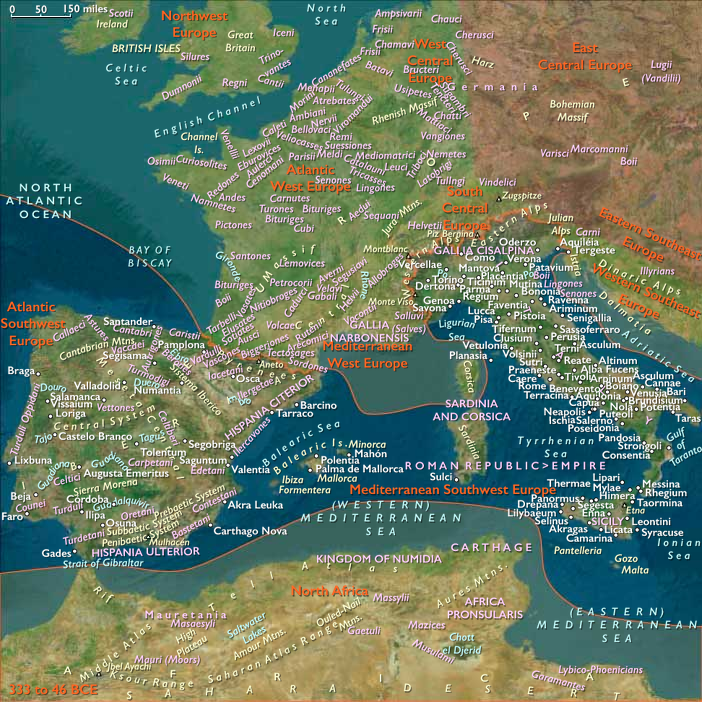
Simultaneously, Roman armies under the command of Publius Cornelius Scipio Africanus Major secure significant victories in Iberia. The decisive Roman capture of Carthago Nova (209 BCE) effectively dismantles Carthaginian dominance on the Iberian Peninsula. Further, Rome achieves a definitive triumph at the Battle of Ilipa (206 BCE), effectively ending Carthaginian influence in Iberia, significantly undermining Carthage's ability to sustain its Italian campaign.
Culmination at Zama and Carthage’s Defeat
In 202 BCE, the Battle of Zama near Carthage marks the climactic end of the Second Punic War. Here, Scipio Africanus faces Hannibal directly in a decisive confrontation. Hannibal's forces, although seasoned and battle-hardened, suffer a conclusive defeat against Scipio’s disciplined Roman legions. The resultant peace terms drastically curtail Carthaginian power, relegating Carthage to the status of a Roman client state, effectively ending its position as a dominant Mediterranean power.
Long-term Impacts and Legacy
The Second Punic War profoundly reshapes the geopolitical dynamics of Mediterranean Southwest Europe. Rome emerges as an undisputed regional hegemon, significantly expanding its influence across Italy, Iberia, and North Africa. Hannibal’s earlier victories and Rome’s eventual triumph underline Rome’s military resilience and strategic depth, setting a precedent for its later expansion and dominance in the broader Mediterranean region. The war’s end signals not only the rise of Rome as a superpower but also the definitive decline of Carthage’s imperial ambitions.
The Romans, led by consul Marcus Claudius Marcellus, have besieged the city of Syrcuse since 214 BCE.
In an early use of the lens as a weapon, Archimedes of Syracuse is said to have employed a number of concave, highly polished bronze shields that directed the sun’s rays against Roman ships to set fire to the invading fleet.
Marcellus, leaving the bulk of the Roman legion in the command of Appius Claudius at Syracuse, meanwhile roams Sicily with a small army, conquering opponents and taking such rebellious cities as Helorus, Megara, and Herbessus.
The Roman Republic first issues the silver coin known as the denarius in 211 BCE at the time of the Second Punic War, with a weight of 4.5 grams on average (denarii will be in use until the mid-third century CE when their replacement by the replaced by the antoninianus).
The earliest denarii feature the head of Diana on the obverse and the Dioscuri (Castor and Pollux) on the reverse.
The younger Publius Cornelius Scipio, had survived the disastrous battles at Ticinus, Trebia, and Cannae, the third of these having claimed the life of his would-be father-in-law Lucius Aemilius Paullus.
On hearing that Lucius Caecilius Metellus and other politicians were at the point of surrender, Scipio had gathered with his followers and stormed into the meeting, where at sword-point he forced all present to swear that they would continue in faithful service to Rome.
The Roman Senate, being of like mind, had refused to entertain thoughts of peace despite the great losses Rome has taken in the war—approximately one-fifth of the men of military age had died within a few years.
After serving as aedile in 213, the twenty-four-year-old Scipio had run for the office of quaestor, the most junior magistrate who was entitled to enter the Senate, apparently to assist his less popular cousin, Lucius Cornelius, who was also standing for election.
The Tribunes of the Plebs (elected representatives from the Plebeian Assembly) had objected to his candidacy, saying that he could not be allowed to stand because he had not yet reached the legal age (curule aediles were automatically entitled to enter the Senate and the legal age for Senate membership was 30).
Already known for his bravery and patriotism, Scipio was elected unanimously and the Tribunes abandoned their opposition.
Both Scipio's father, Publius Scipio, and uncle, Gnaeus Cornelius Scipio Calvus, are killed in battle against Hannibal's brother, Hasdrubal Barca, in 211.
In the following year, Scipio offers himself for the command of the new army which the Romans have resolved to send to Hispania, and is unanimously elected to be sent there as proconsul.
According to Livy, Scipio was the only man brave enough to ask for this position, and no other candidates wanted the responsibility, considering it a death sentence.

The importance of Capua during the third century BCE has increased steadily, and at the beginning of the Second Punic War it was considered to be only slightly behind Rome and Carthage themselves, and was able to furnish thirty thousand infantry and four thousand cavalry.
It had remained faithful to Rome until after the defeat of Cannae, but, after demanding in vain that one of the consuls should always be selected from it or perhaps in order to secure regional supremacy in the event of a Carthaginian victory, it had defected to Hannibal, who made it his winter quarters: he and his army were voluntarily received by Capua.
Livy and others have suggested that the luxurious conditions were Hannibal's "Cannae" because his troops became soft and demoralized by luxurious living.
Historians from Bosworth Smith onward have been skeptical of this, observing that his troops gave as good an account of themselves in battle after that winter as before.
After a long siege, it is taken by the Romans in 211 BCE and severely punished (Second Battle of Capua); its magistrates and communal organization are abolished, those inhabitants not killed lose their civic rights, and its territory is declared ager publicus (Roman state domain).
Marcellus, following his victory at Syracuse, moves to defeat a Carthaginian force near Himera.
He remains in Sicily, where he defeats more Carthaginian and rebel foes.
The important city of Akragas is still under Carthaginian control, though there is now little the Carthaginian leadership can do to support it as the campaigns against the Romans in Spain and Italy now take precedence.
All of Hispania south of the Ebro river is under Carthaginian control in 210 BCE, the year of Scipio's arrival.
Hannibal's brothers Hasdrubal and Mago, and Hasdrubal Gisco, are the generals of the Carthaginian forces in Hispania, and Rome is aided by the inability of these three figures to act in concert.
The Carthaginians are also preoccupied with revolts in Africa.
Fabius Maximus had been elected consul, for the fifth time, in 209.
Marcellus, named proconsul, retains control of his army.
During that year the Roman Army under Marcellus faced Hannibal's forces in a series of skirmishes and raids, without being drawn into open battle.
Marcellus defends his actions and tactics in front of the senate and is named consul for the fifth time for the year 208 BCE.
After entering his fifth consulship, Marcellus reenters the field and takes command of the army at Venusia.
While on a reconnaissance mission with his colleague, T. Quinctius Crispinus and a small band of two hundred and twenty horsemen, the group is ambushed and nearly completely slaughtered by a much larger Carthaginian force of Numidian horsemen.
Marcellus is impaled by a spear and dies on the field.
In the following days, Crispinus dies of his wounds.
The loss of both consuls is a major blow to Roman morale, as the Republic has lost its two senior military commanders in a single battle, while the formidable Carthaginian army is still at large in Italy.
In the year 23 BCE, Roman Emperor Augustus will recount that Hannibal had allowed Marcellus a proper funeral and even sent the ashes back to Marcellus’ son.
The Carthaginian armies disperse in the interior of Iberia in 209 BCE, possibly to maintain control over the Iberian tribes, on which they are dependent on for soldiers and provisions.
Scipio, landing at the mouth of the Ebro, is able to surprise and capture Carthago Nova (New Carthage), the headquarters of the Carthaginian power in Hispania, which had quickly grown as a trading and military post.
He obtains a rich cache of war stores and supplies, and an excellent harbor and base of operations.
Scipio's humanitarian conduct toward prisoners and hostages in Hispania helps in portraying the Romans as liberators as opposed to conquerors.
Livy tells the story of the capture of a beautiful woman by his troops, who offered her to Scipio as a prize of war.
Scipio was astonished by her beauty, but discovered that the woman was betrothed to a Celtiberian chieftain named Allucius.
He returned her to her fiancé, along with the money that had been offered by her parents to ransom her.
While Scipio was long known for his great chivalry, Scipio doubtless also realized that the Senate's first priority was the war in Italy, and in the midst of the Carthaginian base in Hispania, he was to be outnumbered without much hope of reinforcement.
It was paramount therefore that Scipio cooperate with local chieftains to both supply and reinforce his small army.
The woman's fiancé, who soon married her, naturally brought over his tribe to support the Roman armies.
Scipio fights his first set piece battle later in 209 BCE, driving back Hasdrubal Barca from his position at Baecula on the upper Guadalquivir.
Fearing that the armies of Mago and Gisco will enter the field and surround his small army, Scipio's objective is, therefore, to quickly eliminate one of the armies to give him the luxury of dealing with the other two piecemeal.
The battle is decided by a determined Roman infantry charge up the center of the Carthaginian position.
Roman losses are uncertain but may have been considerable in light of an effort by the infantry to scale an elevation defended by Carthaginian light infantry.
Scipio then orchestrates a frontal attack by the rest of his infantry to draw out the remainder of the Carthaginian forces.
Hasdrubal has not noticed Scipio's hidden reserves of cavalry moving behind enemy lines, and a Roman cavalry charge creates a double envelopment on either flank led by cavalry commander Gaius Laelius and Scipio himself.
This breaks the back of Hasdrubal's army and routs his forces—an impressive feat for the young Roman versus the veteran Carthaginian general.
Despite the Roman victory, Hasdrubal manages to retreat with two thirds of his army intact.
Much historical criticism has been leveled Scipio’s inability to effectively pursue Hasdrubal, who will eventually cross the Alps only to be defeated by Gaius Claudius Nero at the Battle of the Metaurus.