Şehzade Ahmet
Ottoman prince
Years: 1465 - 1513
Şehzade Ahmet (1465–1513) is an Ottoman prince who fights to gain the throne of the Ottoman Empire in 1512–13.
(Şehzade means prince in Turkish and Persian)
Related Events
Filter results
Showing 10 events out of 11 total
Constantinople is devastated by an earthquake on September 14, 1509.
Ottoman sultan Bayezid II has failed to suppress revolts by nomadic Turkmen tribes in eastern Anatolia despite their connection with the heterodox Safavids, who are in the process of conquering Iran.
Now past sixty, Bayezid has selected his son Ahmed to be his successor and appears poised to abdicate, but the sultan’s final years see a succession battle between his sons Selim I and Ahmet.
Ahmet is the oldest living son of Bayezid II; his mother is Bülbül Hatun.
In Ottoman tradition, all princes (Turkish: şehzade) are required to serve as provincial (sanjak) governors in Anatolia as a part of their training.
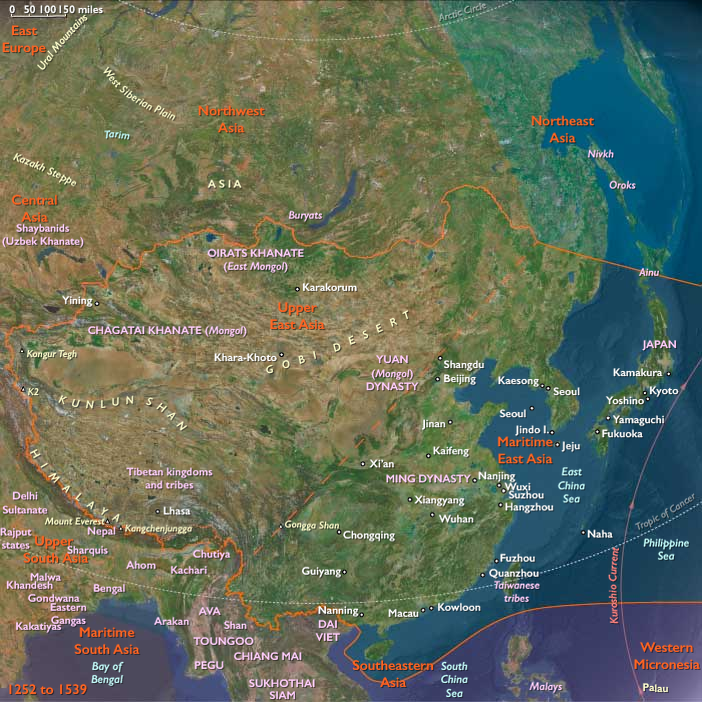
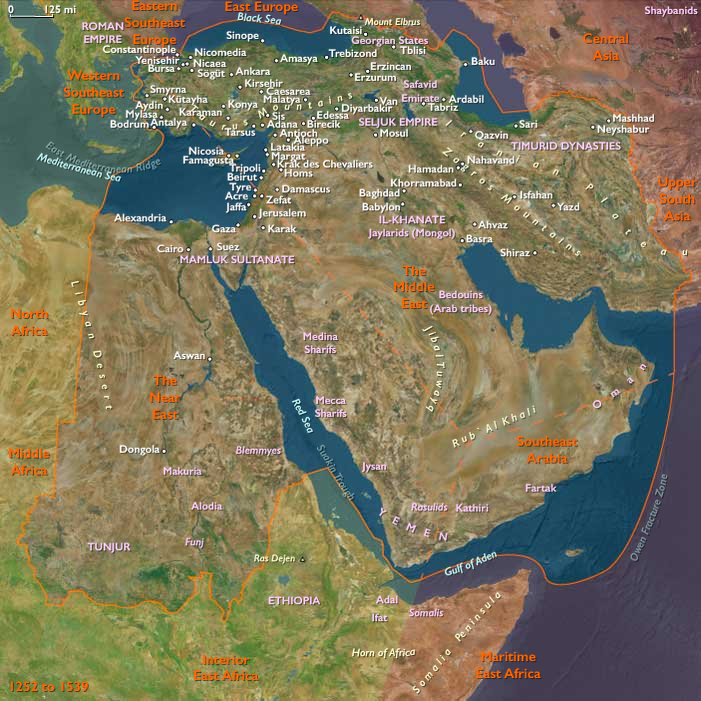
Ahmet is the governor of Amasya, an important Anatolian city.
Although the status is not official, he is usually considered as the crown prince during these last years of his father's reign, in part because of the support of the grand vizier, Hadim Ali Pasha.
Ahmet has two living brothers.
Of the two, Korkut is governing in Antalya and Selim (future sultan Selim I) in Trabzon.
Custom dictates that whoever first reaches Constantinople after the death of the previous sultan has the right to ascend to throne (although disagreements over who had arrived first have very often led to civil wars between the brothers, most prominently displayed in the Ottoman Interregnum), so the distances from the sanjaks to Istanbul more or less determine the succession and usually whoever the previous sultan favors the most as his successor.
In this respect, Ahmet is the most fortunate because his sanjak is the closest to Constantinople.
Ahmet unexpectedly captures Karaman, an Ottoman city, and begins marching to Constantinople to exploit his triumph.
The ambitious Selim, fearing for his safety in Trabzon, marches with his men to Edirne to demand that he (Selim) be given a European province to rule.
Şahkulu is thought by his partisans to be invincible after he raids a royal caravan and kills a high-ranking Ottoman statesman.
A second army is sent after him, commanded by Şehzade Ahmet, one of the claimants to throne, and the grand vizier Hadım Ali Pasha.
They are able to corner Şahkulu near Altıntaş (in modern Kütahya Province), but instead of fighting, Ahmet tried to win over the Janissaries to his cause.
Failing to achieve this, he leaves the battlefield.
Şahkulu sees his chance and escapes.
Ali Pasha, with a smaller force, chases him and clashes with him at Çubukova between Kayseri and Sivas.
The battle, which takes place in July 1511, is a draw, but both Ali Pasha and Şahkulu are killed (July 1511).
However, the conditions that have caused the uprising will remain a major problem for Bayezid's successor.
Şahkulu's partisans are not defeated, but they have lost their leader.
Many scatter, but after a third army is sent by the Ottoman Porte, the most devoted escape to Persia.
During their escape they raid a caravan, and accidentally kill a well-known Persian scholar.
Consequently, instead of showing them hospitality, Ismail executes them.
Meanwhile, in Ottoman lands, Prince Ahmet's behavior in the battle caused reaction among the soldiers.
Moreover the death of Hadım Ali, the chief partisan of Ahmet, provides an advantage to the youngest claimants to throne: the succession will ultimately fall to Selim I, under whose reign the Ottoman state will see spectacular victories and double in area.
Ismail, Shah of Iran, has consolidated Azerbaijan.
He is also sympathetic to the Turkmens of Ottoman Empire, being a champion of the Shiite faith and partially a Turkmen.
To attract supporters, he has sent agents (who usually use the unofficial title of khalif) to Ottoman lands.
His activities had not escaped the attention of the Ottomans, but the Ottoman Empire is too preoccupied with the oncoming period of interregnum during the last years of the crippled sultan Bayezid II.
Thus Ismail has been able to gain many supporters among Ottoman subjects.
One such supporter is Karabıyıkoğlu, who adopts the title Şahkulu, meaning "servant of the shah".
Ottoman sources however usually entitle him as Şeytankulu, meaning "servant of the Devil".
He is living in the territory called Tekeli, named after the former beylik of Teke in a village near Antalya, southwestern Turkey.
He is both a Shiite religious leader and a rebel leader.
During the early days of interregnum, Korkut, one of the princes, is traveling from Antalya to Manisa to be closer to capital.
Şahkulu raids his caravan and robs the treasury.
He then begins attacking the towns and killing the government officers in the towns.
He also raids Alaşehir to seize a part of the royal treasure.
Only now is an Ottoman force under Karagöz Ahmet Pasha, the beylerbey of Anadolu, sent to check his activities, but Şahkulu defeats the forces of Ahmet Pasha and executes him.
This increases Şahkulu's fame and the prestige.
Bayezid's increasingly mystic and pacific nature leads the janissaries to dethrone him in favor of his militant and active son, who now returns from the Crimea and, with support from the janissaries, forces his father to abdicate the throne on April 25, 1512.
Beyazid departs for retirement in his native Demotika, but he dies on May 26, 1512 at Büyükçekmece before reaching his destination, and only a month after his abdication.
He is buried next to the Bayezid Mosque in Istanbul.
His son Kortud, too, dies within the month, very possibly poisoned by Selim.
Whereas Bayezid had been put on the throne by the janissaries despite his pacific nature and had carried out military activities with reluctance, Selim shares their desire to return to Mehmed II's aggressive policy of conquest.
However, Selim does not wish to be dependent on or controlled by those who have brought him to power, so he kills not only all his brothers but also all seven of their sons and four of his own five sons, leaving only the ablest, Süleyman, as the sole heir to the throne.
This deprives potential opponents of alternative leaders around whom they can coalesce.
Selim is thus able to leave the devsirme in control of the government, but he dominates.
Selim's ambitions encompass Europe as well as Asia; Bayezid had left the European fronts relatively quiet, however, so the new sultan turns first to the East and chooses the Safavids of Iran as his initial victims.
Ismail, in response to Selim’s letters, replies that he has no wish for war, adding that he thinks the letters had been written under the influence of opium; he also sends Selim's royal secretary a box of the drug.
As Selim is indeed an opium user, the gesture hits home.
Ismail’s daughter Princess Shahnavaz Begum, is wed before May 14, 1513 as the second wife of Prince Murad Effendi, elder son of Şehzade Ahmet, Crown Prince of Ottoman Empire, son of the late Bayezid II.
When Selim starts his march east in summer 1514, the Safavid realms are invaded in the east by the Uzbek state recently brought to prominence by Abu 'I-Fath Muhammad, who had fallen in battle against Ismail only a few years before.
To avoid the prospect of fighting a war on two fronts, Isma'il employs a scorched earth policy against Selim in the west.
The terrain of eastern Anatolia and the Caucuses is extremely rough and combined with the difficulty in supplying the army in light of Isma'il's scorched earth campaign while marching against Muslims, Selim's army is discontent.
The Janissaries even fire their muskets at the Sultan's tent in protest at one point.
When Selim learns of the Safavid army forming at Chaldiran, on the eastern side of the Euphrates River, northeast of Lake Van, hee quickly moves to engage Isma'il in part to stifle the discontent of his army.
While the Safavid forces are at Chaldiran and planning on how to confront the Ottomans, Muhammad Khan Ustajlu, who serves as the governor of Diyabakir, and Nur-Ali Khalifa, a commander who knows how the Ottomans fight, proposes that they should attack as quickly as possible.
However, this proposal is rejected by the powerful Qizilbash officer Durmish Khan Shamlu, who rudely says that Muhammad Khan Ustajlu is only interested in the province that he governs.
The proposal is also rejected by Ismail himself, who says, "I am not a caravan-thief, whatever is decreed by God, will occur."
Selim, taking precautions against followers of the Shah among his own troops, orders an immediate attack on August 23 and with superior weapons and tactics, wins an overwhelming Ottoman victory.
Ismail's army is more mobile and their soldier are better prepared, but the Ottomans prevail, due in large part to their efficient modern army, and possession of artillery, black powder and muskets.
Ismail is wounded and almost captured in battle.
On first reaching Tabriz with his army in July, Selim had left the Azerbaijani capital unharmed, moving on to defeat the Persians at Chaldiran.
He now returns to Tabriz and reduces the partially populated city within two weeks, sacking it and massacring all its inhabitants save one thousand artisans, who he sends to Istanbul.
The Ottoman victory at Chaldiran and the occupation of Tabriz on September 7 does not lead to the conquest of Iran or the collapse of Isma'il's Safavid empire.
The Ottoman army becomes increasingly discontented under the impact of Safavid propaganda among the already heterodox Janissaries.
A relative lack of booty and supplies compared with campaigns in Europe also weakens morale.
A mutiny among his troops fearing a counterattack and entrapment by the fresh Safavid forces called in from the interior forces the triumphant Ottomans to withdraw prematurely.
Among the booty from Tabriz is Ismail's favorite wife, for whose release the Sultan demands huge concessions, which are refused.
Despite his defeat at the Battle of Chaldiran, Ismail quickly recovers most of his kingdom, from east of Lake Van to the Persian Gulf.
The Ottomans, however, manage to annex for the first time Eastern Anatolia and parts of Mesopotamia, as well as, briefly, northwestern Iran.
The Turkish army withdraws to Amasya and Ankara to disperse.
The major result of the Chaldiran battle is to persuade Ismail and his successors to avoid open conflict with the Ottomans at all costs, a policy that will continue for a century.
This preserves the Safavid army, but it enables Selim to turn toward the last independent Anatolian Kurdish and Turkmen principalities.