Selim I
Sultan of the Ottoman Empire
Years: 1465 - 1520
Selim I, nicknamed Yavuz (traditionally translated as "grim," but closer to "stern" or "implacable" in meaning) (October 10, 1465/1466/1470 – September 22, 1520), is the Sultan of the Ottoman Empire from 1512 to 1520.
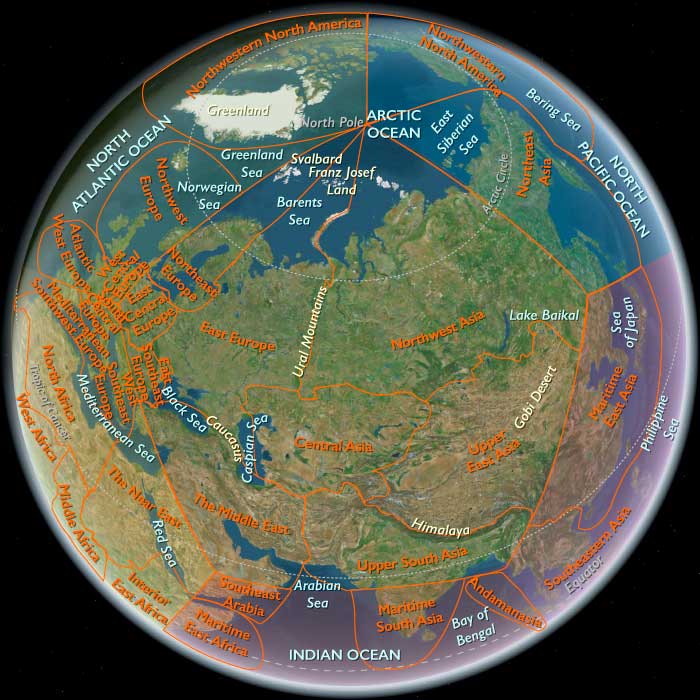
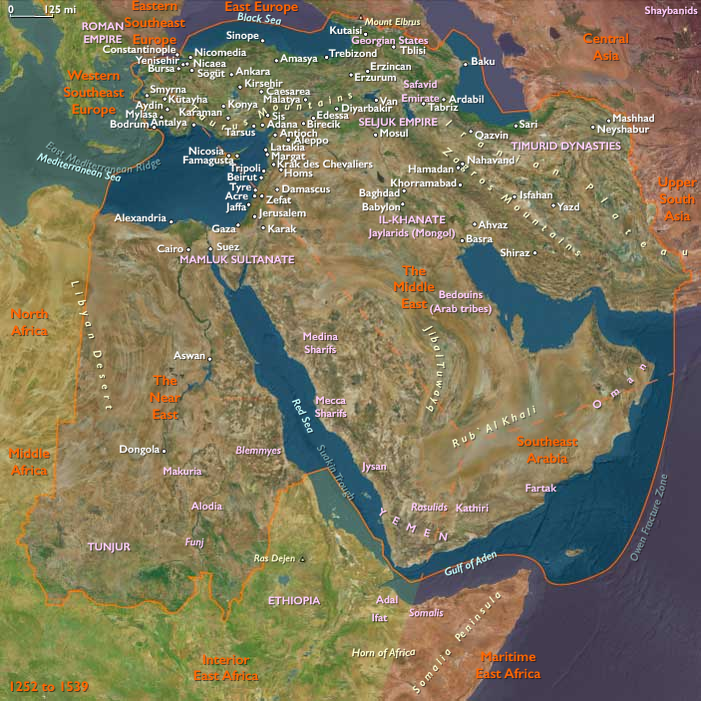
His reign is notable for the enormous expansion of the Empire, particularly his conquest between 1516 and 1517 of the entire Mamluk Sultanate of Egypt, which includes all of Sham, Hejaz, Tihamah, and Egypt itself.
He is also granted the title of "Khâdim ül Haramain ish Sharifain" (Servant of the Holy Cities of Mecca and Medina) by the Sharif of Mecca in 1517.
Through conquering and unification of Muslim lands, Selim becomes the defender of the Holy Cities of Mecca and Medina, which strengthensthe Ottoman claim to caliphate in the Muslim world.
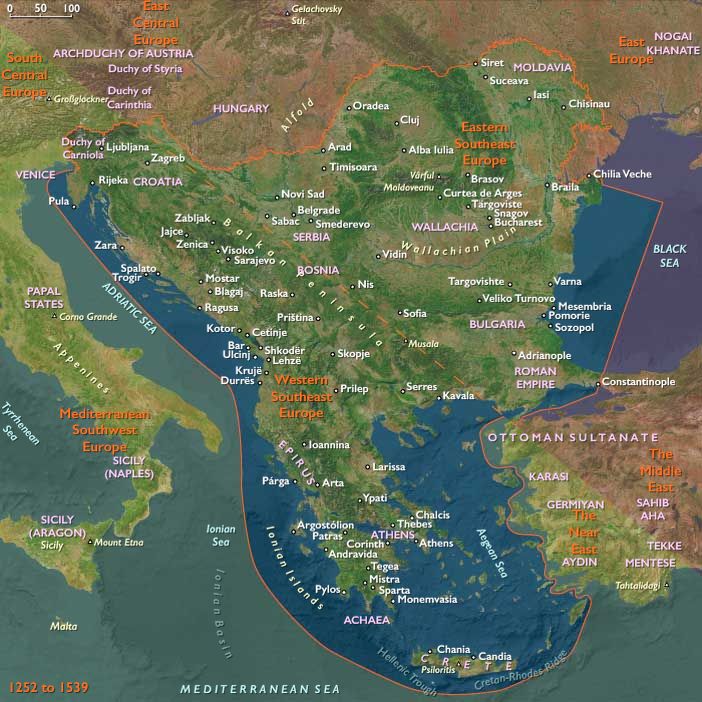
Selim's expansion into the Middle East representsa sudden change in the expansion policy of the empire, which, before his reign, had mostly been within the Balkans (Southeast Europe) and Anatolia (Asia Minor).
On the eve of his death in 1520, the Ottoman Empire spans almost one billion acres (about four million square kilometers), having tripled in size during Selim's reign.
Related Events
Filter results
Showing 10 events out of 69 total
The Near and Middle East (1396–1539 CE)
Timur’s Shadow, Ottoman Rise, and the Safavid–Mamluk Eclipse
Geography & Environmental Context
The Near and Middle East stretched from the Nile and Red Sea to the Tigris–Euphrates, the Iranian Plateau, and the Persian Gulf, spanning the holy cities of Mecca and Jerusalem, the imperial capitals of Cairo, Baghdad, and Isfahan, and the trading ports of Aden, Hormuz, and Muscat.
Highland belts—the Zagros, Caucasus, and Yemeni terraces—bordered steppe, desert, and floodplain worlds. This vast region, joining the Mediterranean, Indian Ocean, and Central Asian corridors, formed the hinge between Europe, Africa, and Asia.
Climate & Environmental Shifts
The Little Ice Age introduced harsher winters and irregular rainfall:
-
In Mesopotamia, fluctuating river courses alternated between prosperity and famine.
-
On the Iranian Plateau, drought decades strained qanat irrigation and transhumant flocks.
-
Across the Caucasus, heavy snows caused floods that replenished vineyards and orchards.
-
The Nile Valley and Yemeni terraces maintained productivity through hydraulic control.
-
The Persian Gulf and Red Sea saw storms and shifting monsoons that tested coastal settlements.
Subsistence & Settlement
Agriculture, trade, and pastoralism overlapped:
-
Nile Valley & Delta: Wheat, barley, sugarcane, flax, and dates fed the Mamluk metropolises.
-
Mesopotamia & Iran: Wheat, barley, cotton, and rice (in Khuzestan, Gilan); orchards in the uplands.
-
Yemen & Hejaz: Sorghum, wheat, fruit, and qat; date groves and oasis farming along pilgrimage routes.
-
Caucasus & Anatolia: Vines, olives, and cereals thrived beside pastoral uplands.
-
Nomadic worlds: Turkoman, Kurdish, Arab, and Lur herders grazed mixed flocks across seasonal pastures.
-
Urban centers: Cairo, Damascus, Baghdad, Tabriz, Isfahan, Aleppo, and Hormuz served as nodes of scholarship, trade, and craft.
Technology & Material Culture
-
Hydraulic systems: Qanats, canals, and terrace walls sustained agriculture; norias turned on the Euphrates.
-
Crafts: Persian carpets (Tabriz, Kashan), glasswork, textiles, and metalware.
-
Architecture: Timurid domes, tile mosaics, and madrasas in Herat and Samarkand; Ottoman mosque architecture in Aleppo and Damascus; coral-stone mosques in Yemen.
-
Military: Composite bows and cavalry remained dominant; firearms and cannon spread after Ottoman adoption.
-
Navigation: Dhows and lateen-sailed ships from Hormuz to Aden connected with Indian Ocean monsoon circuits.
Movement & Interaction Corridors
-
Caravan routes: Linked Tabriz to Anatolia, Baghdad, and the Caucasus; Isfahan and Shiraz to Hormuz.
-
Persian Gulf trade: Hormuz, Muscat, and Basra handled Indian Ocean commerce in textiles, spices, and horses.
-
Silk routes: Crossed Gilan, Shirvan, and the Caucasus, reaching Black Sea markets.
-
Pilgrimage: Caravans to Najaf, Karbala, Mashhad, Mecca, and Medina reinforced religious networks.
-
Ottoman conquests: Redirected Syria and Iraq’s caravan trade to Istanbul after 1517.
-
Portuguese intrusion: Raids on Hormuz (1507) and the Red Sea disrupted long-standing routes.
Cultural & Symbolic Expressions
-
Timurid legacy: Centered in Herat and Samarkand, radiating Persianate art, literature, and architecture.
-
Safavid transformation: Shah Ismail I (r. 1501–1524) unified Iran under Shiʿism, reshaping identity through shrines, mosques, and processions.
-
Ottoman Islam: Extended Sunni orthodoxy across Syria, Egypt, and Iraq, building mosques and tekke (Sufi lodges).
-
Caucasian Christianity: Armenian and Georgian monasteries survived amid imperial flux.
-
Sufism: Orders like the Naqshbandiyya and Qadiriyya linked countryside to city, crossing sectarian lines.
-
Yemen & Oman: Scholars and merchants blended trade, piety, and maritime expansion; Socotra’s hybrid traditions bridged worlds.
Environmental Adaptation & Resilience
-
Irrigation management: Collective upkeep of qanats, terrace walls, and flood canals sustained agriculture.
-
Nomadic mobility: Seasonal herding buffered climatic extremes; shifting routes mitigated drought loss.
-
Urban import systems: Grain shipments from fertile belts fed capitals through caravan and river transport.
-
Long-lived crops: Date palms, vineyards, and olive groves stabilized regional economies across drought cycles.
Technology & Power Shifts (Conflict Dynamics)
-
Timur’s conquests (late 1300s–early 1400s): Ravaged Syria, Iraq, and Iran, yet catalyzed a Persianate artistic renaissance.
-
Turkoman confederations: The Qara Qoyunlu and Aq Qoyunlu dominated Iran and Iraq before the Safavids.
-
Safavid ascendance: Shah Ismail I established a Shiʿi state; defeat at Chaldiran (1514) by Ottoman firearms defined imperial frontiers.
-
Ottoman triumphs: Selim I conquered Syria and Egypt (1516–1517); Süleyman the Magnificent annexed Iraq (1534).
-
Mamluk collapse: Ended centuries of rule; Cairo became an Ottoman provincial capital.
-
Caucasian buffer wars: Armenia and Georgia alternated between Ottoman and Safavid control.
-
Portuguese footholds: Hormuz, Socotra, and Red Sea raids marked Europe’s first sustained intrusion into the region’s trade.
Transition (to 1539 CE)
By 1539, the Near and Middle East had entered an age of imperial duality:
The Ottoman Empire held Syria, Iraq, and Egypt, commanding the holy cities and Mediterranean gateways; the Safavid Empire ruled Iran and the Caucasus, anchoring Shiʿi identity; and the Portuguese dominated Hormuz, diverting Indian Ocean trade.
Across deserts, deltas, and highlands, caravan roads and monsoon ports endured, sustaining a cosmopolitan world born from Timur’s devastation, renewed by Safavid charisma, and unified—if uneasily—under the expanding Ottoman crescent.
The Mamluks indirectly foster relations between Europe and the Middle East even after the fall of the Byzantine Empire.
The Europeans, accustomed to luxury items from the Middle East, strongly desire both its raw materials and its manufactured products, and the people of the Middle East wish to exploit the lucrative European market.
Beirut, favored by its geographical location, becomes the center of intense trading activity.
The Safavi Empire receives a blow that is to prove fatal in 1524, when the Ottoman sultan Selim I defeats Safavi forces at Chaldiran and occupies the Safavi capital, Tabriz.
He is forced to withdraw because of the harsh winter and the Safavis' scorched-earth policy.
Safavi rulers continue to assert claims to spiritual leadership, but the defeat shatters belief in the shah as a semi-divine figure and weakens his hold on the Qizilbash chiefs.
The course of Iraqi history from the sixteenth to the twentieth century will be affected by the continuing conflicts between the Safavid Empire in Iran and the Ottoman Turks.
The Safavids, who are the first to declare Shia Islam the official religion of Iran, seek to control Iraq both because of the Shia holy places at An Najaf and Karbala and because Baghdad, the seat of the old Abbasid Empire, has great symbolic value.
The Ottomans, fearing that Shia Islam will spread to Anatolia (Asia Minor), seek to maintain Iraq as a Sunni-controlled buffer state.
The Safavids, led by Ismail Shah (1502-24), conquer Iraq in 1509, thereby initiating a series of protracted battles with the Ottomans.
Ottoman Sultan Selim the Grim attacks Ismail's forces in 1514 and in 1535 the Ottomans, led by Sultan Suleyman the Magnificent (1520-66), conquer Baghdad from the Safavids.
The Near East (1396–1539 CE): From Mamluk Power to Ottoman Dominion
Geographic & Environmental Context
The subregion of The Near East includes modern Israel, Egypt, Sudan, most of Jordan, extreme southern Lebanon, western Saudi Arabia, western Yemen, southwestern Cyprus, and southwestern Turkey. Anchors comprised the Nile Valley and Delta, the Red Sea corridor with the Hejaz, the Yemeni highlands and Tihama coast, the Levantine uplands and coastal strip, and the southwest Anatolian and Cypriot Mediterranean littorals. These were zones of intensive agriculture, caravan and pilgrimage routes, and seaports connecting the Mediterranean to the Indian Ocean world.
Climate & Environmental Shifts
During the Little Ice Age, cooler winters and erratic rainfall shaped farming and settlement:
-
Nile Valley: Annual floods varied in intensity, producing alternating grain surpluses and shortfalls.
-
Western Yemen: Highland terraces maintained productivity despite irregular rainfall; drought struck the Tihama coast more severely.
-
Hejaz: Extremely arid, reliant on caravan supply and imported grain.
-
Levant & Cyprus: Wet–dry cycles influenced cereal, olive, and vine yields.
-
Sudan (Nubia): Nile-dependent sorghum fields thrived when floods were reliable, but low waters triggered famine and migration.
Subsistence & Settlement
-
Egypt: Irrigated wheat, barley, sugarcane, and fava beans in the Nile Valley and Delta; date palms, vegetables, and flax supplemented. Cairo was the metropolis and breadbasket.
-
Western Arabia: Dates, barley, and small gardens in oases; Mecca and Medina subsisted on caravans bringing Syrian and Egyptian grain.
-
Yemen: Terraced sorghum, wheat, fruits, and qat; goats and cattle in highlands; Red Sea ports like Aden imported rice and cloth.
-
Israel, Jordan, southern Lebanon: Wheat, barley, olives, and vines in uplands; pastoralism in steppe and desert margins.
-
Sudan: Sorghum, millet, and herding along the Nile corridor.
-
Cyprus & southwestern Anatolia: Grain, vines, olives, and sugar; coastal fishing supported towns like Antalya and Limassol.
Technology & Material Culture
-
Irrigation: Nile canals in Egypt; Yemeni terrace walls and cisterns; Jordanian and Levantine cistern systems.
-
Military: Mamluk cavalry and fortified cities in Egypt and Syria; Ottomans introduced siege artillery and gunpowder infantry, shifting regional power.
-
Architecture: Cairo’s mosques, madrasas, and caravanserais; Yemeni stone tower houses; Ottoman mosques rising in Anatolia; Orthodox monasteries in Cyprus.
-
Crafts: Egyptian glass, metalwork, and textiles; Yemeni ceramics; Levantine soap and sugar.
Movement & Interaction Corridors
-
Pilgrimage routes: Cairo and Damascus caravans supplied Mecca; Red Sea shipping funneled pilgrims to Jeddah.
-
Red Sea trade: Aden and Jeddah mediated flows of Indian Ocean spices, textiles, and horses.
-
Nile corridor: Moved grain and sugar from Upper Egypt to Alexandria and Cairo, then outward to Mediterranean markets.
-
Mediterranean ports: Alexandria, Limassol, and Antalya tied the Near East to Venice and Genoa.
-
Sudan–Nubia corridor: Linked gold, slaves, and sorghum north to Egypt.
Cultural & Symbolic Expressions
-
Islamic piety: Mamluk Cairo upheld legitimacy as protector of the holy cities; Mecca and Medina remained spiritual poles.
-
Sufism: Flourished through lodges in Cairo, Jerusalem, and Yemen; saints’ shrines anchored local devotion.
-
Christianity: Monasteries of Copts in Egypt, Armenians and Orthodox in Cyprus and Anatolia; Latin enclaves in Cyprus under Venetian rule.
-
Judaism: Thrived in Cairo, Jerusalem, and Safed (which became a center of mystical Kabbalah by the early 16th century).
-
Art & learning: Mamluk manuscripts and architecture in Cairo; Yemeni chronicles; early Ottoman architecture in Anatolia.
Environmental Adaptation & Resilience
-
Egypt: Stored grain in state and private granaries to offset poor Nile years.
-
Yemen: Terracing and cisterns captured rainfall; diversified crops mitigated drought.
-
Hejaz: Imported grain ensured survival; cisterns and wells sustained pilgrims.
-
Levant: Mixed farming of cereals, olives, and vines spread risk; steppe tribes balanced herding and raiding.
-
Sudan: Sorghum and millet cycles staggered planting to hedge against low Nile years.
Technology & Power Shifts (Conflict Dynamics)
-
Mamluk Sultanate (Egypt, Syria, Hejaz): Maintained control until early 16th century; famed for cavalry, but weakened by plague and economic disruption from Portuguese diversion of spice trade.
-
Western Yemen: Rasulid then Tahirid dynasties ruled, but Zaydi imams contested highlands.
-
Ottoman advance: Captured Constantinople (1453), Antalya, and much of Anatolia; Selim I defeated Mamluks (1516–17), annexing Egypt, Syria, Hejaz, and securing Mecca and Medina.
-
Sudan: Christian Nubia declined; Muslim Funj sultanate rose in Sennar (early 16th century).
-
Portuguese intrusion: After Vasco da Gama (1498), Portuguese fleets disrupted Red Sea–Aden spice routes; naval clashes at Diu (1509) and Aden (1513).
-
Cyprus & Anatolia: Cyprus under Venetian rule; southwestern Anatolia absorbed into Ottoman domains.
Transition
By 1539 CE, the Near East had undergone a profound transformation. The Mamluk Sultanate had fallen; the Ottomans ruled Egypt, Hejaz, Levant, and southwestern Anatolia, presenting themselves as protectors of Islam’s holy cities. Western Yemen remained contested between local dynasties and Zaydi imams, while Aden felt the squeeze of Portuguese and Ottoman rivalry. Sudan’s Funj state emerged along the Nile. Cairo retained cultural centrality but was subordinated to Istanbul. Pilgrimage, Nile irrigation, and Indian Ocean trade still sustained livelihoods, but political hegemony had shifted decisively to the Ottoman sultans.
The Ottoman sultan Selim I (1512-20), known as Selim the Grim, conquers Egypt in 1517, defeating the Mamluk forces at Ar Raydaniyah, immediately outside Cairo.
The origins of the Ottoman Empire go back to the Turkish- speaking tribes who had crossed the frontier into Arab lands beginning in the tenth century.
These Turkish tribes had established themselves in Baghdad and Anatolia, but they had been destroyed by the Mongols in the thirteenth century.
Petty Turkish dynasties called emirates were formed in Anatolia in the wake of the Mongol invasion.
The leader of one of those dynasties was Osman (1280-1324), the founder of the Ottoman Empire.
His emirate, one of many in the thirteenth century, had by the sixteenth century become an empire, destined to be one of the largest and longest lived in world history.
The Ottomans already had a substantial empire in Eastern Europe by the fourteenth century.
In 1453 they conquer Constantinople, the imperial capital, which becomes the Ottoman capital and is renamed Istanbul.
The Ottomans add the Arab provinces, including Egypt, to their empire between 1512 and 1520.
The victorious Selim I leaves behind in Egypt one of his most trusted collaborators, Hayır Bey, as the ruler of Egypt.
Hayır Bey rules as the sultan's vassal, not as a provincial governor.
He keeps his court in the citadel, the ancient residence of the rulers of Egypt.
Selim I does away with the Mamluk sultanate, but neither he nor his successors succeed in extinguishing Mamluk power and influence in Egypt.
Palestine experiences a "dark age" during the fourteenth and fifteenth centuries as a result of Mamluk misrule and the spread of several epidemics.
The Mamluks are slave-soldiers who establish a dynasty that rules Egypt and Syria, which includes Palestine, from 1250 to 1516.
The Ottoman Turks, led by Sultan Selim I, rout the Mamluks in 1516, and Palestine begins four centuries under Ottoman domination.
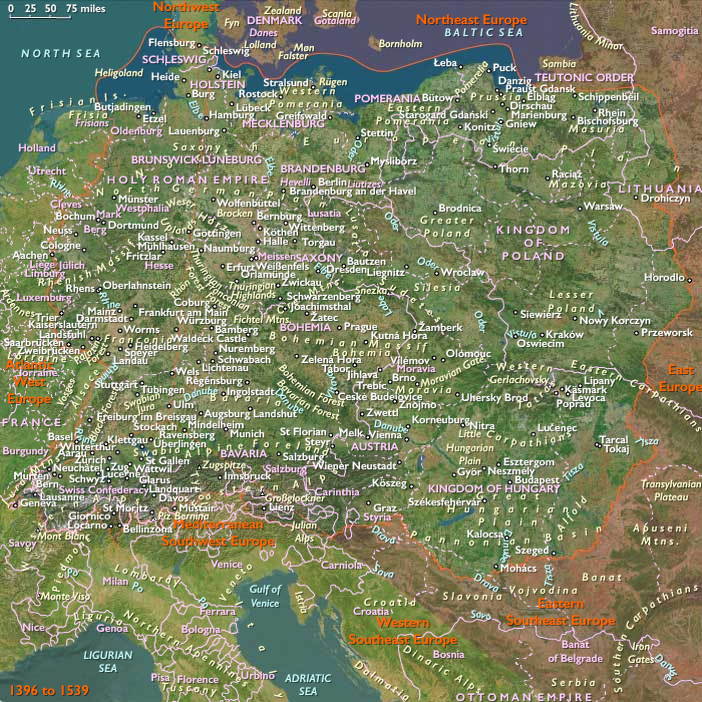
East Central Europe (1504–1515 CE): Jagiellonian-Habsburg Rivalry, Ottoman Encroachment, and Dynastic Alliances
From 1504 to 1515 CE, East Central Europe experienced intense geopolitical shifts driven by escalating rivalry between the Jagiellonian dynasty (in Hungary, Bohemia, and Poland-Lithuania) and the ascendant Habsburg dynasty, as well as growing Ottoman pressures from the south. Diplomatic realignments, including strategic dynastic marriages, reshaped alliances, setting the stage for future Habsburg dominance and enduring regional tensions.
Political and Military Developments
Jagiellonian Rule and Internal Struggles
-
Under Vladislaus II Jagiellon (r. 1490–1516), Hungary and Bohemia increasingly faced internal aristocratic conflicts and weakening royal authority. Vladislaus’s ineffective governance led to greater political fragmentation and noble autonomy.
-
Poland-Lithuania, ruled by Sigismund I the Old (r. 1506–1548), faced continued threats from the Teutonic Order and Moldavia, prompting intensified military and diplomatic efforts to secure eastern and northern frontiers.
Escalation of Jagiellonian-Habsburg Rivalry
-
Habsburg Emperor Maximilian I (r. 1493–1519) pursued an aggressive strategy to assert dominance over Hungarian and Bohemian territories, heightening rivalry with the Jagiellonians.
-
Diplomatic tensions culminated in the First Congress of Vienna (1515), resulting in strategic marriages between the Jagiellonian and Habsburg houses, profoundly influencing future dynastic successions. The treaties at this congress arranged double marriages: Vladislaus’s children, Louis II of Hungary and Bohemia, and Anne Jagiellon, married into the Habsburg dynasty, profoundly reshaping regional alliances.
Increasing Ottoman Threats to Hungary
-
The Ottoman Empire, under Sultan Selim I (r. 1512–1520), intensified its incursions into southern Hungarian territories, significantly straining Hungary’s resources and defenses. Frequent Ottoman raids prompted increased military expenditures and defensive strategies.
Economic and Technological Developments
Continued Urban Prosperity and Trade
-
Economic vitality persisted, particularly within Hanseatic cities (Gdańsk, Toruń, Elbląg, Stettin) and urban centers such as Prague, Kraków, Vienna, and Buda, driven by strong commercial networks trading grain, textiles, metals, and luxury goods.
-
Increased artisanal productivity and expanding mercantile activities significantly enhanced regional economic stability and urban wealth.
Mining and Metallurgical Growth
-
Notably in Hungarian and Slovak mining centers (Banská Štiavnica, Banská Bystrica, Kremnica), robust extraction of precious metals (gold, silver, copper) continued, significantly contributing to regional prosperity and enhancing Hungary’s economic influence.
Cultural and Artistic Developments
Renaissance Flourishing under Jagiellonian and Habsburg Patronage
-
Hungarian Renaissance culture thrived under Vladislaus II, who continued fostering intellectual, artistic, and architectural developments, especially in Buda and Esztergom, further enhancing Hungary’s cultural prestige.
-
Polish cities, notably Kraków under Sigismund I, experienced significant Renaissance cultural patronage, reflected in humanist scholarship, artistic achievements, and architectural innovations.
Bohemian Artistic Continuity
-
Bohemian culture continued blending Gothic and emerging Renaissance influences, particularly in Prague, where royal patronage sustained artistic and architectural projects, despite Vladislaus’s largely absent governance.
Settlement and Urban Development
Defensive Urban Fortification
-
Persistent Ottoman threats and regional conflicts led to enhanced urban fortifications across Hungary, notably Buda, Pest, Székesfehérvár, and along frontier regions, significantly shaping urban development and military infrastructure.
Expansion and Urbanization in Poland and Bohemia
-
Urban centers like Kraków, Lublin, and Prague continued to expand and prosper, driven by robust trade, artisanal activities, and growing populations, reflecting stable urban economies and effective civic governance.
Social and Religious Developments
Nobility’s Growing Power and Influence
-
Aristocratic power significantly expanded, particularly in Hungary, Bohemia, and Poland-Lithuania. Noble diets, notably the Hungarian Diet and Polish Sejm, increasingly dominated royal decision-making, fiscal policy, and regional governance.
-
Nobility’s rising influence contributed to weakened royal authority, internal divisions, and more decentralized governance structures, profoundly shaping regional political dynamics.
Religious Stability and Ecclesiastical Influence
-
The Catholic Church remained influential across East Central Europe, promoting ecclesiastical scholarship, education, and artistic patronage, reinforcing cultural cohesion. Monastic and ecclesiastical institutions notably influenced education, religious practices, and social norms.
Long-Term Consequences and Historical Significance
The era 1504–1515 CE proved pivotal for East Central Europe, significantly reshaped by escalating Jagiellonian-Habsburg rivalry, strategic dynastic marriages from the Congress of Vienna (1515), and intensified Ottoman threats. Diplomatic alliances secured at Vienna laid foundations for eventual Habsburg dominance in Bohemia and Hungary, significantly influencing Central European geopolitics throughout the 16th century. Continued economic vitality and cultural flourishing under Renaissance patronage strengthened regional prosperity, despite rising external threats and internal divisions. These developments profoundly influenced East Central Europe’s trajectory, establishing political and cultural patterns that endured through the early modern period.
Iasi, or Jassy, located on the Bahlui River near its confluence with the Prut, first settled in the seventh century, and a fort and customs station on trade routes during the fourteenth century, suffers attacks from the Tatars in 1513.
Immediately after Bogdan comes to the Moldavian throne, he had expressed his wish to marry Elisabeth, sister of Polish King Alexander Jagiello; after being twice refused despite offering generous gifts (including territorial concessions), he raids southern Poland, and is conceded his demands—based on his promise to be more lenient towards the status of the Roman Catholic Church in Moldavia—in 1506.
Alexander's death and Sigismund's ascendancy lead to a breaking of the previous agreement, provoking further incursions on each side.
In October 1509, Bogdan is severely defeated on the Dniester river; a peace is signed on January 17, 1510, when the ruler finally renounces his pretensions.
In the same year, Moldavia suffers two major Tatar invasions (they are alleged to have carried away seventy-four thousand as slaves).
In 1511, the Tatars even manage to occupy most of the country.
The events force Poland, still recovering from the great invasion of 1506, to send troops as aid, helping Bogdan regain his lands after a victory in May 1512.
In 1514, in order to block the Tatar threat by enlisting the help of a powerful overlord, Bogdan sends chancellor Tăutu to negotiate the terms of Moldavia's submission to the Ottoman Empire, now under the rule of Sultan Selim.
The Porte demands that a certain sum (initially expressed as four thousand gold coins) be paid yearly, together with a ceremonial gift of forty horses and forty falcons, additional expenses (such as for the celebration of Eid ul-Fitr) and assistance in case of war—princes themselves are required to lead a four thousand-strong army that will place itself under the orders of the Sultan.
In exchange for these, Moldavia is allowed a high level of autonomy.