Servius Tullius
6th king of Rome
600 BCE to 535 BCE
Servius Tullius is the legendary sixth king of ancient Rome, and the second of its Etruscan dynasty.
He reigns 578-535 BCE.
Roman and Greek sources describe his servile origins and later marriage to a daughter of Lucius Tarquinius Priscus, Rome's first Etruscan king, who was assassinated in 579 BCE.
Servius was said to have been the first Roman king to accede without election by the Senate, having gained the throne by popular support, at the contrivance of his mother-in-law.
Several traditions describe Servius' father as divine.
Livy depicts Servius' mother as a captured Latin princess enslaved by the Romans; her child is chosen as Rome's future king after a ring of fire is seen around his head.
The Emperor Claudius discounted such origins and described him as an originally Etruscan mercenary who fought for Caelius Vibenna.
Servius was a popular king, and one of Rome's most significant benefactors.
He had military successes against Veii and the Etruscans, and expanded the city to include the Quirinal, Viminal and Esquiline hills.
He is credited with the institution of the Compitalia festivals, the building of temples to Fortuna and Diana, and the invention of Rome's first true coinage.
Despite the opposition of Rome's patricians, he expanded the Roman franchise and improved the lot and fortune of Rome's lowest classes of citizens and non-citizens.
According to Livy, he reigned for 44 years, until murdered by his treacherous daughter Tullia and son-in-law Tarquinius Superbus.
In consequence of this "tragic crime" and his hubristic arrogance as king, Tarquinius was eventually removed.
This cleared the way for the abolition of Rome's monarchy and the founding of the Roman Republic, whose groundwork had already been laid by Servius' reforms.
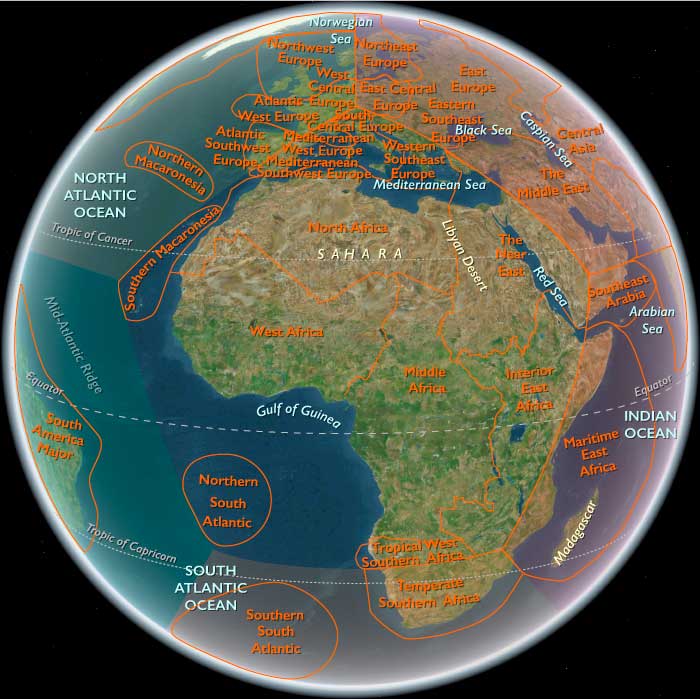
World
The Middle of The Earth
View →Related Events
Showing 7 events out of 7 total
The tradition hands down seven kings: Romulus, Numa Pompilius, Tullus Hostilius, Ancus Marcius, Tarquinius Priscus, Servius Tullius and Tarquinius Superbus.
In 509 BCE, the Romans expel the last king from their city and establish an oligarchic republic.
Mediterranean Southwest Europe (585–574 BCE):
Expansion of Greek Colonies, Rise of Carthaginian Influence, and Infrastructure Developments
Between 585 and 574 BCE, Mediterranean Southwest Europe experiences critical developments marked by Greek colonial expansion, the rising power of Carthage, notable infrastructure projects in Rome, and intensified interactions among diverse cultural groups.
Greek Colonial Expansion: Akragas and Segesta
In 582–581 BCE, Greek colonists from Gela establish the significant colony of Akragas (modern Agrigento) in southwestern Sicily, strengthening Greek influence and extending their control over fertile lands and strategic positions. Concurrently, the culturally Greek yet politically distinct Elymi of Segesta face encroachment by neighboring Selinus, initiating long-term regional tensions.
Tartessos: Wealth and Phoenician Domination
The legendary kingdom of Tartessos, located in the Guadalquivir River valley in southwestern Spain, reaches prominence through rich mineral resources, notably silver bullion. This wealth attracts Greek traders, vividly recounted by Herodotus through the story of King Arganthonios and the Greek captain Kolaios. However, Tartessos increasingly falls under Carthaginian influence due to strategic trade interests and growing military pressure.
Roman Infrastructure under Tarquinius Priscus
In Rome, King Tarquinius Priscus significantly enhances the city's infrastructure and public institutions. He initiates construction of the Circus Maximus, a massive hippodrome situated between the Aventine and Palatine hills, and begins the great drainage project known as the Cloaca Maxima, transforming marshy lands into usable space for the Forum Romanum. Tarquinius also inaugurates the Ludi Romani (Roman Games) around 579 BCE, setting the precedent for future Roman spectacles and public entertainment. His reign ends abruptly in 579 BCE when he is assassinated, but his successor Servius Tullius continues expanding Rome's political and administrative structures.
Carthage: A Hybrid Greek-Phoenician Power
Recent archaeological evidence highlights that Carthage, traditionally viewed as a Phoenician entity, possesses significant Greek cultural elements. By 580 BCE, Carthage emerges as a hybrid Greek-Phoenician power, intricately aligned with Corinth and Syracuse rather than merely opposing Greek expansion. During this period, Carthaginian and allied Phoenician-Greek forces decisively defeat rivals from Selinus and Rhodes near Lilybaeum (modern Marsala), marking a crucial shift in regional power dynamics. Carthage strengthens its strategic positions in Sicily, particularly at Motya, Solus, and Panormus (modern Palermo), reinforcing its defenses and expanding its influence through cultural synthesis and political alliances.
Legacy of the Era
The period from 585 to 574 BCE is transformative for Mediterranean Southwest Europe, characterized by intensified cultural and military interactions among Greeks, Phoenicians, Romans, and indigenous groups. Greek colonization consolidates significant territories in Sicily and southern Italy, Rome's infrastructure and public institutions undergo substantial growth, and Carthage emerges as a dominant hybrid cultural power, significantly reshaping the geopolitical landscape of the western Mediterranean for centuries to come.
The first games of the Ludi Romani are staged at the location of the Circus Maximus (Latin for greatest circus), a hippodrome and mass entertainment venue situated in the valley between the Aventine and Palatine hills, first utilized for public games and entertainment by Lucius Tarquinius Priscus, the legendary fifth king and first Etruscan ruler of Rome.
Following a great flood, the damp lowlands of Rome are drained by the construction of the Cloaca Maxima (great sewers) to create a site for the Forum Romanum.
This public work, ordered by Priscus, is largely achieved through the use of Etruscan engineers and large amounts of semi-forced labor from the poorer classes of Roman citizens.
As his last great act, Priscus begins the construction of a temple in honor of Jupiter Optimus Maximus on the Capitoline Hill, partially funded by plunder seized from the Latins and Sabines.
Many of the Roman symbols both of war and of civil office date from his reign, and he is the first to have celebrated a Roman triumph, after the Etruscan fashion, wearing a robe of purple and gold, and borne on a chariot drawn by four horses.
His thirty-eight-year reign supposedly ends with his assassination in 579 BCE at the behest of the natural sons of his adoptive father, the late King Ancus Marius.
Thanks to the intelligent foresight of the widowed queen Tanaquil however, the assassins are not chosen, but rather Tarquinius' son-in-law Servius Tullius is elected as his successor.
Servius Tullius is the first king to come to power without the consultation of the plebeians.
After military campaigns against Veii and the Etruscans, he improves the administrative and political organization of Rome.
He undertakes building projects and expands the city to include the Quirinal, Viminal and Esquiline hills.
Favoring the goddess, Fortuna, he builds several temples to her as well as to Diana.
He also builds a palace for himself on the Esquiline.
Mediterranean Southwest Europe (573–562 BCE):
Greek Prosperity, Roman Urbanization, and Emerging Regional Dynamics
The period between 573 and 562 BCE in Mediterranean Southwest Europe witnesses continued Greek prosperity in Southern Italy, Roman urban growth, strategic Carthaginian consolidation efforts, and rising tensions among various regional powers.
Sybaris: Pinnacle of Greek Wealth and Influence
By this era, Sybaris, a prominent Greek city in southern Italy, has reached its zenith. Renowned for its immense wealth, Sybaris thrives through inclusive citizenship policies that attract diverse settlers. The city mints its own coinage and innovates significantly, possibly developing the world’s first primitive street-lighting system and introducing early notions of intellectual property—particularly regarding culinary creations. Sybaris exercises considerable regional power, reportedly controlling twenty-five subject cities and establishing colonies across the peninsula, including Poseidonia (Paestum), Laüs (Laus), and Scidrus. At its height, Sybaris displays unmatched luxury and opulence, attracting the admiration and envy of the broader Hellenic world.
Roman Expansion under Servius Tullius
In Rome, King Servius Tullius (578–535 BCE), succeeding Tarquinius Priscus, significantly advances urban and administrative reforms. His initiatives enhance Rome’s political structure, and he expands the city's boundaries to incorporate the Quirinal, Viminal, and Esquiline hills. Under his guidance, several temples dedicated to the goddess Fortuna and to Diana are constructed, signaling Rome’s growing religious and cultural prominence.
Agrigentum under Phalaris
In Sicily, the city of Akragas (Agrigentum) prospers under the leadership of Phalaris, who had seized power around 570 BCE. His reign is marked by infrastructural developments, including improved city walls and enhanced water supplies. The construction of fine buildings under his leadership elevates Akragas’s status as a significant urban and cultural center within Greek Sicily.
Carthage: A Greek-Aligned Power
Recent archaeological findings suggest that Carthage is not merely a Phoenician outpost but rather a culturally Greek-oriented city-state, closely aligned with Corinthian and Syracusan interests. Its interactions with Greek cities, especially Syracuse, appear cooperative and allied rather than consistently adversarial. During this period, Carthage consolidates its strategic positions in Sicily and Sardinia—particularly at Motya and Panormus (Palermo)—reflecting joint Greek and Carthaginian strategic concerns about securing trade and territorial stability. These findings have prompted a reevaluation of Carthaginian identity, recognizing it as primarily Greek-influenced, interwoven with local Levantine aristocratic elements.
Tartessos and Carthaginian Influence
In the southwestern Iberian Peninsula, the kingdom of Tartessos maintains its reputation for immense wealth derived from its silver mines and trade connections. However, its autonomy becomes increasingly compromised as Carthaginian influence, now understood as part of broader Greek regional ambitions, intensifies. Tartessos remains a prosperous trading hub, but its independence diminishes as the culturally Greek-aligned Carthaginian sphere expands.
Legacy of the Era
The era 573–562 BCE solidifies significant developments across Mediterranean Southwest Europe: the economic and cultural flourishing of Greek cities, Rome’s urban transformation, the strategic consolidation of a Greek-oriented Carthage, and the complex interactions among Greek, indigenous, and Roman powers. These intertwined dynamics set the stage for further geopolitical shifts and cultural exchanges, profoundly influencing the region's trajectory.
Mediterranean Southwest Europe (561–550 BCE):
Tyranny, Cultural Flourishing, and Etruscan Artistry
The period 561–550 BCE in Mediterranean Southwest Europe is marked by the height of Akragas under the infamous tyrant Phalaris, significant cultural contributions from Greek poet Stesichorus, and notable advances in Etruscan artistry.
Akragas and the Tyranny of Phalaris
In Sicily, Phalaris, the tyrant of Akragas (Agrigentum), reaches the zenith of his rule, characterized by ambitious urban development and significant infrastructural enhancements, including improved water supplies, fortified city walls, and magnificent civic buildings. Despite these accomplishments, Phalaris becomes notorious for his cruelty, particularly through legends of the brazen bull, an infamous device of torture attributed to him, although historical accounts remain mixed. His reign eventually provokes widespread rebellion, leading to his violent overthrow.
Cultural Impact of Stesichorus
During this era, the celebrated lyric poet Stesichorus resides in Himera, in northern Sicily. Renowned for his innovative contributions to lyric poetry and his epic-inspired narratives, Stesichorus significantly influences the development of Greek literary tradition. Despite his opposition, the citizens of Himera appoint Phalaris as their military general, reflecting complex political dynamics in Greek Sicily. Stesichorus's works, largely lost but influential, remain foundational to the Greek poetic tradition.
Etruscan Artistic Flourishing
In Etruria, potters in cities like Orvieto and Chiusi produce exceptional fine red-figure ware, marking significant advancements in pottery techniques and artistic expression. These exquisite ceramics highlight the high level of craftsmanship and artistic innovation within the Etruscan civilization, reinforcing its cultural and commercial significance in the broader Mediterranean.
Carthaginian Cultural Realignment
Building upon earlier insights, Carthage during this period continues to reflect its Greek-aligned cultural and strategic orientation. Rather than functioning as an isolated Phoenician outpost, Carthage maintains close cooperative relationships with major Greek cities, especially Syracuse and other Corinthian colonies. This cooperation significantly shapes Carthaginian interactions throughout the western Mediterranean, including its political strategies and economic policies.
Legacy of the Era
The era 561–550 BCE solidifies Sicily as a dynamic cultural and political hub, driven by the complex legacy of Phalaris’s tyranny, the literary contributions of Stesichorus, and the artistic sophistication of the Etruscans. Concurrently, the continued evolution of Carthage’s Greek-oriented identity reshapes regional interactions and alliances, influencing future geopolitical and cultural developments across Mediterranean Southwest Europe.
Mediterranean Southwest Europe (537–526 BCE):
Founding of Ports, Population Growth, and Royal Intrigue
The era 537–526 BCE in Mediterranean Southwest Europe is characterized by strategic commercial expansion, significant population shifts, and dramatic political upheavals, particularly in Etruscan, Greek, and Roman territories.
Establishment of Spina and Economic Prosperity
Toward the end of the sixth century BCE, the Etruscans establish Spina, a vital port situated near the mouth of the Po River on the Adriatic coast of Italy (today approximately ten kilometers inland). This port rapidly becomes one of two primary gateways facilitating the rich Greek trade into northern Etruria, bolstering regional economic prosperity and Etruscan influence in the Adriatic.
Expansion and Cultural Resilience of Emporion
The population of the Greek colony of Emporion (modern Empúries) significantly increases due to an influx of refugees following the Persian conquest of Phocaea in 530 BCE. Despite considerable pressure from Carthaginian interests, Emporion successfully maintains its independent Hellenic cultural identity. The city strengthens political and commercial alliances with the nearby indigenous settlement of Indika, further consolidating its status as a crucial economic and commercial hub on the trade route connecting Massalia (modern Marseille) and Tartessos in southern Hispania.
Phocaean Refugees and the Foundation of Elea
Ionian Greeks fleeing the siege of Phocaea around 545 BCE initially find refuge in Rhegium, where they are joined by the philosopher Xenophanes from Messina. After approximately a decade of wandering, this group moves northward along the coast and establishes the colony of Hyele, later known as Elea. The settlement is strategically located at a latitude similar to their original homeland, Phocaea, reinforcing their cultural and commercial heritage in their new home.
Turmoil and the Rise of Tarquinius Superbus in Rome
In Rome, royal intrigues dominate political life. King Servius Tullius had earlier arranged marriages between his daughters and the sons of his predecessor, Lucius Tarquinius Priscus. His daughter, the fiercely ambitious younger Tullia, conspires with Lucius Tarquinius, son of the previous king, to orchestrate the murder of their respective siblings, subsequently marrying each other.
In 534 BCE, with Tullia's urging, Lucius Tarquinius violently seizes power. During a tense confrontation at the Senate, Tarquinius physically attacks Servius Tullius, casting him down the senate-house steps. Servius Tullius is subsequently assassinated in the streets of Rome on Tarquinius's orders, a murder possibly advised by Tullia herself. Demonstrating extreme ruthlessness, Tullia infamously drives her chariot over her father's dead body, earning perpetual notoriety for both herself and the location, thereafter named the "wicked street." Lucius Tarquinius assumes the throne, refuses Servius a proper burial, and earns the epithet "Superbus" (the Proud).
Legacy of the Era
The era 537–526 BCE marks crucial transitions and expansions in Mediterranean Southwest Europe, characterized by economic growth and cultural resilience in Greek colonies, significant infrastructural and commercial developments under the Etruscans, and profound political upheaval within Rome. The dramatic events leading to the rise of Tarquinius Superbus leave a lasting mark on Roman historical tradition, exemplifying the turbulent interplay of ambition, violence, and power.
Servius Tullius had arranged the marriage of his two daughters to the two sons of his predecessor Lucius Tarquinius Priscus.
The sons were named Lucius Tarquinius and Aruns Tarquinius.
According to Livy, the younger of the two daughters had the fiercer disposition, and yet she was married to Aruns, who was the milder of the two sons.
"Tarquin and the younger Tullia, did not, in the first instance, become man and wife; for Rome was there by granted a period of reprieve."
Livy says that the similar temperament of the younger Tullia and Lucius Tarquinius drew them to each other, and she inspired Lucius to greater daring.
The younger Tullia and Lucius Tarquinius next arranged the murder of their respective siblings, the elder Tullia and Aruns, in quick succession, and Lucius and the younger Tullia were afterwards married.
She then encouraged Lucius Tarquinius to seek the throne.
Lucius was convinced, and began to solicit the support of the patrician senators, especially those families who had been given senatorial rank by his father.
He bestowed presents upon them, and to them he criticized the king.
Tarquinius, seizing the throne in 534, goes to the senate-house with a group of armed men, seats himself on the throne, and summons the senators to attend upon King Tarquinius.
Tarquin then speaks to the senators, criticizing Servius: for being a slave born of a slave; for failing to be elected by the Senate and the people during an interregnum, as had been the tradition for the election of kings of Rome; for being gifted the throne by a woman; for favoring the lower classes of Rome over the wealthy and for taking the land of the upper classes for distribution to the poor; and for instituting the census so that the wealth of the upper classes might be exposed in order to excite popular envy.
When Servius Tullius arrives at the senate-house to defend his position, Tarquinius throws him down the steps.
Servius returns home, but is murdered in the streets of Rome by a group of men sent by Tarquin, possibly on the advice of Tullia.
Tullia then drives in her chariot to the senate house, where she hails her husband as king.
He orders her to return home, away from the tumult.
She drives along the Cyprian street, where the king had been murdered, and turns towards the Orbian Hill, in the direction of the Esquiline Hill.
There she encounters her father's body and, on a street later to become known as wicked street because of her actions, drives her chariot over her father's body.
Livy also says that she took a part of her father's body, and his blood, and returned with it to her own and her husband's household gods, and that by the end of her journey she was, herself, covered in the blood.
Tarquinius refuses to permit Servius to be buried, thereby earning for himself the name "Superbus", translated as 'proud.
