Shamash-shum-ukin
king of Babylon
Years: 695BCE - 648BCE
Shamash-shum-ukin, the Assyrian king of Babylon from 668-648 BCE, us the second son of the Assyrian King Esarhaddon.
His elder brother, crown prince Sin-iddina-apla had died in 672, and in his stead the third son Ashurbanipal was invested as crown prince and later king of Assyria, while Shamash-shum-ukin remained crown prince of Babylonia.
Provincial governors and vassals had to take an oath to accept this and to help the brothers gain their respective thrones in the event of Esarhaddon's death.

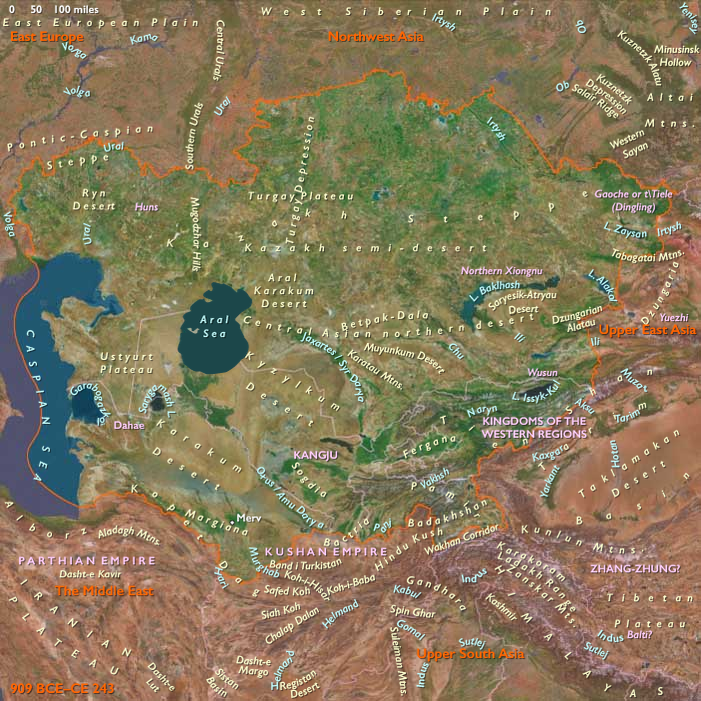
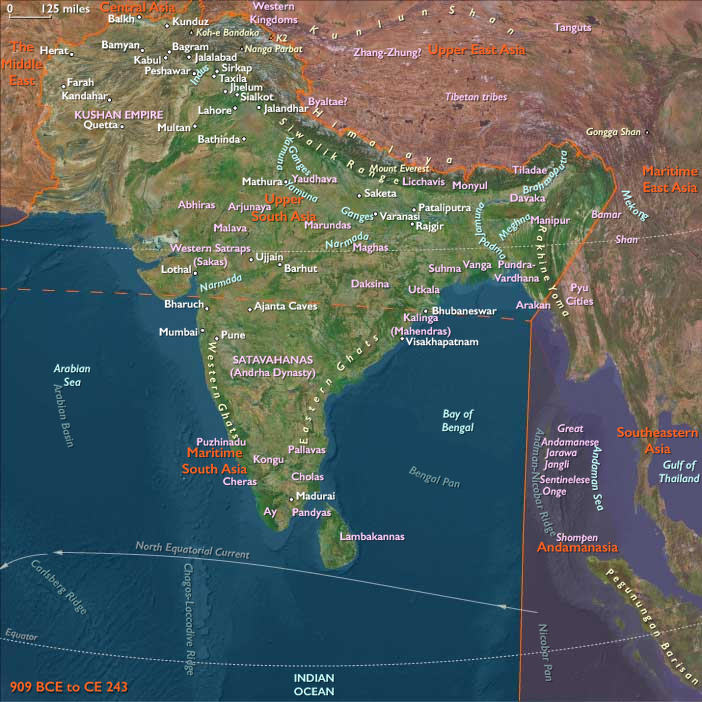
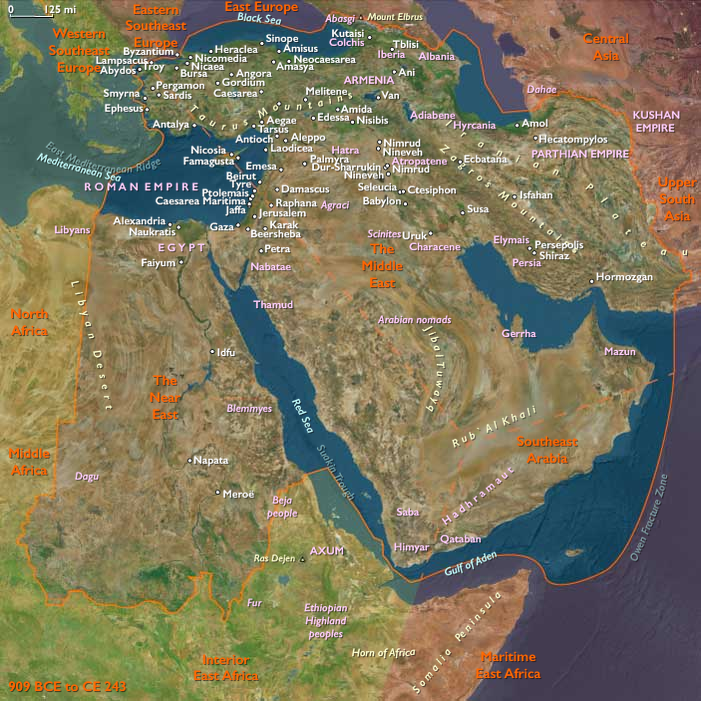
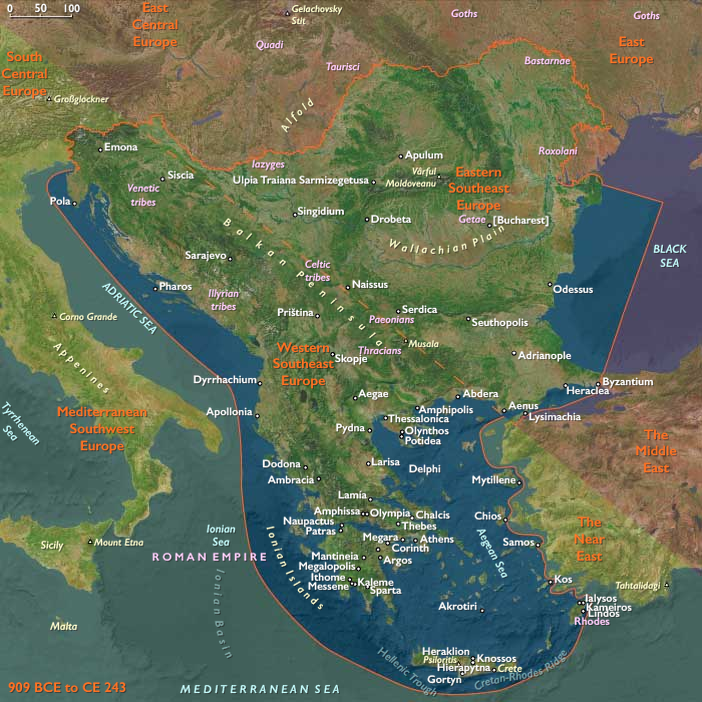



Related Events
Filter results
Showing 5 events out of 5 total
The Middle East: 681–670 BCE
Esarhaddon's Ascension and Consolidation
In 681 BCE, Assyrian king Sennacherib is assassinated by two of his sons following his conquest of Babylon. Esarhaddon, his loyal son, rapidly marches to Nineveh, defeating his rival brothers in a brief civil war. Formally declared king, Esarhaddon immediately takes measures to stabilize and expand his recently enlarged empire, especially guarding against invasions by the Cimmerians and Scythians, who threaten Assyrian possessions in Anatolia and Media.
Esarhaddon actively pursues religious and political policies designed to consolidate his rule. He initiates major construction projects in both Assyria and Babylonia, notably rebuilding the famed Esagila temple in Babylon and the Ekur temple at Nippur, sites traditionally identified with the Tower of Babel. Simultaneously, he reconstructs the sanctuary of Esharra in Ashur, underscoring his impartial stance toward both major Assyrian and Babylonian religious centers.
Sidonian Revolt and Its Suppression
In 680 BCE, Abdi-Milkutti, king of Sidon, leads a rebellion against Assyrian dominance, forming an alliance with Sanduarri of Kundu (western Cilicia) and Sizzu, a Lebanese prince. After a prolonged three-year siege, Esarhaddon defeats and executes Abdi-Milkutti in 677 BCE, utterly destroying Sidon and deporting its inhabitants. He rebuilds Sidon as Kar-Ashur-aha-iddina ("Harbor of Esarhaddon"). Sanduarri is also executed, with the severed heads of both kings publicly displayed in Nineveh. Loyal Assyrian vassals, including Baal I of Tyre, receive shares of the extensive plunder taken from Sidon.
Regional Diplomacy and Military Engagements
Esarhaddon undertakes extensive military campaigns to strengthen Assyrian influence. In 674 BCE, he campaigns in Bazu, identified with present-day Qatar near Dilmun (Bahrain), facing harsh desert conditions. Around 678 BCE, Esarhaddon campaigns against the rising power of the Medes, fortifying Assyrian control of critical trade routes and strategic regions along the Zagros Mountains.
In Anatolia, the Assyrians contend with significant challenges. In 679 BCE, the Cimmerians, led by Teushpa, invade Cilicia and the Neo-Hittite kingdom of Tabal. Esarhaddon confronts these threats and also besieges Melid in 675 BCE, though without immediate success. Diplomatic marriages, such as the union of Esarhaddon's daughter with the Scythian prince Bartatua, aim to stabilize relations with nomadic groups that posed recurring threats to Assyrian dominance.
Conflict with Elam and Urartu
Esarhaddon faces intermittent hostilities with Elam and Urartu. In 675 BCE, Humban-Haltash II of Elam launches an unsuccessful attack against Sippar but dies shortly thereafter. His successor, Urtaki, restores peaceful relations with Assyria. In 673 BCE, Esarhaddon wages war against Rusas II of Urartu, responding to Urartu's resurgence after earlier devastations by Sargon II and the Cimmerians.
Succession and Internal Politics
Internally, Esarhaddon carefully prepares the succession for his sons. Initially designating his eldest son, Sin-iddina-apla, as crown prince of Assyria and his second son, Shamash-shum-ukin, as ruler of Babylon, he is forced to adjust his plans after the death of the eldest son in 672 BCE. The younger Ashurbanipal, though initially unpopular with court elites, is elevated as crown prince. To secure his position, Esarhaddon negotiates loyalty agreements with Assyrian nobles, foreign rulers, and influential court members, setting the stage for Ashurbanipal's future reign.
Thus, from 681 to 670 BCE, Esarhaddon's dynamic leadership significantly reshapes the geopolitical landscape, reinforcing Assyria’s dominance, managing rebellions and invasions, and securing internal stability through strategic diplomacy and meticulous planning for succession.
The Middle East: 669–658 BCE
Ashurbanipal's Reign and the Dual Monarchy
In 669 BCE, following the sudden death of Esarhaddon during his Egyptian campaign, his son Ashurbanipal ascends to the Assyrian throne. Despite initial court resistance, Ashurbanipal swiftly consolidates power, aided notably by his influential grandmother, Zakutu (Naqi'a). The transition proceeds smoothly, with Ashurbanipal installing his brother, Shamash-shum-ukin, as king of Babylon, establishing a carefully planned dual monarchy. Ashurbanipal, though initially not expected to rule, is uniquely prepared—his education including literacy, mathematics, divination, and military training—making him perhaps the most scholarly of Assyrian kings.
Babylon under Shamash-shum-ukin
Shamash-shum-ukin's rule in Babylon initially demonstrates Assyrian goodwill. Ashurbanipal even sends a statue of the Babylonian deity Marduk with his brother to symbolize respect. Yet, tensions simmer beneath the surface as Shamash-shum-ukin harbors ambitions of becoming the preeminent Mesopotamian ruler, seeing himself as heir to the region's ancient imperial legacy. Although he oversees Babylonian rituals, his practical authority remains limited, with Assyrian garrisons in strategic cities and provincial governors seeking favor directly from Ashurbanipal.
Diplomatic and Military Affairs
Ashurbanipal initially maintains stable relations with neighboring Elam, even providing famine relief. However, in 664 BCE, Elamite king Urtaku abruptly attacks Babylonia. Ashurbanipal's delayed response briefly endangers Babylon, though the Elamites ultimately withdraw. Urtaku's death shortly thereafter sparks internal Elamite strife, driving princes such as Humban-nikash to seek refuge in Assyria.
In Anatolia, Assyrian diplomacy successfully aligns with Lydia under king Gyges, who, following prophetic dreams of the god Ashur, pledges allegiance to Ashurbanipal. This alliance helps Gyges defeat the Cimmerians around 660 BCE, extending Assyrian influence westward to the Aegean.
Assyrian Military Innovations
The Assyrian army evolves significantly during this era, particularly in cavalry tactics. Depictions from Ashurbanipal's reign show advanced heavy horse archery units, marking a tactical shift from earlier reliance on chariots. These armored cavalrymen, forming disciplined ranks, combine rapid archery volleys with decisive spear charges, greatly enhancing Assyrian military effectiveness.
Cultural Flourishing in Cyprus
Cyprus, now fully independent from Assyrian oversight since about 663 BCE, experiences notable cultural and artistic growth. Epic poetry flourishes, exemplified by Stasinus of Cyprus, attributed author of the lost epic Cypria, detailing events preceding Homer's Iliad. Bronze craftsmanship, intricate ironwork, ivory carvings, and delicate jewelry reflect the island's vibrant artistic scene.
Esarhaddon's Legacy and Succession
Esarhaddon had carefully prepared his succession plan, securing allegiance from Median and Assyrian nobility to support his sons. Ashurbanipal's coronation and Shamash-shum-ukin's simultaneous enthronement in Babylon realize Esarhaddon's vision of a harmonious dual monarchy. Nevertheless, underlying tensions hint at future strife, as Babylonian nationalism grows under Shamash-shum-ukin’s nominal rule.
Thus, from 669 to 658 BCE, Ashurbanipal's reign marks a period of continued Assyrian dominance characterized by strategic diplomacy, military innovation, and notable cultural and literary advancements, even as tensions simmer beneath the veneer of stability.
Ashurbanipal, in assigning his brother to Babylon, had sent a statue of the divinity Marduk with him as sign of good will.
The arrangement is evidently intended to flatter the Babylonians by giving them once more the semblance of independence.
For some time this works well; however, Shamash-shum-ukin becomes infused with Babylonian nationalism, and claims that it is he rather than his younger brother who is the successor of the Mesopotamian monarchs whose empire stretched from Iran to the Mediterranean and from the Caucasus to Arabia and north Africa.
The Babylonian territory consists of Babylon, Borsippa, Kutha and Sippar.
While Shamash-shum-ukin is the sovereign ruler of the south in theory, Assyria maintains a garrison in Nippur, and some of the provincial governors try to get into Assyrian favor.
Letters by Sin-balassu-iqbi, governor of Ur, show how he tried to ingratiate himself with Ashurbanipal.
Shamash-shum-ukin's powers are limited.
He performs Babylonian rituals but the official building projects are still executed by his younger brother, who takes an active part in the restoration of sanctuaries in the south.
A stela now in London commemorates his help in restoring the temple Esagila; another tells of how he restored the Nabu-temple in Borsippa.
Even the Sumerian language is revived as the official tongue.
During Shamash-shum-ukin’s first years, Elam is still in peace as it was under his father.
Ashurbanipal even claimed that he sent food supplies during a famine.
Around 664 BCE, the situation changes and Urtaku, the Elamite king, attacks Babylonia by surprise.
Assyria’s delays in sending aid to Babylon could have been caused either by the soothing messages of Elamite ambassadors or the possibility that Ashurbanipal might simply not have been present at that time.
Elamites retreat before the Assyrian troops, and in the same year Urtaku dies.
He is succeeded by Teumman (Tempti-Khumma-In-Shushinak) who is not his legitimate heir.
Thus, many Elamite princes have to flee from him to Ashurbanipal's court, including Urtaku's oldest son Humban-nikash.
The Middle East: 657–646 BCE
Ashurbanipal's Dominance and Babylonian Revolt
During this period, Ashurbanipal firmly consolidates Assyrian dominance, securing his empire through forceful diplomacy and relentless military campaigns. His reign sees the Assyrian Empire at its greatest territorial extent, stretching from Persia to Egypt and encompassing key regions of Anatolia and the Levant. However, underlying tensions within the empire, particularly in Babylonia, threaten stability.
The Revolt of Shamash-shum-ukin
In 652 BCE, Ashurbanipal’s brother Shamash-shum-ukin, king of Babylon, openly revolts, seeking autonomy and rallying a coalition of Elamites, Arameans, Arabs, and several Babylonian cities against Assyrian rule. Ashurbanipal responds decisively, launching a prolonged siege of Babylon that lasts until 648 BCE. The siege devastates the city, leading to severe famine and suffering. In desperation, Shamash-shum-ukin reportedly perishes in a fire as Babylon falls back under direct Assyrian control. Ashurbanipal then installs a puppet ruler, Kandalanu, to govern Babylon, ensuring its compliance with Assyrian dominance.
Assyrian Campaigns against Elam
Ashurbanipal next turns his attention to Elam, which had supported the Babylonian revolt. In a series of brutal campaigns between 647 and 646 BCE, Ashurbanipal devastates Elam, capturing its cities and razing its capital, Susa, in 646 BCE. Elamite temples and royal tombs are looted, and the statues of Elamite deities are taken to Nineveh. These acts decisively weaken Elam, effectively ending its status as a significant power.
Cultural and Artistic Achievements
Despite the ongoing military conflicts, Ashurbanipal fosters considerable cultural and intellectual achievements in Assyria. He expands the renowned Library of Ashurbanipal in Nineveh, meticulously collecting thousands of clay tablets covering literature, history, science, medicine, and divination. This vast library becomes an invaluable cultural repository, preserving significant Mesopotamian literature, including the Epic of Gilgamesh.
Internal Stability and External Influence
Ashurbanipal’s decisive actions against Babylon and Elam restore internal stability and reinforce Assyrian supremacy. Meanwhile, his continued diplomatic and military successes ensure external dominance, with kingdoms across Anatolia, the Levant, and even as far west as Lydia recognizing Assyrian influence. The empire's advanced military techniques—particularly its cavalry—continue to evolve, solidifying Assyria’s reputation as the region’s paramount military power.
Thus, between 657 and 646 BCE, Ashurbanipal’s reign is characterized by the aggressive suppression of rebellion, significant territorial consolidation, cultural flourishing, and relentless expansion of Assyrian influence, reaffirming the empire's place at the apex of ancient Near Eastern power.
Babylonian king Shamash-shum-ukin rises in rebellion against his brother in May 652.
The reasons for this are completely unknown, as no Babylonian sources have been preserved.
He forms a powerful coalition including Nabu-bel-shumate, king of the Mesopotamian Sealands, the Elamites, the Chaldean tribes of the south under Merodach Baladan, the kings of Guti, Amurru and Meluhha and the Arabs from Arabia.
According to a later Aramaic tale on Papyrus 63, Shamash-shum-ukin formally declared war on Ashurbanipal in a letter where he claims that his brother is only the governor of Nineveh and his subject.
Again the Assyrians delayed an answer, this time due to unfavorable omens.
It's not certain how the rebellion affected the Assyrian heartlands but some unrest in the cities indicates that there were problems.
When Babylon finally is attacked, the Assyrians prove to be more powerful.
Civil war prevents further military aid, and in 648 BCE, Borsippa and Babylon are besieged.
Without aid, the situation is hopeless.
The sources describe cases of cannibalism.
After two years Shamash-shum-ukin meets his end in his burning palace just before the city surrenders in June 648, to be remembered by the Greeks in the story of Sardanapal (Ashurbanipal).
This time Babylon is not destroyed, as under Sennacherib, but a terrible massacre of the rebels takes place, according to the king's inscriptions.
Ashurbanipal allows Babylon to keep its semiautonomous position, but it becomes even more formalized than before.
The next king Kandalanu leaves no official inscription, probably as his function is only ritual.
During the four-year civil conflict between Assyria and Babylonia, Egypt has become independent, the alliance with Lydia has ended, and Elam and Media cease to be tributary to Assyria.