
T. E. Lawrence
British archaeologist, army officer, diplomat, and writer
1888 CE to 1935 CE
Colonel Thomas Edward Lawrence, CB, DSO (16 August 1888 – 19 May 1935) is a British archaeologist, army officer, diplomat, and writer.
He is renowned for his role in the Arab Revolt and the Sinai and Palestine Campaign against the Ottoman Empire during the First World War.
The breadth and variety of his activities and associations, and his ability to describe them vividly in writing, earns him international fame as Lawrence of Arabia, a title used for the 1962 film based on his wartime activities.
He was born out of wedlock in August 1888 to Sarah Junner, a governess, and Thomas Chapman, an Anglo-Irish landowner.
Chapman left his wife and family in Ireland to cohabit with Junner.
Chapman and Junner called themselves Mr. and Mrs. Lawrence, the surname of Sarah's likely father; her mother had been employed as a servant for a Lawrence family when she became pregnant with Sarah.
In 1896, the Lawrences move to Oxford, where Thomas attendsthe High School and then studies history at Jesus College from 1907 to 1910.
Between 1910 and 1914, he works as an archaeologist for the British Museum, chiefly at Carchemish in Ottoman Syria.
Soon after the outbreak of war, he volunteers for the British Army and is stationed in Egypt.
n 1916, he is sent to Arabia on an intelligence mission and quickly becomes involved with the Arab Revolt as a liaison to the Arab forces, along with other British officers.
He works closely with Emir Faisal, a leader of the revolt, and he participates, sometimes as leader, in military actions against the Ottoman armed forces, culminating in the capture of Damascus in October 1918.
After the war, Lawrence joins the Foreign Office, working with the British government and with Faisal.
In 1922, he retreats from public life and spent the years until 1935 serving as an enlisted man, mostly in the Royal Air Force, with a brief period in the Army.
During this time, he publishes his best-known work Seven Pillars of Wisdom, an autobiographical account of his participation in the Arab Revolt.
He also translates books into English and writes The Mint, which detais his time in the Royal Air Force working as an ordinary aircraftman.
He corresponds extensively and is friendly with well-known artists, writers, and politicians.
For the RAF, he participates in the development of rescue motorboats.
Lawrence's public image results in part from the sensationalized reporting of the Arab revolt by American journalist Lowell Thomas, as well as from Seven Pillars of Wisdom.
In 1935, Lawrence is fatally injured in a motorcycle accident in Dorset.
World
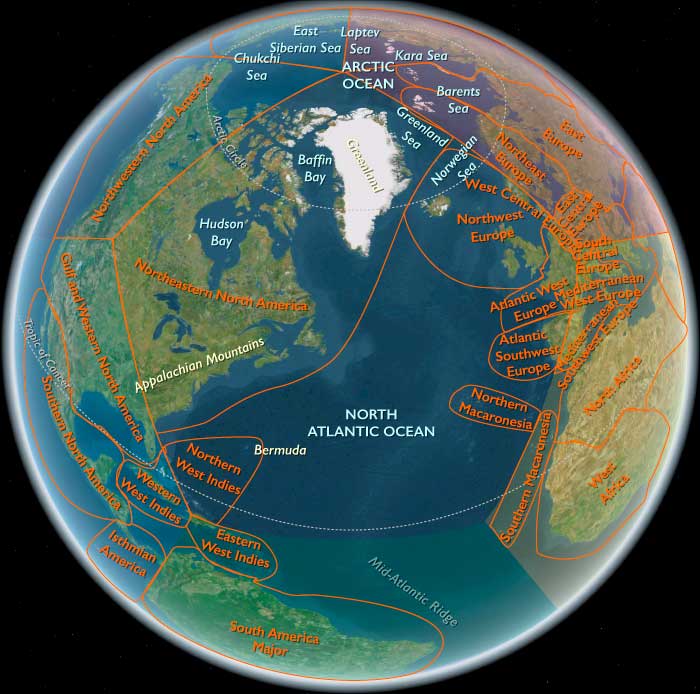
The Atlantic Lands
View →Related Events
Showing 9 events out of 9 total
The Middle East (1912–1923): The Collapse of Ottoman Authority and the Rise of Nationalism
The period from 1912 to 1923 marks a transformative era in the history of the Middle East, characterized by the collapse of the Ottoman Empire, intensified European intervention, and the emergence of nationalist movements striving to define modern nation-states from the ruins of imperial rule. Iraq, Armenia, Syria, Lebanon, and Arabia witness profound social, political, and economic upheaval that reshapes the region for the rest of the twentieth century.
Collapse of Ottoman Control and the First World War
Ottoman rule in the Middle East, weakened by decades of internal fragmentation, nationalist movements, and increasing European intervention, crumbles under the strain of the First World War (1914–1918). Ottoman Turkey sides with the Central Powers (Germany and Austria-Hungary), a decision that will lead directly to the empire's demise. The Middle East becomes one of the primary battlegrounds of the war, with devastating consequences for the region.
The British, seeking to secure routes to their empire in India and protect strategic resources, launch major offensives in Mesopotamia (Iraq) and Palestine, capturing key cities like Baghdad (1917) and Jerusalem (1917). Meanwhile, Arab nationalists, encouraged by British promises of post-war independence, revolt against Ottoman authority, notably in the Arab Revolt (1916–1918), spearheaded by Sharif Hussein ibn Ali of Mecca and assisted by British officer T.E. Lawrence ("Lawrence of Arabia"). These combined pressures accelerate Ottoman collapse, leaving behind a vacuum that Western powers eagerly exploit.
Arab Nationalism and the Emergence of Iraq
In Iraq, the Ottoman decline accelerates preexisting social and political fragmentation. The Ottoman legacy of decentralized governance leaves Iraq divided between tribes, cities, and religious groups, with a nascent but vocal intelligentsia advocating for nationalism. Influenced by the earlier reforms of the Young Turks—which alienated many Arabs through forced "Turkification"—Iraqi intellectuals and army officers form secret nationalist groups, notably Al Ahd (the Covenant), whose membership swells to several thousand by the war’s outbreak.
During the war, British forces quickly overwhelm Ottoman troops in Mesopotamia, capturing Basra (1914) and Baghdad (1917), placing the entire territory under British control by 1918. Post-war, Britain receives a League of Nations mandate over Iraq, combining Mosul, Baghdad, and Basra into one administrative entity despite considerable cultural, ethnic, and sectarian differences. This artificial unity generates lasting internal tensions. Iraqi nationalists, disappointed by broken British promises of independence, begin demanding full sovereignty, setting the stage for persistent anti-colonial resistance.
Armenian Genocide and National Tragedy
In eastern Anatolia, the Armenian genocide (1915–1923) unfolds as one of the most tragic events of the era. Fearing Armenian sympathies with Russia during wartime, the Ottoman government initiates mass deportations and systematic massacres of the Armenian population. Approximately 1.5 million Armenians perish, and hundreds of thousands more flee to Russian Armenia, Lebanon, Syria, and elsewhere. This devastating genocide permanently alters the demographic and cultural landscape of Anatolia, deeply traumatizing the surviving Armenian diaspora and profoundly shaping Armenian national identity.
Following the war, Armenian survivors briefly establish the independent Republic of Armenia (1918–1920), but it succumbs quickly to Soviet conquest, becoming the Armenian Soviet Socialist Republic in 1920.
Rise of Mustafa Kemal and the Turkish Republic
In Anatolia, Ottoman defeat leads directly to the rise of Turkish nationalism under Mustafa Kemal (Atatürk). Rejecting the harsh terms imposed by the post-war Treaty of Sèvres (1920)—which partitions Anatolia among European powers and proposes independent Armenian and Kurdish states—Mustafa Kemal organizes armed resistance, culminating in victory during the Turkish War of Independence (1919–1922). Kemal’s forces defeat Greek armies occupying western Anatolia, forcing the Allies to negotiate a new settlement.
The resulting Treaty of Lausanne (1923) recognizes the sovereignty of the new Republic of Turkey, abolishes the Ottoman Sultanate, and ends centuries of Ottoman rule. Mustafa Kemal, now Turkey’s first president, institutes sweeping secular reforms, Westernizes Turkish society, and moves the capital from Istanbul to Ankara, definitively ending the Ottoman era.
Mandate States: Syria and Lebanon
The dismantling of Ottoman Syria leads to the establishment of French mandates in Syria and Lebanon. Under the Sykes-Picot Agreement (1916), Britain and France had secretly agreed to partition Ottoman territories after the war, ignoring promises made to Arab nationalists. Syria’s nationalists resist French control, resulting in the proclamation of a short-lived Arab Kingdom of Syria under King Faisal I in 1920. France quickly suppresses this state, imposing direct colonial administration, which fuels resentment and nationalist agitation.
In Lebanon, France creates "Greater Lebanon" in 1920 by merging Mount Lebanon with coastal cities, the Beqaa Valley, and predominantly Muslim areas in the south and north. The new entity, intended to establish a friendly Christian-majority state, nevertheless sows seeds of sectarian conflict that will plague Lebanon throughout the twentieth century.
Arabia and the Consolidation of Al Saud
In Arabia, Abdulaziz ibn Saud capitalizes on Ottoman decline and regional instability. From his base in Najd, Abdulaziz unites disparate tribes and, with support from the conservative Wahhabi religious movement, gradually conquers much of the Arabian Peninsula. By 1921, Abdulaziz secures control over much of the Najd region and begins to threaten British-protected Gulf sheikhdoms and the Hashemite rulers of the Hejaz, foreshadowing the eventual establishment of Saudi Arabia.
Persia’s Continued Struggle for Sovereignty
In Persia (Iran), the Qajar dynasty remains vulnerable to foreign influence and internal instability. Despite the 1906 Constitutional Revolution, Russia and Britain continue to dominate Iranian politics and economy, dividing the nation into spheres of influence. Widespread resentment of foreign exploitation and government corruption leads to nationalist discontent, setting the stage for future internal upheaval and the eventual rise of the Pahlavi dynasty under Reza Shah.
Legacy of the Era (1912–1923)
The collapse of the Ottoman Empire and the tumultuous aftermath of World War I fundamentally reshape the Middle East, creating the modern geopolitical framework. New states and borders drawn arbitrarily by European powers, along with imposed national identities, sow the seeds of future instability. Nationalist movements emerge with force, driven by resistance to colonial domination, laying the foundation for independence struggles that will define the subsequent decades. Conflicts and resentments arising in this era—sectarian, ethnic, and nationalist—persist, profoundly influencing the historical trajectory of the region through the twentieth century and beyond.
The Near East, 1912 to 1923 CE: War, Resistance, and Colonial Consolidation
Darfur, Sudan, and British Expansion
Sudan's western boundary presents significant challenges during this era, especially regarding the status of Darfur. After the collapse of the Mahdiyah, Sultan Ali Dinar reclaims the throne of Darfur, which had been under Egyptian control until 1874, subsequently holding it under nominal Ottoman suzerainty with British approval. When the First World War breaks out in 1914, Ali Dinar declares allegiance to the Ottoman Empire, responding to the Ottoman call for a jihad against Allied forces. Britain, having declared a protectorate over Egypt in the same year, dispatches a military force against Ali Dinar. He is killed in combat in 1916, and Britain formally annexes Darfur into Sudan, thus terminating the historic Fur Sultanate.
Economic and Infrastructure Development
Under the Anglo-Egyptian Condominium, economic developments are largely confined to the settled regions of the Nile Valley. British colonial authorities focus on extending critical infrastructure such as telegraph and railway lines, enhancing administrative and military capabilities within northern Sudan. Nevertheless, remote areas remain largely disconnected from these advancements. The port city of Port Sudan, opened in 1906, effectively replaces Suakin as Sudan's primary maritime outlet, significantly improving trade logistics and accessibility for colonial administrators.
The First World War in Palestine and the Arab Revolt
During the First World War, Palestine becomes a significant theater of conflict as British and Ottoman forces clash. Allied campaigns, particularly those aided by Arab irregular forces led by T.E. Lawrence, famously known as "Lawrence of Arabia," target strategic locations including the Ottoman-controlled Hejaz Railway, a crucial supply and troop route stretching from Damascus to Medina. Lawrence and his Arab allies conduct effective guerrilla warfare, disrupting Ottoman logistics and contributing to the eventual Allied victory in the region.
Egyptian Revolution of 1919
Egypt witnesses widespread nationalist upheaval in 1919, triggered by the British arrest and exile of nationalist leader Saad Zaghlul. Massive protests, strikes, and demonstrations demand independence from British rule. Although Britain suppresses the uprising militarily, it leads to significant political concessions, paving the way for Egypt’s nominal independence in 1922, albeit with continuing British influence over defense, foreign affairs, and the Suez Canal.
Zionism and Arab-Jewish Tensions
The period also sees the significant expansion of Jewish settlement in Palestine, notably through the Third Aliyah (1919-1923), bringing thousands of European Jews fleeing persecution and attracted by the Zionist movement. This influx heightens tensions with the Arab population, culminating in violent Arab-Jewish clashes, most notably the Jaffa Riots of 1921. The British administration's response includes tighter immigration controls and attempts at mediating communal tensions, but these actions fail to resolve underlying conflicts.
The Impact of Colonial Administration
British administrative control in Sudan and the broader Near East during this era solidifies into structured colonial governance systems. British officials dominate key positions, maintaining tight control over political and economic policies. The Condominium framework continues to reflect its inherent ambiguities, as Egyptian influence remains symbolic but substantively marginal. Tensions occasionally arise from local populations, yet organized resistance is significantly diminished following previous suppressions of revolts.
Legacy of the Era: Colonial Consolidation and Regional Boundaries
The period from 1912 to 1923 firmly establishes British dominance in Sudan, Egypt, and Palestine, notably marked by the annexation of Darfur and intensified nationalist movements. Infrastructure and economic advancements, though geographically uneven, bolster British administrative effectiveness but also lay foundations for future disparities and tensions. Colonial rule deeply entrenches divisions and political frameworks, setting the stage for enduring conflicts and nationalist struggles in subsequent decades.
...declaring himself "King of the Arabs" on October 2, Hussein performs the ceremony of the bai'a, the traditional Arab custom in which the investiture is accompanied by a formal declaration of allegiance, although the Allies recognize him only as king of the Hijaz, a tide rejected by most peninsular Arabs.
Britain provides supplies and money for the Arab forces led by Abdullah and Faisal.
British military advisers also are detailed from Cairo to assist the Arab army that the brothers are organizing.
Of these advisers, T.E. Lawrence (Lawrence of Arabia) is to become the best known.
The British maintain two hundred and fifty thousand troops in Egypt even after the evacuation from Gallipoli.
A major source of worry to the British is the danger of a Turkish threat from Palestine across the Sinai Desert to the Suez Canal.
That danger wanes, however, when Hussein's initially unpromising revolt is developed by the personal enterprise of British military strategist colonel T. E. Lawrence into a revolt infecting the whole Arabian hinterland of Palestine and Syria and threatening to sever the Turks' vital Hejaz railway.
The Arab army commanded jointly by Lawrence and Sherif Hussein's third son Amir Faisal, though outnumbered by a force of twelve hundred Turks, captures Aqaba on July 6, 1917.
Arab consternation at the agreement is palliated by British and French reassurances that their commitments to the Arabs will be honored and by the fact that Allied military operations are progressing favorably.
Faisal accepts the military subordination of his army to overall British command, but for him the fighting is essentially a war of liberation in which Britain is actively cooperating with the Arabs.
The British command, however, considers the Arab army an adjunct to the Allied offensive in Palestine, intended primarily to draw Turkish attention to the East Bank while Allenby mops up resistance in Galilee and prepares for a strike at Damascus.
Faisal enters Damascus on October 2, and the Ottoman government consents to an armistice on October 31, bringing the war in this theater to a close.
Effectively, Turkish rule in Transjordan is simply replaced by British rule.
British Lieutenant Colonel Frederick Gerard Peake raises an internal police force, the Arab Legion, to keep order among Transjordanian tribes and to safeguard Transjordanian villagers from Bedouins.
As a result of these deliberations, Britain subdivides the Palestine Mandate along the Jordan River-Gulf of Aqaba line.
The eastern portion—called Transjordan—is to have a separate Arab administration operating under the general supervision of the commissioner for Palestine, with Abdullah appointed as amir.
At a follow-up meeting in Jerusalem with Churchill, High Commissioner Herbert Samuel, and T. E. Lawrence, Abdullah agrees to abandon his Syrian project in return for the amirate and a substantial British subsidy.