
Toribio de Benavente Motolinia
Franciscan missionary
1482 CE to 1568 CE
Toribio of Benavente, O.F.M.
(1482, Benavente, Spain – 1568, Mexico City, New Spain), also known as Motolinía, is a Franciscan missionary, one of the famous Twelve Apostles of Mexico who arrives in New Spain in May 1524.
His published writings are a key source for the history and ethnography of the Nahuas of central Mexico in the immediate post-conquest period as well as the challenges of Christian evangelization.
World
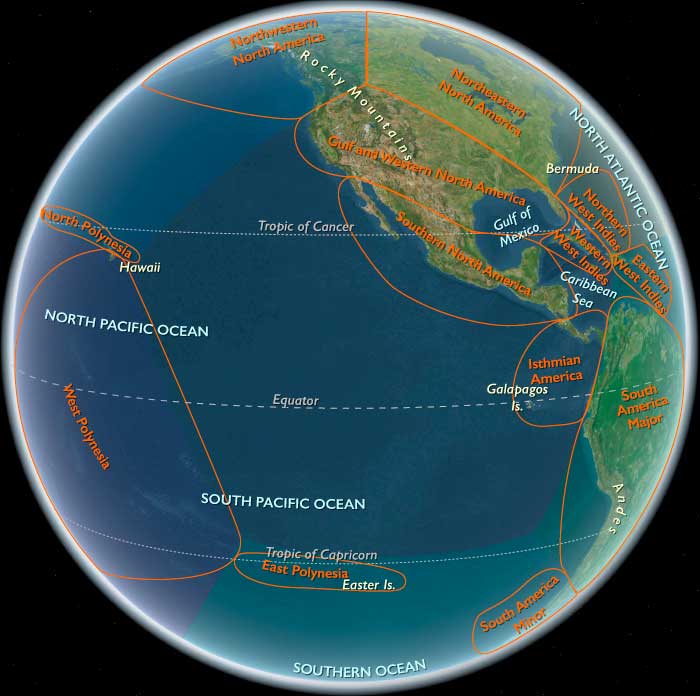
The Far West
View →Related Events
Showing 3 events out of 3 total
Cortés manages the founding of new cities and appoints men to extend Spanish rule to all of New Spain, imposing the encomienda system in 1524.
He reserves many encomiendas for himself and for his retinue, which they consider just rewards for their accomplishment in conquering central Mexico.
However, later arrivals and members of factions antipathetic to Cortés complain of the favoritism that excludes them.
The Franciscans arrive in May of 1524, a symbolically powerful group of twelve known as the Twelve Apostles of Mexico, led by Fray Martín de Valencia.
Franciscan Geronimo de Mendieta claims that Cortés's most important deed was the way he met this first group of Franciscans.
The conqueror himself is said to have met the friars as they approached the capital, kneeling at the feet of the friars who had walked from the coast.
This story will be used by Franciscans as a demonstration of Cortés's piety and humility as a powerful message to all, including the Indians, that Cortés's earthly power is subordinate to the spiritual power of the friars.
However, one of the first twelve Franciscans, Fray Toribio de Benavente Motolinia does not mention it in his history.
Cortés and the Franciscans will have a particularly strong alliance in Mexico, with Franciscans seeing him as "the new Moses" for conquering Mexico and opening it to Christian evangelization.
In Motolinia's 1555 response to Dominican Bartolomé de Las Casas, he will praise Cortés.
The monastery of the Assumption of Mary of Cuernavaca (Spanish: monasterio de la Asunción de María) is one of number of large fortress-style monasteries that are built in the early sixteenth century in what is now northern Morelos and far western Puebla states, near the Popocatepetl volcano.
These monasteries, built to evangelize and subdue the indigenous populations shortly after the Spanish conquest of the Aztec Empire, begin the evangelization effort that will spread south towards Oaxaca and Central America, then later throughout the colony of New Spain.
The organization of the Cuernavaca monastery had been founded in 1525 by the first twelve Franciscans to arrive to the new Spanish colony, along with some newer arrivals.
Among these were Antonio Maldonado, Antonio Ortiz, Alonso de Herrera and Diego de Almonte.
The original purpose of the monastery organization is the evangelization of the local indigenous peoples, and later to house and train missionaries to other parts of New Spain.
However, the main church and its walled atrium is originally off limits to all except the Spanish and indigenous nobles.
Building of the complex proper begins in 1529 on land donated by Juana de Zúñiga de Cortés, Hernán Cortés’s wife.
It is the fifth construction in New Spain by the order and supervised by Toribio de Benavente Motolinia.
Like other monasteries of the time, it is built with large, tall, thick walls and with merlons in order to defend the new missionaries from still hostile native peoples.
The monastery’s lands originally extend far beyond the current complex, and include large gardens and other lands used by the monks to produce food and other needed supplies.
The number of baptized Indians in Mexico in 1536 was five million according to Fray Toribio de Benavente Motolinia.
The multitude of Indians who have asked for baptism, said to have greatly increased after the apparition of Our Lady of Guadalupe in 1531, had forced the missionaries to adopt a special form for administering this sacrament.
The catechumens are arranged in order, with children in front.
Prayers are recited in common over all, salt, saliva, etc., applied to a few, and then water is poured on the head of each without using the customary holy oils or chrism.
The practice faced no opposition while the Franciscans were in charge of the missions, but as soon as members of other religious orders and some secular ecclesiastics arrived, doubt began to be cast upon the validity of these baptisms.
To put an end to the dispute Bishop Zumárraga has submitted the case to Rome, and on June 1, 1537, Pope Paul III issues the bull Altitudo divini consilii, which declares that the friars had not sinned in administering baptism in this form, but decrees that in the future it should not be thus administered except in cases of urgent need.
Another difficulty had arisen regarding marriage.
The pre-Columbian religions had permitted polygamy and the taking of concubines, and when Natives were converted the question arose as to which were legitimate wives and which were concubines, and whether any of the marriages had been valid at all.
The Franciscans know that certain rites are observed for certain unions, and that in some cases where separation or divorce is desired, it is necessary to obtain the consent of the authorities, while in other cases the consent of the interested parties suffices.
These customs, they argue, mean that there are valid marriages among the Indians.
Others deny that this was the case.
Bishop Zumárraga had taken part in all these discussions until the case was submitted to the Holy See.
Pope Paul III decrees in the Altitudo that the converted Indians should keep the first woman wed as their wife.