
W. B. Yeats
Irish poet, dramatist, prose writer and one of the foremost figures of twentieth-century literature
1865 CE to 1939 CE
William Butler Yeats (June 13, 1865 – January 28, 1939) is an Irish poet, dramatist, prose writer and one of the foremost figures of twentieth-century literature.
A pillar of the Irish literary establishment, he helps to found the Abbey Theatre, and in his later years serves two terms as a Senator of the Irish Free State.
He is a driving force behind the Irish Literary Revival along with Lady Gregory, Edward Martyn and others.
Yeats was born in Sandymount, Ireland, and educated there and in London.
He is a Protestant and member of the Anglo-Irish community.
He spends childhood holidays in County Sligo and studies poetry from an early age, when he becomes fascinated by Irish legends and the occult.
These topics feature in the first phase of his work, which lasts roughly until the turn of the twentieth century.
His earliest volume of verse is published in 1889, and its slow-paced and lyrical poems display debts to Edmund Spenser, Percy Bysshe Shelley, and the poets of the Pre-Raphaelite Brotherhood
From 1900, his poetry grows more physical and realistic.
He largely renounces the transcendental beliefs of his youth, though he remains preoccupied with physical and spiritual masks, as well as with cyclical theories of life
In 1923, he is awards the Nobel Prize in Literature.
World
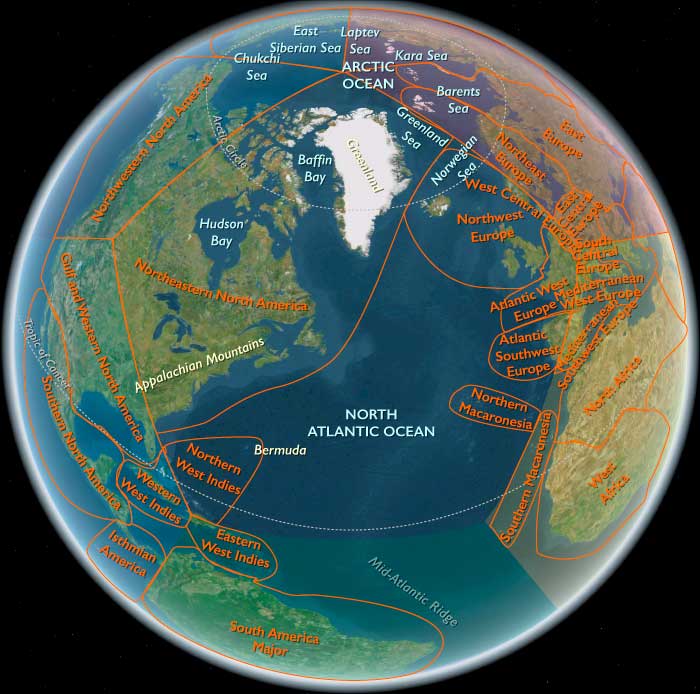
The Atlantic Lands
View →Related Events
Showing 1 events out of 1 total
The Irish poet W. B. Yeats heads the Order of the Golden Dawn in 1900.
Toward the end of 1899, the Adepts of the Isis-Urania and Amen-Ra temples had become dissatisfied with Samuel Liddell Mathers' leadership, as well as his growing friendship with Aleister Crowley.
They had also become anxious to make contact with the Secret Chiefs themselves, instead of relying on Mathers as an intermediary.
Within the Isis-Urania temple, disputes are arising between Florence Farr's The Sphere, a secret society within the Isis-Urania, and the rest of the Adepti Minores.
Crowley had been refused initiation into the Adeptus Minor grade by the London officials.
Mathers overrides their decision and quickly initiates him at the Ahathoor temple in Paris on January 16, 1900.
Upon his return to the London temple, Crowley requests from Miss Cracknell, the acting secretary, the papers acknowledging his grade, to which he is now entitled.
To the London Adepts, this is the final straw.
Farr, already of the opinion that the London temple should be closed, writes to Mathers expressing her wish to resign as his representative, although she is willing to carry on until a successor is found.
Mathers believes Westcott is behind this turn of events and replies on February 16.
On March 3, a committee of seven Adepts is elected in London and requests a full investigation of the matter.
Mathers sends an immediate reply, declining to provide proof, refusing to acknowledge the London temple, and dismissing Farr as his representative on March 2.
In response, a general meeting is called on March 29 in London to remove Mathers as chief and expel him from the Order.