
William Champion
British metallurgist
1709 CE to 1789 CE
William Champion (1709–1789) is credited with patenting a process in Great Britain to distill zinc from calamine using charcoal in a smelter.
World
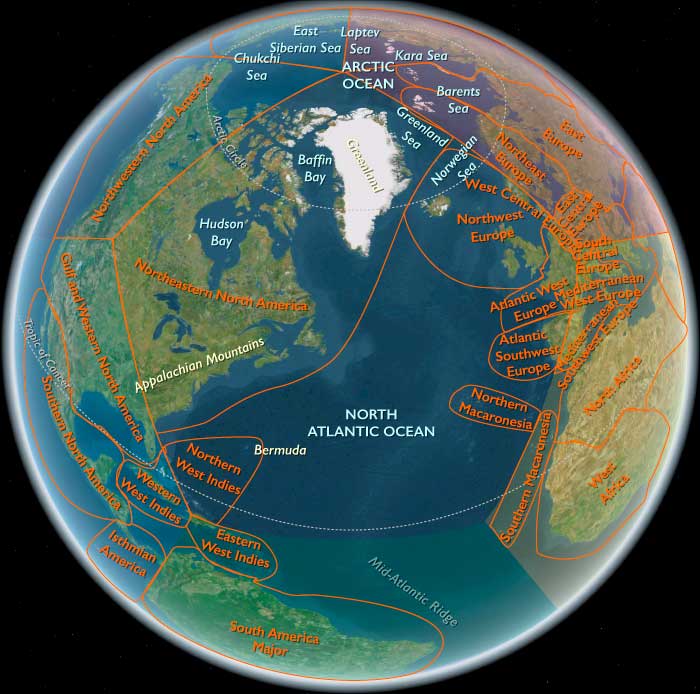
The Atlantic Lands
View →Related Events
Showing 6 events out of 6 total
William Champion had obtained a patent for a process to reduce zinc oxide to zinc in 1738, but the process is energy inefficient.
The difficulty is that a temperature of 1000°C is needed to reduce the oxide to the metal, but zinc vaporizes at 907°C.
It is thus necessary for the furnace to provide a means of condensing the vapor.
The distillation process produces around four hundred kilograms of zinc per charge from six crucibles located in the furnace.
The zinc is collected by iron tubes into water.
His initial works are on Old Market in Bristol and he makes two hundred tons of spelter (as zinc is at this time called) by 1742, when he is required to move because his premises are a 'common nuisance'.
Champion comes from a family who are already concerned in the metal trade at Bristol, his father being a leading partner in the Bristol Brass Company.
As a young man, he had toured Europe, returning in 1730.
He then experimented with smelting calamine, developing a method very similar to those long in use at the Zawar mines in India (except in scale), but no mechanism for technology transfer has yet been established.
Northwest Europe (1744–1755): Jacobite Rebellion, Colonial Rivalries, and Industrial Advances
The Jacobite Rebellion of 1745
In 1745, long-simmering Jacobite discontent flared into open rebellion. Charles Edward Stuart—the Young Pretender—landed in the Scottish Highlands and rallied clans to his cause, aiming to restore the Stuart dynasty. After early victories at Prestonpans and the occupation of Edinburgh, his forces crossed into England. Yet by 1746, the rebellion was crushed at the Battle of Culloden, where British troops under the Duke of Cumberland delivered a decisive and brutal defeat. The aftermath ushered in harsh reprisals: Highland culture was suppressed, Jacobite leaders were executed or exiled, and the clan system was systematically dismantled, extinguishing a centuries-old social order.
Britain and France: Intensifying Colonial Rivalry
The mid-1740s to early 1750s saw escalating Anglo-French competition over overseas territories, particularly in North America, the Caribbean, and India. These conflicts, part of a broader imperial rivalry, included frequent naval skirmishes and proxy wars that destabilized the colonial frontier. These tensions were a prelude to the global conflict that would become the Seven Years’ War (1756–1763).
The British government, wary of the financial strain of sustained conflict, turned again to its most powerful trading institution. In 1742, Parliament had extended the United East India Company's exclusive license until 1783 in exchange for a £1 million loan. This extension ensured continued revenues from Indian trade and reinforced the company's central role in supporting the British imperial and fiscal apparatus.
The 1750 Gaol Fever Outbreak
In May 1750, another devastating outbreak of gaol fever (typhus) struck the heart of London’s legal establishment. Originating in the filthy confines of Newgate Prison, the disease spread into the adjacent Old Bailey courtroom during the Lent assizes. Among the dead were Sir Samuel Pennant, the Lord Mayor of London, and a large number of court officers and jurors. This tragedy highlighted the appalling conditions of British prisons and the permeability of disease between carceral and civic spaces, reigniting calls for penal reform—though substantive change would remain slow.
The Hellfire Club and Elite Dissent
In this era of formal Enlightenment and state consolidation, a more shadowy aspect of elite culture flourished. Around 1749, Sir Francis Dashwood revived the Hellfire Club, more formally known as the Order of the Friars of St. Francis of Wycombe. Its rumored rituals—held at Medmenham Abbey—and its motto, Fais ce que tu voudras ("Do what thou wilt"), shocked polite society. Though shrouded in secrecy, the club attracted powerful political figures and prominent members of the aristocracy. Earlier iterations had been founded as early as 1719 by Philip, Duke of Wharton, and continued to proliferate, especially in Ireland. These clubs embodied a paradox of the period: outward rationalism masking inner libertinism among the ruling class.
John Harrison and the Mechanization of Precision
Meanwhile, John Harrison advanced his efforts to resolve the longitude problem. His H2 and H3 marine chronometers—refined in the 1740s and early 1750s—incorporated mechanisms designed to resist the distortions of humidity, temperature, and ship movement. Harrison’s work represented the forefront of mechanical innovation, challenging long-standing astronomical approaches and offering Britain a competitive navigational advantage. Though official recognition remained elusive, his chronometers laid the groundwork for reliable sea navigation, vital in an era of intensifying global trade and naval warfare.
William Champion and Zinc Metallurgy
In the realm of industry, William Champion revolutionized British metallurgy with the first commercial-scale zinc production. Building on methods similar to those long practiced at the Zawar mines in India, Champion adapted the process to Bristol’s industrial infrastructure. His innovation involved solving a complex thermodynamic problem: zinc vaporizes at 907°C, but requires reduction at 1000°C, necessitating a sealed furnace with a vapor condensation mechanism. Although no direct transmission of knowledge from India can yet be demonstrated, Champion’s success reflected a growing capacity for independent scientific problem-solving and the dawn of modern chemical engineering in Northwest Europe.
Denmark-Norway: Quiet Reform and Commercial Development
In Denmark-Norway, Frederick V continued the cautious modernization of his dual monarchy. While not a major actor in the Anglo-French rivalry, Denmark-Norway pursued regional economic consolidation. Copenhagen’s shipyards and merchants grew in importance, while gradual administrative reforms continued. However, the North Atlantic dependencies—Iceland, the Faroe Islands, Shetland, and Orkney—remained on the periphery, economically dependent on fishing and trade in wool and dried cod, and largely untouched by the era’s industrial innovations.
Ireland: Repression and Emigration
The penal codes remained harshly enforced in Ireland, marginalizing the Catholic majority and restricting political and economic participation. Rural poverty deepened, especially in western counties, driving a new wave of emigration to North America. Though Dublin and Belfast retained pockets of commercial vitality and Enlightenment culture, the broader island remained socially polarized and economically stagnant.
Intellectual and Cultural Milestones
The literary and intellectual culture of Northwest Europe continued to flourish. In 1755, Samuel Johnson published his Dictionary of the English Language, an extraordinary achievement that standardized English spelling and grammar. Simultaneously, elite social spaces—from libraries and salons to reading chairs and secret societies—supported a wide range of intellectual expression, from moral philosophy to occult experimentation. The period’s cultural life reflected the tensions between Enlightenment order and aristocratic indulgence.
Between 1744 and 1755, Northwest Europe experienced profound shifts: the last Jacobite rebellion was extinguished, Britain and France entered increasingly violent imperial rivalry, and transformative scientific and industrial advances began reshaping the region's technological capabilities. From the disease-ridden prisons of London to the smelting furnaces of Bristol, from secret libertine societies to precision marine chronometers, the age was marked by paradox—order and disorder, discipline and decadence—on the cusp of global conflict and industrial revolution.
William Champion leads the way in the development of commercial zinc production in the middle of the eighteenth century.
Champion came from a family who were already concerned in the metal trade at Bristol, his father being a leading partner in the Bristol Brass Company.
As a young man he had toured Europe, returning in 1730.
He then experimented with smelting calamine, developing a method very similar to those long in use at the Zawar mines in India (except in scale), but no mechanism for technology transfer has yet been established.
The difficulty is that a temperature of 1000°C is needed to reduce zinc oxide to zinc, but zinc vaporizes at 907°C.
It is thus necessary for the furnace to provide a means of condensing the vapor.
He had obtained a patent for the process in 1738, but the process was energy inefficient.
The distillation process produces around four hundred kilograms of zinc per charge from six crucibles located in the furnace.
The zinc is collected by iron tubes into water.
His initial works were on Old Market in Bristol and he made two hundred tons of spelter (as zinc was then called) by 1742, when he was required to move because his premises were a 'common nuisance'.
He forms a partnership (the Warmley Company) in 1746 with fellow Quakers, including Thomas Goldney (the Bristol merchant is a partner in the Coalbrookdale Works) and Sampson Lloyd, the Birmingham ironmonger, and sets up works at Warmley, creating a large reservoir to power battery works, wire mills and rolling mills.
He seeks an extension of his patent in 1750 but this is opposed.
He has by 1754: '15 copper furnaces 12 brass furnaces; 4 spelter or zinc furnace; a battery mill or small mill for kettles; rolling mills for making plates; rolling and cutting mills for wire; and a wire mill of both thick and fine drawn kinds.
Northwest Europe (1756–1767): Global War, Economic Thought, and Societal Innovations
The Seven Years' War and British Dominance
From 1756 to 1763, Britain and France engaged in the Seven Years' War, a global conflict fought across Europe, North America, the Caribbean, India, and West Africa. Britain's decisive victory, cemented by key triumphs like the capture of Quebec (1759), culminated in the Treaty of Paris (1763). France lost most of its North American territories, solidifying Britain's global dominance. However, victory left Britain burdened with immense debts, prompting the introduction of controversial colonial taxes—sparking tensions destined to ignite the American Revolution.
Adam Smith and the Birth of Economic Liberalism
The intellectual environment of Northwest Europe was profoundly shaped by the rise of Enlightenment figures such as Adam Smith, born in Kirkcaldy, Scotland, in 1723. Educated at the University of Glasgow under moral philosopher Francis Hutcheson, Smith developed his commitment to liberty, reason, and free speech. After a difficult tenure at Oxford, which he criticized harshly for intellectual stagnation, Smith began delivering popular public lectures in Edinburgh in 1748, sponsored by the Philosophical Society of Edinburgh under Lord Kames.
Smith’s lectures covered rhetoric and belles-lettres, but notably introduced his emerging economic philosophy—what he termed the "obvious and simple system of natural liberty." Although not naturally gifted as an orator, Smith's clarity and innovative ideas garnered success. In 1759, Smith published The Theory of Moral Sentiments, laying the ethical and psychological groundwork for his later masterpiece, The Wealth of Nations (1776). Departing from his teacher Hutcheson’s notion of an inherent moral sense, Smith developed a pluralistic moral philosophy centered on sympathy—the imaginative capacity to understand others' experiences. His work significantly reshaped moral philosophy and established the foundations of modern economics.
John Harrison’s Triumph and Precision Navigation
Meanwhile, John Harrison finally resolved the critical maritime longitude problem with his revolutionary marine chronometer, H4, tested successfully on a voyage to Jamaica in 1761–1762. Despite resistance from proponents of astronomical methods, Harrison’s chronometer achieved near-perfect accuracy, leading the Board of Longitude to award him a significant portion of the Longitude Prize in 1765. His invention dramatically improved maritime safety and strengthened British naval and commercial power.
Gaol Fever and Public Health Crises
Public health remained a significant concern. In 1759, an English authority estimated that nearly one-quarter of prisoners died annually from gaol fever (typhus), a disease notorious for repeatedly spreading from overcrowded, unsanitary prisons like Newgate Prison into London's general population. These outbreaks highlighted urgent public health vulnerabilities and slowly galvanized support for improvements in sanitation and prison conditions.
Champion Brothers and Industrial Struggles
Industrial developments continued around Bristol and Swansea, spearheaded by metallurgist William Champion and his brother John Champion. In 1758, John patented an improved calcination process for converting zinc sulfide (zinc blende) into zinc oxide for use in retorts, further advancing zinc metallurgy. Despite this technical innovation, William Champion struggled financially by 1761, unsuccessfully seeking incorporation and new investors for his ambitious zinc works at Warmley. By 1765, Champion's financial difficulties escalated, culminating in bankruptcy in 1768 and his dismissal from the Warmley Company. The works were sold in 1769 to the Bristol Brass Company, which never fully utilized their potential.
The Emergence of Modern Life Insurance
Financial innovation also marked this era. Modern life insurance, rooted in Roman-era "burial clubs," was significantly refined. The Amicable Society for a Perpetual Assurance Office, founded in London in 1706, had initially offered basic life assurance. By the 1750s, mathematician James Dodson, building on Edmond Halley's pioneering mortality tables (1693), attempted to form a new company offering more scientifically-based long-term insurance but was rejected due to his age. His protégé, Edward Rowe Mores, successfully established the Society for Equitable Assurances on Lives and Survivorship in 1762—the world's first mutual life insurer. Mores introduced age-based premiums derived from mortality rates, revolutionizing insurance practices and introducing the business role of "actuary."
Culinary Innovations: The Sandwich
Cultural innovations also emerged in everyday life. The modern sandwich gained popularity around 1762, famously attributed to John Montagu, 4th Earl of Sandwich, who purportedly requested meat between bread slices for convenience at gaming tables or his busy naval office. This simple innovation, though long preceded by various forms of food-on-bread across cultures—from the unleavened wraps of ancient Jewish sage Hillel to the open-faced Dutch belegde broodje—entered English polite society, quickly spreading through Europe's social elites.
Leisure and the Bathing Machine
Leisure and health culture expanded at coastal resorts, aided by inventions like the bathing machine. Originating in the 1730s, with designs attributed to Benjamin Beale at Margate around 1750, bathing machines became increasingly common, reflecting changing cultural attitudes toward modesty, public leisure, and healthful recreation.
Rococo Portraiture and British Art
In visual arts, the Rococo era saw portraiture flourish. Britain produced influential artists, including the blunt realism of William Hogarth and the refined, Van Dyck-inspired elegance of Thomas Gainsborough, Joshua Reynolds, Francis Hayman, and the Swiss-born Angelica Kauffman. Their work embodied the period’s cultural complexities, capturing society's sophistication and contradictions through vivid, compelling portraiture.
Denmark-Norway’s Quiet Prosperity
Under Frederick V, Denmark-Norway quietly prospered, enhancing trade through Copenhagen, though overshadowed by Britain’s global dominance. Peripheral territories—Iceland, Faroe Islands, Shetland, and Orkney—remained economically modest, with limited integration into broader European markets.
Ireland’s Continued Struggles
Ireland suffered persistent economic hardship under restrictive Penal Laws, exacerbating rural poverty and fueling continued emigration to North America. Despite pockets of Enlightenment influence in Dublin and Belfast, most rural areas languished economically.
Between 1756 and 1767, Northwest Europe experienced critical shifts driven by global warfare, Adam Smith’s economic liberalism, innovations in maritime navigation by John Harrison, and significant advancements in public health awareness, industrial metallurgy, financial services, culinary practices, and leisure culture. These transformations, both profound and everyday, shaped the trajectory of Northwest Europe, positioning it at the forefront of global power and innovation on the eve of the Industrial Revolution.
John Champion, the brother of pioneering zinc producer Williiam Champion, develops a refined process and in 1758 patents the calcination of zinc sulfide (zinc blende) to oxide for use in the retort process.
The English zinc industry is concentrated in and around Bristol and Swansea.
Williiam Champion in 1761 seeks new partners for an expanded works, but by 1765 he is in financial difficulties.
He seeks a charter of incorporation, but this is refused. (Ultimately he will be declared bankrupt in 1768 and dismissed by the Warmley Company. The company will be forced to sell its works in 1769 to the old Bristol Brass Company, but the latter will never use the works to their full capacity.)
Northwest Europe (1768–1779): Industrial Growth, Enlightenment Thought, and the American Crisis
Britain's American Crisis and Imperial Tensions
Between 1768 and 1779, Britain faced profound challenges within its empire, particularly escalating tensions with its North American colonies. Following expensive military engagements during the Seven Years’ War, Britain attempted to offset debts by enforcing unpopular taxes, including the Townshend Acts (1767–1768). American resistance culminated in the Boston Massacre (1770), deepening hostility. Parliament’s subsequent repeal of most Townshend duties did little to quell tensions, which escalated dramatically after the Boston Tea Party (1773), leading to punitive measures—the so-called Intolerable Acts (1774)—and ultimately igniting the American Revolutionary War (1775). By 1776, American colonies declared independence, fundamentally challenging Britain’s imperial dominance and reshaping global political dynamics.
Adam Smith and "The Wealth of Nations"
Amidst political and economic turmoil, Scottish Enlightenment philosopher and economist Adam Smith published his seminal work, An Inquiry into the Nature and Causes of the Wealth of Nations, in 1776. Building upon earlier lectures delivered in Edinburgh and his philosophical foundation outlined in The Theory of Moral Sentiments (1759), Smith’s masterpiece articulated principles of free trade, market-driven economics, and limited governmental intervention—what he termed the "system of natural liberty." Smith’s theories profoundly influenced economic policy, advocating that prosperity emerged through individuals pursuing rational self-interest guided by competition—the concept famously summarized as the "invisible hand." His critiques of colonialism, monopolies, and mercantilist policies resonated widely, reshaping economic thought and policy throughout Europe and North America.
Industrial Struggles and Zinc Production: The Champion Brothers
The zinc industry in Britain, initially pioneered by William Champion and advanced by his brother John Champion, experienced both innovation and financial distress during this era. Although John Champion's refined calcination process—patented earlier in 1758—advanced British metallurgy, by 1765 William faced severe economic troubles. By 1768, Champion was declared bankrupt, and the Warmley works near Bristol were acquired in 1769 by the older Bristol Brass Company, which unfortunately never fully utilized the site's production capacity. This event marked an early cautionary example of the precarious nature of industrial entrepreneurship.
Public Health and Prison Reform
Continuing public health concerns persisted, especially regarding the appalling conditions within British prisons. Following repeated outbreaks of gaol fever (typhus), notably in Newgate Prison—where poor sanitation regularly sparked epidemics reaching London’s broader population—pressure steadily grew for prison reform. Though major systemic reforms were not yet realized, heightened awareness steadily laid the groundwork for future humanitarian improvements in prison conditions.
Life Insurance and the Actuarial Revolution
The sophistication of financial services evolved significantly with the pioneering work of actuaries such as Edward Rowe Mores. The Society for Equitable Assurances on Lives and Survivorship, founded by Mores in 1762, continued to flourish, laying down foundational practices of modern insurance. Its innovative methods, calculating premiums based on accurate mortality rates and actuarial principles, increasingly influenced financial institutions throughout Britain and Europe, shaping the growth of modern insurance industries.
Cultural Innovations: The Sandwich and Bathing Machines
Cultural habits continued evolving during these years. The sandwich, named after the 4th Earl of Sandwich, John Montagu, who popularized it—reputedly while engrossed at gaming tables or working at his naval office—became widely accepted. This culinary innovation symbolized convenience, modernity, and changing social customs in British life.
Similarly, the popularity of seaside leisure expanded rapidly. Bathing machines, mobile wooden structures providing privacy for changing clothes before entering the sea, became increasingly common across coastal Britain. Initially appearing decades earlier, their adoption during this period symbolized changing attitudes toward recreation, modesty, and social customs, driving tourism to coastal resorts like Margate and Brighton.
Rococo Portraiture: A Flourishing British Art
Artistic innovation remained vibrant, particularly in the realm of Rococo portraiture. Notable artists such as Joshua Reynolds, Thomas Gainsborough, Francis Hayman, and the Swiss-born Angelica Kauffman produced portraits that captured the sophisticated elegance and cultural aspirations of British elites. These artists, influenced by the elegant compositions of Flemish master Anthony van Dyck, balanced realism and idealization, significantly shaping British visual culture.
Captain James Cook and Maritime Exploration
Between 1768 and 1779, Captain James Cook undertook his three major voyages, profoundly expanding European geographic knowledge. Sponsored by the Royal Society and the Admiralty, Cook’s first voyage (1768–1771) aboard HMS Endeavour famously included the observation of the Transit of Venus (1769) and extensive charting of New Zealand and Australia’s east coast. Subsequent expeditions (1772–1775; 1776–1779) further explored the Pacific Ocean, bringing new scientific, geographic, and ethnographic knowledge to Europe. Cook’s voyages symbolized Britain’s Enlightenment-driven exploration and maritime dominance.
Denmark-Norway Under Christian VII: Reform and Instability
In Denmark-Norway, King Christian VII (reigned 1766–1808) came to the throne. His reign was characterized by political instability, personal mental illness, and court intrigue. Nevertheless, under influential statesman and reformer Johann Friedrich Struensee (in power from 1770 to 1772), Denmark-Norway briefly experienced a flurry of Enlightenment-inspired reforms aimed at modernizing administration, promoting economic liberalism, and reducing censorship. Though Struensee’s tenure was short-lived—ending dramatically with his execution in 1772—these brief reforms left a lasting imprint on the kingdom’s future political evolution.
Ireland’s Continued Economic Struggle
In Ireland, economic hardship under restrictive Penal Laws persisted, exacerbating rural poverty and emigration. By the late 1760s and 1770s, increasingly vocal calls for reform and relief emerged, reflecting growing discontent. While urban areas like Dublin displayed signs of economic activity, Ireland’s countryside remained largely impoverished and politically disenfranchised, setting the stage for future unrest.
Scientific and Technological Progress
The late 1760s and 1770s continued to witness significant scientific and technological advancements in Northwest Europe. Building upon the navigational triumphs of John Harrison’s marine chronometer (H4), Britain’s naval and commercial fleets adopted chronometric navigation extensively, boosting maritime efficiency and safety. Concurrently, agricultural experimentation and improved manufacturing processes marked the early phases of Britain’s industrial transformation.
Between 1768 and 1779, Northwest Europe navigated complex changes characterized by imperial turmoil, revolutionary economic thought exemplified by Adam Smith, maritime exploration, scientific innovation, and the early industrial revolution. Cultural trends in art, leisure, and everyday life evolved rapidly alongside significant developments in public health, finance, and governance. Collectively, these transformations set the stage for Europe's continued global dominance, industrialization, and future revolutionary upheavals.