Woodes Rogers
English sea captain, privateer, and first Royal Governor of the Bahamas
Years: 1679 - 1732
Woodes Rogers (ca.
1679 – 15 July 1732) is an English sea captain, privateer, and, later, the first Royal Governor of the Bahamas.
He is known as the captain of the vessel that rescued the marooned Alexander Selkirk, whose plight is generally believed to have inspired Daniel Defoe's Robinson Crusoe.
Rogers comes from an affluent seafaring family, grows up in Poole and Bristol, and servs a marine apprenticeship to a Bristol sea captain.
His father, who holds shares in many ships, dies when Rogers is in his mid-twenties, leaving Rogers in control of the family shipping business.
In 1707, Rogers is approached by Captain William Dampier, who seeks support for a privateering voyage against the Spanish, with whom the British are at war.
Rogers leads the expedition, which consists of two well-armed ships, the Duke and the Duchess, and is the captain of the Duke.
In three years, Rogers and his men go around the world, capturing several ships in the Pacific Ocean.
En route, the expedition rescues Selkirk, finding him on Juan Fernandez Island on February 1, 1709.
When the expedition returns to England in October 1711, Rogers has circumnavigated the globe, while retaining his original ships and most of his men, and the investors in the expedition have doubled their money.
While the expedition makes Rogers a national hero, his brother has been killed and Rogers has been badly wounded in fights in the Pacific.
On his return, he is successfully sued by his crew on the ground they had not received their fair share of the expedition profits, and Rogers is forced into bankruptcy.
He writes of his maritime experiences in a book A Cruising Voyage Round the World, which sells well, in part due to public fascination at Selkirk's rescue.
Rogers is twice appointed Governor of the Bahamas, where he succeeds in warding off threats from the Spanish, and in ridding the colony of pirates.
However, his first term as governor is financially ruinous, and on his return to England, he is imprisoned for debt.
During his second term as governor, Rogers dies in Nassau at the age of about 53.
Related Events
Filter results
Showing 10 events out of 43 total
The West Indies (1684 – 1827 CE): Empire, Slavery, and the Atlantic Crossroads
Geographic and Environmental Context
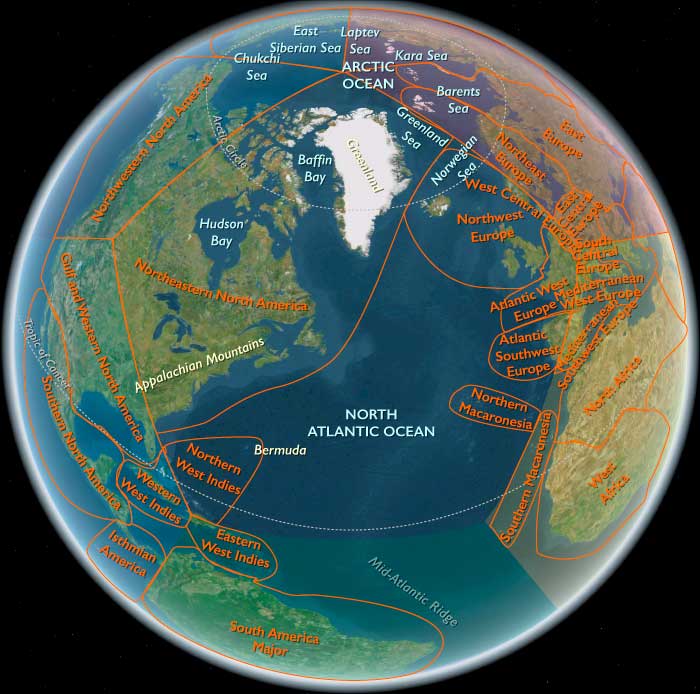
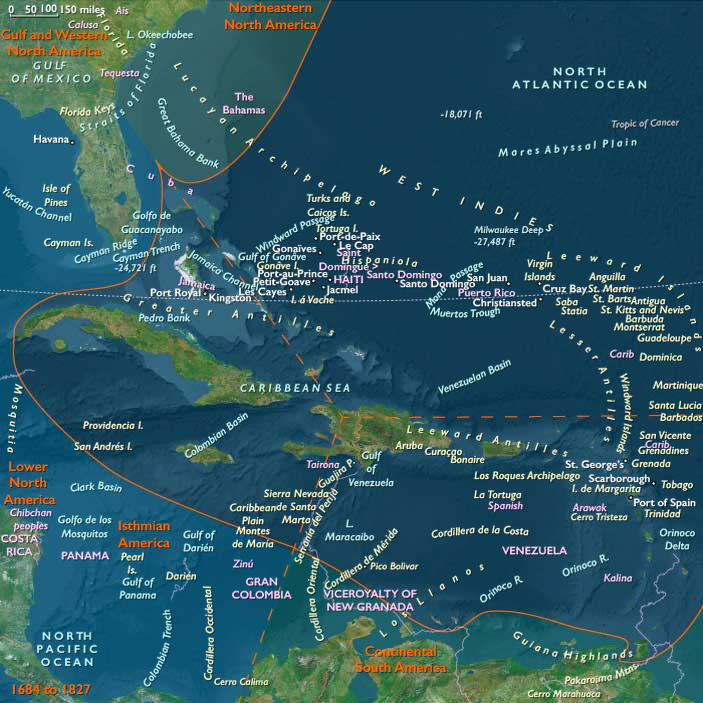
The West Indies of the long eighteenth and early nineteenth centuries—stretching from Cuba and Jamaica in the west through Hispaniola, Puerto Rico, and the Lesser Antilles to Trinidad, and northward through the Bahamas, Bermuda, and Turks and Caicos—formed one of the most strategic and contested maritime regions in the world.
This region’s division into three natural and historical subrealms—the Northern, Eastern, and Western West Indies—was defined by wind, current, and empire as much as by geography.
-
The Northern West Indies (Bahamas, Turks and Caicos, Bermuda, northern Hispaniola) was a world of shallow banks, salt pans, and smuggling harbors, a crossroads of piracy and empire.
-
The Eastern West Indies (Trinidad, Barbados, Saint Lucia, Puerto Rico, Virgin Islands, eastern Hispaniola) became the plantation heart of the Caribbean, where sugar, slavery, and revolt shaped the modern Atlantic.
-
The Western West Indies (Cuba, Jamaica, the Caymans, and the Inner Bahamas) was the imperial cockpit—a corridor of treasure fleets, naval wars, and plantation kingdoms whose influence reached far beyond the Caribbean basin.
Together these subregions bound Europe, Africa, and the Americas into a single, brutal, and creative system: the Atlantic World.
Climate and Environmental Shifts
The late Little Ice Age persisted into the 1700s, bringing alternating pulses of storm and drought.
-
Hurricanes periodically erased entire settlements—from the Great Hurricane of 1780 that devastated Barbados and Saint Lucia to the cyclones that swept the Bahamas and Jamaica.
-
Droughts afflicted Hispaniola and eastern Cuba, while floods reshaped Puerto Rico’s valleys and washed away fragile terraces.
-
Volcanic and coral soils in the eastern arc buffered rainfall variability, but thin limestone and wind-exposed cays in the north demanded constant rebuilding.
Despite climatic instability, warm seas, and the steady northeast trades made the Caribbean a perennial hub of shipping and migration.
Subsistence, Settlement, and Economy
Across the archipelago, local adaptations reflected the twin forces of ecology and empire.
-
In the Northern West Indies, shallow banks and reefs nurtured piracy and contraband. Nassau and Tortuga became pirate havens before being “reformed” into colonial ports. Bermuda evolved into a shipbuilding and trading powerhouse, while salt-raking and small-scale ranching sustained the Turks and Caicos and northern Hispaniola’s frontier.
-
In the Eastern West Indies, plantation economies reached their zenith. Barbados, Saint-Domingue, Puerto Rico, Trinidad, and the Danish and British Virgins built vast estates of sugar and coffee, their profits extracted through the labor of enslaved Africans. The Treaty of Ryswick (1697) split Hispaniola into French and Spanish halves—Saint-Domingue, the world’s richest colony, and Santo Domingo, a ranching and provisioning frontier.
-
In the Western West Indies, Spain’s Cuba and Britain’s Jamaica anchored rival empires. Havana became a fortified naval hub and the final stop for Spanish treasure fleets; Jamaica grew into the centerpiece of the British sugar system, defended by Maroon treaties and fed by Atlantic slavery. The Bahamas and Caymans remained smaller satellite economies, dependent on fishing, turtling, and trade.
Everywhere, African labor and knowledge made the system function: sugar cultivation, salt evaporation, animal husbandry, shipwrighting, and tropical medicine all drew on African expertise.
Technology and Material Culture
-
Plantation industry reached new levels of mechanization: wind- and later steam-powered mills, boiling houses, and curing houses dotted the islands.
-
Shipbuilding thrived in Bermuda and Jamaica, producing sleek sloops that outsailed European vessels.
-
Fortification architecture defined Havana, San Juan, and Port Royal; the ruins of stone mills, cisterns, and aqueducts endure as the era’s material signature.
-
Enslaved Africans and their descendants contributed ironworking, weaving, pottery, basketry, and culinary traditions that transformed Caribbean daily life.
Movement and Interaction Corridors
The West Indies was the beating heart of Atlantic circulation:
-
Trade routes carried sugar, rum, and molasses to Europe and North America, returning with goods, guns, and enslaved captives from Africa.
-
Naval convoys guarded silver fleets through the Windward and Mona Passages.
-
Pirates and privateers exploited the same currents, operating from the Bahamas and Hispaniola.
-
Slave ships traversed the Middle Passage to Saint-Domingue, Jamaica, Cuba, and Trinidad.
-
Maroon and contraband networks stitched together mountain refuges and frontier coasts from Jamaica to Santo Domingo.
-
Migrant flows after the American Revolution—Loyalists, free Blacks, and enslaved Africans—reshaped Bahamian and Cayman society.
These corridors made the region at once interconnected and violently unequal.
Cultural and Symbolic Expressions
The West Indies forged some of the most profound cultural syntheses in the Atlantic world.
-
Religions: Catholicism and Protestantism provided colonial frameworks, but African cosmologies—Vodou, Santería, Obeah, Myal, and others—redefined the sacred landscape.
-
Languages and Music: Creole languages, drumming, and call-and-response singing blended African, European, and Indigenous rhythms.
-
Resistance and Community: Festivals, ring-shouts, and secret gatherings sustained solidarity among the enslaved; pirates, maroons, and sailors developed their own egalitarian codes.
-
Architecture and Landscape: Plantation great houses stood above quarters, mills, and cane fields, while vernacular huts and maroon villages adapted to hills, mangroves, and storms.
Through suffering and creativity, Caribbean people produced enduring art, faith, and identity.
Environmental Adaptation and Resilience
Despite relentless exploitation, the region’s inhabitants learned resilience:
-
Islanders rebuilt after each hurricane with stronger stone, better cisterns, and low, wind-resistant roofs.
-
Provision grounds allowed enslaved and free people to maintain food security with cassava, yams, and plantains.
-
African agronomy and water management sustained fertility in thin tropical soils.
-
Cattle and small stock on drier islands (Turks, Caicos, Santo Domingo) supplemented the plantation diet and economy.
Human adaptation paralleled ecological resilience: mangroves, reefs, and coral cays regenerated repeatedly after devastation.
Transition and Legacy (by 1827 CE)
By the early nineteenth century, the West Indies was transforming under revolutionary and abolitionist pressure:
-
The Haitian Revolution (1791–1804) destroyed the world’s richest colony and created the first Black republic, inspiring fear and hope across the region.
-
British Jamaica and Barbados tightened control but faced growing unrest; debates over emancipation gained force.
-
Cuba and Puerto Rico, under Spain, expanded sugar and slavery even as neighboring colonies moved toward freedom.
-
Trinidad absorbed French planters and enslaved labor under British rule after 1797.
-
Bermuda and the Bahamas became minor metropoles of Atlantic shipping and, eventually, abolitionist transit.
By 1827, the West Indies had become both the engine and the conscience of the Atlantic world—its wealth built on enslavement, its resistance birthing freedom’s first revolutions.
In the framework of The Twelve Worlds, the region embodied the paradox of modernity itself:
a crossroads where empire, ecology, and human endurance converged to shape the moral and material map of the modern age.
Northern West Indies (1684–1827 CE): Piracy, Empire, and Maritime Crossroads
Geographic & Environmental Context
The subregion of Northern West Indies includes Bermuda, the Turks and Caicos, northern Hispaniola, and the Outer Bahamas (Grand Bahama, Abaco, Eleuthera, Cat Island, San Salvador, Long Island, Crooked Island, Mayaguana, Little Inagua, and eastern Great Inagua). The Inner Bahamas belong to the Western West Indies. Anchors included the Bahama Banks, the Caicos Passage, Bermuda’s cedar outcrop, and the Cibao Valley of northern Hispaniola. The region’s shallow cays, reefs, and natural harbors became pivotal in the age of piracy and naval rivalry.
Climate & Environmental Shifts
The Little Ice Age lingered into the 18th century. Hurricanes swept across the Bahamas and Caicos, often devastating fragile settlements. Bermuda endured repeated storms in 1712 and 1719. Hispaniola’s north coast experienced cycles of drought and flood, shaping ranching and farming.
Subsistence & Settlement
-
Northern Hispaniola: Spanish authority waned along the north coast. French buccaneers and settlers encroached from Tortuga and Saint-Domingue. Ranching and contraband trade flourished.
-
Bahamas: English settlement at Nassau (1670) became notorious for piracy. Captains like Blackbeard (Edward Teach) operated from Bahamian waters until Governor Woodes Rogers reestablished order in 1718. Loyalist refugees after the American Revolution resettled the islands.
-
Turks and Caicos: Salt-raking emerged as the economic base, developed by Bermudian and Bahamian settlers using enslaved Africans.
-
Bermuda: Matured as a maritime colony. Cedar-built sloops carried goods across the Atlantic. Tobacco declined, replaced by food crops, salt fish, and shipping. Enslaved Africans formed the majority of the labor force.
Technology & Material Culture
-
Bermudian sloops exemplified fast, maneuverable shipbuilding.
-
Salt pans and stone windmills dotted Turks and Caicos.
-
Ranching in Hispaniola used Spanish herding technologies.
-
African influences shaped basketry, drumming, and foodways across the islands.
Movement & Interaction Corridors
-
Pirate routes crisscrossed the Bahamas, threatening Spanish fleets.
-
British shipping tied Bermuda to North America, the Caribbean, and London.
-
Salt from Turks and Caicos supplied Atlantic markets.
-
Contraband from Hispaniola’s north coast linked ranchers with French Saint-Domingue and Dutch Curaçao.
-
The transatlantic slave trade bound all islands into wider circuits.
Cultural & Symbolic Expressions
-
Catholicism persisted in Hispaniola; African traditions fused with saints’ festivals.
-
Anglican churches anchored Bermuda and Nassau, while enslaved Africans nurtured creole religious practices.
-
Piracy generated its own symbolic culture: flags, legends, and songs of outlaw captains.
-
Salt rakers in Turks and Caicos marked seasons with communal rituals of harvest.
Environmental Adaptation & Resilience
Settlers rebuilt after hurricanes with sturdier limestone houses and water catchments (notably in Bermuda). Bahamian settlers exploited shallow soils with provision grounds and shifting gardens. African agrarian knowledge preserved crops like okra, cassava, and yams. Hispaniola’s ranchers adapted to drought with mobile herds.
Transition
By 1827 CE, the Northern West Indies was bound tightly into Atlantic empires. Bermuda stood as a fortified British naval station. The Bahamas transitioned from piracy to plantation and Loyalist resettlement. Turks and Caicos anchored salt exports on enslaved labor. Northern Hispaniola lay contested, overshadowed by the rise of French Saint-Domingue and, later, revolutionary Haiti. The subregion was a maritime frontier of slavery, contraband, and empire.
Western West Indies (1684–1827 CE): Sugar Kingdoms, Slave Resistance, and Imperial Rivalries
Geographic & Environmental Context
The subregion of Western West Indies includes Cuba, Jamaica, the Cayman Islands, and the Inner Bahamas (Andros, New Providence, Great Exuma, and neighboring islands). Anchors included Havana harbor, the Blue Mountains of Jamaica, the Andros Barrier Reef, and the Cayman Trench. The subregion’s fertile soils, deepwater ports, and strategic channels made it the focus of imperial competition between Spain and Britain.
Climate & Environmental Shifts
The late Little Ice Age lingered into the 18th century. Hurricanes devastated Jamaica (1722, 1780) and Cuba (1768, 1791). Droughts occasionally affected plantations, but warm, humid conditions generally sustained sugar, tobacco, and coffee. The Bahamas remained vulnerable to storms and shallow soils, while the Caymans supported small-scale settlement around turtle fisheries.
Subsistence & Settlement
-
Cuba: Became Spain’s wealthiest colony. Havana was fortified as a naval hub. Vast sugar and tobacco plantations expanded, powered by enslaved Africans. Coffee planting spread in the late 18th century.
-
Jamaica: Seized by England in 1655, Jamaica grew into a leading sugar producer. Plantations dominated the coastal plains, with enslaved Africans forming the majority. Maroon communities in the mountains resisted colonial control, negotiating treaties in 1739.
-
Bahamas: Nassau developed into a British colonial capital after piracy was suppressed by Governor Woodes Rogers in 1718. Loyalist refugees after the American Revolution brought enslaved Africans, expanding plantations on the larger islands.
-
Cayman Islands: Remained lightly settled by English families, focused on turtle hunting, fishing, and small-scale plantations using enslaved labor.
Technology & Material Culture
Plantation technology—sugar mills, boiling houses, and windmills—defined landscapes. Africans preserved traditions in food, crafts, and music, blending them with European and Indigenous survivals. British fortifications in Nassau and Port Royal, and Spanish bastions in Havana, embodied imperial rivalry. Bermuda sloops and other fast vessels linked ports with Atlantic markets.
Movement & Interaction Corridors
-
Atlantic slave trade brought tens of thousands of Africans into Cuba and Jamaica.
-
Spanish treasure fleets still rallied at Havana into the 18th century.
-
British convoys linked Jamaica and the Bahamas to London and North America.
-
Maroon trails in Jamaica tied mountain refuges to coastlines.
-
Smuggling flourished between Cuba and Saint-Domingue, later Haiti.
Cultural & Symbolic Expressions
-
Catholicism remained dominant in Cuba, infused with African spiritual traditions such as Regla de Ocha(Santería).
-
Protestant Anglicanism anchored Jamaica and the Bahamas, though African-derived religions and rituals survived in plantations and Maroon villages.
-
Music, drumming, and oral epics carried memory and defiance.
-
Festivals, carnivals, and saints’ days blended African, European, and Indigenous traditions.
Environmental Adaptation & Resilience
Planters shifted between sugar, coffee, and tobacco to balance markets. Africans adapted resilience through food plots, kinship networks, and ritual practice. Maroons maintained independence in difficult mountain environments. Coastal towns rebuilt after hurricanes, while sailors and fishers of the Caymans relied on provisioning voyages.
Transition
By 1827 CE, the Western West Indies was marked by deep contrasts: Cuba remained Spain’s “Pearl of the Antilles,” reliant on slavery and plantations, while Jamaica stood as Britain’s sugar jewel, though plagued by resistance and unrest. The Bahamas stabilized under British colonial rule but faced fragile soils and dependence on trade. The Caymans lingered on the margins as small maritime outposts. Across the subregion, African labor, culture, and resistance defined daily life, and the region had become one of the most contested and productive corners of the Atlantic world.
Alexander Selkirk, engaged at an early period in buccaneer expeditions to the South Seas, had joined the expedition of famed privateer and explorer William Dampier in 1703.
Selkirk, the son of a shoemaker and tanner in Lower Largo, Fife, Scotland, was born in 1676, and displayed a quarrelsome and unruly disposition in his youth.
Dampier was captain of the St. George, while Selkirk served on the galley Cinque Ports, the St. George's companion, as a sailing master serving under Thomas Stradling.
The ships had parted ways because of a dispute between Stradling and Dampier, after which the Cinque Ports had been brought by Stradling in 1703 to an island that is today known as Robinson Crusoe Island in the uninhabited archipelago of Juan Fernández off the coast of Chile for a mid-expedition restocking of supplies and fresh water.
Selkirk by this time had grave concerns about the seaworthiness of this vessel and had tried to persuade some of his crewmates to desert with him, remaining on the island; he was counting on an impending visit by another ship.
No one else had agreed to come along with him.
Stradling declared that he would grant him his wish and leave him alone on Juan Fernández.
Selkirk promptly regretted his decision, chasing and calling after the boat, to no avail.
Selkirk was to live the next four years and four months without any human company.
The Cinque Ports had indeed later foundered off the coast of what is present-day Colombia.
Stradling and half a dozen of the crew had survived the loss of their ship, but were made prisoners by the Spanish, as the War of the Spanish Succession is going on, England and the Netherlands being in conflict with France and Spain over who was to be King of Spain.
Sent to Lima in Peru, they had endured a harsh imprisonment there.
Selkirk, hearing strange sounds from inland, which he feared were dangerous beasts, had remained at first along the shoreline, eating shellfish, scanning the ocean daily for rescue, and suffering all the while from loneliness, misery and remorse.
Hordes of raucous sea lions, gathering on the beach for the mating season, had eventually driven him to the island's interior.
Once there, his way of life had taken a turn for the better, as more foods were now available.
Feral goats—introduced by earlier sailors—provide him with meat and milk and wild turnips, cabbage, and black pepper berries offer him variety and spice.
Although rats attack him at night, he is able, by domesticating and living near feral cats, to sleep soundly and in safety.
Selkirk has proved resourceful in using equipment from the ship as well as materials that are native to the island.
He has built two huts out of pimento trees.
He uses his musket to hunt goats and his knife to clean their carcasses.
As his gunpowder dwindles, he has to chase prey on foot.
During one such chase he had been badly injured when he tumbled from a cliff, lying unconscious for about a day. (His prey had cushioned his fall, sparing him a broken back.)
He reads from the Bible frequently, finding it a comfort to him in his condition and a mainstay for his English.
When Selkirk's clothes wear out, he makes new garments from goatskin using a nail for sewing.
The lessons he had learned as a child from his father, a tanner, help him greatly during his stay on the island.
When his shoes became unusable, he had no need to make new ones, since his toughened, callused feet make protection unnecessary.
He forges a new knife out of barrel rings left on the beach.
Two vessels had arrived and departed, but both were Spanish.
As a Scotsman and privateer, he risked a terrible fate if captured and therefore he hid himself.
At one point, his Spanish pursuers had urinated at the bottom of a tree he was hiding in, but did not discover him.
Woodes Rogers, who has turned to privateering as a means of recouping losses against the French, had been approached in late 1707, by William Dampier, a navigator and friend of Rogers' father, who had proposed a privateering expedition against the Spanish.
This was a desperate move on the part of Captain Dampier to save his career.
Dampier had recently returned from leading a two-ship privateering expedition into the Pacific, which had culminated in a series of mutinies before both ships finally sank, due to Dampier's error in not having the hulls properly cleaned of worms before leaving port.
Rogers, unaware of this, had agreed.
Financing is provided by many in the Bristol community, with the support of Rogers' father in law.
Commanding two frigates, the Duke and the Duchess, and captaining the first, Rogers will spend three years circumnavigating the globe.
The ships departs Bristol, with Dampier is aboard as Rogers' sailing master, on August 1, 1708.
The eldest son and heir of Woods Rogers, a successful merchant captain, Woodes had spent part of his childhood in Poole, England, where he likely attended the local school; his father, who owned shares in many ships, was often away nine months of the year with the Newfoundland fishing fleet.
Sometime between 1690 and 1696, Captain Rogers had moved his family to Bristol.
Woodes had apprenticed to Bristol mariner John Yeamans to learn the profession of a sailor in November 1697 at eighteen, which was somewhat old to be starting a seven-year apprenticeship.
His biographer, Brian Little, suggests that this might have been a way for the newcomers to become entrenched in Bristol maritime society, as well as making it possible for Woodes Rogers to become a freeman, or voting citizen, of the city.
Little also suggests that it is likely that Rogers gained his maritime experience with Yeamans' ship on the Newfoundland fleet. (Little, Brian (1960). Crusoe's Captain Odhams Press.)
Completing his apprenticeship in November 1704, the following January Rogers had married Sarah Whetstone, daughter of Rear Admiral Sir William Whetstone, who is a neighbor and close family friend; Woodes becomes a freeman of Bristol because of his marriage into the prominent Whetstone family.
Captain Rogers died in 1706 at sea, leaving his ships and business to his son Woodes.
Between 1706 and 1708, Woodes and Sarah Rogers have a son and two daughters.
The War of the Spanish Succession had started in 1702, during which England's main maritime foes are France and Spain, and a number of Bristol ships have been given letters of marque, allowing them to strike against enemy shipping.
At least four vessels in which Rogers has an ownership interest have been granted the letters.
One, the Whetstone Galley, named for Rogers' father in law, had received the letters before being sent to Africa to begin a voyage in the slave trade.
It had not reached Africa, but was captured by the French.
Rogers has suffered other losses against the French, although he does not record their extent in his book.
The Woodes Rogers expedition encountered a slew of problems as it made its way towards South America in 1708.
Forty crew members from Bristol had either deserted or been dismissed, prompting a month-long recruitment effort in Ireland to find replacements and prepare the vessels for sea.
Among the crew were Dutch, Danish, and other foreign sailors, adding to the diverse mix on board.
Trouble brewed when some crew members mutinied after Rogers refused their request to plunder a neutral Swedish vessel.
However, the mutiny was swiftly quelled, and the ringleader was flogged, placed in irons, and sent back to England on another ship.
The less culpable mutineers received lighter punishments, such as reduced rations
Realizing they were ill-prepared for the frigid Drake Passage at the tip of South America, the expedition made a crucial stop in Tenerife to replenish their stock of local wine and fashion their ships' blankets into cold-weather gear, deeming alcohol more essential than warm clothing.
The ships of Woodes Rogers’ expedition experience a difficult interoceanic passage; they are forced to almost 62° South latitude, which, according to Rogers, "for ought we know is the furthest that any one has yet been to the southward". (Bradley, Peter (1999). British Maritime Enterprise in the New World: From the Late Fifteenth to the Mid-eighteenth Century. Edwin Mellen Press.)
At their furthest south, they are closer to as-yet-undiscovered Antarctica than to South America.
Rogers has stocked his ships with limes to fend off scurvy, a practice not universally accepted at this time.
The ships' provisions of limes are exhausted after reaching the Pacific Ocean, and seven men die of the vitamin deficiency disease.
Dampier is able to guide the ships to little-known Juan Fernandez Island to replenish supplies of fresh produce.
As they near the island on January 31, 1709, the sailors spot a fire ashore and fear that it might be a shore party from a Spanish vessel.
Rogers sends a party ashore the next morning and discovers that the fire is from Scottish sailor Alexander Selkirk, who had been stranded there four years previously.
Almost incoherent in his joy, the agile Selkirk, catching two or three goats a day, helps restore the health of Rogers' scurvy-ravaged men.
According to Rogers' journal, Rogers found Selkirk to be "wild-looking" and "wearing goatskins", noting, "He had with him his clothes and bedding, with a firelock, some powder, bullets and tobacco, a hatchet, a knife, a kettle, a Bible and books." (The Daily Telegraph, January 5, 2009.)
Selkirk, who had been part of the ship's crew that abandoned Dampier after losing confidence in his leadership, is at first reluctant to join the expedition because of the presence of his old commodore, but eventually does so.
Serving initially as a mate aboard the Duke, he will later be given command of a small ship captured by the expedition., and will conclude the voyage as master of the Duke.
Rogers' A cruising voyage round the world: first to the South-Sea, thence to the East-Indies, and homewards by the Cape of Good Hope will be published in 1712 and include an account of Selkirk's ordeal.
He is to become the inspiration for the classic novel Robinson Crusoe, written by Rogers' friend, Daniel Defoe.
The Rogers expedition, after leaving Juan Fernandez on February 14, 1709, captures and loots a number of small vessels, and launches an attack on the town of Guayaquil, today located in Ecuador.
When Rogers attempts to negotiate with the governor, the townsfolk secrete their valuables.
Rogers is able to get a modest ransom for the town, but some crew members are so dissatisfied that they dig up the recently dead, hoping to find items of value.
This leads to sickness on board ship, of which six men die.
The expedition loses contact with one of the captured ships, which is under the command of Simon Hatley.
The other vessels search for Hatley's ship, but to no avail—Hatley and his men are captured by the Spanish. (On a subsequent voyage to the Pacific, Hatley will emulate Selkirk by becoming the center of an event that will be immortalized in literature.
His ship beset by storms, Hatley will shoot an albatross in the hope of better winds, an episode memorialized by Samuel Taylor Coleridge in The Rime of The Ancient Mariner.)