
Xicotencatl I
ruler of the city-state of Tizatlan
1425 CE to 1522 CE
Xicotencatl I or Xicotencatl the Elder (c. 11 House (1425) – c. 4 Rabbit (1522)) is a long-lived tlatoani (ruler) of Tizatlan, a Nahua altepetl within the pre-Columbian confederacy of Tlaxcala, in what is now Mexico.
World
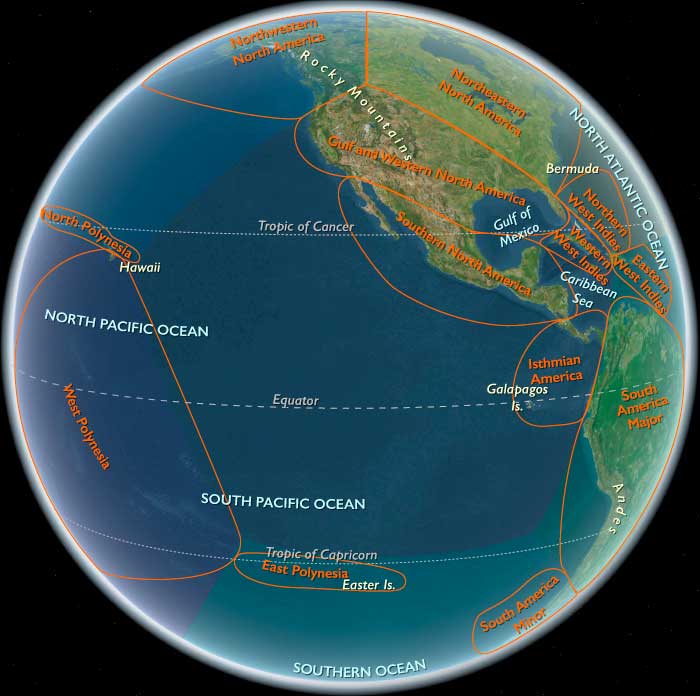
The Far West
View →Related Events
Showing 10 events out of 20 total
Cortés stays twenty days in Tlaxcala, giving his men time to recover from their wounds.
Cortés seems to have won the true friendship and loyalty of the senior leaders of Tlaxcala, among them Maxixcatzin and Xicotencatl the Elder, although he cannot win the heart of Xicotencatl the Younger.
The Spaniards agree to respect parts of the city, like the temples, and reportedly take only the things that are offered to them freely.
Ocotelolco is one of the four towns that form the state of Tlaxcala.
Its ruler, Maxixcatzin, is instrumental in forming the alliance between Tlaxcallan and the Spanish force against the Aztecs.
Xicotencatl, who is very old and of poor health, is instrumental in aligning the Txlacala with Cortes' Spaniards.
Tlaxcalan historian Diego Muñoz Camargo will write of him that he was more than one hundred and twenty years old and that he could only see Cortés if he had someone lift his eyelids for him.
He also writes that he had more than five hundred wives and concubines and consequently a large number of children.
His Nahuatl name is sometimes also spelled Xicotencatl and means "Person from the bumblebee edge place".
He is the ruler of Tizatlan, one of the four confederate altepeme of the Tlaxcallan state, of which Xicotencatl the Younger is considered to be the de facto ruler because of his father's weakened health.
Xicotencatl II is known primarily as the leader of the force dispatched from Tlaxcallan to intercept the forces of Cortés and his Totonac allies as they entered Tlaxcallan territory when coming inland from the Veracruz coast.
His actions are described in the letters of Cortés, the "Historia Verdadera" of Bernal Díaz del Castillo and in the history of Tlaxcala written by Muñoz Camargo some decades later.
As before with other native groups, Cortés preaches to the Tlaxcalan leaders about the benefits of Christianity.
The Cacques gives Cortes "the most beautiful of their daughters and nieces".
Xicotencatl the Elder's daughter is baptized as Dona Luisa, and Maxixcatzin's daughter is baptized as Dona Elvira.
They are given by Cortes to Pedro de Alvarado and Juan Velazquez de Leon respectively.
Another of Xicotencatl‘s daughters is baptized as Doña Lucía; she will marry Jorge de Alvarado.
Legends say that Cortés persuaded the four leaders of Tlaxcala to become baptized.
Maxixcatzin, Xicotencatl the Elder, Citalpopocatzin and Temiloltecutl receive the names of Don Lorenzo, Don Vicente, Don Bartolomé and Don Gonzalo.
It is impossible to know if these leaders understood the Catholic faith.
In any event, they apparently had no problems in adding the Christian "Dios" (God, in Spanish), the lord of the heavens, to their already complex pantheon of gods.
An exchange of gifts is made and thus begins the highly significant and effective alliance between Cortés and Tlaxcala.
Meanwhile, ambassadors from Moctezuma, who had been in the Spanish camp after the battles with the Tlaxcalans, continue to press Cortés to take the road to Mexico via Cholula, which is under Aztec control, rather than by Huexotzinco.
They are surprised Cortes has stayed in Tlaxcala so long "among a poor and ill-bred people".
Cholula, dating to the second century BCE, is one of the most important cities of Mesoamerica, the second largest, and probably the most sacred.
Its huge pyramid (larger in volume than the great pyramids of Egypt) makes it one of the most prestigious places of the Aztec religion.
I it appears, however, that Cortés as he marches to Tenochtitlan perceives Cholula more as a military threat to his rear guard than a religious center.
He sends emissaries first to try a diplomatic solution to entering the city.
Cortés has not yet decided to start a war with the Aztec Empire, and decides to offer a compromise.
He accepts the gifts of the Aztec ambassadors, but also accept the offer of the Tlaxcalans to provide porters and one thousand warriors on his journey to Cholula.
He also sends two men, Pedro de Alvarado, and Bernardino Vázquez de Tapia, directly to Tenochtitlan, as ambassadors and to scout a route.
There are contradictory reports about what happened at Cholula.
Moctezuma had apparently decided to resist with force the advance of Cortés and his troops, and it seems that Moctezuma had ordered the leaders of Cholula to try to stop the Spaniards.
Cholula has a very small army, because as a sacred city they put their confidence in their prestige and their gods.
The priests of Cholula according to the chronicles of the Tlaxcalteca expected to use the power of Quetzalcoatl, their primary god, against the invaders.
Cortéz and his men enters Cholula without active resistance, but they are not met by the city leaders and are not given food and drink on the third day.
Cempoalans report that fortifications are being constructed around the city.
The Tlaxcalans are also warning the Spaniards.
Finally, La Malinche, after talking to the wife of one of the lords of Cholula, informs Cortés that the locals plan to murder the Spaniards in their sleep.
Cortés, not knowing if the rumor is true or not, orders a preemptive strike, urged on by the Tlaxcalans, the enemies of the Cholulans.
Cortés confronts the city leaders in the main temple alleging that they are planning to attack his men.
They admit that they had been ordered to resist by Moctezuma, but they claim they have not followed his orders.
Regardless, the Spaniards on command seize and kill many of the local nobles to serve as a lesson.
They seize the Cholulan leaders Tlaquiach and Tlalchiac, then order the city set afire.
The troops start in the palace of Xacayatzin, then move on to Chialinco and Yetzcoloc.
Cortés in letters to his King claims that in three hours time his troops (helped by the Tlaxcalans) killed three thousand people and burned the city.
Another witness, Vázquez de Tapia, claims the death toll was as high as thirty thousand.
Of course, the reports by the Spaniards are usually gross exaggerations.
Since the women and children, and many men, had already fled the city, it is unlikely that so many were killed.
Regardless, the massacre of the nobility of Cholula is a notorious chapter in the conquest of Mexico.
The Azteca and Tlaxclateca histories of the events leading up to the massacre differ.
The Tlaxcalteca claim that their ambassador Patlahuatzin was sent to Cholula and had been tortured by the Cholula.
Thus, Cortés was avenging him by attacking Cholula.
The Azteca version puts the blame on the Tlaxcalteca claiming that they resented Cortés going to Cholula instead of Huexotzingo.
The massacre has a chilling effect, to say the least, on the other city states and groups affiliated with the Aztecs, as well as the Aztecs themselves.
Tales of the massacre persuade the other cities in the Aztec Empire to entertain seriously Cortés' proposals rather than risk the same fate.
Cortés now sends emissaries to Moctezuma with the message that the people of Cholula had treated him with trickery and had therefore been punished.
In one of his responses to Cortés, Moctezuma blames the commanders of the local Aztec garrison for the resistance in Cholula, and recognizing that his long-standing attempts to dissuade Cortés from coming to Tenochtitlan with gifts of gold and silver had failed, Moctezuma finally invites the Spaniards to visit his capital city, according to Spanish sources.
Tenochtitlán-Tlatelolco, home to more than one hundred and fifty thousand by 1519, the year the Spanish arrive, is laid out on a grid plan and covers more than 4.6 square miles (twelve square kilometers), much of this consisting of reclaimed swampland that forms a zone of fertile garden plots around the edge of the city.
At the center of Tenochtitlan is a large walled precinct, the focus of religious activity, containing the main temples (dedicated to Huitzilopochtli, Tlaloc the Rain God, and Quetzalcoatl); also found here are schools and priests' quarters, a court for the ritual ballgame, a wooden rack holding the skulls of sacrificial victims, and many commemorative sculptures.
Just outside the precinct walls lie the palaces of Montezuma II and earlier rulers.
A ten-mile (sixteen-kilometer) dike seals off part of the lake and controls flooding, so that Tenochtitlán, stands, Venice-like, on an island in an artificial lagoon.
Causeways link the island to the lake shore, and canals reach to all parts of the city.
Many of the disgruntled Aztec subjects flock to Cortés’ side as he marches inland with his army of about four hundred Spaniards and six thousand native Cemoalan and Tlaxcalan auxiliaries.
Cortés’ invasion force according to the Aztec calendar had landed in Mexico on the day One Reed, the calendar day of the hero-god Quetzalcoatl's birth.
Quetzalcoatl, a title taken by several historical rulers and heroes since the driving out of King Topiltzin Quetzalcoatl from the city of Tula in the twelfth century, has become central to mythological stories about the deification of the god-man and his promise to return and claim his earthly kingdom.
This still-current prophecy has apparently caused Moctezuma to regard Cortés as a deity, perhaps Quetzalcoatl himself.
The Spaniards reach the Aztec’s island capital of Tenochtitlan in November 1519, and, after a study of omens and prophecies persuades Motecuhzoma that the invaders are gods, he concludes that he is doomed.
He chooses not to fight the Europeans but to deter them by trickery, magic, and gift offerings.
Failing in this, Moctezuma permits Cortés and his men to enter Tenochtitlán unopposed by the formidable imperial armies.
Cortés and his forces enter the island capital of the Mexica-Aztecs, on November 8, 1519.
Of all the cities in Europe, only Constantinople is larger than Tenochtitlan.
The most common estimates put the population at around sixty thousand to over three hundred thousand people.
The largest city in Spain, for example, is Seville, which has a population of only thirty thousand.
According to the Aztec chronicles recorded by Sahagún, the Aztec ruler Moctezuma II welcomes Hernán Cortés, El Caudillo, with great pomp, on the Great Causeway.
According to Sahagún's manuscript, Moctezuma personally dressed Cortes and his commanders with flowers.
In turn, Cortés attempted to embrace the Emperor but was restrained by a courtier.
This contradiction between "the arrogant emperor' and the "humble servant of Quetzalcoatl" has been problematic for historians to explain and has led to much speculation.
However, all the proscriptions and prohibitions regarding Moctezuma and his court had been established by Moctezuma and were not part of traditional Aztec customs.
Those prohibitions had already caused friction between Moctezuma and the pillis (noble classes).
There is even an Aztec legend in which Huemac, the legendary last lord of Tollan Xicotitlan, instructed Moctezuma to live humbly and eat only the food of the poor, to divert a future catastrophe.
Thus, it seems out of character for Moctezuma to violate rules that he himself had promulgated.
Yet, as supreme ruler, he had the power to break his own rules.
Moctezuma has the royal palace of Axayácatl, Moctezuma's father, prepared for Cortes.
Later the same day that the Spanish expedition and their allies enter Tenochtitlan, Moctezuma come to visit Cortés and his men.
What happened in this second meeting remains controversial.
According to several Spanish versions, some written years or decades later, Moctezuma first repeated his earlier, flowery welcome to Cortés on the Great Causeway, but then went on to explain his view of what the Spanish expedition represented in terms of Aztec tradition and lore, including the idea that Cortés and his men (pale, bearded men from the east) were the return of characters from Aztec legend.
At the end of this explanation, the Emperor pledges his fealty to the King of Spain and accepts Cortés as the King's representative.
According to Diaz, Moctezuma said to Cortes, "As for your great king, I am in his debt and will give him of what I possess."
While in the Axayacatl palace, the Spaniards discover the secret room where Moctezuma keeps the treasure he had inherited from his father.
The treasure consists of a "quantity of golden objects - jewels and plates and ingots".
Diaz noted, "The sight of all that wealth dumbfounded me."
Cortés later asks Moctezuma to allow him to erect a cross and an image of Virgin Mary next to the two large idols of Huichilobos and Tezcatlipoca, after climbing the one hundred and fourteen steps to the top of the main temple pyramid.
Moctezuma and his priests are furious at the suggestion, with Moctezuma claiming his idols, "give us health and rain and crops and weather, and all the victories we desire.”
The Mexica now kill seven Spanish soldiers Cortes had left on the coast, including Cortes' Villa Rica Constable Juan de Escalante, and many Totonacs.
Cortés, along with five of his captains and Dona Marina and Aguilar, persuades Moctezuma to "come quietly with us to our quarters, and make no protest...if you cry out, or raise any commotion, you will immediately be killed."
Moctezuma is later implicated by Qualpopoca and his captains, who had killed the Spanish soldiers.
Though these captains of Moctezuma are sentenced to be "burned to death", Moctezuma continues to remain a prisoner, fearing a "rebellion in his city" or that the Spanish may "try to set up another prince in his place."
This, despite Moctezuma's chieftains, nephews and relations suggesting they should attack the Spanish.
Moctezuma as of November 14, 1519, is Cortes' prisoner as insurance against any further resistance.
Moctezuma lives with Cortés in the palace of Axayácatl and continues to act as Emperor, subject to Cortés' overall control.
Cacamatzin, king of Texcoco, the second most important city of the Aztec Empire, is a son of the previous king Nezahualpilli by one of his mistresses.
Traditionally, the Texcocan kings are elected by the nobility from the most able of the royal family.
Cacamatzin's election to the throne in 1515 is said to have been made under considerable pressure from Moctezuma II, lord of Tenochtitlán.
Moctezuma II wishes to lessen Texcoco's power in favor of greater centralization in Tenochtitlán.
Moctezuma II, under orders from Cortes, had Cacamatzin arrested "in his own palace while discussing war-preparations".
The Caciques of Coyoacan, Iztapalapa, and Tacuba are also arrested.
Moctezuma and his caciques are forced after the treason of Cacamatzin to take a more formal oath of allegiance to the King of Spain, though Moctezuma "could not restrain his tears".
Moctezuma told his Caciques that "their ancestral tradition, set down in their books of records, that men would come from the direction of the sunrise to rule these lands" and that "He believed...we were these men."
Cortés sends expeditions to investigate the Aztec sources of gold in the provinces of Zacatula, Tuxtepec, and the land of the Chinantecs.
Moctezuma is now made to pay a tribute to the Spanish king, which includes his father's treasure.
These the Spaniards melt down to form gold bars stamped with an iron die.
Finally, Moctezuma lets the Spaniards build an altar on their temple, next to the Aztec idols.
The Aztec gods tell the Mexican papas, or priests, they will not stay unless the Spaniards are killed and driven back across the sea.
Moctezuma warna Cortes to leave at once, as their lives are at risk.
Many of the nobility rally around Cuitláhuac, the brother of Moctezuma and his heir-apparent; however, most of them can take no overt action against the Spanish unless the order is given by the Emperor.
Moctezuma informs Cortés that a much larger party of Spaniards consisting of nineteen ships and fourteen hundred soldiers under the command of Pánfilo de Narváez had arrived.
Narváez had been sent by Governor Velázquez from Cuba to kill or capture Cortés.
Leaving his two hundred "least reliable soldiers" under the command of Pedro de Alvarado to guard Moctezuma in Tenochtitlan, Cortés sets out against Narváez, who has advanced onto Cempoala.