Early Antiquity
2637 BCE to 909 BCE
Related Events
Showing 4 events out of 4 total
Polynesia (2637 – 910 BCE): Lapita Horizons, Voyaging Science, and the Unreached North
Regional Overview
Across the open Pacific, Polynesia lay poised for its first true colonization.
While the great civilizations of Eurasia turned to bronze, iron, and empire, this oceanic world entered an age of exploration defined not by metals but by canoes, stars, and memory.
Between the mid-third and early first millennium BCE, Austronesian voyagers—descendants of Lapita pioneers—pushed eastward from the Bismarck and Fijian arcs, testing routes that would one day span a third of the globe.
The southern frontier, in Tonga and Samoa, saw permanent settlement by about 900 BCE.
Farther east and north, the Societies, Marquesas, Hawaiʻi, and Rapa Nui remained pristine: mapped in mind, not yet in habitation.
Geography and Environmental Context
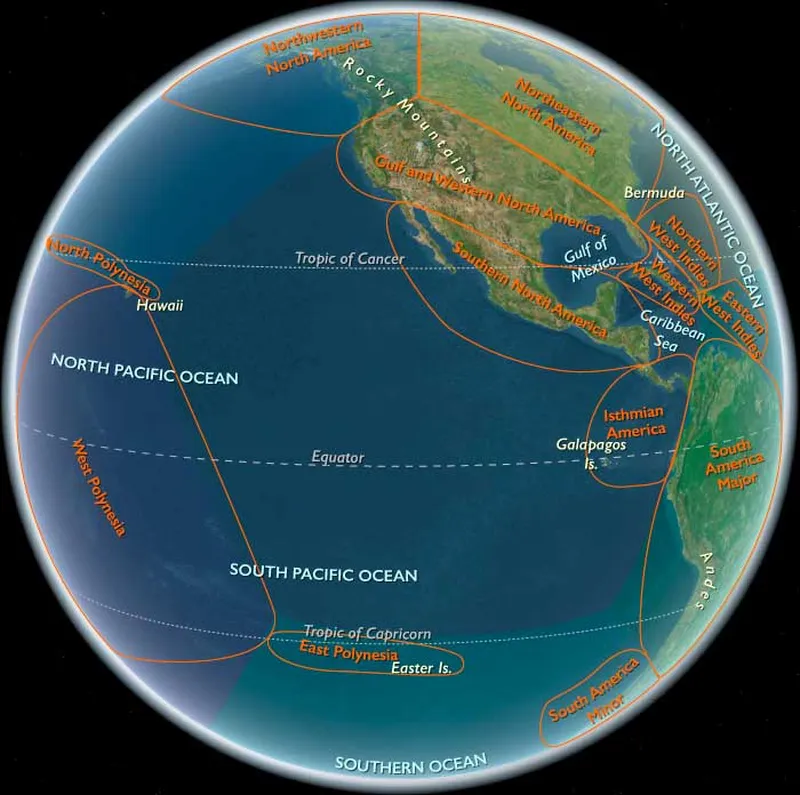
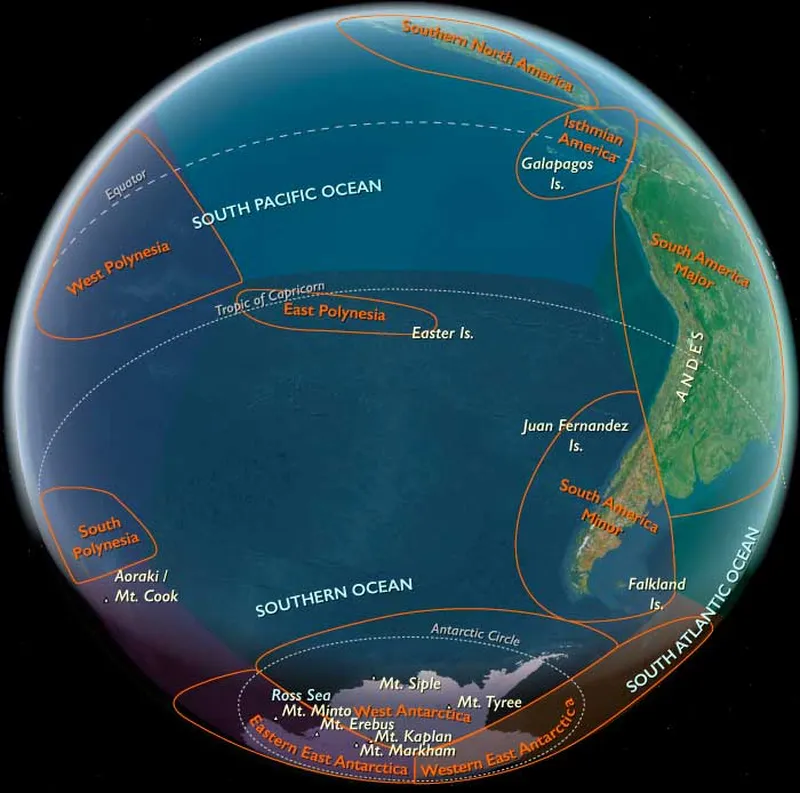
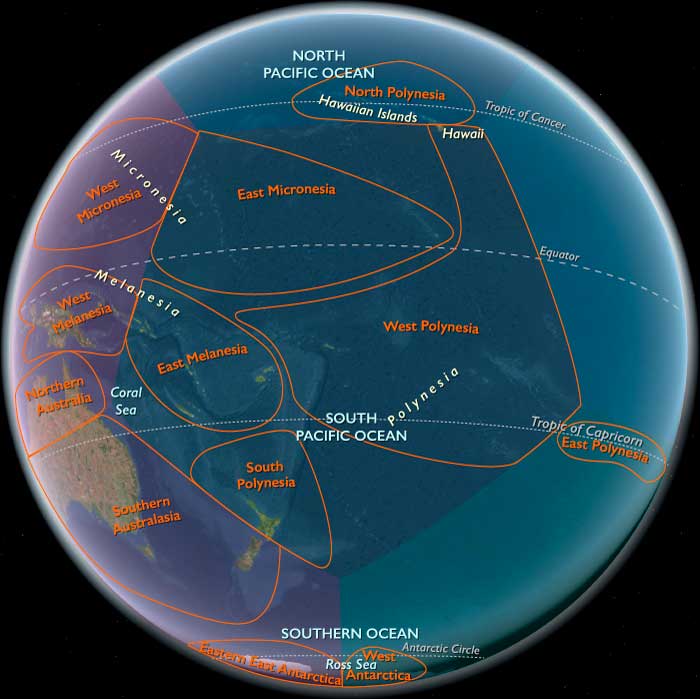
The Polynesian triangle—bounded by future Hawaiʻi, New Zealand, and Rapa Nui—was still largely empty of people.
To the south and west, Lapita societies thrived along the Fiji–Tonga–Samoa axis, a zone of fertile volcanic soils, reef-sheltered coasts, and abundant breadfruit and taro.
Northward stretched the high, forested islands of the Hawaiian chain and the remote atoll of Midway; eastward, the volcanic peaks of the Societies and Marquesas, the coral ridges of the Cooks, and the lonely cones of Rapa Nui and Pitcairn awaited discovery.
Across these immense distances, the Pacific’s trade winds, countercurrents, and celestial regularities provided the framework for navigation.
Climate and Environmental Shifts
Holocene stability reigned.
Regular trade-wind seasons, interspersed with localized droughts and Kona-type storms, defined the pattern familiar through later millennia.
Sea levels had stabilized close to modern elevations, lagoons and atolls matured ecologically, and coral reef systems reached their pre-human equilibrium—a pristine baseline soon to host the transported landscapes of Polynesian horticulture.
Societies, Settlement, and Expansion
By the early first millennium BCE, Lapita communities from Near Oceania had developed into full maritime chiefdoms.
They founded Tonga and Samoa, bringing with them domesticated animals, tubers, tree crops, and an integrated horticultural–fishing economy.
Their settlements, organized around coastal hamlets and beach-ridge cemeteries, formed the first enduring societies in what would become Polynesia proper.
These colonists combined intricate kinship systems with lineage-based authority expressed through exchange and feasting.
Beyond them, the high islands and atolls of central and northern Polynesia remained unvisited—the last great frontier of the human voyage.
Economy and Technology
Lapita subsistence depended on mixed horticulture, arboriculture, and reef harvesting.
Stone and shell adzes, barkcloth looms, and obsidian tools underpinned daily life.
Pottery—characterized by its distinctive dentate-stamped designs—served as both utilitarian ware and a marker of cultural identity.
The real technological revolution, however, lay in seamanship: the refinement of the double-hulled canoe, the balanced crab-claw sail, and the astronomical navigation system that made deliberate ocean crossings routine.
These innovations transformed the Pacific from a barrier into a continent of water.
Movement and Interaction Corridors
A dense voyaging corridor linked Fiji, Tonga, and Samoa, forming the nucleus of the later Polynesian exchange sphere.
Exploratory probes reached eastward toward the Cook and Society Islands and northward into uncharted waters, where Hawaiʻi’s volcanic silhouettes awaited future landfall.
Each expedition tested wind patterns, star paths, and ocean swells, gradually extending the mental map of the ocean.
The Lapita maritime network thus became the laboratory from which Polynesian wayfinding emerged.
Belief and Symbolism
Lapita iconography—incised faces, spirals, and concentric motifs—encoded ancestral and cosmological themes, linking the sea, lineage, and creation.
Sacred beach terraces, aligned to the horizon, may represent early forms of marae or ahu, foreshadowing the ritual architecture of later Polynesia.
Voyaging itself was a sacred act: canoes were consecrated, navigators initiated, and landfalls interpreted as fulfillments of ancestral design.
Environmental Adaptation and Resilience
Colonists transported a complete biocultural package—taro, yam, breadfruit, coconut, pig, dog, chicken, and the social institutions to manage them.
They sited villages in leeward zones sheltered from cyclones, practiced intercropping for soil stability, and established portable ecosystems that could regenerate on any new island.
In yet-unsettled regions, natural ecosystems continued undisturbed, providing the environmental blank slate that later settlers would transform into productive landscapes.
Regional Synthesis and Long-Term Significance
By 910 BCE, Tonga and Samoa stood as the Lapita world’s eastern bastions, while the vast remainder of Polynesia remained silent and untouched.
Yet every element of the later Polynesian achievement was already in place—the technology, cosmology, and navigational genius that would soon knit the central and northern Pacific into a single cultural sphere.
This epoch thus represents Polynesia in potential: a constellation of islands awaiting connection, its human story poised at the threshold of discovery.
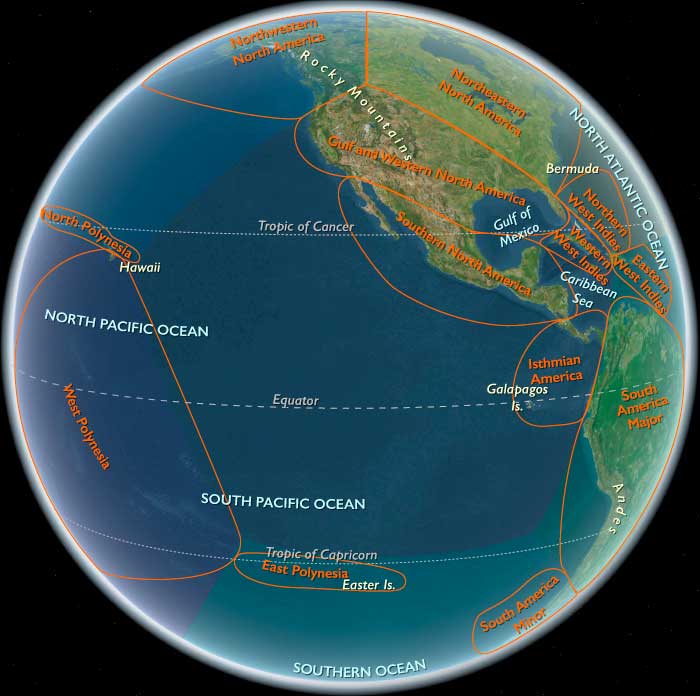
West Polynesia (2,637 – 910 BCE): Proto-Settlement Horizons — Lapita Approaches and First Colonizations (Tonga–Samoa)
Geographic & Environmental Context
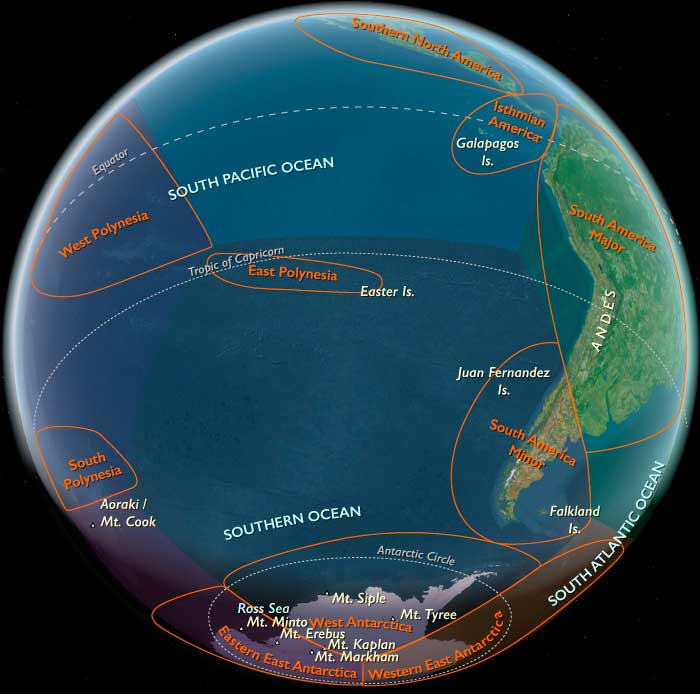
West Polynesia includes Hawaiʻi Island (the Big Island); Tonga (Tongatapu, Haʻapai, Vavaʻu); Samoa (Savaiʻi, Upolu, Tutuila/Manuʻa); Tuvalu and Tokelau (low atolls); the Cook Islands (Rarotonga, Aitutaki, Mangaia, etc.); Society Islands (Raiatea–Tahiti–Moʻorea–Bora Bora); and the Marquesas (Nuku Hiva, Hiva Oa).
-
Anchors (settlement focus): Tongatapu–Haʻapai–Vavaʻu (Tonga), Savaiʻi–Upolu (Samoa); Society Islands–Marquesas–Cooks–Hawaiʻi Island remain unsettled; Tuvalu–Tokelau likely unsettled or only intermittently visited at the end of this span.
Climate & Environmental Shifts
-
Holocene stability with episodic droughts; lagoons and leeward plains productive; reliable trade winds support long-range sailing.
Subsistence & Settlement
-
Lapita voyagers (c. 900–800 BCE) colonize Tonga and Samoa: establish coastal hamlets on leeward flats and bay heads.
-
Horticulture: taro, yam, banana, breadfruit; arboriculture (pandanus, coconut) planted; managed fallows.
Technology & Material Culture
-
Lapita dentate-stamped ceramics, obsidian and high-quality cherts, one- and double-hulled canoes (waʻa), shell adzes, drilled pearlshell fishhooks, barkcloth (tapa).
Movement & Interaction Corridors
-
Backbone route: Fiji–Tonga–Samoa; exploratory probes reach Cooks and Societies late in the epoch (no firm permanent settlement); Marquesas and Hawaiʻi Island remain beyond routine circuits.
Cultural & Symbolic Expressions
-
Lapita ancestral iconography on pottery; early marae/ahu-like ritual precincts on beach ridges inferred from alignments.
Environmental Adaptation & Resilience
-
Transported landscapes: portable cultigens, commensals (dogs, pigs, chickens), and agroforestry mosaics engineered for resilience; shoreline hamlets adopt storm-avoidance siting.
Transition
By ~910 BCE, Tonga and Samoa are settled Lapita frontiers; farther east and north (Cooks, Societies, Marquesas, Hawaiʻi Island), the ecological stage remains pristine, awaiting later pulses.
The majority of the far-flung islands of Oceania remain uninhabited, so far as is known, at the beginning of recorded history.
People from Melanesia and Micronesia migrate toward the Polynesian triangle, a region of the Pacific Ocean with three island groups at its corners: Hawaii, Easter Island (Rapa Nui), and New Zealand.
It is often used as a simple way to define Polynesia.
At the center is Tahiti with Samoa to the west.
The Polynesian people, by ancestry, are considered to be a subset of the sea-migrating Austronesian people and the tracing of Polynesian languages places their prehistoric origins in the Malay Archipelago.
There are three theories regarding the spread of humans across the Pacific to Polynesia.
These are outlined well by Kayser et al. (2000) and are as follows:
• Express Train model: A recent (circa three thousand years ago) expansion out of Southeast Asia, predominantly Taiwan, via Melanesia but with little genetic admixture between those migrating and the existing native population, reaching western Polynesian islands around two thousand years ago.
The majority of current genetic, linguistic, and archaeological data supports this theory.
• Entangled Bank model: Supposes a long history of cultural and genetic interactions among southeast Asians, Melanesians, and already-established Polynesians.
• Slow Boat model: Similar to the express-train model but with a longer hiatus in Melanesia along with admixture, both genetically, culturally and linguistically with the local population.
This is supported by the Y-chromosome data of Kayser et al. (2000), which shows that all three haplotypes of Polynesian Y chromosomes can be traced back to Melanesia.
Speakers of Austronesian languages spread throughout the islands of Southeast Asia between circa 3000 and 1000 BCE.
These people, according to linguistic and archaeological evidence, originated from aborigines in Taiwan as tribes whose natives were thought to have arrived through South China at the beginning of the eighth millennium to the edges of western Micronesia and on into Melanesia.
The archaeological record shows well-defined traces of this expansion, which allow the path it took to be followed and dated with a degree of certainty.
It is thought that roughly thirty-five hundred years ago, the Lapita culture appeared in the Bismarck Archipelago, northwest Melanesia.
This culture is argued to have either been developed there or, more likely, to have spread from China/Taiwan.
The most eastern site for Lapita archaeological remains recovered so far through archaeology in Samoa is at Mulifanua on Upolu.
The Mulifanua site, where four thousand two hundred and eighty-eight pottery shards have been found and studied, has a true age of circa three thousand years BP, based on carbon-14 dating.
Within a mere three or four centuries between 1300 and 900 BCE, the Lapita culture spread six thousand kilometers further to the east from the Bismarck Archipelago, until it reached as far as Fiji, Tonga, and Samoa, which were populated around two thousand years ago.
In this region, the distinctive Polynesian culture will develop, sharing common traits in language, customs, and society.