Global
Related Events
Showing 10 events out of 95 total
We are Hominids, or Hominidae, also known as great apes.
Our taxonomic family of primates includes four extant genera: the chimpanzees (Pan) with two species; gorillas (Gorilla) with two species; humans (Homo) with one species; and orangutans (Pongo) with two species.
Homininae, a subfamily of Hominidae that includes members of hominini—humans, as well as gorillas, chimpanzees, bonobos and some extinct relatives—comprises all hominids that arose after the split from orangutans (Ponginae).
A number of known extinct genera are grouped with humans in the Homininae subfamily, others with orangutans in the Ponginae subfamily.
The most recent common ancestor of the Hominidae lived roughly fourteen million years ago, when the ancestors of the orangutans speciated from the ancestors of the other three genera.
The subtribe Hominina is the "human" branch, including the genus Homo, which has its beginnings in this eon, which spans a quarter of a million years.
The fossil record suggests that individuals of the species Gigantopithecus blacki are the largest apes that ever lived, standing up to three meters (nine point eight feet feet) and weighing up to five hundred and forty kilograms (one thousand one hundred and ninety pounds).
Gigantopithecus, having come into existence perhaps nine million years ago, exists to as recently one hundred thousand years ago in what is now Nepal, China, India, and Vietnam.
This places Gigantopithecus in the same time frame and geographical location as several hominin species.
In addition to the Homo genus to which we belong, other members of the family include Orrorin, Ardipithecus, Kenyanthropus, and the australopithecines Australopithecus and Paranthropus.
The name of the genus Orrorin means "original man" in Tugen, and the name of the only classified species, O. tugenensis, derives from Tugen Hills in Kenya, where the first fossil was found in 2000, followed by another score or so more in the ensuing years.
Apparently a climber of trees, Orrorin lives in dry evergreen forest environment estimated at six point one million to five point seven million years ago (Mya).
If Orrorin proves to be a direct human ancestor, then australopithecines such as Australopithecus afarensis ("Lucy") may be considered a side branch of the hominid family tree: Orrorin is both earlier, by almost three million years, and more similar to modern humans than is A. afarensis.
The relationship of the Ardipithecus genus to human ancestors, and whether it is a hominin, or not, is unknown.
The literature describes two species: A. kadabba, dated to approximately five point sixmillion years ago (late Miocene), and A. ramidus, which lived about four point four million years ago during the early Pliocene.
Like most hominids, but unlike all previously recognized hominins, it had a grasping hallux or big toe adapted for locomotion in the trees.
It is not confirmed how much other features of its skeleton reflect adaptation to bipedalism on the ground as well.
Like later hominins, Ardipithecus had reduced canine teeth.
The brain of Ardipithecus ramidus, measuring between three hundred and three hundred and fifty square centimeters, is slightly smaller than a modern bonobo or female common chimpanzee brain, but much smaller than the brain of australopithecines like Lucy (around four hundred to five hundred and fifty square kilometers) and roughly twenty percent the size of the modern Homo sapiens brain.
Kenyanthropus platyop, a three point five million to three point two million year-old (Pliocene) hominin fossil discovered in Lake Turkana, Kenya, is believed to have lived in a “mosaic” environment of grassland and some forested areas.
In contrast, their close relative, A. afarensis, found in sites such as Laetoli, Tanzania, and Hadar, Ethiopia, are believed to have spent a lot of time among trees.
Maeve Leakey proposed in 2001 that the fossil represents an entirely new hominine genus, while others classify it as a separate species of Australopithecus, Australopithecus platyops, and yet others interpret it as an individual of Australopithecus afarensis.
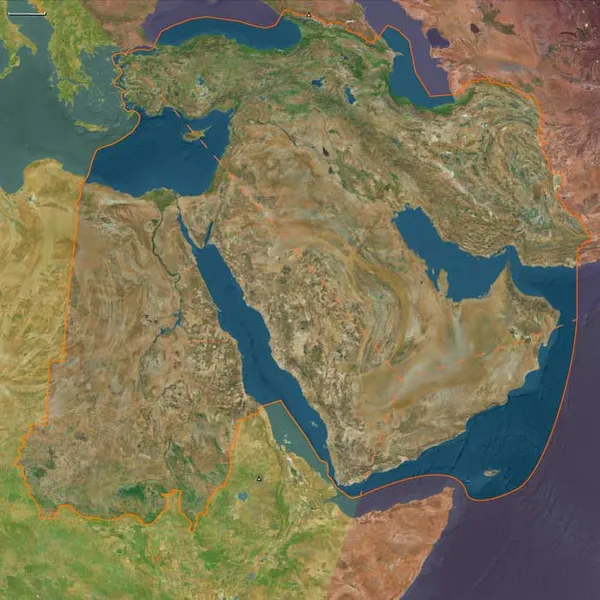
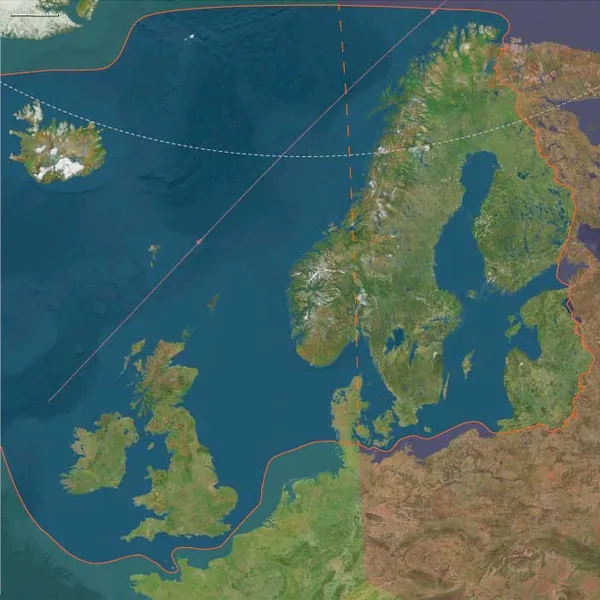
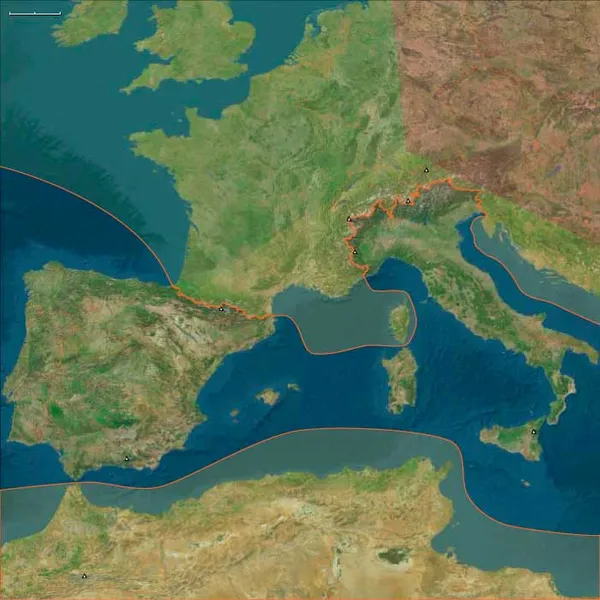
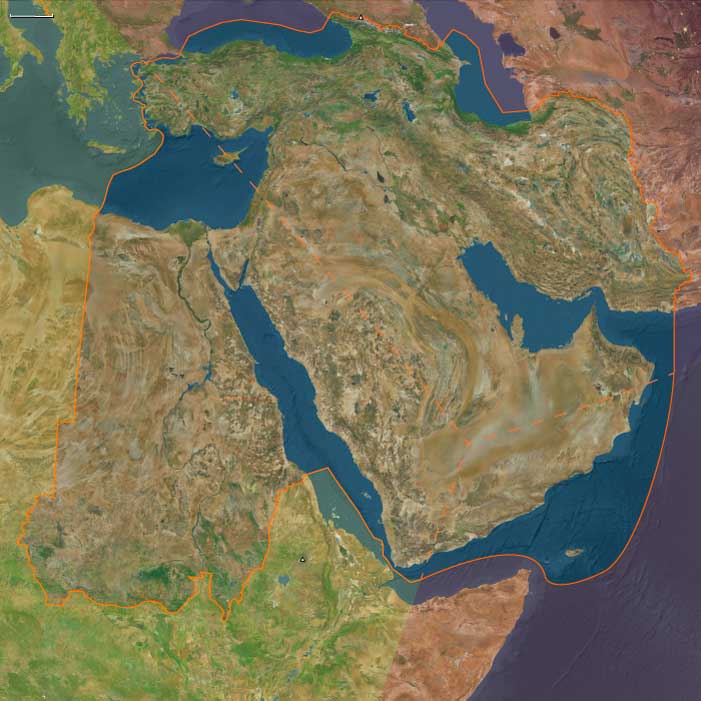
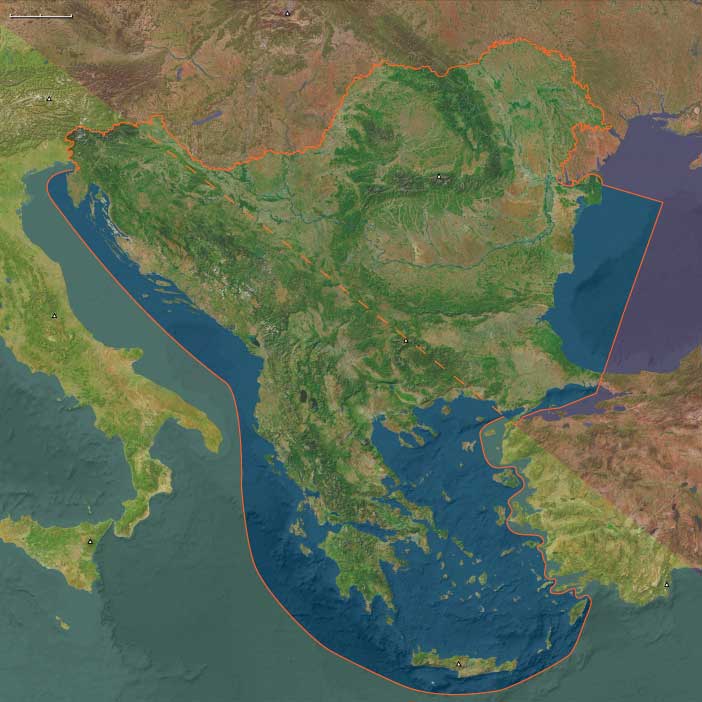
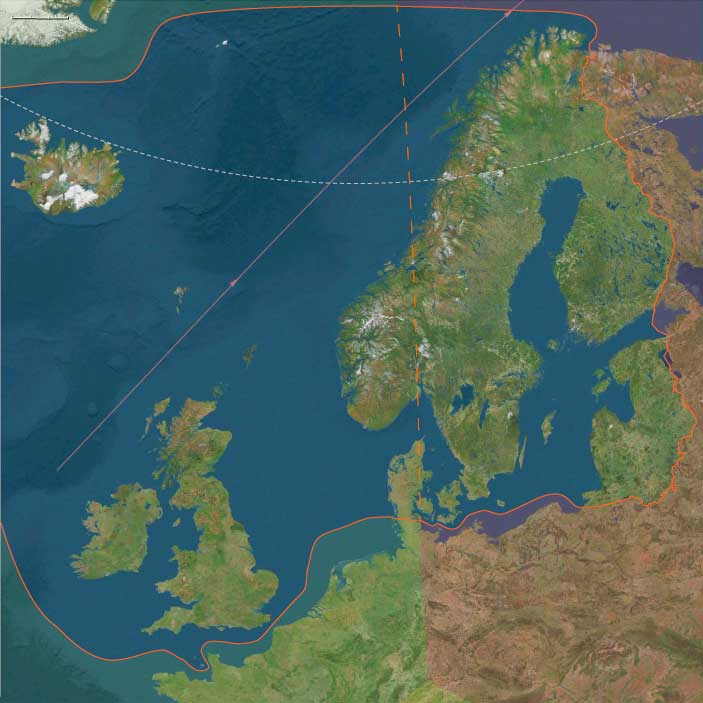
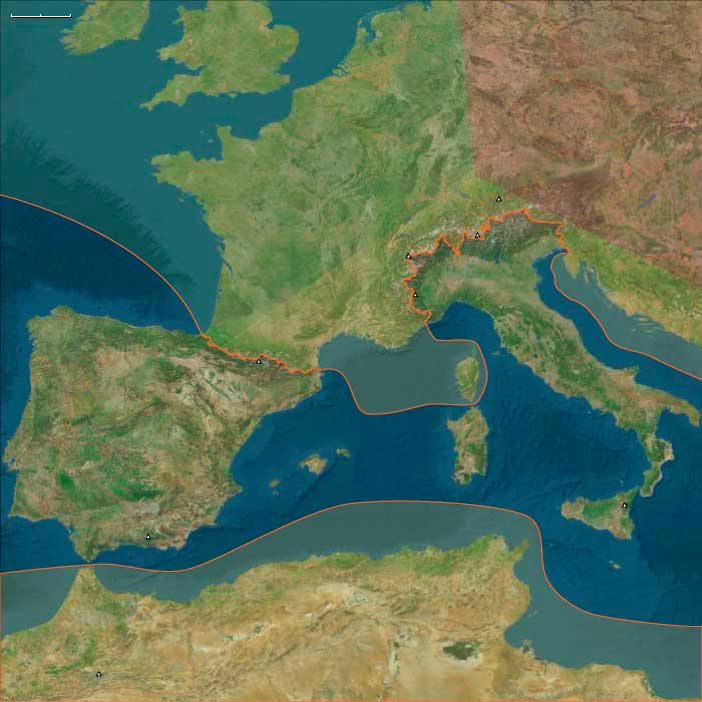
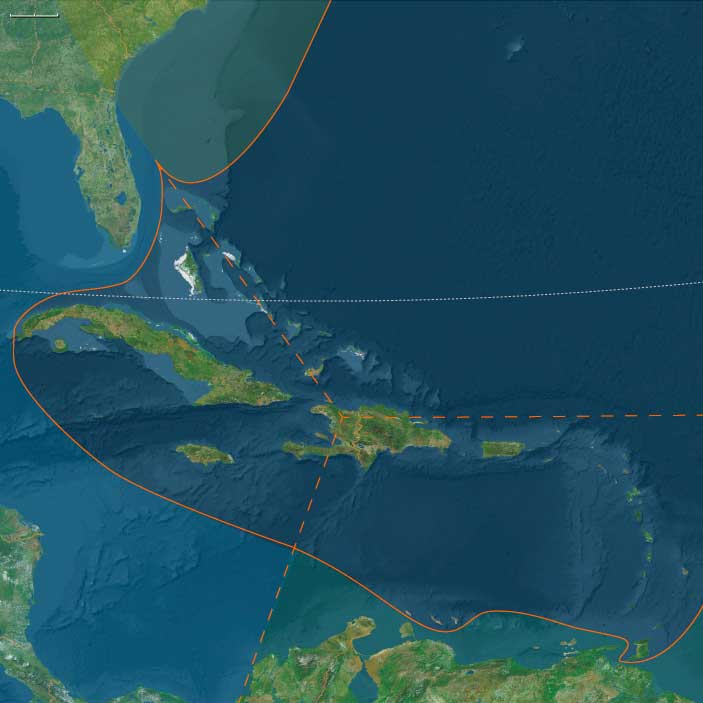
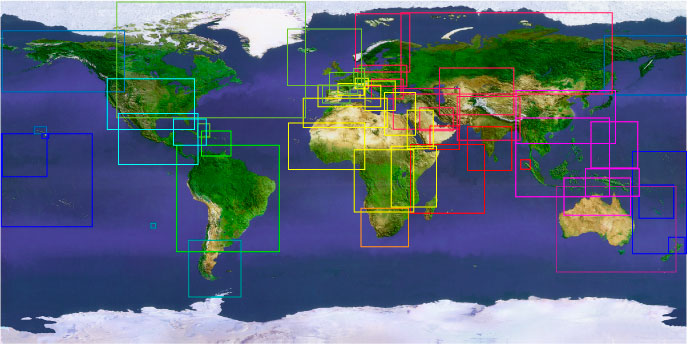
We begin in the easternmost subregions and move westwardly around the globe, crossing the equator as many as six times to explore ever shorter time periods as we continue to circle the planet. The maps of the regions and subregions change to reflect the appropriate time period.
Narrow results by searching for a word or selecting from one or more of a dozen filters.
Humans—the genus Homo—may have descended from australopithecine ancestors, while the genus Ardipithecus is a possible ancestor of the australopithecines.
Australopithecine is the general term for any species in the related genera of Australopithecus and Paranthropus.
They are bipedal and dentally similar to humans, but with a brain size not much larger than that of modern apes.
It appears that the Australopithecus genus evolved in eastern Africa around four million years ago before spreading throughout the continent and eventually becoming extinct two million years ago.
During this time period several australopith species emerges, including Australopithecus afarensis, A. africanus, A. anamensis, A. bahrelghazali, A. garhi and A. sediba.
Opinions differ as to whether the species aethiopicus, boisei, and robustus should be included within the genus Australopithecus, and there is no current consensus as to whether they should be placed in the distinct group of hominids now called the "robust australopiths” or, Paranthropus (Greek para, "beside"; Greek anthropos, “human”).
The fossil record seems to indicate that Australopithecus is the common ancestor of Paranthropus, and most likely the genus Homo, which includes modern humans.
Though the intelligence of these early hominids is likely no more sophisticated than modern apes, the bipedal stature is the key evidence that distinguishes the group from previous primates, who were quadrupeds.
Most species of Australopithecus are no more adept at tool use than modern nonhuman primates, yet modern African apes, chimpanzees, and most recently gorillas, have been known to use crack open nuts with stones and use long sticks to dig for termites in mounds, and chimpanzees have been observed using spears (not thrown) for hunting.
However, some have argued that A. garhi used stone tools due to a loose association of this species and butchered animal remains.
Trace element studies of the strontium/calcium ratios in robust australopith fossils in 1992 suggested the possibility of animal consumption, as they did in 1994 using stable carbon isotopic analysis.
Paranthropus stands roughly one point three to one point four meters (four and a quarter to four and a half feet) tall and is well muscled.
More massively built craniodentally, Paranthropus tends to sport gorilla-like sagittal crests on the cranium that anchor massive temporalis muscles of mastication.
The emergence of the robusts could be either a display of divergent or convergent evolution.
Australopithecus afarensis and A. anamensis had, for the most part, disappeared by the time Paranthropus first appears, roughly two point seven million years ago, sharing the earth with some early examples of the Homo genus, such as Homo habilis, H. ergaster, and possibly even H. erectus.
Most species of Paranthropus have significantly larger braincases than Australopithecus, with a brain about forty percent of the size of a modern human.
Paranthropus is associated with stone tools both in southern and eastern Africa, although there is considerable debate whether they were made and utilized by these robust australopithecines or contemporaneous Homo.
Most believe that early Homo was the toolmaker, but hand fossils from Swartkrans, South Africa, indicate that the hand of this robust species was also adapted for precision grasping and tool use.
Most Paranthropus species seem almost certainly neither to have used language nor to have controlled fire, although they are directly associated with the latter at Swartkrans.
Its physiology specifically tailored to a diet of grubs and plants, Paranthropus is thought to have lived in wooded areas rather than the grasslands of the Australopithecus.
This would have made it more reliant on favorable environmental conditions than members of the genus Homo, such as Homo habilis, which would eat a much wider variety of foods.
Therefore, due to poor adaptation, Paranthropus boisei/Robust Australopithecus dies out, leaving no descendants.
The Quaternary Period, the current and most recent of the three periods of the Cenozoic Era in the geologic time scale of the International Commission on Stratigraphy (ICS), follows the Neogene Period and spans from 2.588 ± 0.005 million years ago to the present.
Typically defined by the cyclic growth and decay of continental ice sheets driven by Milankovitch cycles and the associated climate and environmental changes that occurred, the Quaternary Period is divided into two epochs: the Pleistocene and the Holocene (eleven thousand seven hundred years ago to today).
The Pleistocene spans the world's recent period of repeated glaciations.
With the onset of the Quaternary glaciation, the first of the several ice ages to follow, decreasing oceanic evaporation results in a drier climate in East Africa and an expansion of the savanna at the expense of forests.
Reduced availability of fruits forces some Australopithecines to unlock new food sources found in the drier savanna climate, representing a move from the mostly frugivorous or omnivorous diet of Australopithecus to the carnivorous scavenging lifestyle of early Homo.
Paranthropus species are still present in the beginning of the Pleistocene, along with early human ancestors, but they disappear during the lower Paleolithic.
The Lower Paleolithic, the earliest subdivision of the Paleolithic or Old Stone Age, begins around two and a half million million years ago when the first evidence of craft and use of stone tools by hominids appears in the current archaeological record.
The genus Homo, which includes modern humans and species closely related to them, is estimated to be about two point three to two point four million years old, evolving from australopithecine ancestors with the appearance of Homo habilis.
Specifically, H. habilis is considered the direct descendant of Australopithecus garhi, a gracile species that lived about two and a half million years ago.
The most salient physiological development between the two species is the increase in cranial capacity, from about four hundred and fifty cubic centimeters (twenty-seven cubic inches) in A. garhi to six hundred cubic centimeters (thirty-seven cubic inches) in H. habilis.
Homo habilis (“Handy-man") lives from approximately two point three to one point four million years ago at the beginning of the Pleistocene period.
With a cranial capacity slightly less than half of the size of modern humans, standing no more than one point three meters meters four feet three inches) tall, and with disproportionately long arms compared to modern humans, it has a less protruding face than the australopithecines from which it is thought to have descended.
Despite the ape-like morphology of the bodies, primitive stone tools often accompany H. habilis remains.
Homo habilis has often been thought to be the ancestor of the more gracile and sophisticated Homo ergaster, which in turn gives rise to the more human-appearing species, Homo erectus.
Some experts propose excluding H. habilis from the genus Homo, and renaming as "Australopithecus habilis.” Debates continue over whether H. habilis is a direct human ancestor, and whether all of the known fossils are properly attributed to the species.
New findings in 2007, however, suggest that the two species coexisted and may be separate lineages from a common ancestor instead of H. erectus being descended from H. habilis.
Homo erectus (from the Latin ērĭgĕre, "to put up, set upright”) originated in Africa at the end of the Pliocene epoch and spread as far as China and Java to the later Pleistocene, about one point eight to one point three million years ago.
There is still disagreement on the subject of the classification, ancestry, and progeny of H. erectus, with two major alternative hypotheses: erectus may be another name for Homo ergaster, and therefore the direct ancestor of later hominids such as Homo heidelbergensis, Homo neanderthalensis, and Homo sapiens; or it may be an Asian species distinct from African ergaster.
Homo erectus is the only hominid species found in fossil records for much of the Pleistocene.
The phenomena called the Saharan pump has been used to date four waves of human migration from Africa of which H. erectus is the first, migrating from Africa around two million years ago into Southeast and East Asia.
This species will migrate through much of the Old World, giving rise to many variations of humans, notably Homo ergaster, widely accepted to be the direct ancestor of later hominids such as Homo heidelbergensis, Homo sapiens, and Homo neanderthalensis rather than Asian Homo erectus.
Genetic studies suggest that the functional DNA of modern humans and Homo neanderthalensis diverged five hundred thousand years before the present time.
Similarly, the few specimens of Homo rhodesiensis have also occasionally been classified as a subspecies, but this is not widely accepted.
The analysis indicated that modern humans, Neanderthals, and the Denisova hominin last shared a common ancestor around one million years ago and that this new hominin species was the result of an early migration out of Africa, distinct from the later out-of-Africa migrations associated with Neanderthals and modern humans, but also distinct from the earlier African exodus of Homo erectus.
The estimated time of divergence between Denisovans and Neanderthals is six hundred and forty thousand years ago.
That between both these groups and modern Africans is eight hundred and four thousand years ago.
The divergence of the Denisova mtDNA may result either from the persistence of a lineage purged from the other branches of humanity through genetic drift or else an introgression from an older hominin lineage.
Homo ergaster (or erectus) makes large stone hand-axes out of flint and quartzite, at first quite rough and later "retouched" by additional, more subtle strikes at the sides of the flakes during the period known as the Acheulean, from seven hundred thousand to three hundred thousand years before the present.
Cranial capacity has again doubled within the Homo genus from H. habilis to an archaic Homo species called Homo heidelbergensis by six hundred thousand years ago.
The cranial capacity of H. heidelbergensis overlaps with the range found in modern humans.
Sites such as Boxgrove in Sussex illustrate the later arrival in the archaeological record of H. heidelbergensis around five hundred thousand years years ago.
Homo heidelbergensis is the second human wave to be pumped from Africa into the Middle East and Western Europe.
These early peoples make Acheulean flint tools (hand axes) and hunt the large native mammals of the period.
They are thought to have driven elephants, rhinoceroses, and hippopotamuses over the tops of cliffs or into bogs to kill them more easily.
These kill sites, often at waterholes where animals would gather to drink, were interpreted up until the 1970s as being where Acheulean tool users killed game, butchered their carcasses, and then discarded the tools they had used.
Since the advent of zooarchaeology, which has placed greater emphasis on studying animal bones from archaeological sites, this view has changed.
Many of the animals at these kill sites have been found to have been killed by other predator animals, so it is likely that humans of the period supplemented hunting with scavenging from already dead animals.
The extreme cold of the Anglian Stage, from four hundred and seventy-eight thousand to four hundred and twenty-four thousand years ago, is likely to have driven humans out of Britain altogether and the region does not appear to have been occupied again until the ice receded during the Hoxnian Stage.