
A combined Greek-Genoese fleet of thirty-eight or…
1263 CE
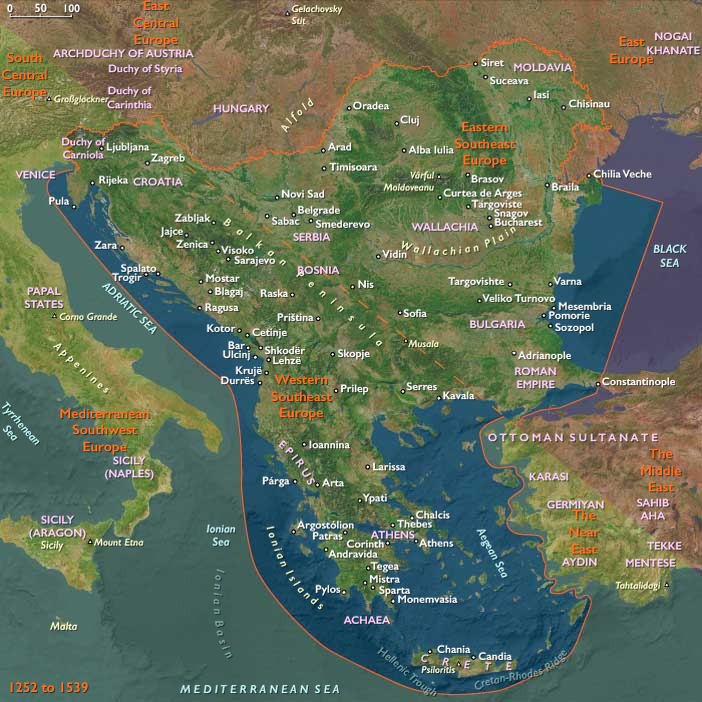
A combined Greek-Genoese fleet of thirty-eight or thirty-nine galleys and ten light cutters (saettie), sailing in May–June 1263 to the imperial fortress and naval base of Monemvasia in the southeastern Morea, encounters a Venetian fleet of thirty-two galleys sailing north to Negroponte.
The details of the engagement are not clear.
The Genoese Annales Ianuenses claims that when the signal to attack was given, only fourteen Genoese ships advanced, while the rest stood back and then suddenly fled.
The Venetian chronicler Canale, however, records that the Venetian ships attacked first, while the Genoese were trying to ambush them.
The battle ends in a clear Venetian victory: the Genoese fleet, half of which fails to engage at all, loses many men, including an admiral and two of their flagships, before breaking off and fleeing.
Canale claims one thousand Genoese losses as compared to four hundred and twenty Venetian casualties.
In any case, the outcome is clearly the result of both the divided command of the Genoese fleet, and the reluctance, consistently displayed in earlier and later engagements, of the Genoese admirals to risk their ships: this is because the Genoese ships are fitted by private contractors, usually the rich noble merchants who run the city, and thus constitutes valuable assets for which the admirals are answerable.
Although most of the Genoese fleet survives the battle, their defeat has major political ramifications, as Michael VIII begins to reconsider the alliance with Genoa, which is very costly but has so far brought little in return, chiefly due to the Genoese admirals' timidity.
As a sign of his dissatisfaction, Michael VIII dismisses sixty Genoese ships from his service soon after the battle.
Locations
Groups
Topics
Commodities
Subjects
Regions
Southeast Europe
View →Subregions
