
Singapore's development and prosperity at mid-century are …
Years: 1852 - 1863
Singapore's development and prosperity at mid-century are largely confined to the coast within a few kilometers of the port area.
The interior remains a dense jungle ringed by a coastline of mangrove swamps.
Attempts to turn the island to plantation agriculture between 1830 and 1840 had met with little success.
Nutmeg, coffee, sugar, cotton, cinnamon, cloves, and indigo had all fallen victim to pests, plant diseases, or insufficient soil fertility.
The only successful agricultural enterprises were the gambier and pepper plantations, numbering about x hundred in the late 1840s and employng some six thousand Chinese laborers.
When the firewood needed to extract the gambier became depleted, the plantation would be moved to a new area.
As a result, the forests of much of the interior of the island haa been destroyed and replaced by coarse grasses by the 1860s, and the gambier planters have moved their operations north to Johor.
This pressure on the land had also affected the habitats of the wildlife, particularly tigers, which began increasingly to attack villagers and plantation workers.
Tigers reportedly claimed an average of one victim per day in the late 1840s.
When the government offers rewards for killing the animals, tiger hunting becomes a serious business and a favorite sport.
The last year a person would be be reported killed by a tiger will be 1890, and the last wild tiger will be shot in 1904.
Locations
People
Groups
- Bugis
- Chinese (Han) people
- Johor, Sultanate of
- Philippines, Spanish colony of the
- Chinese Empire, Qing (Manchu) Dynasty
- East India Company, British (United Company of Merchants of England Trading to the East Indies)
- British Malaya
- Siam, (Rattanakosin) Kingdom of
- Straits Settlements, (British)
- Dutch East Indies
- Britain (United Kingdom of Great Britain and Ireland)
- Spain, Bourbon Kingdom (first restoration) of
- Netherlands, Kingdom of The
- French Cochinchina
Commodoties
- Fish and game
- Weapons
- Colorants
- Grains and produce
- Textiles
- Ceramics
- Strategic metals
- Salt
- Narcotics
- Spices
Subjects
Regions
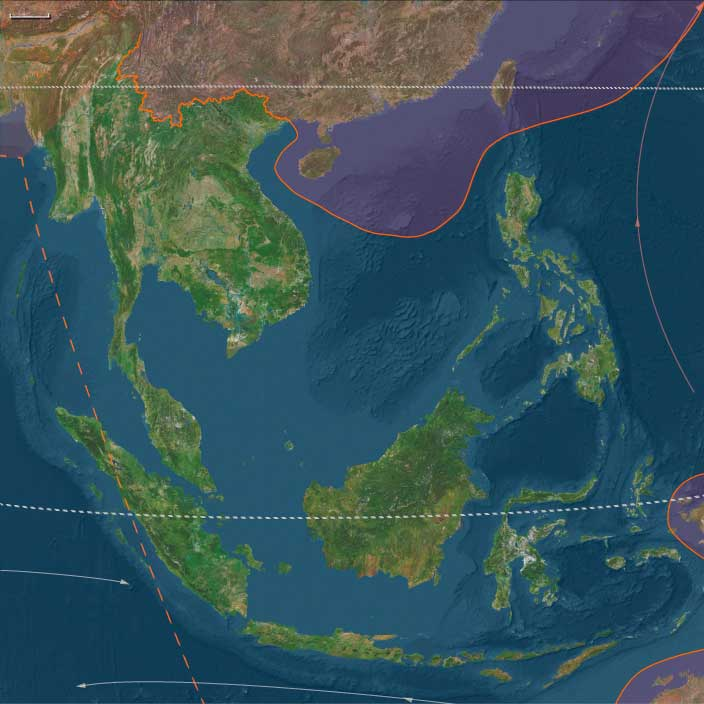
Subregions
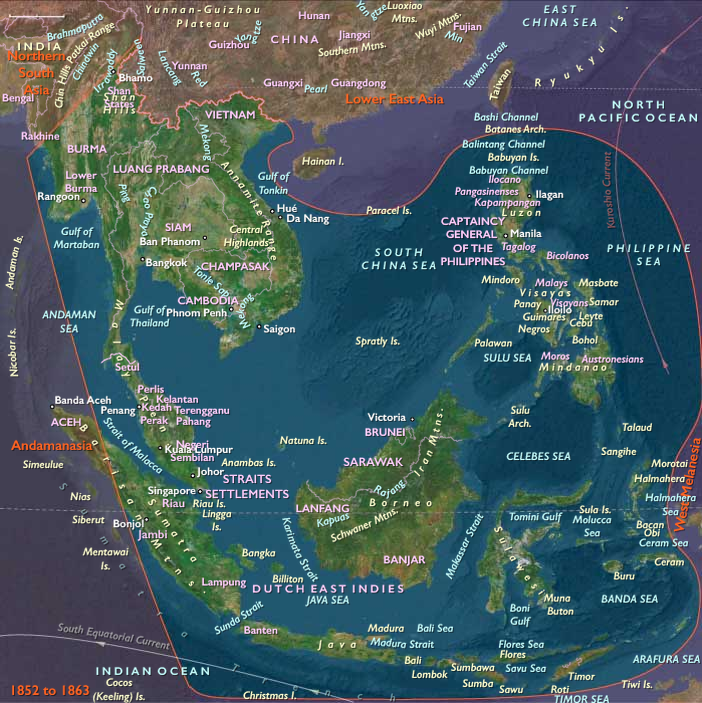
Years: 1852 - 1863
Locations
People
Groups
- Bugis
- Chinese (Han) people
- Johor, Sultanate of
- Philippines, Spanish colony of the
- Chinese Empire, Qing (Manchu) Dynasty
- East India Company, British (United Company of Merchants of England Trading to the East Indies)
- British Malaya
- Siam, (Rattanakosin) Kingdom of
- Straits Settlements, (British)
- Dutch East Indies
- Britain (United Kingdom of Great Britain and Ireland)
- Spain, Bourbon Kingdom (first restoration) of
- Netherlands, Kingdom of The
- French Cochinchina
Commodoties
- Fish and game
- Weapons
- Colorants
- Grains and produce
- Textiles
- Ceramics
- Strategic metals
- Salt
- Narcotics
- Spices
Subjects
Regions
Subregions