Not all Vietnamese resist the French conquest,…
1876 CE to 1887 CE
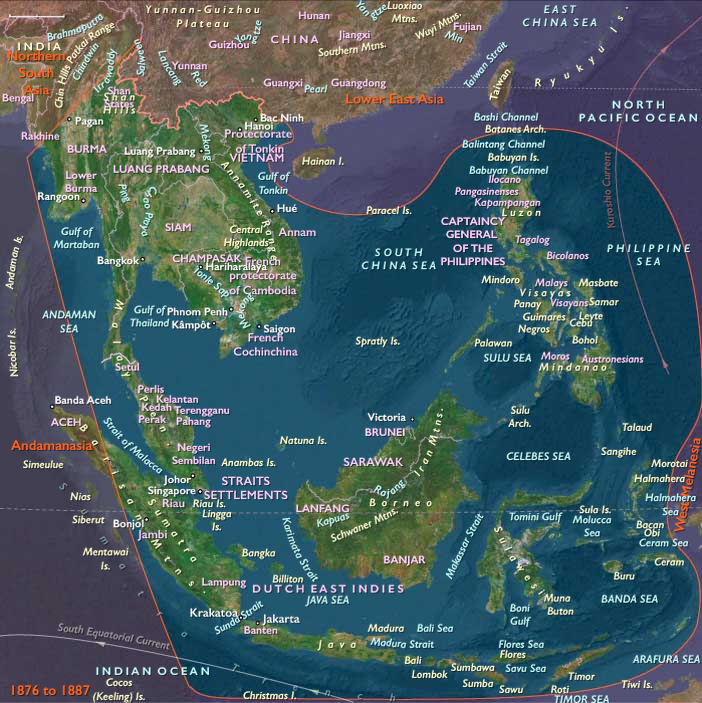
Not all Vietnamese resist the French conquest, and some even welcome it.
The monarchy, through decades of repression, had lost the support of the people; and Tu Duc, in the eyes of large segments of the peasantry, had lost his mandate to rule.
He had been able to protect his people neither from foreign aggression nor from an unusually high incidence of natural disasters such as floods, famines, locusts, droughts, and a cholera epidemic in 1865 that killed more than one million people.
Tu Duc's repression of Catholics had also created a large opposition group ready to cooperate with the French, and those who did were often rewarded with lands vacated during the French invasion.
Much of this land, however, has been given to French colons (colonial settlers), often in sizable holdings of four thousand hectares or more.
Gradually a French- Vietnamese landholding class is developing in Cochinchina.
Vietnamese, however, are appointed only to the lower levels of the bureaucracy established to administer the new colony.
Seeking to finance the growing bureaucracy, the early admiral-governors of Vietnam view the colony as the source of the necessary revenue.
Rice exports, forbidden under the monarchy, reached 229,000 tons annually in 1870.
Taxes extracted from Cochinchina had increased tenfold in the first decade of French control.
State monopolies and excise taxes on opium, salt, and alcohol eventually come to provide seventy percent of the government's operating revenue.
Locations
People
Groups
Regions
Southeast Asia
View →Subregions