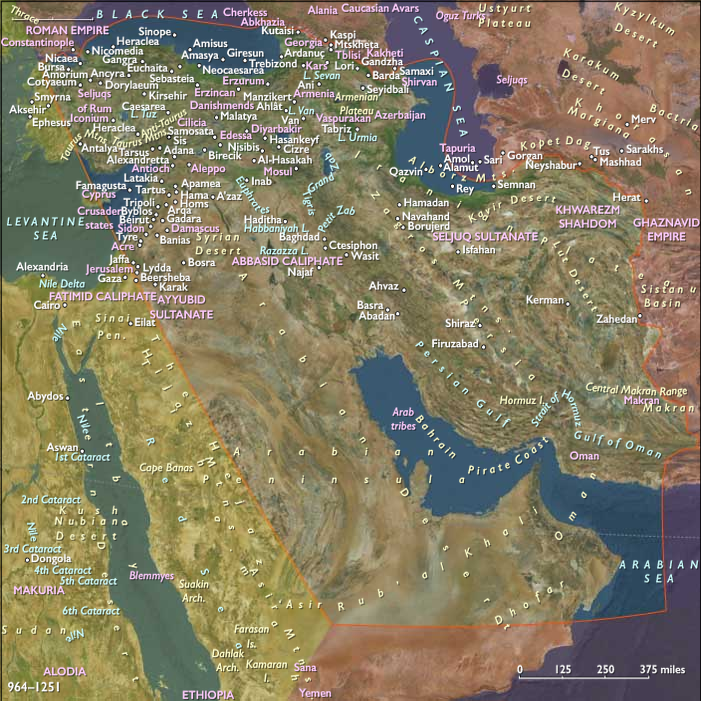
Abu'l Qasim declares himself sultan after the…
1086 CE
Abu'l Qasim declares himself sultan after the death of Suleiman.
His authority, however, is limited to his own domain in Bithynia and Cappadocia, where his brother rules; most of the Anatolian Seljuq realm fractures into independent or semi-independent emirates like the one led by Tzachas of Smyrna.
Using his control of the Anatolian shore of the Marmara Sea, Abu'l Qasim decides to build a navy at Kios and challenge the imperial navy.
The emperor Alexios I Komnenos sends two of his generals, Manuel Boutoumites and Tatikios, against him.
Abu'l Qasim's army is defeated, his fleet destroyed, and he himself is forced to retreat to Nicaea, whence he concludes a truce with the emperor.
Locations
People
Groups
Persian people
View →
Armenian people
View →
Oghuz Turks
View →
Greeks, Medieval (Byzantines)
View →
Islam
View →
Armeniac Theme
View →
Muslims, Sunni
View →
Abbasid Caliphate (Baghdad)
View →
Mazyadid (Al-Mazeedi) state of Iraq
View →
Ghaznavids
View →
Turkmen people
View →
Fatimid Caliphate
View →
'Uqaylid Dynasty of Mosul
View →
Georgia, (Bagratid) Kingdom of
View →
Mirdasid dynasty
View →
Armenia, Principalities of
View →
Seljuq Empire (Isfahan)
View →
Christians, Eastern Orthodox
View →
Roman Empire, Eastern: Doukid dynasty
View →
Topics
Regions
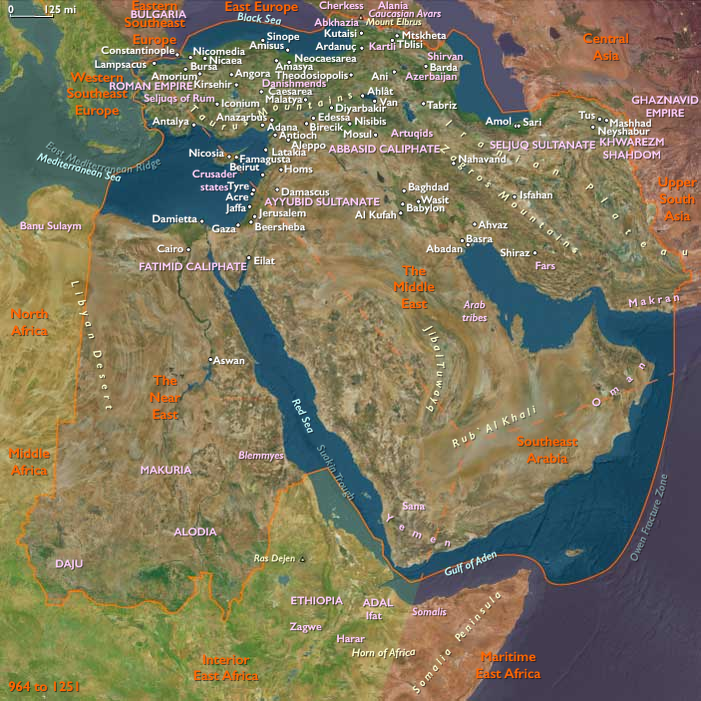
The Near and Middle East
View →Subregions