Event
Colonial Venezuela's primary value to Spain is…
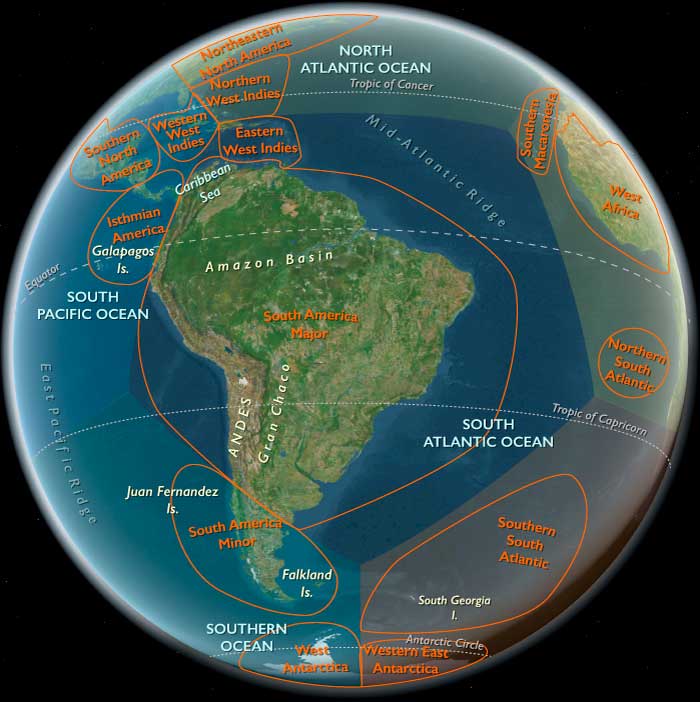
Colonial Venezuela's primary value to Spain is geographic: its long Caribbean coastline provides security from foreign enemies and pirates for the Spanish bullion fleet during its annual journey between Portobelo, in present-day Panama, and Cuba.
Venezuela's own form of mineral wealth, petroleum, had been noticed as early as 1500, but after being hastily scrutinized, the country's vast deposits are ignored for nearly four centuries.
Venezuela lacks political unity for the first two and a half centuries of colonial rule, in part because it is of no economic importance to the Spanish officials.
Before 1777, what we today label Venezuela consists of a varying number of provinces that are governed quite independently of one another.
These provinces are administered from neighboring colonies that the Spanish consider more important.
Beginning in 1526, the provinces had come under the jurisdiction of the Audiencia de Santo Domingo.
In 1550 their colonial administrative seat moves to the Audiencia de Santa Fe de Bogota, which in 1718 will be upgraded to become the Viceroyalty of New Granada.
During most of the remainder of the eighteenth century, what is today Venezuela will consist of five provinces: Caracas, Cumana, Merida de Maracaibo, Barinas, and Guayana.
Because these provinces are far from each other and from the centers of Spanish colonial rule, their municipal officials enjoy a degree of local autonomy unknown in most of Spanish America.
Agriculture has become Venezuela's chief economic activity by the late sixteenth century.
The rich farmlands of the Andean region, the western llanos, and especially the fertile valleys surrounding Caracas make Venezuela agriculturally self-sufficient, and also provide a surplus of a number of products for exportation.
Wheat, tobacco, and leather are among the early products exported from colonial Venezuela.
The Spanish crown, however, shows little interest in Venezuela's agriculture.
Spain is obsessed with extracting precious metals from its other territories to finance a seemingly endless series of foreign wars.
As a result, as late as the early eighteenth century, Venezuela will sell the bulk of its considerable surplus of agricultural goods to British, French, or Dutch traders, who, under the Spanish crown's medieval notions of commerce based on bureaucratic control and mercantilism, are labeled as smugglers.
Starting in the 1620s, cocoa becomes Venezuela's principal export for the next two centuries.
Cocoa, a powder containing a mild stimulant used in the processing of chocolate, is a native product of Venezuela's coastal valleys.
Its impact on colonial Venezuelan society is immense.
Its sizable profits attract, for the first time, significant immigration of Spaniards, including relatively poor Canary Islanders, and its plantation culture creates a great demand for enslaved Africans during the seventeenth and early eighteenth centuries.
These two population groups will complete a social hierarchy that becomes virtually a caste system.
On top is a small elite of white peninsulares (those born in Spain) and criollos (those born in America of Spanish parentage); they are followed by the white Canary Islanders, who typically work as wage laborers.
Next come a large group of racially mixed pardos, who by the late eighteenth century will make up more than half the total; they are followed by African slaves, who will constitute about twenty percent of the population; and, lastly, by the natives.
The native population, decimated by slavery and disease throughout the colonial period, will constitute less than ten percent of the total population at independence.
-
{# Image navigates to the detail page; the magnifying-glass chip is the only Fancybox lightbox trigger (kept a separate sibling — anchors can't nest). #}
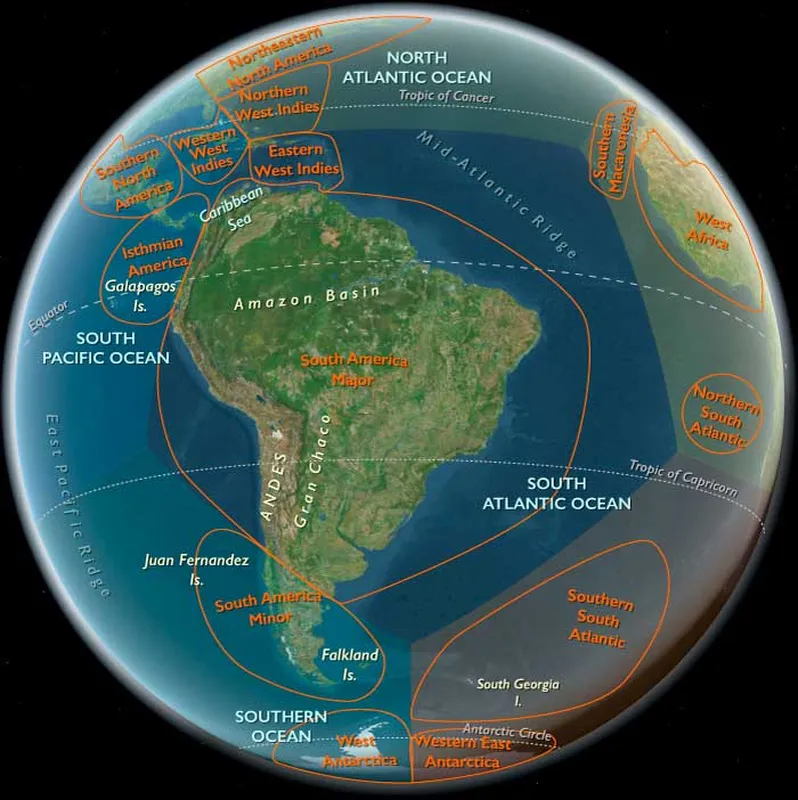 South America and The Eastern Isles
World
-
{# Image navigates to the detail page; the magnifying-glass chip is the only Fancybox lightbox trigger (kept a separate sibling — anchors can't nest). #}
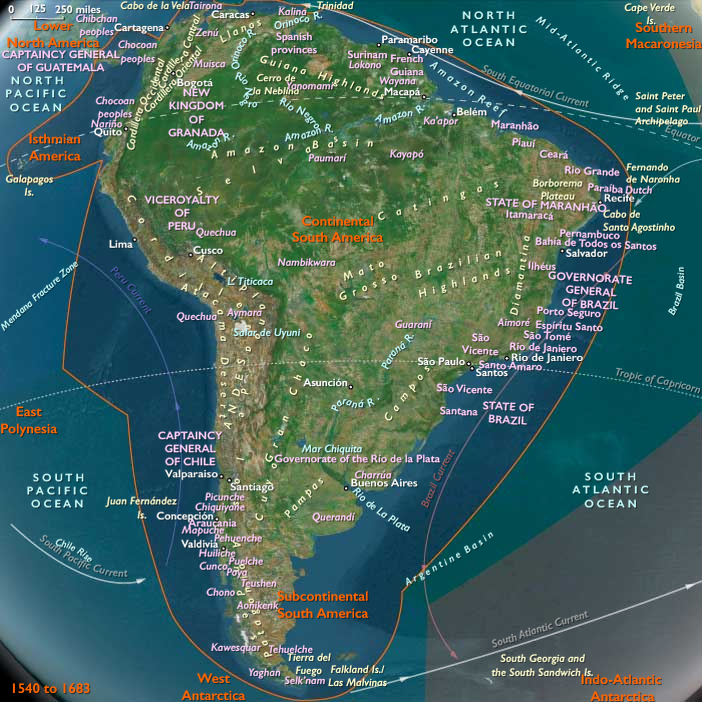 South America
Region
-
{# Image navigates to the detail page; the magnifying-glass chip is the only Fancybox lightbox trigger (kept a separate sibling — anchors can't nest). #}
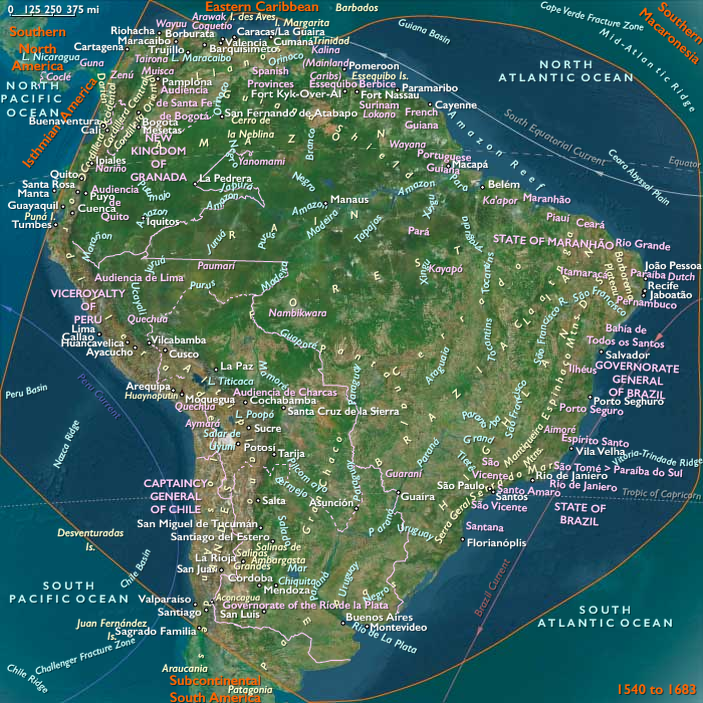 South America Major
Subregion