
The German monarch's struggle with the papacy…
964 CE to 1107 CE
The German monarch's struggle with the papacy results in a war that will ravage German lands from 1077 until the Concordat of Worms in 1122.
This agreement stipulates that the pope is to appoint high church officials but give the German king the right to veto the papal choices.
Imperial control of Italy is lost for a time, and the imperial crown becomes dependent on the political support of competing aristocratic factions.
Feudalism also becomes more widespread as freemen seek protection by swearing allegiance to a lord.
These powerful local rulers, having thereby acquired extensive territories and large military retinues, take over administration within their territories and organize it around an increasing number of castles.
The most powerful of these local rulers come to be called princes rather than dukes.
People
Groups
Regions
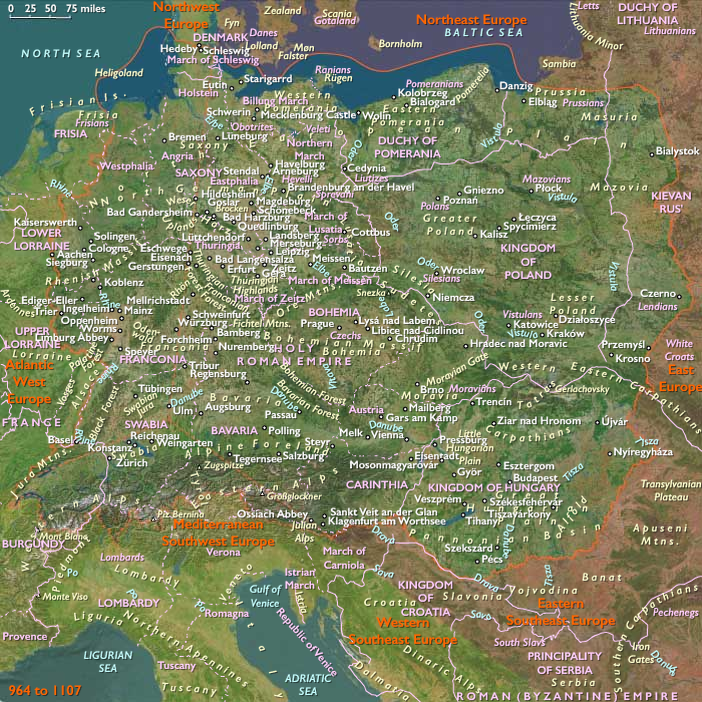
Central Europe
View →Subregions
