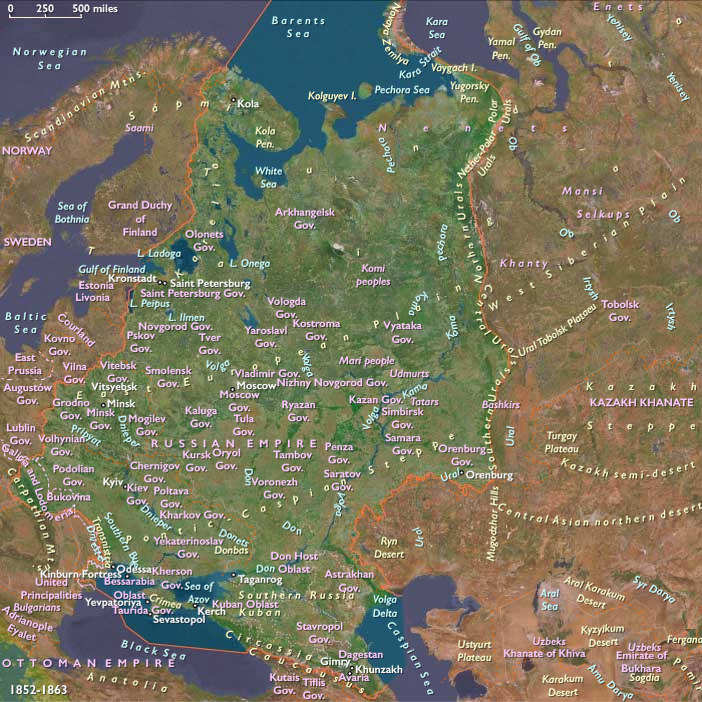
The Russian regime had envisioned that the…
1852 CE to 1863 CE
The government also had envisioned that peasants would produce sufficient crops for their own consumption and for export sales, thereby helping to finance most of the government's expenses, imports, and foreign debt.
Neither of the government's visions was realistic, and both the former serfs and the former owners of serfs are dissatisfied with the outcome of emancipation.
Because the lands given to serfs by local commissions are often poor and because Russian agricultural methods are inadequate, the new peasants soon fall behind in their payments to the government.
The former owners of serfs, most of whom can neither farm nor manage estates without their former serfs, often have to sell their lands to remain solvent.
In addition, the value of their government bonds falls as the peasants fail to make their
redemption payments.
Groups
Regions
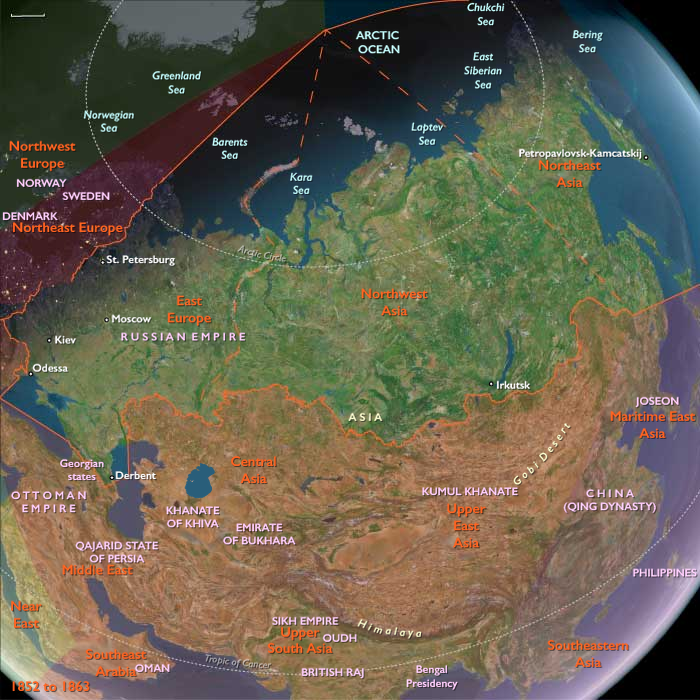
Northeastern Eurasia
View →Subregions