
Filters:
Brabant Shifts Alliances: The Saint-Quentin Treaty and …
Years: 1347 - 1347
Brabant Shifts Alliances: The Saint-Quentin Treaty and the Marriage of Margaret (1343–1347)
In 1343, Duke John III of Brabant had sought papal dispensation for the marriage of his daughter Margaret to Prince Edward of Woodstock, the son of Edward III of England. However, as Edward’s finances weakened and his military focus shifted elsewhere, the Brabant-English alliance unraveled, forcing John to seek a new diplomatic arrangement.
Brabant Aligns with France: The Treaty of Saint-Quentin (1347)
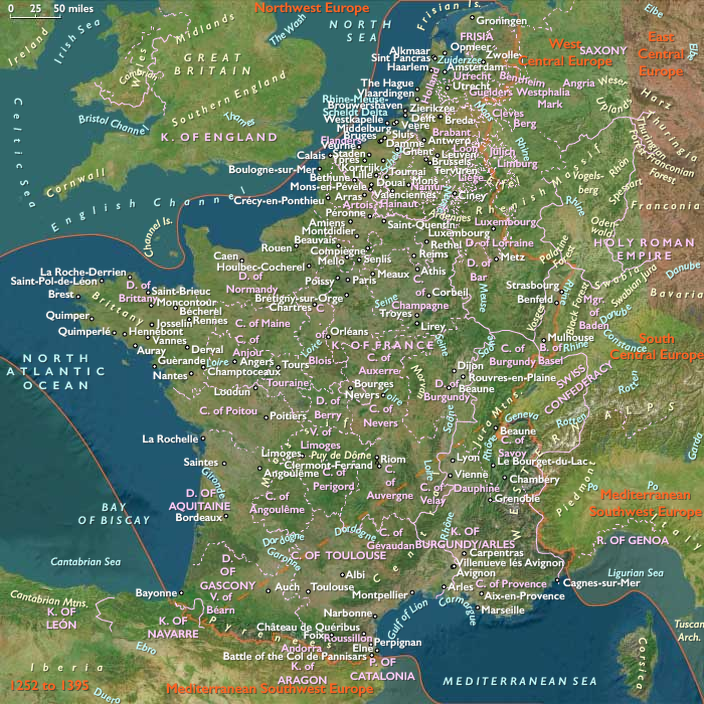
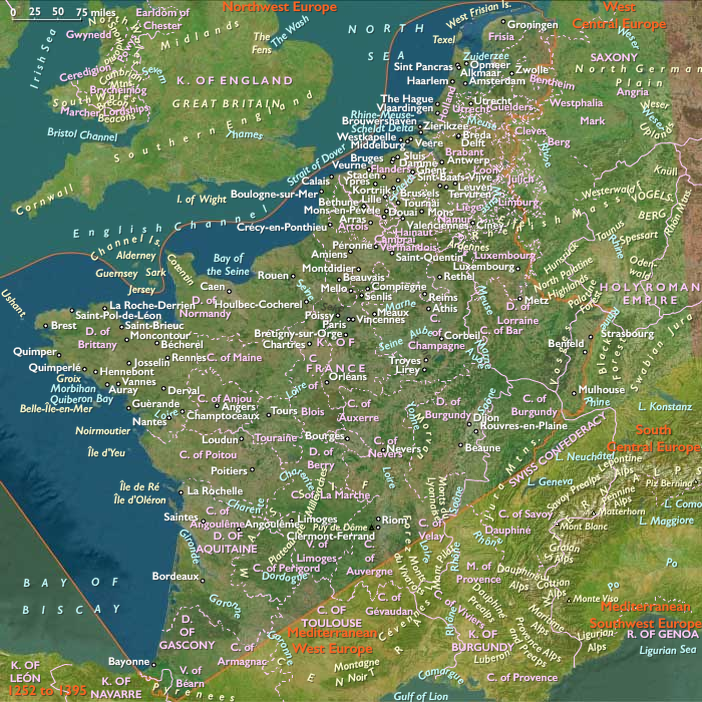
- In September 1345, representatives of France and Brabant met at Château de Saint-Germain-en-Laye to negotiate a shift in Brabant’s alliances.
- This led to the Treaty of Saint-Quentin, signed on June 1347, in which:
- Brabant formally aligned with France, abandoning its previous English connections.
- Margaret of Brabant was betrothed to Louis of Male, the newly inherited Count of Flanders.
The Marriage of Margaret and the Strengthening of Brabant-Flanders Relations
- Louis of Male, the new Count of Flanders, had little real power over the independent-minded Flemish communes, which had long resisted comital authority.
- By marrying Margaret of Brabant, the House of Flanders secured an important alliance with Brabant, which had territorial ambitions in the Low Countries.
- A major point of dispute between Brabant and Flanders had been the Lordship of Mechelen, a strategic enclave within Brabant.
- As part of the treaty, it was agreed that Mechelen would now come under full Brabantine control, strengthening Brabant’s territorial claims.
Impact and Legacy
- The Treaty of Saint-Quentin marked a significant shift in Brabant’s foreign policy, as it now firmly aligned with France rather than England.
- The marriage between Margaret and Louis of Male reinforced the Brabant-Flanders connection, influencing regional politics in the Low Countries.
- The transfer of Mechelen to Brabant was a diplomatic victory for John III, securing greater territorial consolidation.
The failure of Brabant’s English alliance and its new alignment with France in 1347 shaped the political balance in the Low Countries, ensuring that Brabant remained a key player in Franco-Flemish relations for years to come.
Locations
People
Groups
- Christians, Roman Catholic
- England, (Plantagenet, Angevin) Kingdom of
- Brabant, Duchy of
- France, (Valois) Kingdom of
Topics
Subjects
Regions
Subregions
Related Events
Showing 1 events out of 1 total
Years: 1347 - 1347
Locations
People
Groups
- Christians, Roman Catholic
- England, (Plantagenet, Angevin) Kingdom of
- Brabant, Duchy of
- France, (Valois) Kingdom of
Topics
Subjects
Regions
Subregions