Andamanasia (1396–1539 CE): Islam in Aceh, Island…
1396 CE to 1539 CE
Andamanasia (1396–1539 CE): Islam in Aceh, Island Societies, and the Arrival of the Portuguese
Geographic & Environmental Context
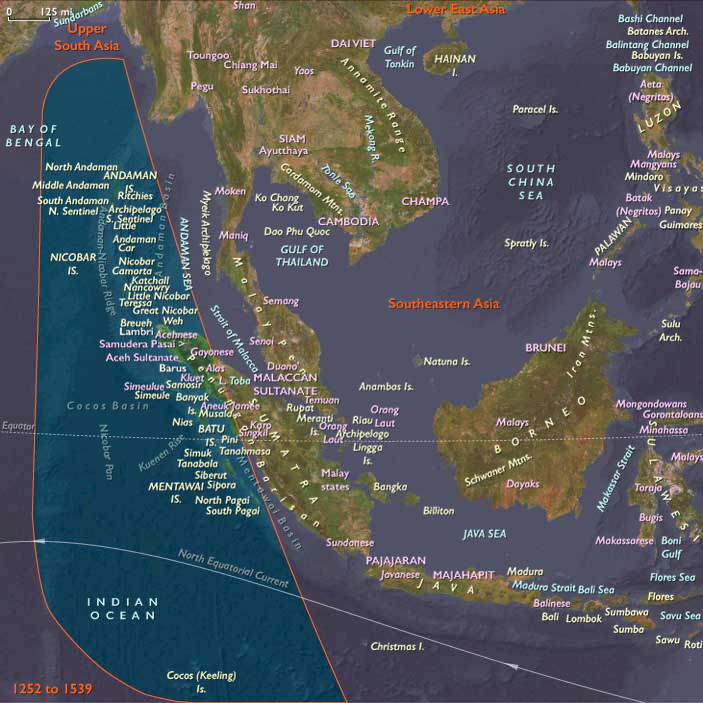
The subregion of Andamanasia includes Aceh on northern Sumatra, together with Simeulue, Nias, the Batu and Mentawai Islands; the Andaman and Nicobar Islands in the Bay of Bengal; the small Myanmarese islands of Preparis, Coco, and Little Coco; and the Cocos (Keeling) Islands. Anchors included the northern tip of Sumatra, controlling access to the Strait of Malacca, the outer island arc of Simeulue, Nias, Batu, and Mentawai on Sumatra’s Indian Ocean flank, the Andaman and Nicobar chain spanning the Bay of Bengal, and the isolated Cocos atolls in the far southern ocean.
Climate & Environmental Shifts
The Little Ice Age brought slightly cooler conditions and variable rainfall. Monsoons governed agriculture and navigation: the southwest monsoon carried ships to the coast of Sumatra and the Bay of Bengal; the northeast winds returned them to Arabia and India. Aceh’s valleys remained fertile for rice and pepper; outer islands experienced earthquakes and tsunamis; Andaman and Nicobar forests sustained sago, yams, and wild game. Cyclones periodically struck Comorian latitudes but also brushed the Nicobar–Preparis chain.
Subsistence & Settlement
-
Aceh: Rice terraces and pepper gardens supported growing towns and courts. Fishing villages thrived on the straits and open coasts.
-
Outer islands (Simeulue, Nias, Batu, Mentawai): Swidden gardens of taro, yam, banana, and sago, along with coconuts and fishing. Longhouse settlements persisted.
-
Andaman and Nicobar: Foraging, fishing, and shifting gardens remained central; communities gathered wild yams, hunted pigs, and harvested coconuts.
-
Preparis, Coco, Little Coco: Thinly inhabited, if at all, though used as fishing and navigation stops.
-
Cocos (Keeling): Still uninhabited, but charted by sailors for coconuts and seabirds.
Technology & Material Culture
Aceh adopted Islamic architectural forms—stone mosques, calligraphy, and Arabic-script inscriptions. Blacksmiths forged iron weapons, plows, and knives. In Nias and Mentawai, raised longhouses with carved ancestor figures and stone monuments symbolized clan prestige. Andamanese crafted bows, arrows, and dugouts; pottery, weaving, and beadwork circulated through coastal exchange. Imported textiles, ceramics, and glass reached Aceh and nearby islands.
Movement & Interaction Corridors
-
Strait of Malacca: Aceh’s location gave it leverage over shipping between the Indian Ocean and China. Muslim merchants, Chinese junks, and Indian traders called at Acehnese ports.
-
Outer islands: Provided timber, coconuts, and slaves to Sumatra’s ports. Simeulue became noted for maritime products like tortoise shell.
-
Andaman and Nicobar: Contact with Bay of Bengal sailors remained intermittent; some exchange of coconuts and resins occurred, but communities often resisted outsiders.
-
Preparis and Coco islets: Served as navigational markers for ships sailing between Bengal and Malacca.
-
Cocos (Keeling): Remained ecological outposts noted in seafarers’ lore.
-
Portuguese arrival: In 1511 the Portuguese captured Malacca; by the 1520s they probed Aceh’s waters, seeking to dominate spice flows. Aceh resisted, beginning a long rivalry.
Cultural & Symbolic Expressions
-
Aceh: Islam consolidated in courts and towns. Sufi brotherhoods, mosques, and Arabic-script chronicles bound Aceh to the wider Muslim world. Poetry and ritual affirmed Islamic kingship.
-
Outer islands: Ancestor worship, feasting rituals, and megaliths (Nias) or wooden carvings (Mentawai) structured social life.
-
Andaman and Nicobar: Ritual dances, songs, and taboos guided relations with spirits of sea and forest.
-
Preparis, Coco, and Cocos/Keeling: Carried symbolic value mainly in maritime navigation, known to sailors but outside organized settlement.
Environmental Adaptation & Resilience
Acehnese rice terraces and pepper gardens buffered famine, while trade redistributed surpluses. Islanders relied on flexible combinations of sago, taro, coconut, and fish. Raised longhouses resisted floods and quakes. Andamanese used mobility and taboos to protect hunting and fishing stocks. Cocos and small islets remained untouched ecological reserves.
Technology & Power Shifts (Conflict Dynamics)
Aceh grew into a sultanate, consolidating control over northern Sumatra. Rival ports contested pepper and rice trade. Outer islands became targets of raiding and slaving as demand increased. The Andamans resisted settlement through hostile encounters with outsiders. Portuguese fleets entered the Straits, challenging Aceh and reshaping the region’s strategic balance.
Transition
By 1539 CE, Andamanasia was at a hinge: Aceh had become a Muslim kingdom and rising rival to Portuguese Malacca; Simeulue, Nias, Batu, and Mentawai sustained resilient island societies tied to Sumatra’s trade; Andaman and Nicobar remained independent foragers and fishers; Preparis and Coco were way stations; and the Cocos (Keeling) stood as remote atolls. The Portuguese arrival foreshadowed centuries of struggle for dominance at the northern gate of the Indian Ocean.
Images

Andamanasia (with civilization) ©2024-26 Electric Prism, Inc. All rights reserved.
Groups
Topics
Commodities
Subjects
Regions
Southeast Asia
View →Subregions