Andamanasia (1540–1683 CE): Acehnese Power, Portuguese Rivalry,…
1540 CE to 1683 CE
Andamanasia (1540–1683 CE): Acehnese Power, Portuguese Rivalry, and Island Resilience
Geographic & Environmental Context
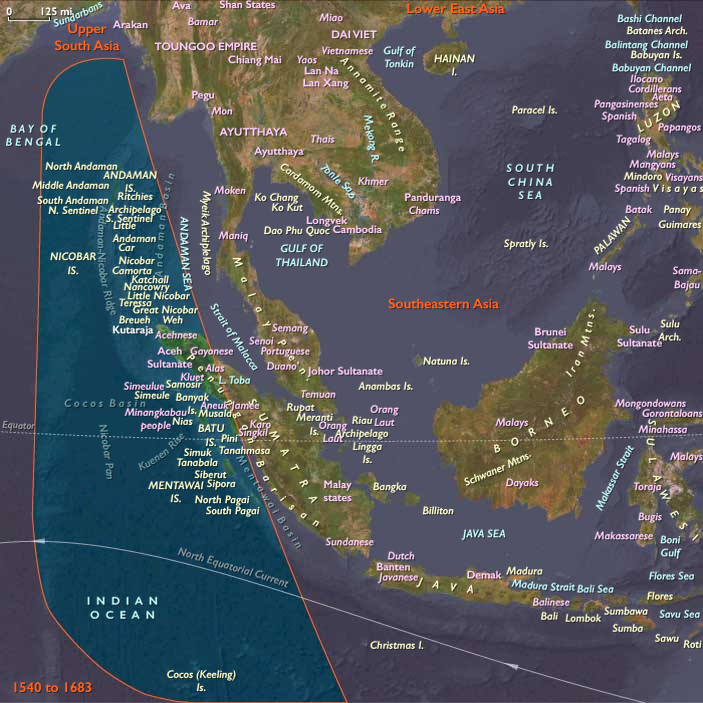
The subregion of Andamanasia includes Aceh on northern Sumatra, together with Simeulue, Nias, the Batu and Mentawai Islands; the Andaman and Nicobar Islands in the Bay of Bengal; the small Myanmarese islands of Preparis, Coco, and Little Coco; and the Cocos (Keeling) Islands. Anchors included the Strait of Malacca gateway at Aceh, the outer island arc of Simeulue, Nias, Batu, and Mentawai, the Andaman and Nicobar chain spanning the Bay of Bengal, and the isolated Cocos atolls in the open Indian Ocean.
Climate & Environmental Shifts
The Little Ice Age persisted, with wetter monsoons in some decades and harsher dry spells in others. Aceh’s pepper and rice agriculture thrived in fertile valleys but was vulnerable to flood and drought years. Offshore islands endured occasional earthquakes and tsunamis, especially Simeulue. The Andaman and Nicobar forests continued to sustain abundant wild foods. Cyclones periodically swept the Bay of Bengal, damaging settlements and affecting sailing schedules.
Subsistence & Settlement
-
Aceh: Rice terraces and pepper gardens anchored a flourishing sultanate. Port towns expanded to host Muslim and Gujarati traders, later Ottoman envoys.
-
Outer islands (Simeulue, Nias, Batu, Mentawai): Villagers grew taro, yam, bananas, coconuts, and sago, combined with reef and deep-sea fishing. Longhouse settlements and megalithic traditions persisted.
-
Andaman and Nicobar: Foragers combined wild yams, fruit, reef fishing, and pig hunting. Some Nicobar groups planted coconuts and taro gardens in small clearings.
-
Preparis, Coco, and Little Coco: Functioned as intermittent fishing camps and navigation landmarks.
-
Cocos (Keeling): Remained uninhabited, supporting seabird rookeries and coconuts used by passing sailors.
Technology & Material Culture
Aceh built mosques, fortified harbors, and manuscript workshops. Cannons and firearms, obtained from Ottoman allies and Indian merchants, strengthened defenses. In Nias and Mentawai, stone monuments and wooden ancestor carvings affirmed clan prestige. Longhouses on stilts, iron tools, and canoes were common. Andamanese crafted bows, outrigger canoes, and shell tools, while Nicobarese used dugouts for inter-island travel. Imported Indian textiles and Chinese ceramics enriched Acehnese courts.
Movement & Interaction Corridors
-
Strait of Malacca: Aceh became a major power after the Portuguese seized Malacca (1511). Under Sultan Iskandar Muda (r. 1607–1636), Aceh expanded militarily, allied with the Ottomans, and fought Portugal and Johor for control of the strait.
-
Outer islands: Provided captives, forest products, and maritime supplies to Aceh. Simeulue became renowned for maritime products such as tortoise shell.
-
Andaman and Nicobar: Served as way stations for Bay of Bengal sailors, though local groups resisted permanent settlement.
-
Preparis and Coco islets: Functioned as navigation points for ships between Bengal and Malacca.
-
Cocos (Keeling): Charted by Portuguese and later Dutch navigators, though still uninhabited.
Cultural & Symbolic Expressions
-
Aceh: Islam flourished; mosques, Sufi lodges, and Arabic-script chronicles linked the sultanate to global Islam. Court rituals and poetry glorified sultans as champions of the faith.
-
Outer islands: Ancestor veneration and feasting rituals persisted. Nias elites staged megalithic rituals; Mentawai shamans performed dances to maintain harmony with spirits.
-
Andaman and Nicobar: Oral traditions and ritual dances honored forest and sea spirits, reinforcing taboos that protected resources.
-
Preparis, Coco, Cocos/Keeling: Their symbolic role remained navigational, remembered in sailors’ logbooks rather than in settled traditions.
Environmental Adaptation & Resilience
Acehnese farmers expanded irrigation and terracing to stabilize rice supplies; pepper exports provided wealth but also risked famine when trade diverted food. Islanders relied on swidden cycles, coconut groves, and fishing for resilience. Andamanese mobility between forest and coast buffered shocks. Simeulue’s communities passed down oral traditions (later remembered as smong) warning of tsunamis, reflecting adaptive memory.
Technology & Power Shifts (Conflict Dynamics)
Aceh emerged as the dominant power, using firearms, cannon, and alliances to contest Portuguese dominance. Iskandar Muda’s fleets attacked Portuguese Malacca and raided Johor, though Portuguese forts remained formidable. In the outer islands, raiding and enslavement increased under Aceh’s hegemony and Portuguese demand. The Andamans resisted contact with violence, while Nicobars saw sporadic missionary visits from Portuguese Dominicans, who failed to establish lasting bases.
Transition
By 1683 CE, Andamanasia had been reshaped by the rise of Aceh as a Muslim maritime empire, Portuguese efforts to monopolize spice routes, and the resilience of outer island societies. Aceh stood as a formidable Islamic power in Southeast Asia, while Simeulue, Nias, and Mentawai maintained ancestral traditions amid growing slave raids. The Andaman and Nicobar Islands remained fiercely independent, with only fleeting missionary contact. Preparis, Coco, and the Cocos atolls persisted as uninhabited markers in the maritime imagination.
Images

Andamanasia (with civilization) ©2024-26 Electric Prism, Inc. All rights reserved.
People
Groups
Topics
Commodities
Subjects
Regions
Southeast Asia
View →Subregions