
Andamanasia (1684–1827 CE): Acehnese Decline, Island Autonomies,…
1684 CE to 1827 CE
Andamanasia (1684–1827 CE): Acehnese Decline, Island Autonomies, and European Encroachment
Geographic & Environmental Context
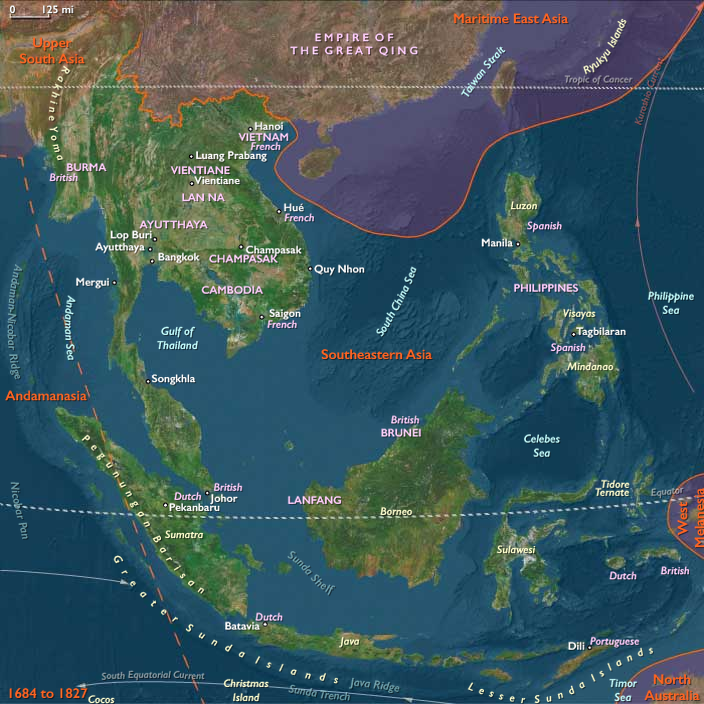
The subregion of Andamanasia includes Aceh on northern Sumatra, together with Simeulue, Nias, the Batu and Mentawai Islands; the Andaman and Nicobar Islands in the Bay of Bengal; the small Myanmarese islands of Preparis, Coco, and Little Coco; and the Cocos (Keeling) Islands. Anchors included the Strait of Malacca gateway at Aceh, the outer island arc of Simeulue, Nias, Batu, and Mentawai, the Andaman and Nicobar chain, and the remote Cocos atolls.
Climate & Environmental Shifts
The waning Little Ice Age brought alternating wet and dry decades. In Aceh, pepper yields fluctuated with rainfall; rice valleys endured occasional drought. The outer islands faced recurrent seismic events, with Simeulue maintaining oral traditions (smong) to remember tsunamis. The Andaman and Nicobar forests sustained food diversity despite cyclones. The Cocos atolls remained exposed to storm surges but ecologically stable.
Subsistence & Settlement
-
Aceh: Still produced rice and pepper but could no longer monopolize the Strait of Malacca; inland farming supported smaller polities.
-
Outer islands (Simeulue, Nias, Batu, Mentawai): Continued swidden farming, coconut cultivation, fishing, and longhouse village life. Stone monuments on Nias and ancestor rituals persisted.
-
Andaman and Nicobar: Populations relied on reef fishing, wild tubers, and coconuts; Nicobarese communities grew taro and bananas in small plots.
-
Preparis, Coco, Little Coco: Used intermittently by fishers and passing sailors.
-
Cocos (Keeling): Remained uninhabited until early 19th century, when European sailors began charting them for copra and as provisioning stops.
Technology & Material Culture
Aceh’s mosques and manuscripts remained symbols of Islamic culture, though courts had weakened. In the outer islands, carved longhouses, megaliths, and clan regalia affirmed local prestige. Canoes and iron tools sustained daily subsistence. Andamanese continued to use bows, arrows, and dugouts; Nicobarese wove mats and built outrigger canoes. Imported beads, textiles, and firearms trickled into Aceh and its satellites via Dutch and English traders.
Movement & Interaction Corridors
-
Aceh: Declined as a major power after the death of Iskandar Thani (d. 1641), ceding control of the Strait to Johor and later Dutch Malacca. By the 18th century, Aceh was fragmented into rival pepper-producing chiefdoms.
-
Outer islands: Remained peripheral but supplied captives and coconuts to coastal Sumatra.
-
Andaman and Nicobar: Encountered sporadic visits by European missionaries and traders. Danish and Austrian ventures briefly tried settlements in the Nicobars (1750s, 1778) but failed due to disease and resistance.
-
Preparis and Coco islets: Became regular navigational markers for East India Company ships.
-
Cocos (Keeling): In 1820s, British and Australian traders began visiting; permanent settlement by Alexander Hare and John Clunies-Ross families soon followed.
Cultural & Symbolic Expressions
-
Aceh: Islam endured as the basis of authority; Sufi orders and mosque communities preserved cultural unity despite political decline.
-
Outer islands: Ancestor worship, feasting rituals, and shamanic dances continued; Nias megaliths embodied prestige.
-
Andaman and Nicobar: Spiritual taboos structured relations with forest and sea spirits; ritual dances and initiation maintained cohesion.
-
Preparis, Coco, and Cocos: Acquired symbolic identity in seafarers’ lore, remembered for birds, coconuts, and reefs.
Environmental Adaptation & Resilience
Islanders rotated swidden gardens, planted coconuts, and fished reefs for resilience. In Simeulue, tsunami memory (smong) ensured survival strategies. Andamanese mobility buffered against resource shortages. Nicobarese diversified diets with coconuts and taro. On the Cocos, seabird and turtle populations remained intact until European exploitation began.
Technology & Power Shifts (Conflict Dynamics)
-
Aceh: Lost regional dominance as Dutch and English traders diverted commerce to Malacca, Penang, and Batavia. By the late 18th century, Aceh was reduced to pepper chiefdoms, pressured by both European companies and rising Malay states.
-
Outer islands: Suffered intermittent raiding for slaves by coastal Sumatrans.
-
Andaman and Nicobar: Missionary ventures failed; Andamanese resisted outsiders with violence.
-
European powers: The Dutch and English strengthened naval presence across the Bay of Bengal and Indian Ocean. The Cocos became a strategic provisioning point just as European expansion deepened.
Transition
By 1827 CE, Andamanasia had shifted from a zone dominated by Aceh’s Islamic sultanate to a fragmented archipelago shaped by local resilience and European encroachment. Aceh’s decline left a power vacuum in the northern Malacca Straits. Simeulue, Nias, and Mentawai continued ancestral lifeways under pressure from raiding and trade. The Andamans and Nicobars remained independent, resisting foreign footholds, though their islands were increasingly mapped. Preparis, Coco, and the Cocos atolls entered European navigational circuits. The subregion stood poised for deeper colonial entanglement in the 19th century.
Images

Andamanasia (with civilization) ©2024-26 Electric Prism, Inc. All rights reserved.
Groups
Topics
Commodities
Subjects
Regions
Southeast Asia
View →Subregions
