
Andamanasia (1828–1971 CE): Colonial Conquest, Island Adaptations,…
1828 CE to 1971 CE
Andamanasia (1828–1971 CE): Colonial Conquest, Island Adaptations, and Decolonization Currents
Geographic & Environmental Context
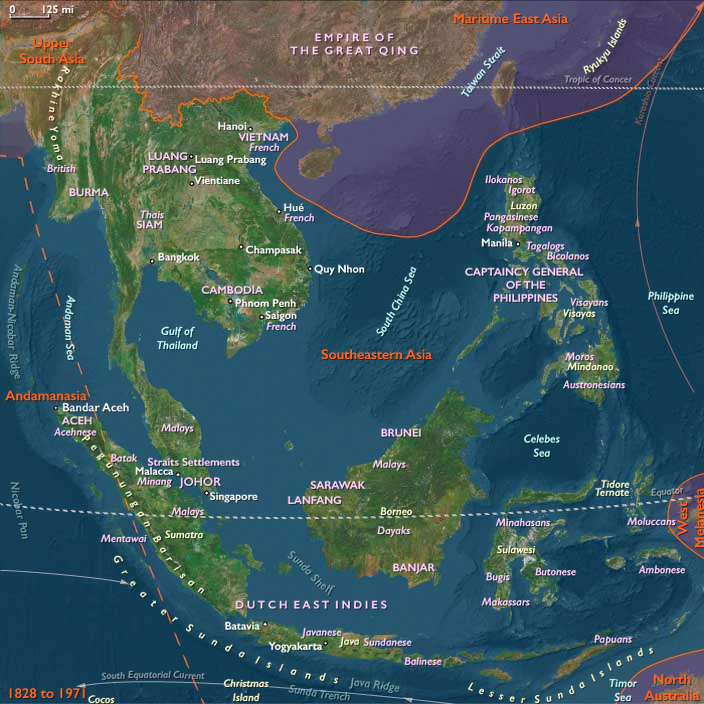
The subregion of Andamanasia includes Aceh on northern Sumatra, together with Simeulue, Nias, the Batu and Mentawai Islands; the Andaman and Nicobar Islands in the Bay of Bengal; the small Myanmarese islands of Preparis, Coco, and Little Coco; and the Cocos (Keeling) Islands. Anchors included the northern tip of Sumatra at Aceh, the outer island arc of Simeulue, Nias, Batu, and Mentawai, the Andaman and Nicobar chain, and the Cocos atolls southward in the Indian Ocean. By this period, the subregion was increasingly partitioned into Dutch, British, and later independent sovereignties.
Climate & Environmental Shifts
The 19th century brought cycles of drought and flood, alongside seismic shocks along the Sunda arc. Famines struck Aceh and northern Sumatra in the 1870s. The Andamans and Nicobars endured cyclones; forests remained abundant until large-scale colonial logging began. On the Cocos, hurricanes periodically destroyed coconut plantations. Island oral traditions—such as Simeulue’s smong tsunami lore—remained critical for resilience.
Subsistence & Settlement
-
Aceh and northern Sumatra: Wet-rice cultivation, pepper, and coffee sustained valleys; fishing villages dotted the coast.
-
Outer islands (Simeulue, Nias, Batu, Mentawai): Continued swidden farming, coconut groves, taro, bananas, and fishing; longhouses and megaliths persisted. Missionization gradually reshaped cultural landscapes.
-
Andaman and Nicobar: Foragers and horticulturalists continued mixed diets of wild yams, coconuts, taro, and fish; British settlement disrupted indigenous lifeways after mid-century.
-
Preparis and Coco islets: Thinly settled, functioning mainly as navigation markers and fishing camps.
-
Cocos (Keeling): Permanently settled in the 1820s by British adventurers (John Clunies-Ross family) and enslaved/indentured workers from Southeast Asia and Africa; developed into coconut/copra plantations.
Technology & Material Culture
Aceh’s fortresses and mosques symbolized Islamic identity; firearms and European artillery entered local arsenals during the Aceh wars. Nias and Mentawai produced wooden carvings, megaliths, and clan regalia. In the Andamans, indigenous bows, canoes, and tools continued until British suppression. British colonists built penal settlements (notably Cellular Jail, Port Blair), sawmills, and telegraph stations. On the Cocos, copra mills, sailing craft, and later motorboats tied atolls to Singapore.
Movement & Interaction Corridors
-
Aceh: Resisted Dutch expansion during the Aceh War (1873–1904); became part of the Dutch East Indies after prolonged guerrilla resistance.
-
Outer islands: Became mission fields and peripheral territories of Dutch Sumatra; many islanders conscripted into plantation and military labor.
-
Andaman and Nicobar: Annexed by Britain in the 1850s; Port Blair established as a penal colony for Indian convicts. During World War II, the Japanese occupied the islands (1942–1945), before Britain reasserted control. Integrated into independent India in 1947.
-
Preparis and Coco islets: Incorporated into British Burma, later Myanmar after 1948.
-
Cocos (Keeling): British colony administered from Ceylon, then Singapore. The Clunies-Ross family ruled plantations until mid-20th century. Transferred to Australia in 1955, remaining an external territory.
Cultural & Symbolic Expressions
-
Aceh: Islam underpinned resistance; ulama and Sufi orders mobilized fighters. Chronicles and poetry glorified martyrs against the Dutch.
-
Outer islands: Ancestor veneration, megalithic rituals (Nias), and shamanic traditions (Mentawai) endured, though missions introduced Christianity, producing syncretism.
-
Andaman and Nicobar: Indigenous groups (Jarwa, Onge, Nicobarese, Great Andamanese) retained oral traditions, dances, and taboos, though displacement and disease reduced populations.
-
Cocos (Keeling): A creole Muslim society formed, blending Malay, African, and European traditions under Islam, with mosque-centered community life.
Environmental Adaptation & Resilience
Acehnese rebuilt rice fields and pepper gardens after war devastation. Simeulue maintained tsunami-warning traditions. Andamanese shifted camps and guarded food sources despite colonial incursions. Cocos islanders adapted to cyclone damage by replanting coconut groves. In all islands, kinship, ritual, and oral tradition reinforced survival during famine, storms, and foreign domination.
Technology & Power Shifts (Conflict Dynamics)
-
Aceh: Fierce resistance against the Dutch, led by religious leaders, made it the last part of Sumatra subdued. Guerrilla war and martyrdom narratives shaped later nationalism.
-
Outer islands: Dutch campaigns subdued Nias after brutal wars (late 19th century). Missionization and colonial conscription altered local power.
-
Andaman and Nicobar: British penal colonies displaced indigenous groups; resistance was often met with violence. WWII Japanese occupation disrupted British control, briefly raising independence hopes.
-
Cocos (Keeling): Plantation oligarchy under the Clunies-Ross family persisted until integration into Australia; laborers remained in semi-feudal dependence.
Transition
By 1971 CE, Andamanasia was politically divided but interconnected. Aceh was an Indonesian province with a legacy of resistance and Islamic identity. Simeulue, Nias, Batu, and Mentawai were peripheral to the Indonesian state but culturally resilient. The Andaman and Nicobar Islands were part of India, their indigenous peoples marginalized but enduring. Preparis and Coco belonged to Burma (Myanmar). The Cocos (Keeling) were administered by Australia, their Muslim community retaining autonomy within a plantation legacy. Across the region, Islamic courts, ancestor rituals, and oral traditions coexisted with colonial legacies and new national frameworks, setting the stage for the turbulence of late 20th-century politics.
Images

Andamanasia (with civilization) ©2024-26 Electric Prism, Inc. All rights reserved.
Groups
Topics
Commodities
Subjects
Regions
Southeast Asia
View →Subregions
