Event
Andamanasia (909–478 BCE): Archaic Antiquity — Emerging…
Andamanasia (909–478 BCE): Archaic Antiquity — Emerging Maritime Communities of the Eastern Bay
Geographic and Environmental Context
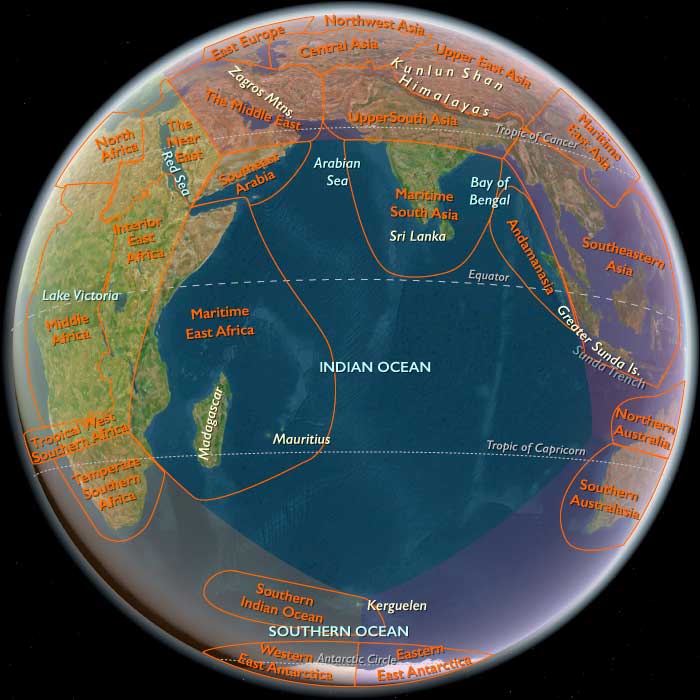
Andamanasia encompasses the Andaman Islands (North, Middle, and South Andaman), the Nicobar Islands, Aceh in northern Sumatra with the nearby islands of Simeulue, Nias, the Batu Islands, and the Mentawai Islands, together with the Preparis, Coco, and Little Coco Islands off Myanmar and the remote Cocos (Keeling) Islands. Productive coral reefs, mangrove-fringed estuaries, tropical rainforests, and dependable monsoon seas linked these islands into a maritime landscape while still allowing considerable regional isolation.
Societies and Political Developments
During this period, the islands remained politically decentralized. The Andamans continued to be occupied by highly mobile hunter-gatherer communities organized through kinship rather than permanent political institutions. Farther south and west, larger villages emerged in the Nicobars, Aceh, and Nias, where hereditary headmen coordinated seasonal fishing, forest harvesting, and canoe construction. Political authority remained local, although repeated contact between neighboring islands gradually fostered enduring alliances.
Economy and Exchange
Marine resources formed the economic foundation throughout the region. Fishing, shellfish collection, turtle hunting, and the harvesting of forest products such as resins, rattan, honey, and hardwoods supported village life. Exchange networks expanded gradually as larger dugout canoes connected nearby islands, while Aceh increasingly participated in regional trade reaching the eastern Indian Ocean. Imported prestige goods—including beads, fine pottery, and occasional iron objects—began appearing within coastal communities, although most production remained local.
Technology and Material Culture
Large dugout canoes became increasingly sophisticated, with outriggers appearing in some southern island groups. Pottery production spread across much of the Nicobar–Aceh sphere, while barkcloth, woven coconut fiber, carved wooden vessels, and polished shell ornaments remained widespread. Iron remained scarce but increasingly known through exchange.
Belief and Cultural Life
Communities maintained strong traditions of ancestor veneration closely associated with the sea. Canoes often carried symbolic importance beyond transportation, while ritual feasts, dances, and oral traditions reinforced kinship ties. Sacred groves, distinctive coastal landmarks, and prominent trees continued to structure religious life throughout the archipelago.
Environmental Adaptation and Resilience
Island communities relied upon diversified subsistence strategies that combined reef fisheries, mangrove resources, tropical forests, and seasonal mobility. After storms or localized shortages, neighboring communities frequently redistributed resources through canoe exchange, creating resilient regional systems despite the absence of centralized political authority.
Legacy of the Age
By 478 BCE, Andamanasia had become a mosaic of increasingly interconnected maritime communities. Although the Andamans retained their long-established foraging traditions, expanding canoe exchange among the Nicobars, Aceh, and Nias laid the foundations for broader participation in the commercial networks of the Bay of Bengal.

-
{# Image navigates to the detail page; the magnifying-glass chip is the only Fancybox lightbox trigger (kept a separate sibling — anchors can't nest). #}
 The Indian Ocean Lands
World
-
{# Image navigates to the detail page; the magnifying-glass chip is the only Fancybox lightbox trigger (kept a separate sibling — anchors can't nest). #}
 Southeast Asia
Region
-
{# Image navigates to the detail page; the magnifying-glass chip is the only Fancybox lightbox trigger (kept a separate sibling — anchors can't nest). #}
 Andamanasia
Subregion