Anselm has continued to agitate for reform…
1095 CE
Anselm has continued to agitate for reform and the interests of Canterbury.
His vision of the Church is one of a universal Church with its own internal authority, which counters William's vision of royal control over both Church and state.
The Church's rule states that metropolitans cannot be consecrated without receiving the pallium from the hands of the pope.
Anselm, accordingly, insists that he must proceed to Rome to receive the pallium, but William will not permit it.
The Antipope Clement is disputing the authority of Urban II, who has been recognized by France and Normandy.
It does not appear that the English King is a partisan of the Antipope, but he wishes to strengthen his own position by asserting his right to decide between the rival claimants.
Hence, when Anselm asks leave to go to the Pope, the King says that no one in England should acknowledge either Pope until he, the King, has decided the matter.
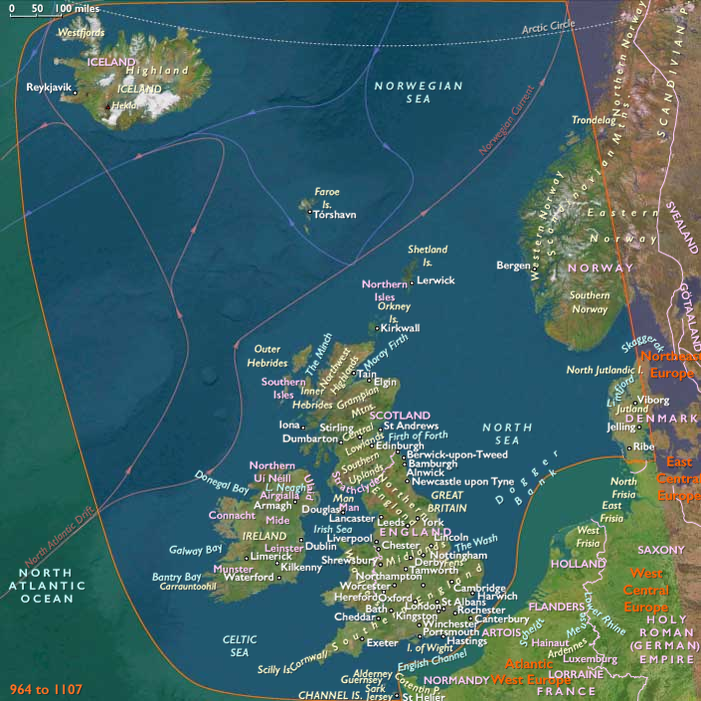
Tthe bishops and nobles of England on February 25, 1095, hold a council at Rockingham to discuss the issue.
The bishops side with the king, with William de St-Calais, the bishop of Durham, even advising William to depose Anselm.
The nobles choose Anselm's position, and the conference ends in deadlock.
Immediately following this.
William sends secret messengers to Rome.
They prevail on Urban to send a legate (Walter of Albano) to the king bearing the archiepiscopal pallium.
Walter and William then negotiate in secret.
William agrees to acknowledge Urban as pope, and secures the right to give permission before clerics could receive and obey papal letters; Walter, negotiating for Urban, concedes that Urban will send no legates without William's invitation.
William's greatest desire is that Anselm be deposed and another given the pallium.
Walter says that "there was good reason to expect a successful issue in accordance with the king’s wishes”.
William then openly acknowledges Urban as pope, but Walter refuses to depose Anselm.
William then tries to extract money from Anselm for the pallium, and is refused.
William also tries to personally hand over the pallium to Anselm, and is refused again.
He compromises, and on June 10, 1095, Anselm takes the pallium from the altar at Canterbury.
Locations
People
Groups
Commodities
Regions

North Europe
View →Subregions