West Antarctica (4,365–2,638 BCE): Maritime Antarctica and…
4365 BCE to 2638 BCE
West Antarctica (4,365–2,638 BCE): Maritime Antarctica and Expanding Ice-Free Margins
Geographic & Environmental Context
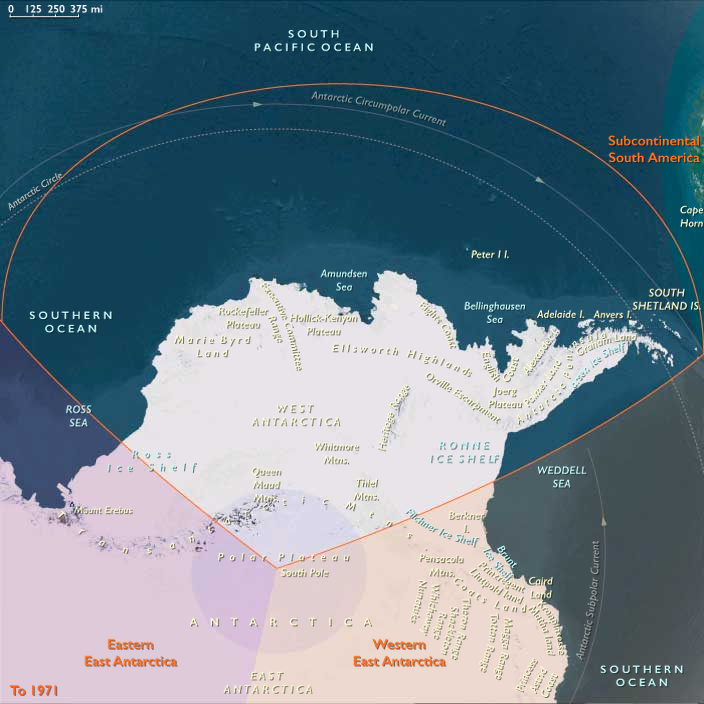
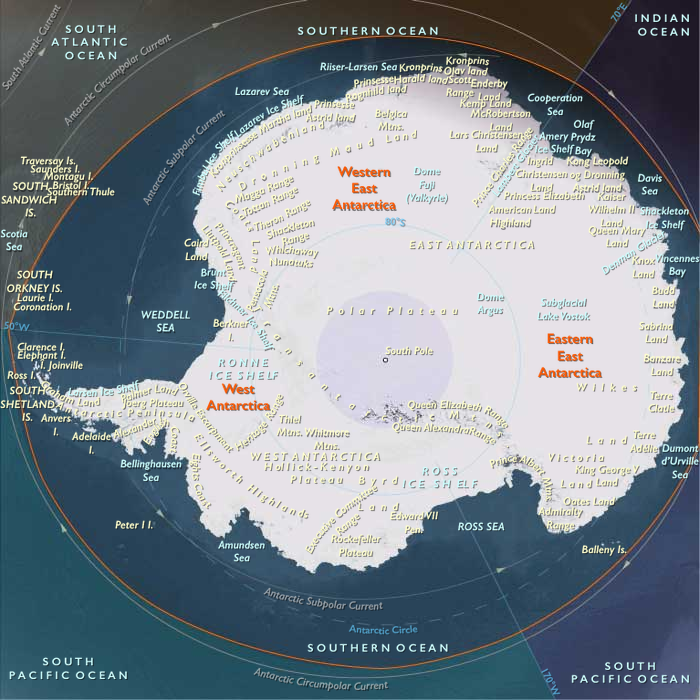
West Antarctica encompassed the Antarctic Peninsula, South Shetland Islands, South Orkney Islands, Ellsworth Land, Marie Byrd Land, and the Amundsen–Bellingshausen coastal sectors. Compared with East Antarctica, this region was more topographically fragmented and climatically sensitive, characterized by mountain chains, ice streams, island archipelagos, seasonal sea ice, and extensive marine influence.
Anchors included:
- Antarctic Peninsula fjords and nunataks
- South Shetland coastal plains and rookeries
- South Orkney ice-free headlands
- Pine Island and Thwaites glacier margins
- Marie Byrd Land volcanic uplands
- Bellingshausen and Amundsen Sea coastal shelves
Retreating glaciers exposed additional coastal terrain, creating expanding mosaics of rock, till, freshwater ponds, moss beds, and seabird habitat.
Climate & Environmental Shifts
West Antarctica experienced some of the strongest expressions of Mid-Holocene warmth.
Seasonal temperatures remained slightly warmer than later millennia, reducing sea-ice persistence and lengthening summer productivity windows. Glacier retreat continued in localized coastal sectors, exposing new ice-free landscapes while maintaining overall continental ice-sheet stability.
Summer polynyas expanded along portions of the Bellingshausen and Amundsen coasts. Seasonal snowfields retreated from lower elevations, while mountain glaciers remained active at higher altitudes.
Toward the close of the epoch, climatic variability gradually increased as conditions began trending toward Neoglacial cooling.
Biotic Communities and Ecosystems
Life concentrated in maritime environments and newly exposed coastal terrain.
Penguin colonies expanded across ice-free beaches and rocky headlands, particularly among Adélie, chinstrap, and gentoo populations. Petrels, skuas, and other seabirds nested on nunataks and coastal ridges.
Mosses, liverworts, algae, and microbial communities spread into meltwater corridors, pond systems, and sheltered slopes. Freshly exposed ground supported early successional ecological communities, gradually stabilizing into persistent biological patches.
Krill-rich waters sustained seals, whales, seabirds, and fish throughout the surrounding seas.
Marine productivity remained the dominant ecological engine of the region.
Technology & Material Culture
No human populations occupied West Antarctica.
Across the wider world, societies experimented with metallurgy, agriculture, and long-distance exchange. None of these developments penetrated the Southern Ocean frontier.
West Antarctica remained entirely governed by climatic, geological, and biological processes.
Movement & Interaction Corridors
The Antarctic Circumpolar Current and associated fronts linked West Antarctica to marine ecosystems throughout the Southern Ocean.
Whales migrated seasonally between Antarctic feeding grounds and lower-latitude breeding zones. Seals and seabirds moved among the Peninsula, South Shetlands, South Orkneys, Scotia Arc, and subantarctic islands, distributing nutrients across vast distances.
Icebergs calved from Peninsula glaciers and West Antarctic ice streams, transporting sediments and microorganisms northward into Southern Ocean ecosystems.
The Peninsula acted as one of Antarctica's principal biological gateways between the continent and the wider Southern Ocean.
Cultural & Symbolic Expressions
No human symbolic traditions existed within West Antarctica.
Ecological continuity instead emerged through repeated biological occupation:
- penguin nesting grounds reused across generations
- seabird nesting ledges maintained through continual activity
- seal haul-outs repeatedly occupying favored beaches
- moss communities persisting within stable meltwater niches
These recurring ecological patterns created long-term landscape memory independent of human influence.
Environmental Adaptation & Resilience
West Antarctic ecosystems adapted to continual disturbance from:
- glacier fluctuations
- iceberg scouring
- sea-ice variability
- freeze–thaw cycles
- severe winds
Species synchronized breeding with short bursts of summer productivity. Mosses and microbial communities rapidly colonized newly exposed terrain. Marine food webs responded flexibly to changing sea-ice conditions while maintaining overall ecological stability.
The coexistence of expanding ice-free margins and persistent glaciation produced unusually dynamic but resilient ecosystems.
Long-Term Significance
By 2,638 BCE, West Antarctica represented the most biologically active and environmentally dynamic sector of the Antarctic continent. Ice-free coastal landscapes had expanded beyond early-Holocene conditions, marine productivity remained exceptionally high, and ecological communities occupied nearly every available niche along the Peninsula and maritime fringe.
Though entirely untouched by humans, West Antarctica served as a critical node within Southern Ocean ecosystems. Its glaciers, sea ice, wildlife populations, and oceanographic systems helped regulate planetary climate and linked Antarctica to ecological networks extending across the South Atlantic, Indian, and Pacific Oceans.
In this epoch, West Antarctica stood as Earth's great maritime polar frontier: partially deglaciated, biologically rich, and profoundly interconnected with the surrounding Southern Ocean.
Images

West Antarctica in the Late Holocene
Subjects
Regions
Antarctica
View →Subregions