
Castile, which had traditionally turned away from…
1252 CE to 1395 CE
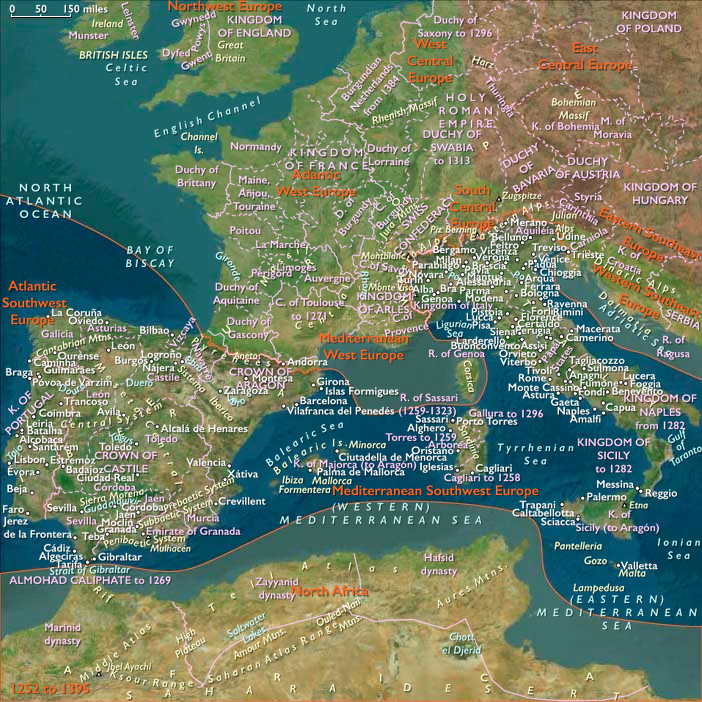
Castile, which had traditionally turned away from intervention in European affairs, develops a merchant marine in the Atlantic that successfully challenges the Hanseatic League (a peaceful league of merchants of various free German cities) for dominance in the coastal trade with France, England, and the Netherlands.
The economic climate necessary for sustained economic development is notably lacking, however, in Castile.
The reasons for this situation appear to have been rooted both in the structure of the economy and in the attitude of the Castilians.
Restrictive corporations closely regulate all aspects of the economy—production, trade, and even transport.
The most powerful of these corporations, the Mesta, controls the production of wool, Castile's chief export.
Perhaps a greater obstacle for economic development is that commercial activity enjoys little social esteem.
Noblemen see business as beneath their station and derive their incomes and prestige from landownership.
Successful bourgeois entrepreneurs, who aspire to the petty nobility, invest in land rather than in other sectors of the economy because of the social status attached to owning land.
This attitude deprives the economy of needed investments and engenders stagnation rather than growth.
Groups
Topics
Commodities
Regions
Southwest Europe
View →Subregions
