
Atlantic Southwest Europe (1564–1575 CE): Imperial Pressures, …
Years: 1564 - 1575
Atlantic Southwest Europe (1564–1575 CE): Imperial Pressures, Maritime Prosperity, and Religious Consolidation
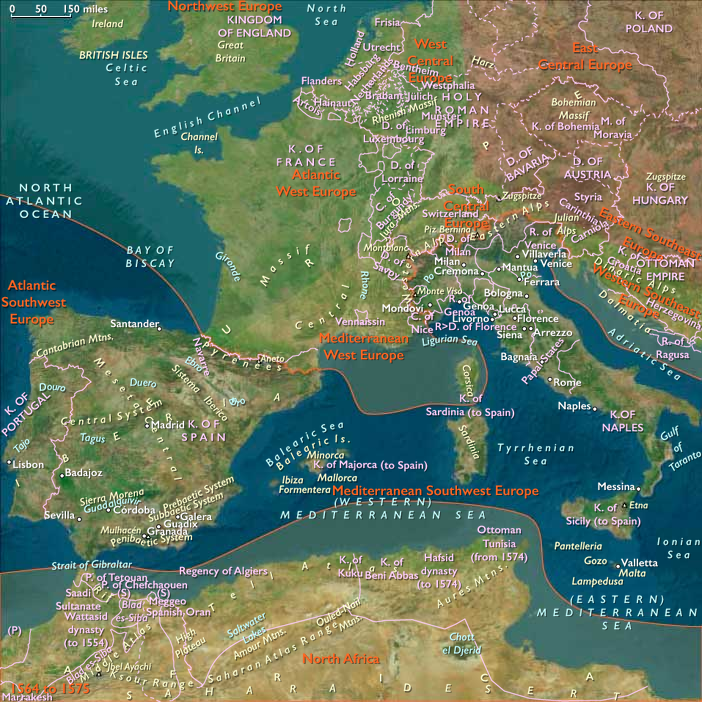
Between 1564 and 1575 CE, Atlantic Southwest Europe—including Galicia, northern and central Portugal, Asturias, Cantabria, northern León and Castile, northern Navarre, northern Rioja, and the Basque Country—faced increased imperial demands, deepened religious orthodoxy, thriving maritime commerce, and growing internal tensions. Under Philip II of Spain and the young King Sebastião of Portugal, the region’s integration into wider imperial frameworks intensified, profoundly shaping regional identities, economies, and cultural trajectories.
Political and Military Developments
Philip II’s Imperial Ambitions and Regional Burdens
Under Philip II (1556–1598 CE), centralized Habsburg authority intensified across northern Spain. The Basque Country, Cantabria, and northern Castile experienced heightened taxation and extensive recruitment to support imperial conflicts, especially military operations in the Netherlands and the preparation of the Spanish Armada. Regional nobility and urban merchant classes struggled with increasing fiscal and military demands, sparking tension between regional autonomy and centralized power.
Portugal’s Ambitious Expansion under King Sebastião
King Sebastião (1557–1578 CE) took personal rule in 1568, ending regency government. Driven by youthful idealism and religious zeal, Sebastião pursued aggressive military campaigns in North Africa, significantly involving northern Portuguese nobility and cities. These costly Moroccan ventures strained Portugal’s financial and human resources, foreshadowing vulnerabilities that would later undermine national stability.
Northern Navarre’s Delicate Stability
Northern Navarre successfully balanced dual allegiances between French and Spanish factions. This nuanced diplomacy preserved local autonomy, cultural resilience, and regional stability amid mounting geopolitical tensions between Spain and France.
Economic Developments
Maritime Prosperity and Portuguese Trade Networks
Portuguese maritime commerce thrived, particularly driven by lucrative sugar exports from Brazil. Coastal cities like Porto flourished economically, reinforcing urban wealth. However, escalating costs for naval defenses and fortifications to counter piracy and competition from English and French merchants began placing considerable strain on Portuguese state finances.
Expansion of Basque and Cantabrian Maritime Commerce
Basque ports, notably Bilbao and San Sebastián, prospered through expanded transatlantic trade, wool exports, and a booming shipbuilding industry crucial to Philip II’s naval ambitions, especially the ongoing preparations for the Spanish Armada. Cantabrian towns like Santander benefited similarly from increased mercantile activities, though the influx of silver from American colonies intensified inflation, negatively affecting local economies.
Agricultural Stability and Inland Stagnation
While coastal urban centers flourished, rural communities in Galicia, Asturias, and León remained largely dependent on traditional agriculture and pastoral economies, experiencing limited economic growth. Inflation driven by American silver imports exacerbated these regional disparities, deepening socioeconomic divisions between coastal and rural populations.
Cultural and Religious Developments
Heightened Counter-Reformation and Inquisitorial Authority
The Counter-Reformation profoundly intensified under Philip II’s rule, reinforcing Catholic orthodoxy through rigorous inquisitorial activities in Castilian cities such as Valladolid and Burgos, Basque towns like Bilbao and Vitoria, and northern Portuguese cities. Portugal’s Inquisition notably targeted conversos, merchants, and intellectual elites, curtailing earlier humanist freedoms and scholarly exchanges, reshaping regional intellectual and cultural landscapes significantly.
Artistic Patronage Aligned with Counter-Reformation Ideals
Northern Spanish cities, especially Burgos, Valladolid, and Salamanca, experienced significant artistic patronage aligned closely with Counter-Reformation orthodoxy. Religious architecture, devotional art, and literature flourished, reflecting deeper religious conformity and ecclesiastical authority. Portugal saw a similar cultural revival, especially at institutions like the University of Coimbra, where scholastic theology and classical humanism thrived within rigid doctrinal boundaries.
Galician Cultural Resilience and Pilgrimage Traditions
Galicia maintained strong cultural resilience, supported by Santiago de Compostela’s ecclesiastical prestige and pilgrimage traditions. Architectural projects, artistic patronage, and manuscript preservation continued, significantly reinforcing Galician identity and international prominence amidst intensified religious oversight.
Social and Urban Dynamics
Urban Expansion and Rising Merchant Influence
Maritime commerce significantly drove urban growth in coastal cities like Bilbao, Porto, Lisbon, and Santander, enhancing the prosperity and political influence of the merchant class. This urban prosperity, however, contrasted sharply with inland regions, exacerbating regional disparities and prompting internal migrations toward thriving coastal towns.
Imperial Demands and Regional Social Tensions
Philip II’s military campaigns and Portugal’s overseas ambitions intensified local demands for manpower, taxation, and strict religious conformity. These imperial pressures deepened social tensions across the region, sparking resentment among rural and urban communities struggling under the heavy burdens imposed by central authorities.
Basque Regional Autonomy Amid Centralization
Basque communities continued defending traditional local autonomy through the preservation of fueros, balancing loyalty to Philip II with efforts to maintain distinct regional identities and administrative freedoms. This delicate balancing act allowed significant regional self-governance amid growing centralizing pressures.
Notable Regional Groups and Settlements
-
Portuguese: Maintained maritime dominance and economic prosperity despite increasing vulnerabilities under Sebastião’s aggressive foreign policy, shaping Portugal’s global prominence and future challenges.
-
Spaniards (Castilians and Aragonese): Reinforced centralized Habsburg governance, heightened military and fiscal demands, and intensified religious orthodoxy under Philip II, decisively influencing regional political structures and cultural trajectories.
-
Galicians: Preserved vibrant economic resilience, cultural vitality, and ecclesiastical significance, supported by pilgrimage activities and maritime commerce, reinforcing regional prominence and resilience.
-
Basques (Navarre): Balanced centralized authority with regional autonomy, preserving distinctive cultural identities, local governance, and economic prosperity despite increasing imperial demands.
Long-Term Significance and Legacy
Between 1564 and 1575 CE, Atlantic Southwest Europe:
-
Experienced intensified imperial demands, financial pressures, and military obligations under Philip II and Sebastião, shaping regional identities and exposing economic vulnerabilities.
-
Witnessed heightened Counter-Reformation orthodoxy and inquisitorial rigor, reshaping intellectual life, cultural expressions, and religious practices profoundly.
-
Sustained robust maritime trade and urban expansion, reinforcing economic prosperity but also deepening regional socioeconomic divisions.
-
Maintained resilient local governance and distinctive regional identities despite increasing centralization pressures, laying foundations for future cultural and political developments.
This era decisively shaped regional governance, economic prosperity, cultural expression, and social cohesion, influencing Atlantic Southwest Europe’s trajectory toward continued global prominence, heightened religious orthodoxy, and enduring historical significance.
People
Groups
- Galicia, Kingdom of
- Portuguese people
- Basque people
- Christians, Roman Catholic
- Galicians
- Portugal, Avizan (Joannine) Kingdom of
- Asturias, Principality of
- Portuguese Empire
- Ottoman Empire
- Portuguese Gold Coast
- Inquisition, Spanish
- Christians, New
- Portuguese Mozambique
- Portuguese Malacca
- Spaniards (Latins)
- Spain, Habsburg Kingdom of
- Inquisition, Portuguese
- Brazil, Colonial
- Spain, Habsburg Kingdom of
Topics
- Colonization of the Americas, Portuguese
- Renaissance, Portuguese
- Renaissance, Spanish
- Colonization of the Americas, Spanish
- Colonization of Asia, Portuguese
- Colonization of Asia, Spanish
- Counter-Reformation (also Catholic Reformation or Catholic Revival)
- Eighty Years War (Netherlands, or Dutch, War of Independence)
Commodoties
Subjects
Regions
Subregions

Years: 1564 - 1575
People
Groups
- Galicia, Kingdom of
- Portuguese people
- Basque people
- Christians, Roman Catholic
- Galicians
- Portugal, Avizan (Joannine) Kingdom of
- Asturias, Principality of
- Portuguese Empire
- Ottoman Empire
- Portuguese Gold Coast
- Inquisition, Spanish
- Christians, New
- Portuguese Mozambique
- Portuguese Malacca
- Spaniards (Latins)
- Spain, Habsburg Kingdom of
- Inquisition, Portuguese
- Brazil, Colonial
- Spain, Habsburg Kingdom of
Topics
- Colonization of the Americas, Portuguese
- Renaissance, Portuguese
- Renaissance, Spanish
- Colonization of the Americas, Spanish
- Colonization of Asia, Portuguese
- Colonization of Asia, Spanish
- Counter-Reformation (also Catholic Reformation or Catholic Revival)
- Eighty Years War (Netherlands, or Dutch, War of Independence)
Commodoties
Subjects
Regions
Subregions