
Atlantic Southwest Europe (1612–1623 CE): Imperial Decline, …
Years: 1612 - 1623
Atlantic Southwest Europe (1612–1623 CE): Imperial Decline, Deepening Strains, and Early Signs of Revolt
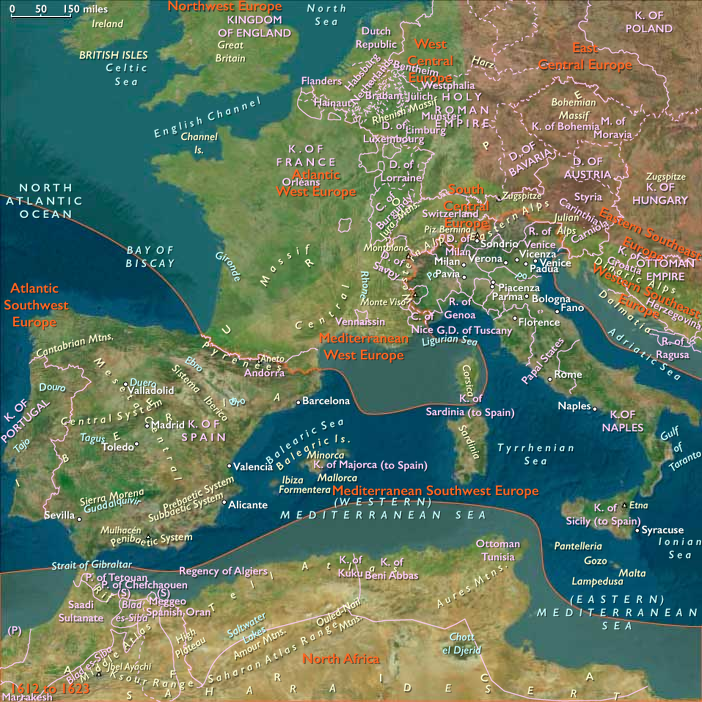
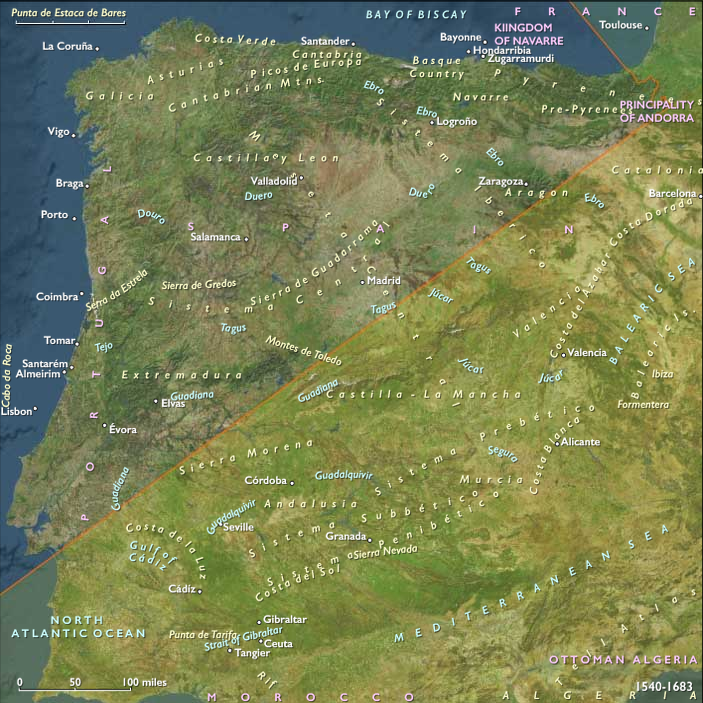
Between 1612 and 1623 CE, Atlantic Southwest Europe—including northern Portugal, Galicia, Asturias, Cantabria, northern León and Castile, northern Navarre, northern Rioja, and the Basque Country—faced escalating economic crises, intensified political frustrations, and persistent social tensions within the broader context of Iberian imperial overstretch. Under Spanish Habsburg rule, increasingly strained by ambitious global conflicts, the region exhibited mounting resistance to centralized control, laying the groundwork for profound political upheaval later in the seventeenth century. Regional identities strengthened, and cultural resilience persisted despite severe religious restrictions and economic hardships.
Political and Military Developments
Imperial Overreach and Regional Resentment
The reigns of Philip III (1598–1621 CE) and his successor Philip IV (1621–1665 CE) witnessed Spain’s continued participation in ambitious international conflicts, particularly the Thirty Years' War (1618–1648 CE). These prolonged military engagements demanded substantial resources, soldiers, and funds from northern Spanish provinces, intensifying regional dissatisfaction. Local elites, particularly in the Basque Country, Galicia, and northern Portugal, increasingly viewed Madrid’s central authority as excessively oppressive, disconnected from regional needs, and responsible for deepening economic hardship.
Rising Unrest and Autonomy Movements
In northern Portugal, notably in Porto, Braga, and Viana do Castelo, growing anti-Spanish sentiment began to coalesce into more structured autonomy movements. These sentiments foreshadowed future rebellions, especially the decisive Portuguese Restoration War beginning in 1640. Similarly, Basque provinces and northern Navarre intensified their demands for preservation and even expansion of traditional local rights (fueros), successfully resisting Madrid’s attempts at greater administrative uniformity and centralization.
Economic Developments and Maritime Decline
Fiscal Crisis, Inflation, and Economic Instability
Persistent inflation severely impacted local economies across the region, particularly in northern Portugal, Galicia, Cantabria, and the Basque territories. Increasing taxation to fund Spanish imperial conflicts exacerbated productivity declines in agriculture, textiles, iron manufacturing, and maritime commerce. Northern ports like Bilbao, Santander, and Porto suffered from disruptions due to piracy, wartime conflicts, and fierce competition from Dutch and English maritime rivals, significantly undermining regional economic stability.
Agricultural Hardships and Rural Poverty
Rural areas, particularly Galicia, Asturias, and northern León and Castile, continued facing chronic agricultural crises. Repeated poor harvests, inadequate investment, excessive taxation, and demographic pressures drove substantial rural poverty, prompting increased internal migration toward urban centers and significant emigration overseas, especially to the Americas. This rural exodus intensified urban demographic pressures and deepened socioeconomic divides.
Religious and Cultural Developments
Persistent Dominance of Counter-Reformation Orthodoxy
The Counter-Reformation maintained its powerful presence, actively enforced by inquisitorial tribunals operating rigorously in Valladolid, Coimbra, Braga, and Pamplona. Religious authorities continued aggressive surveillance and prosecution of suspected Protestants, conversos, and intellectual dissidents, severely restricting intellectual freedom and maintaining a climate of stringent doctrinal conformity.
Regional Cultural Resilience Amid Orthodoxy
Despite rigid religious orthodoxy, regional cultural identities persisted robustly. Folklore, literature, music, and language traditions in Galicia, the Basque Country, Asturias, Cantabria, and northern Portugal subtly expressed resistance to centralized assimilation. Local artistic circles and intellectual networks cautiously fostered regional traditions, emphasizing local distinctiveness and historical narratives as implicit forms of opposition to imperial homogenization.
Artistic and Scholarly Patronage within Constraints
Religious and educational institutions, notably universities in Coimbra, Valladolid, and ecclesiastical centers throughout northern Spain, continued to promote scholarship, religious literature, and classical learning within carefully controlled parameters. Artistic patronage persisted predominantly through religious commissions reflecting Counter-Reformation themes, with notable projects in Braga, Santiago de Compostela, Burgos, and Valladolid reinforcing ecclesiastical prestige and orthodoxy.
Social and Urban Developments
Rising Social Unrest and Urban Tensions
Economic distress, heavy taxation, and compulsory military service intensified social tensions throughout the region. Major cities—including Porto, Braga, Bilbao, Santander, Valladolid, and Burgos—witnessed sporadic urban unrest and public disturbances, reflecting widespread dissatisfaction among urban merchant classes, artisans, and lower-income populations. Urban elites increasingly advocated for greater local autonomy, lower taxes, and improved economic management, challenging centralized governance.
Rural-Urban Migration and Demographic Pressures
Deepening rural poverty and agricultural stagnation fostered significant demographic shifts toward urban centers and overseas colonies, especially to the Americas. This rural-to-urban migration placed heavy burdens on urban resources, exacerbating social inequalities and amplifying urban poverty. Consequently, urban authorities struggled to manage escalating pressures arising from demographic changes.
Preservation of Basque and Navarrese Autonomy
The Basque territories and northern Navarre continued resolutely defending their traditional privileges, successfully maintaining significant regional autonomy and administrative distinctiveness. Their unwavering defense of fueros provided crucial stability, significantly influencing regional political dynamics and laying important foundations for future autonomy movements and regional identity politics.
Notable Regional Groups and Settlements
-
Portuguese (Northern Regions): Demonstrated escalating resistance toward Spanish rule, with growing autonomy sentiments foreshadowing future rebellions and decisive political shifts.
-
Spaniards (Castilians, Cantabrians, Riojans): Experienced intensified economic distress, heavy taxation, and military demands, fueling social unrest and resistance against centralized imperial policies.
-
Galicians: Maintained cultural vitality and resilience despite persistent economic hardships, agricultural stagnation, and heightened religious repression, significantly reinforced through pilgrimage traditions and local cultural expressions.
-
Basques (Navarre): Successfully defended extensive local autonomy, preserving regional identity, governance, and cultural distinctiveness amid escalating centralizing pressures from Madrid.
Long-Term Significance and Legacy
Between 1612 and 1623 CE, Atlantic Southwest Europe:
-
Witnessed escalating political and social tensions, economic hardships, and increasing resistance to centralized Habsburg rule, laying critical groundwork for subsequent regional rebellions, particularly the Portuguese Restoration War (1640).
-
Experienced deepening economic instability, inflationary pressures, agricultural decline, and maritime disruptions, decisively shaping long-term regional economic structures and demographic dynamics.
-
Maintained cultural and religious life shaped profoundly by persistent Counter-Reformation orthodoxy yet preserved regional identities and traditions through subtle cultural resistance and expressions of local heritage.
-
Successfully preserved significant regional autonomy, notably in Basque and Navarrese territories, significantly influencing regional stability and future autonomy struggles.
This transformative era decisively influenced Atlantic Southwest Europe’s historical trajectory, setting the stage for intensified regional resistance, economic adaptations, and enduring cultural resilience amid growing imperial decline, ultimately reshaping political, social, and economic landscapes throughout the seventeenth century.
People
Groups
- Galicia, Kingdom of
- Portuguese people
- Basque people
- Christians, Roman Catholic
- Galicians
- Portugal, Avizan (Joannine) Kingdom of
- Asturias, Principality of
- Portuguese Empire
- Ottoman Empire
- Portuguese Gold Coast
- Inquisition, Spanish
- England, (Tudor) Kingdom of
- Christians, New
- Marranos
- Portuguese Mozambique
- Portuguese Malacca
- Spaniards (Latins)
- Spain, Habsburg Kingdom of
- Protestantism
- Inquisition, Portuguese
- Morocco, Sa'di Sharifate of
- Brazil, Colonial
- Spain, Habsburg Kingdom of
- Iberian Union
Topics
- Colonization of the Americas, Portuguese
- Renaissance, Portuguese
- Renaissance, Spanish
- Colonization of the Americas, Spanish
- Colonization of Asia, Portuguese
- Colonization of Asia, Spanish
- Counter-Reformation (also Catholic Reformation or Catholic Revival)
- Eighty Years War (Netherlands, or Dutch, War of Independence)
- Thirty Years' War
Commodoties
Subjects
Regions
Subregions
Years: 1612 - 1623
People
Groups
- Galicia, Kingdom of
- Portuguese people
- Basque people
- Christians, Roman Catholic
- Galicians
- Portugal, Avizan (Joannine) Kingdom of
- Asturias, Principality of
- Portuguese Empire
- Ottoman Empire
- Portuguese Gold Coast
- Inquisition, Spanish
- England, (Tudor) Kingdom of
- Christians, New
- Marranos
- Portuguese Mozambique
- Portuguese Malacca
- Spaniards (Latins)
- Spain, Habsburg Kingdom of
- Protestantism
- Inquisition, Portuguese
- Morocco, Sa'di Sharifate of
- Brazil, Colonial
- Spain, Habsburg Kingdom of
- Iberian Union
Topics
- Colonization of the Americas, Portuguese
- Renaissance, Portuguese
- Renaissance, Spanish
- Colonization of the Americas, Spanish
- Colonization of Asia, Portuguese
- Colonization of Asia, Spanish
- Counter-Reformation (also Catholic Reformation or Catholic Revival)
- Eighty Years War (Netherlands, or Dutch, War of Independence)
- Thirty Years' War
Commodoties
Subjects
Regions
Subregions