Atlantic Southwest Europe (1804–1815): Invasion, Resistance, and…
1804 CE to 1815 CE
Atlantic Southwest Europe (1804–1815): Invasion, Resistance, and the Struggle for Sovereignty
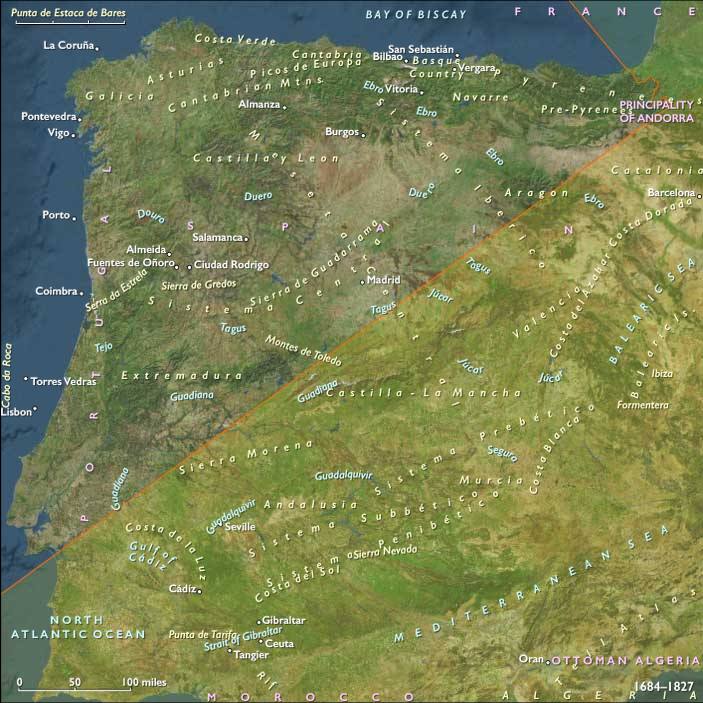
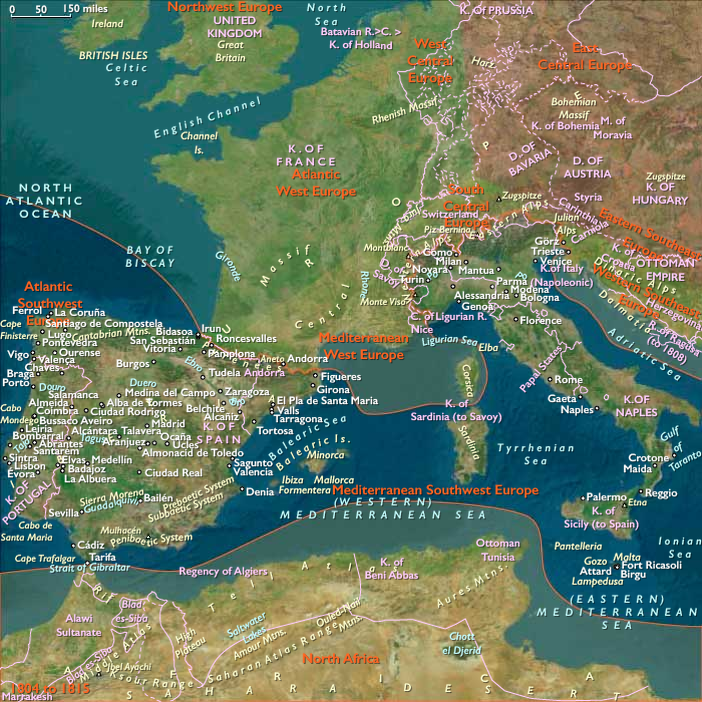
Between 1804 and 1815, Atlantic Southwest Europe—including northern and central Portugal (Lisbon), Galicia, Asturias, Cantabria, northern León and Castile, northern Navarre, northern Rioja, and the Basque Country—underwent transformative upheavals driven by the Napoleonic Wars, the French invasions of Iberia, widespread guerrilla resistance, and deepened political and economic crises. The period dramatically reshaped regional and national identities, fueling nationalist sentiment, liberal reforms, and intensified regional autonomy movements that would resonate throughout the nineteenth century.
Political and Military Developments
French Invasion and Occupation (1807–1814)
-
In 1807, French forces invaded Portugal, aiming to enforce the Continental Blockade against Britain. Lisbon fell quickly, prompting the Portuguese royal family and court to flee to Brazil, where they governed remotely from Rio de Janeiro.
-
Spain was similarly targeted in 1808, as Napoleon’s armies occupied Madrid, forcing the abdication of King Charles IV and his son Ferdinand VII. Northern Spanish territories—including Galicia, Asturias, Cantabria, and the Basque Country—experienced brutal occupation, stirring local resistance.
Widespread Guerrilla Warfare and Popular Resistance
-
Fierce guerrilla warfare erupted throughout northern Spain and Portugal, characterized by strong local leadership and grassroots resistance movements. The Galician, Asturian, and Basque regions became renowned for effective guerrilla tactics, greatly hindering French military operations.
-
Notable victories by local militias and British-led allied forces occurred at Vimeiro (1808) in Portugal and subsequent campaigns in Galicia and Asturias. These battles severely undermined French control, symbolizing regional determination for autonomy and freedom.
Political Reorganization and the Cortes of Cádiz (1810–1812)
-
With the monarchy in exile, representatives from northern Spain joined the liberal Cortes convened in Cádiz (1810–1812), drafting Spain’s first liberal constitution (Constitution of 1812), promoting representative government, civil liberties, and reduced monarchic powers.
-
Although short-lived, this liberal constitutional movement had profound impacts in the Basque Country, Navarre, Galicia, and northern Portugal, spreading ideals of political reform and regional self-determination.
Economic Developments: Devastation and Disruption
Severe Economic Damage
-
The French occupation devastated regional economies, particularly in northern Portugal, Galicia, Asturias, Cantabria, and the Basque Country. Agricultural production collapsed due to military requisitions, scorched-earth tactics, and prolonged warfare, triggering widespread famine and economic disruption.
-
Maritime commerce, especially in Lisbon, Porto, Bilbao, Santander, and Vigo, faced ruin due to blockades, destroyed infrastructure, and disrupted trade networks with Britain and overseas colonies, causing prolonged economic hardship.
Postwar Reconstruction Challenges
-
Following French withdrawal (1813–1814), Atlantic Southwest Europe confronted daunting reconstruction efforts. Extensive damage to agriculture, industry, and trade severely hindered regional recovery, requiring decades of rebuilding and investment.
-
Fiscal crises arose in Spain and Portugal, both burdened with war debt, inflation, and unstable currencies, exacerbating regional economic disparities and intensifying social unrest.
Religious and Cultural Developments
Church Resilience and Nationalist Sentiment
-
The Catholic Church emerged strengthened from the resistance, playing a pivotal role in galvanizing popular support against French occupation by positioning itself as a defender of national identity and tradition.
-
Clergy in Galicia, Asturias, and northern Portugal actively supported resistance efforts, utilizing pulpits and religious institutions to rally local populations, thereby reinforcing Catholicism’s central role in regional identity and culture.
Cultural Revival and National Identity
-
Resistance against French occupation fostered powerful expressions of regional and national identity. Literature, poetry, music, and art celebrated local heroism and resilience, notably evident in Galician and Portuguese popular songs and Basque folk traditions, enhancing regional pride and cultural revival.
-
This period laid essential foundations for nineteenth-century nationalism, particularly in Portugal, Galicia, and the Basque territories, shaping long-term cultural and political identities.
Social and Urban Developments
Urban and Rural Hardship
-
The devastation of warfare severely impacted urban centers—Lisbon, Porto, Bilbao, Vigo, and Santander—with infrastructure destroyed, trade disrupted, and urban populations experiencing extreme hardship and displacement.
-
Rural areas in Galicia, Asturias, and northern Castile suffered catastrophic agricultural disruption, famine, and mass population displacement, creating enduring social and demographic upheaval.
Emergence of Social Reform Movements
-
Postwar hardship sparked demands for social reform, influenced by liberal constitutional ideas introduced by the Cortes of Cádiz. Urban intellectual and middle-class groups in northern Portuguese and Spanish cities pressed for reforms addressing inequality, poverty, and improved governance.
Legacy and Significance
The years from 1804 to 1815 dramatically reshaped Atlantic Southwest Europe, marking a watershed period characterized by devastating warfare, popular resistance, and profound political transformations. Resistance to French occupation strengthened regional and national identities, fostered powerful movements toward political reform, and reinforced local autonomy demands. Despite the severe economic and social hardships endured, this era laid critical foundations for the emergence of modern nationalism, liberal constitutionalism, and enduring regional identities that significantly influenced the region’s subsequent historical trajectory.
Groups
Topics
Commodities
Subjects
Regions
Southwest Europe
View →Subregions