
Atlantic Southwest Europe (1924–1935): Dictatorship, Stabilization, and…
1924 CE to 1935 CE
Atlantic Southwest Europe (1924–1935): Dictatorship, Stabilization, and Rising Political Polarization
Between 1924 and 1935, Atlantic Southwest Europe—including northern and central Portugal, Galicia, Asturias, Cantabria, northern León and Castile, northern Navarre, northern Rioja, and the Basque Country—experienced authoritarian stabilization, economic modernization, and escalating political tensions. The era was defined by the establishment of authoritarian regimes in Portugal under António de Oliveira Salazar and Spain under Miguel Primo de Rivera, followed by the Second Spanish Republic’s brief democratic experiment. Meanwhile, deepening ideological divisions and intensified regional nationalism prepared the region for the turmoil of the late 1930s.
Political and Military Developments
Spain: Primo de Rivera’s Dictatorship (1923–1930)
-
In 1923, General Miguel Primo de Rivera seized power, establishing a military dictatorship to stabilize Spain amid severe political and social unrest. His regime initially restored public order and facilitated infrastructural projects, benefiting regions like the Basque Country (Bilbao’s port expansion), Cantabria, and Asturias.
-
Primo de Rivera curtailed regional autonomy, notably antagonizing Basque and Galician nationalists by suppressing cultural activities and limiting political expression, fueling further regional dissent.
The Second Spanish Republic and Rising Polarization (1931–1935)
-
Primo de Rivera’s resignation (1930) led to the proclamation of the Second Spanish Republic (1931–1939). Initial optimism for democracy gave way to profound political polarization, particularly intense in northern industrial and rural areas.
-
The Republic enacted extensive reforms, including secularization, land redistribution, and regional autonomy statutes. The Basque Country drafted an autonomy statute, reflecting growing nationalist strength, though tensions mounted as conservative sectors and the Catholic Church resisted republican reforms vehemently.
Portugal: Salazar’s Estado Novo (1933–1974)
-
Portugal’s chaotic First Republic ended definitively in 1926 with a military coup that installed a conservative dictatorship, solidified after António de Oliveira Salazar became finance minister in 1928 and prime minister in 1932. His regime—known from 1933 as the Estado Novo (“New State”)—established authoritarian, corporatist governance emphasizing social order, fiscal discipline, and conservative Catholic values.
-
Northern Portugal, particularly Porto, initially benefited from Salazar’s financial stabilization policies, gaining infrastructure improvements and economic growth, though at the cost of political freedoms and civil liberties.
Economic Developments: Stabilization and Modernization
Infrastructure and Industrial Growth
-
Under Primo de Rivera, northern Spain saw extensive infrastructure improvements, notably road-building, rail expansion, and urban renewal in cities like Bilbao, Oviedo, and Santander, promoting regional economic integration and industrial competitiveness.
-
The Basque Country, Asturias, and Cantabria experienced industrial stabilization, especially in steel, shipbuilding, and coal mining, although labor conditions remained harsh, fostering underlying social tensions.
Salazar’s Economic Policies and Stability in Portugal
-
Salazar’s disciplined fiscal policies ended Portugal’s inflationary cycles, restored public finances, and encouraged modest industrialization and infrastructure development, notably roads and railways connecting Porto, Braga, and Lisbon.
-
Northern Portugal’s textile, agricultural, and wine sectors benefited from improved stability, although economic growth was gradual and conservative, preserving significant regional and rural poverty.
Social and Urban Developments
Urban Expansion and Social Control
-
Under authoritarian regimes, cities such as Porto, Bilbao, and Santander witnessed controlled urban growth, infrastructural modernization, and improved public services, though accompanied by strict political surveillance and reduced civic freedoms.
-
Social inequalities persisted in industrial and rural areas, fueling underlying dissatisfaction, especially among working-class and rural populations in Galicia, Asturias, and northern León.
Labor and Social Tensions
-
Despite authoritarian stability, labor unrest periodically erupted due to poor working conditions and suppressed unions. Northern Spain’s industrial cities (Gijón, Bilbao, Oviedo) experienced occasional labor strikes and protests, harshly suppressed by authorities.
-
In Portugal, Salazar’s regime maintained tight control over labor movements, suppressing political dissent through strict censorship, surveillance, and occasional imprisonment of activists.
Cultural and Religious Developments
Resurgence of Catholicism and Conservative Values
-
Both Salazar’s Portugal and conservative sectors in Spain promoted Catholic traditionalism as fundamental to national identity, closely aligning Church and state. Catholic institutions regained prominence, influencing education, social policy, and cultural life, particularly strong in rural northern areas and cities such as Braga and Oviedo.
-
The Catholic Church strongly opposed republican secularization in Spain, becoming a central force in conservative opposition, particularly in northern Navarre, Rioja, and the Basque rural areas.
Strengthening of Regional and Nationalist Movements
-
Basque nationalism continued expanding, exemplified by the growth of the PNV, linguistic revitalization, and active cultural organizations promoting Basque identity. Similar, though milder, nationalist sentiment persisted in Galicia.
-
In Portugal, Salazar promoted centralized nationalism emphasizing unity, often suppressing regional distinctiveness. However, cultural life in Porto and northern universities (Coimbra, Braga) continued promoting regional pride within a framework acceptable to the regime.
Legacy and Significance
The period 1924–1935 in Atlantic Southwest Europe marked a critical turning point, defined by authoritarian stabilization, economic modernization, intensified political polarization, and rising regional nationalism. Primo de Rivera’s dictatorship and Salazar’s Estado Novo established stable but oppressive governance, temporarily quelling social unrest but embedding long-term tensions. Spain’s brief republican experiment heightened political polarization, laying critical foundations for the devastating Spanish Civil War (1936–1939). Simultaneously, Portugal under Salazar solidified authoritarian corporatism, shaping the country’s political and economic landscape for decades. Culturally, regional identities strengthened, particularly Basque nationalism, sowing seeds of future conflicts and autonomy movements.
Groups
Commodities
Subjects
Regions
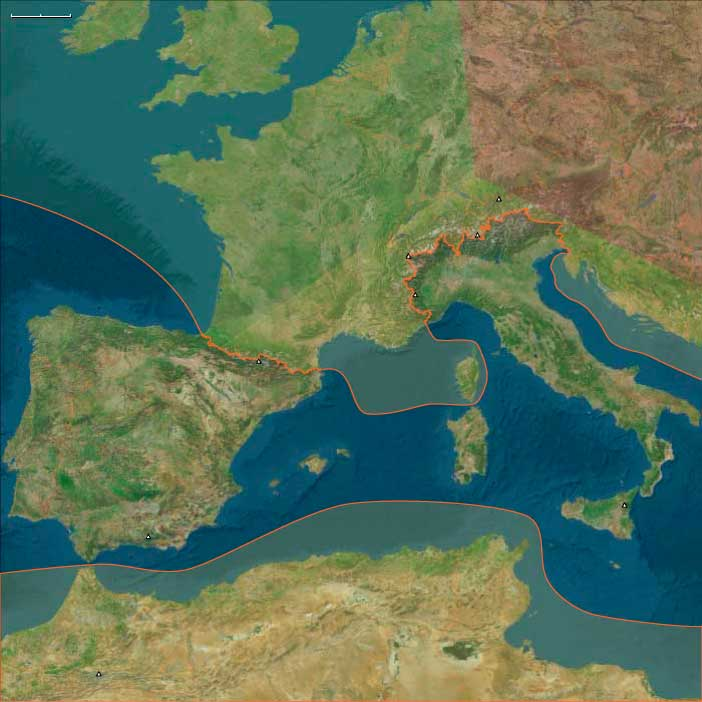
Southwest Europe
View →Subregions
