
Atlantic Southwest Europe (820–831 CE): Asturian Strength, …
Years: 820 - 831
Atlantic Southwest Europe (820–831 CE): Asturian Strength, Ecclesiastical Prestige, and Growing Pilgrimage Influence
Between 820 and 831 CE, Atlantic Southwest Europe—comprising Galicia, northern and central Portugal, Asturias, Cantabria, and northern Spain south of the Franco-Spanish border (43.05548° N, 1.22924° W)—entered a period of sustained political stability, territorial consolidation, and cultural prominence under the reign of King Alfonso II ("the Chaste," 791–842 CE). The Asturian kingdom continued to reinforce its position as the primary Iberian Christian polity, strengthened by growing ecclesiastical prestige, a flourishing economy, and the increasing influence of Santiago de Compostela as a major pilgrimage destination.
Political and Military Developments
Stable Centralized Authority under Alfonso II
During this period, Alfonso II maintained strong centralized governance, effectively balancing regional autonomy with royal oversight. Asturian authority remained firmly established throughout Galicia, Asturias, Cantabria, and into northern Lusitania, supported by robust frontier defenses, notably the strategic buffer along the Duero region. Diplomatic relationships with regional aristocrats and tribal leaders continued to provide critical stability.
Enhanced Frontier Defense and Limited Islamic Conflict
Asturias continued fortifying its borders against Islamic incursions from al-Andalus. Alfonso II’s defensive policies effectively minimized major Islamic attacks, maintaining peace and stability within the kingdom's core territories. While occasional border skirmishes occurred, Asturian defensive structures—fortresses, watchtowers, and fortified settlements—ensured ongoing regional security.
Economic Developments
Continued Economic Prosperity
Under stable political conditions, the regional economy prospered. Villa-based agriculture thrived, emphasizing grain, vineyards, olive orchards, and livestock husbandry. Mining, particularly gold and silver extraction in Galicia and Asturias, remained significant, enhancing regional wealth and economic stability.
Steady Maritime and Regional Trade
Coastal settlements such as Bracara Augusta (Braga) and smaller ports in Galicia and northern Portugal sustained consistent maritime trade. Although modest, these connections provided crucial economic continuity and integration into wider Atlantic and Mediterranean trade networks.
Cultural and Religious Developments
Increased Prestige of Santiago de Compostela
The cult surrounding Saint James at Santiago de Compostela continued its dramatic growth, rapidly becoming a premier pilgrimage destination in Christian Europe. King Alfonso II actively promoted this pilgrimage, significantly elevating the town’s ecclesiastical and cultural prestige. Pilgrimage activities fostered religious unity, stimulated economic growth, and increased the flow of ideas and cultural exchange across the region.
Expanded Ecclesiastical Authority and Governance
Influential bishoprics—including Braga, Lugo, Iria Flavia (later Santiago de Compostela), and Asturica Augusta—deepened their administrative and civic authority, providing moral leadership, local governance, education, and social welfare. Ecclesiastical influence became central to regional identity, further embedding orthodox Christianity within local communities.
Monastic Expansion and Cultural Influence
Monastic communities flourished further, significantly shaping regional cultural, educational, and economic life. Monasteries continued to be critical centers of manuscript preservation, scholarship, literacy, agricultural improvement, and social welfare, reinforcing local and regional identities.
Persistent Cultural Syncretism
The enduring integration of orthodox Christianity with indigenous Celtic and Iberian traditions remained robust, particularly in rural Galicia, Asturias, and northern Portugal. This cultural synthesis reinforced community resilience and regional distinctiveness.
Civic Identity and Governance
Deepened Royal and Ecclesiastical Integration
Governance structures continued to reflect a cohesive integration of royal and ecclesiastical authority. Civic identities increasingly centered around loyalty to Alfonso II’s monarchy, the ecclesiastical institutions, and the pilgrimage destination of Santiago de Compostela, strongly defining Asturias as the symbolic heart of Iberian Christian resistance.
Notable Tribal Groups and Settlements
-
Astures and Cantabri: Continued to provide political cohesion and military strength, decisively shaping the Asturian kingdom’s identity and defensive structures.
-
Galicians and Lusitanians: Maintained effective local governance, economic resilience, and strong cultural autonomy, pragmatically cooperating with Asturian central authority.
-
Vascones: Maintained their longstanding neutrality, territorial independence, and cultural distinctiveness, diplomatically engaging with Asturias yet remaining insulated from broader regional conflicts.
Long-Term Significance and Legacy
Between 820 and 831 CE, Atlantic Southwest Europe:
-
Enjoyed sustained political stability, reinforcing Asturian royal authority and laying enduring foundations for subsequent medieval kingdoms.
-
Witnessed the rising prominence of Santiago de Compostela as a pilgrimage site, decisively shaping regional religious practices, cultural identity, and economic development.
-
Strengthened ecclesiastical leadership, economic resilience, and distinctive regional cultural identities, deeply influencing the medieval trajectory of northern Iberia.
This era represented a critical period of consolidation and cultural flourishing, profoundly impacting Atlantic Southwest Europe's enduring historical and cultural legacy throughout the medieval era.
People
Groups
- Polytheism (“paganism”)
- Vascones
- Lusitanians, or Lusitani
- Gallaeci
- Cantabri (Celtic tribe)
- Astures (Celtic tribe)
- Moors
- Christianity, Chalcedonian
- Islam
- al-Andalus (Andalusia), Muslim-ruled
- Asturias, Kingdom of
- Córdoba, Umayyad Emirate of
- Abbasid Caliphate (Baghdad)
- Navarre, Kingdom of
Topics
Commodoties
- Fish and game
- Weapons
- Oils, gums, resins, and waxes
- Grains and produce
- Fibers
- Textiles
- Ceramics
- Strategic metals
- Salt
- Beer, wine, and spirits
- Lumber
Subjects
- Commerce
- Architecture
- Engineering
- Labor and Service
- Conflict
- Mayhem
- Faith
- Government
- Scholarship
- Custom and Law
- Technology
- religious movement
Regions
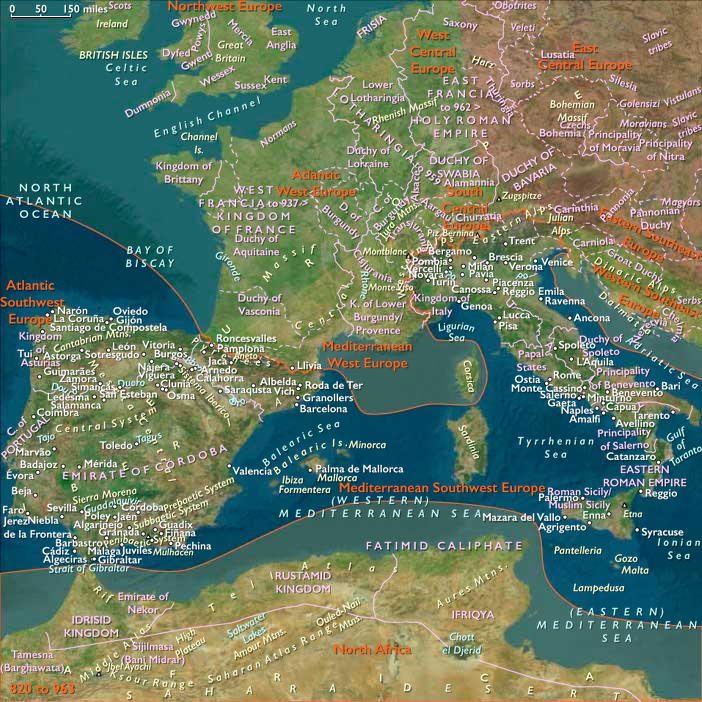
Subregions
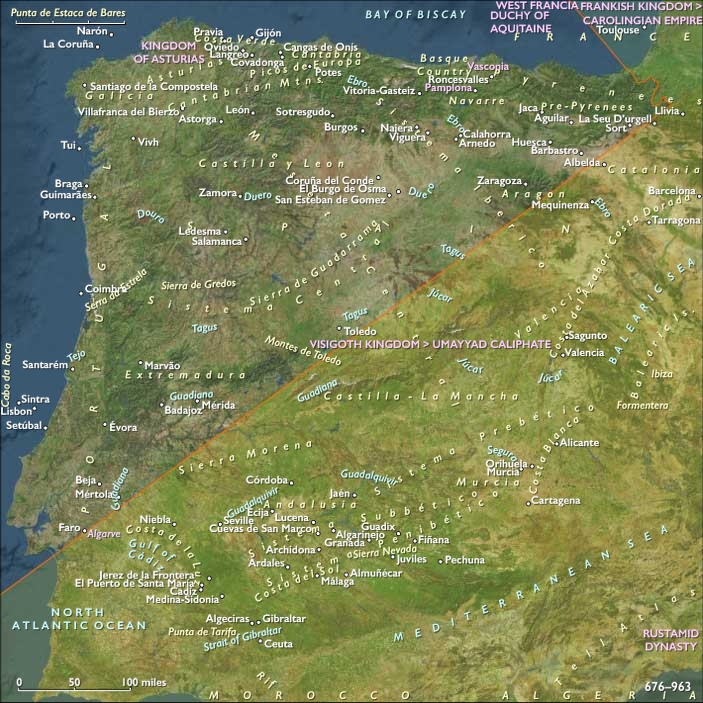
Related Events
Showing 10 events out of 54673 total
Years: 820 - 831
People
Groups
- Polytheism (“paganism”)
- Vascones
- Lusitanians, or Lusitani
- Gallaeci
- Cantabri (Celtic tribe)
- Astures (Celtic tribe)
- Moors
- Christianity, Chalcedonian
- Islam
- al-Andalus (Andalusia), Muslim-ruled
- Asturias, Kingdom of
- Córdoba, Umayyad Emirate of
- Abbasid Caliphate (Baghdad)
- Navarre, Kingdom of
Topics
Commodoties
- Fish and game
- Weapons
- Oils, gums, resins, and waxes
- Grains and produce
- Fibers
- Textiles
- Ceramics
- Strategic metals
- Salt
- Beer, wine, and spirits
- Lumber
Subjects
- Commerce
- Architecture
- Engineering
- Labor and Service
- Conflict
- Mayhem
- Faith
- Government
- Scholarship
- Custom and Law
- Technology
- religious movement
Regions
Subregions