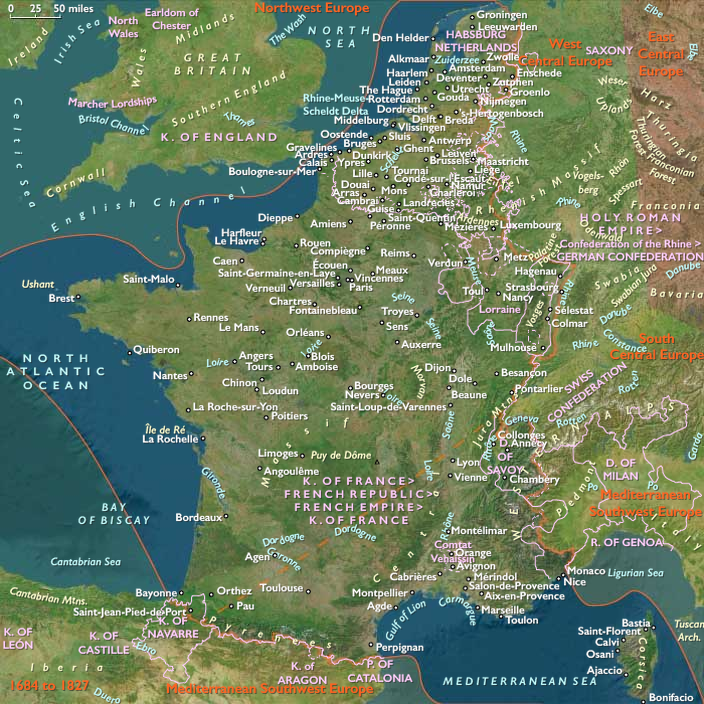
The French Revolutionary Army and the Challenges…
May 1796 CE
The French Revolutionary Army and the Challenges of the First Coalition War (1792–1796)
Initially, the monarchs of Europe viewed the French Revolution as an internal conflict between King Louis XVI and his subjects. However, as revolutionary rhetoric intensified, they began to see it as an existential threat to the monarchic order.
The Declaration of Pillnitz (August 27, 1791) – A Warning to Revolutionary France
- Issued by Emperor Leopold II of Austria and King Frederick William II of Prussia, the Declaration of Pillnitz threatened serious consequences should any harm come to the French royal family.
- Though ambiguous, it signaled that European monarchs would not tolerate the overthrow of a fellow sovereign.
Meanwhile, French émigrés—aristocrats who had fled France—actively agitated for counter-revolution, gaining the support of:
- The Habsburg Monarchy (Austria)
- The Kingdom of Prussia
- Great Britain
France Declares War (April 20, 1792) – The First Coalition Assembles
With tensions escalating, the French National Convention declared war on Austria on April 20, 1792, drawing all of the Holy Roman Empire into the war. This marked the beginning of the War of the First Coalition (1792–1798), pitting France against nearly all of its neighboring states as well as:
- Great Britain
- The Kingdom of Portugal
- The Ottoman Empire
The Revolutionary Army – Disruption and Reorganization (1793–1795)
From 1793 to 1795, French military fortunes fluctuated, as the radicalization of the Revolution led to massive purges in the army:
- Officers suspected of royalist sympathies were removed, imprisoned, or executed.
- The levée en masse (mass conscription) flooded the ranks with thousands of illiterate, untrained men.
- Many new officers were chosen more for their loyalty to the Revolution than for their military competence.
The Demi-Brigade – A New Military Organization
The traditional military structure of France was disrupted by the introduction of the demi-brigade system:
- Each demi-brigade was composed of one unit from the old royalist army and two from newly conscripted revolutionary forces.
- This reorganization aimed to instill revolutionary spirit into the army, but it also created disciplinary and operational challenges.
The Army in Crisis (1795)
By 1795, the French Revolutionary Army was in turmoil:
- The Rhine Campaign of 1795 had resulted in disappointment and losses, demoralizing the troops and the French public.
- The army had gained a reputation for lawlessness and pillaging, as it relied heavily on local populations for food and supplies.
- Rumors of indiscipline and corruption within the army eroded public trust.
Financial Struggles – The Need for a Foreign Campaign
- In April 1796, the French Directory finally resumed payments in metallic currency rather than the worthless paper assignats.
- However, back pay was still in arrears, and logistical support for the army remained inadequate.
- The Directory expected the war to pay for itself, not budgeting to sustain its own troops.
The Need for an Offensive War
Faced with financial constraints and internal unrest, the Directory saw an external campaign as a necessity:
- Plundering enemy territories would help feed and pay the army, removing the burden from the French countryside.
- A successful offensive could boost national morale and distract from domestic instability.
Thus, by 1796, France was preparing to launch a large-scale military campaign beyond its borders, which would soon alter the course of European warfare.