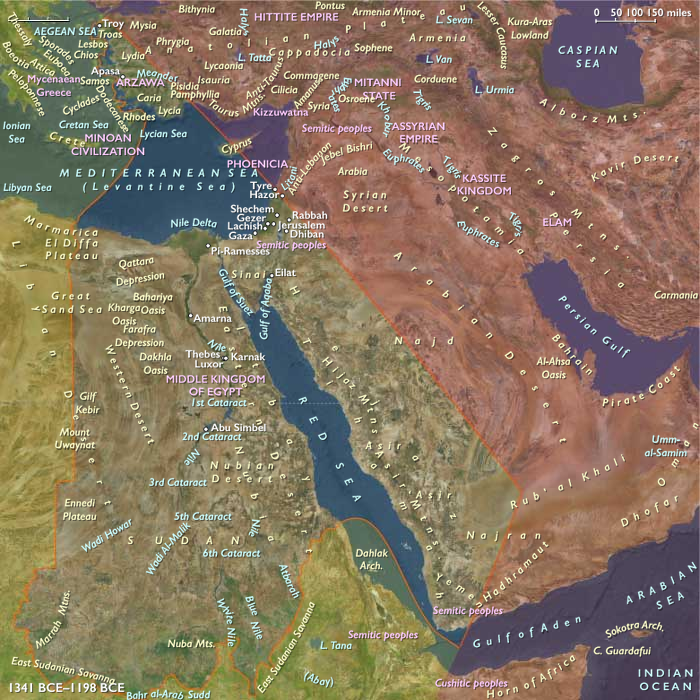
Beycesultan, an archaeological site in western Anatolia,…
1341 BCE to 1198 BCE
Beycesultan, an archaeological site in western Anatolia, located about five kilometers southwest of the modern-day city of Çivril in the Denizli Province of Turkey, lies in a bend of an old tributary of Büyük Menderes River (Maeander River).
Occupied beginning in the Late Chalcolithic period, the settlement increased in size and prominence through the third millennium, with notable religious and civil buildings.
Development peaked early in the second millennium with the construction of a massive palace and associated structures.
The palace was abandoned and then destroyed circa 1700 BCE.
To this point, the orientation of Beycesultan was strongly influenced from the west, mainly the Aegean and Crete.
After a few centuries of semi-abandonment, Beycesultan begins to rise again, this time more influenced by the Hittite regions of Anatolia.
Though smaller than the earlier city, the site was of impressive size.
This second flowering of Beycesultan is destroyed around 1200 BCE, as are many locations in Anatolia at this time.
Seton Lloyd, along with James Mellaart, excavated Beycesultan on behalf of the British Institute of Archaeology in Ankara for six seasons from 1954 to 1959 with each dig lasting around two months.
The excavators reported a row of small houses that had been destroyed by fire.
There was also a palace, the plan of which suggested that of Knossos, which had been cleared out before its destruction.
At one entrance of the palace was a kind of bathroom, where visitors evidently washed themselves before making their bows at court.
Beneath the floors of the inner chambers, which are raised about a yard above the ground, were small passages suggesting air ducts of a central heating system, which will be invented, or reinvented, by Gaius Sergius Orata in the Rome of 80 BCE.
Locations
Topics
Regions
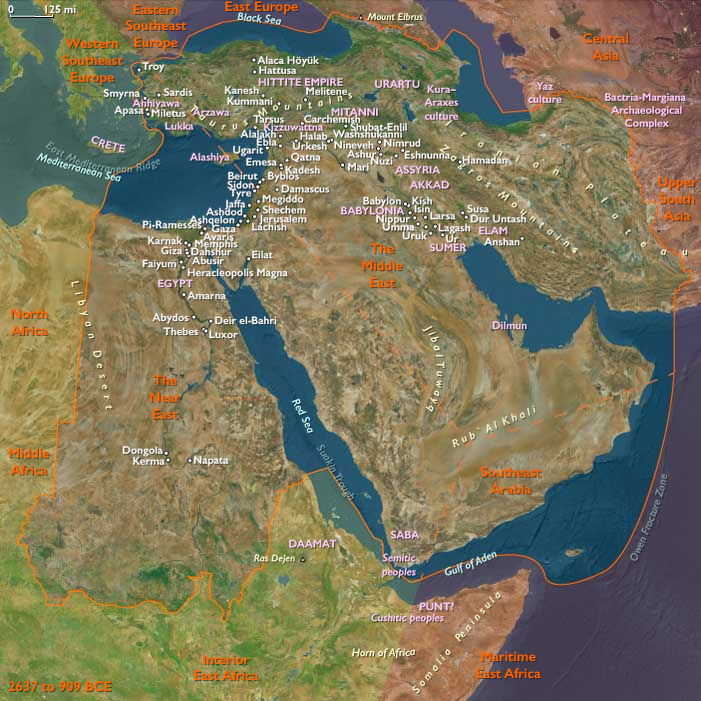
The Near and Middle East
View →Subregions