
Both Aragon and Pamplona have remained outside …
Years: 824 - 824
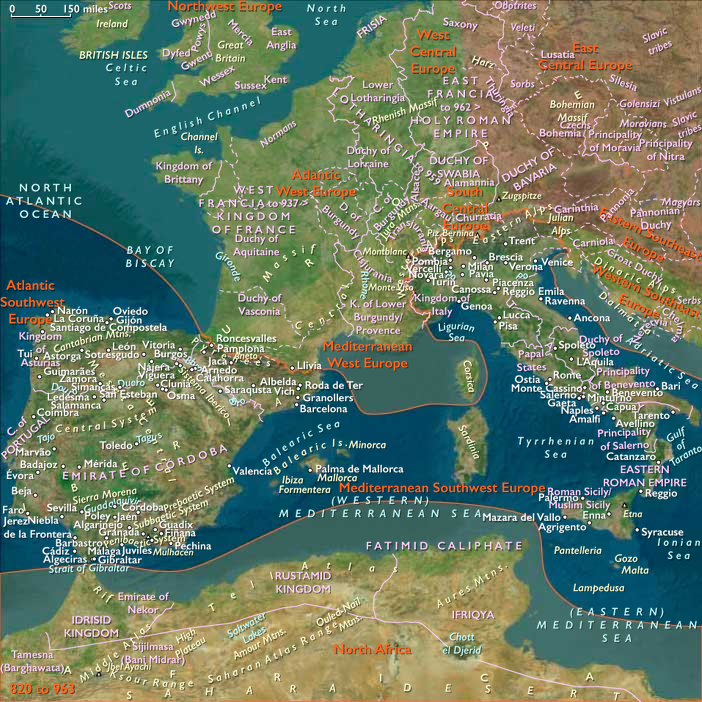
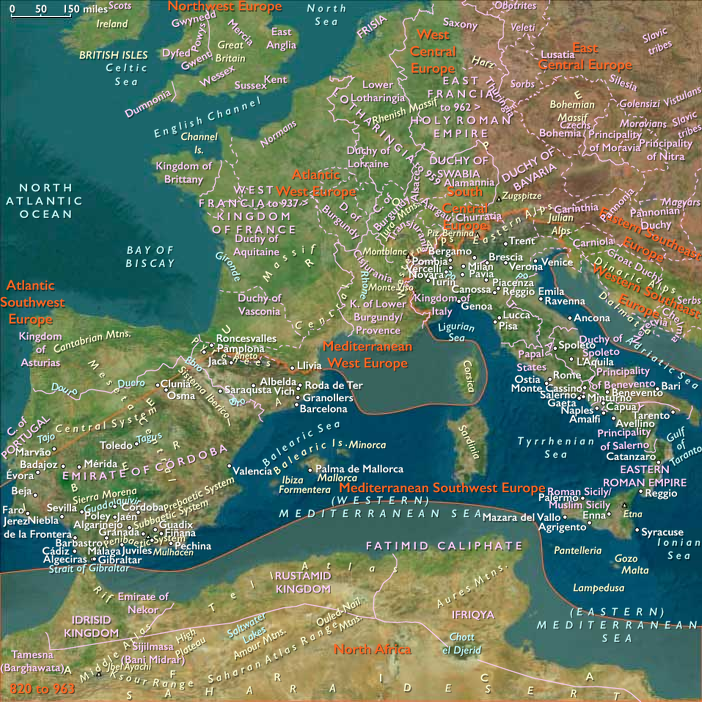
Both Aragon and Pamplona have remained outside Carolingian control; western Gascony continues in revolt.
According to the Vita Hludowici, the counts Aznar Sánchez and Aeblus, Frankish vassals, lead an army across the Pyrenees in 824 against rebellious Pamplona to reestablish control.
According to the Annales regni Francorum of Einhard, they (Aeblus and Aznar) bring a great deal of wealth with them.
They are defeated by joint Pamplonese and Banu Qasi forces in a "second Roncesvalles", and Pamplona gains its independence as the kingdom of Navarre while the two counts are captured.
Aznar, however, being a relative of his captors, according to Astronomus, is released.
Aeblus is sent a prisoner to the Emir of Córdoba, where he will die a captive.
García the Bad and Musa ibn Musa al-Qasawi of the Banu Qasi had probably lent their support to the Basque Íñigo, leading to the defeat of the Frankish counts.
The Basque victors are not named, but it is in the context of this defeat that Íñigo Arista is said to have been pronounced "King of Pamplona" in that city by the people.
Locations
People
Groups
- Franks
- Vasconia, Duchy of
- Banu Qasi
- Papal States (Republic of St. Peter)
- Córdoba, Umayyad Emirate of
- Marca Hispanica
- Aragón, or Zaca, County of
- Frankish, or Carolingian (Roman) Empire
- Navarre, Kingdom of
- Basque people
Topics
Commodoties
Subjects
Regions
Subregions
Related Events
Filter results
Showing 10 events out of 225 total
Southwest Europe (1540–1683 CE)
Habsburg Sea Power, Baroque Splendor, and Ottoman Encounters
Geography & Environmental Context
Southwest Europe in this era encompassed Spain, Italy (including Sicily, Sardinia, and Milan), Malta, and the Balearic Islands—a region unified under the broad influence of Habsburg empire and shadowed by the Ottoman frontier. Anchors stretched from the Po Valley and Apennines to the Andalusian plains, from the Valencian huertas to the fortified harbors of Malta, Messina, and Barcelona. The western Mediterranean linked fertile deltas and mountainous interiors to a network of maritime highways—the very arteries of imperial power and commerce.
Climate & Environmental Shifts
The Little Ice Age deepened its grip between the mid-sixteenth and mid-seventeenth centuries. Cool, wet decades (1550s–1620s) alternated with prolonged droughts (1630s–1660s):
-
Po Valley floods and silting tested irrigation networks.
-
Andalusia, Sicily, and Murcia suffered harvest failures under aridity.
-
Terraced slopes of Catalonia and Liguria faced erosion from torrential winter rains.
Urban resilience relied on imported Sicilian and Sardinian grain, huerta irrigation, and charitable granaries. American crops such as maize and peppers, diffusing gradually, improved food security across rural districts.
Subsistence & Settlement
Cereal, vine, and olive cultures remained the economic base, complemented by citrus and pastoralism.
-
Italy: Rice expanded in Lombardy; olives and silk thrived around Naples and Tuscany.
-
Spain: Andalusia’s olive estates, Valencia’s sugar and silk, and Murcia’s irrigated citrus supported dense populations.
-
Sicily and Sardinia: Granaries of empire; wheat exports fed Naples, Rome, and the Spanish navy.
-
Malta & Balearics: Dependent on imports but essential as naval depots and fisheries.
Urbanization peaked: Naples exceeded a quarter million inhabitants; Seville, Valencia, Palermo, and Venice flourished as port metropolises linking Europe to the Atlantic and Levant.
Technology & Material Culture
-
Hydraulics & irrigation: Canal dredging in the Po Delta, acequia upkeep in Valencia, and cistern systems in Malta and Sardinia mitigated climatic stress.
-
Maritime innovation: Arsenal systems at Venice, Genoa, and Barcelona produced galleons and galleasses; the transition from oared to sail-driven fleets blurred the Mediterranean–Atlantic divide.
-
Manufactures: Venetian glass, Neapolitan and Florentine silks, Valencian ceramics, and Sevillian metalwork adorned both courtly and ecclesiastical settings.
-
Architecture & arts: The Baroque replaced the Renaissance—Bernini and Borromini in Rome, Caravaggio in Naples, Zurbarán and El Greco in Iberia—melding sacred passion with imperial majesty.
Movement & Interaction Corridors
-
Imperial arteries: The Spanish Road linked Milan to Flanders, while Mediterranean convoys moved troops, bullion, and grain to the Levantine frontier.
-
Trade circuits: Venice dealt in Levantine goods; Genoa financed Habsburg loans; Seville and later Cádiz funneled American silver into Mediterranean markets.
-
Pilgrimage & diplomacy: Jubilee processions in Rome and the fortified splendor of Valletta symbolized Catholic resilience. Jesuit missions spread education and reform from Italian and Iberian ports to Africa, Asia, and the Americas.
Cultural & Symbolic Expressions
The Catholic Reformation defined the region’s spiritual and artistic life.
-
The Council of Trent (1545–1563) reaffirmed doctrine and inspired an artistic counteroffensive—the visual eloquence of Baroque sculpture, music, and architecture proclaiming divine order.
-
Rome regained its stature as capital of faith; Jesuit colleges and Franciscan missions spread learning from Palermo to Lisbon.
-
Malta, entrusted to the Knights of St. John, repelled the Ottoman siege (1565), transforming Valletta into a walled sanctuary of Christendom.
-
Folk traditions—harvest feasts, confraternities, and processions—endured beneath clerical orthodoxy, fusing old and new devotional worlds.
Environmental Adaptation & Resilience
Mixed agriculture, rotational grazing, and intercropped vines and olives buffered against famine. Urban monti di pietà(public grain funds) and confraternal charities distributed bread in crisis years. Imports of maize, potato, and beans from the New World diversified diets, easing demographic recovery after plague cycles (notably Naples 1656, Seville 1649). Irrigation and terrace rebuilding sustained rural populations through climatic volatility.
Technology & Power Shifts (Conflict Dynamics)
-
Ottoman frontier: Naval clashes at Malta (1565) and Lepanto (1571) marked the zenith of Christian–Ottoman contest.
-
Venetian wars: Costly struggles for Cyprus (1570–73) and Crete (1645–1669) sapped Venice’s strength yet preserved its maritime prestige.
-
Habsburg entanglements: The Dutch Revolt, Thirty Years’ War, and Neapolitan and Catalan uprisings (1640s) drained Spanish coffers and authority.
-
Corsair and pirate war: Barbary fleets raided Sicily, Valencia, and the Balearics, while Mediterranean galleons hunted rivals across shifting alliances.
-
Fiscal exhaustion & renewal: The 17th century’s recessions and plagues weakened Spain’s grip, but stable dynasties restored order by the 1680s.
Transition (to 1683 CE)
By 1683, Southwest Europe remained the cultural and maritime heart of the Catholic world. Habsburg Spain ruled Naples, Sardinia, and Sicily; Venice and Genoa persisted as cosmopolitan city-states; Malta, rebuilt after siege, stood as fortress and hospital of the seas.
Baroque art and Jesuit learning animated its cities, while ships from Seville, Valencia, Naples, and Venice spanned oceans from the Caribbean to the Levant.
Despite famine, plague, and revolt, irrigation, terrace agriculture, and global commerce preserved prosperity. The region’s blend of imperial might, artistic grandeur, and maritime innovation made Southwest Europe the enduring core of the early modern Mediterranean world.
Mediterranean Southwest Europe (1540–1683 CE)
Empire, Faith, and the Baroque Sea
Geography & Environmental Context
Mediterranean Southwest Europe spans Italy (with Sardinia and Sicily), Malta, and southeastern Spain—including Andalusia, Murcia, Valencia, Catalonia’s southern coast, and the Balearic Islands. Anchors included the volcanic peaks of Etna and Vesuvius, the Po Valley, the Apennine spine, the Bay of Naples, the Ebro delta, and the Mediterranean archipelagos linking Iberia to Italy.
The Little Ice Age brought alternating droughts and torrential winters, particularly across Andalusia and southern Italy. Erratic rains affected wheat and olive harvests, while extended cool seasons reduced grape yields in uplands. Yet the region’s maritime orientation, diversified crops, and enduring irrigation networks sustained dense populations and vibrant coastal cities.
Political Landscapes & Imperial Tides
Spanish and Italian Worlds under Habsburg Rule
By the mid-16th century, Habsburg Spain presided over a trans-Mediterranean empire linking Andalusia, Naples, Sicily, Milan, and the Balearics into a single imperial framework. From Seville, treasure fleets departed for the Americas; from Naples and Messina, fleets supplied the garrisons of Tunis and Oran. The Spanish Crown maintained tight control through viceroys in Naples, Sicily, and Milan, whose palaces and arsenals symbolized both imperial reach and bureaucratic weight.
Habsburg Italy bore the dual imprint of Spanish absolutism and local autonomy: the Republics of Venice and Genoaremained formally independent but economically bound to the empire’s trade and credit systems.
The Papal and Ducal States
In central Italy, the Papal States reasserted ecclesiastical sovereignty under the Counter-Reformation. Popes like Paul III and Urban VIII fused religious zeal with Baroque patronage—rebuilding St. Peter’s Basilica, commissioning Bernini’s colonnades, and sponsoring the Jesuit missions that radiated outward through Malta, Goa, and the New World.
Elsewhere, ducal courts—Florence, Ferrara, Modena, Parma, Mantua—balanced Habsburg oversight with artistic grandeur, cultivating painters, architects, and philosophers whose work defined European taste.
Malta and the Great Siege (1565)
The Order of Saint John transformed Malta into a fortified bastion of Christendom. The Great Siege of 1565, when Ottoman fleets besieged the island for months, became a defining episode: the Knights’ victory resonated across Europe as a triumph of faith and endurance. Valletta, rebuilt after the siege, embodied Renaissance geometry fused with military modernity—a city of bastions, domes, and arsenals facing east toward perpetual vigilance.
Ottoman–Habsburg Maritime Conflict
The Battle of Lepanto (1571)—fought off western Greece—marked the climax of Mediterranean naval rivalry. A Holy League fleet led by Don John of Austria shattered Ottoman naval supremacy, though piracy and privateering persisted from Barbary corsairs to Calabrian coasts. Coastal watchtowers, signal fires, and galleys patrolling from Messina to Alicante embodied the militarization of the sea.
Economy & Material Life
Agrarian Systems and Maritime Exchange
Across Italy and Spain’s southern provinces, irrigation channels, terraces, and communal cisterns preserved the legacy of Moorish and Roman water management. Andalusian latifundia produced olives, citrus, and wine for export through Cádiz and Valencia. Sicily and Apulia fed the empire with grain; Malta and the Balearics served as provisioning depots. Sardinia’s salt pans and cork forests entered Mediterranean trade, while silk from Naples and Valencia graced European markets.
Maritime commerce thrived despite warfare: Genoese financiers bankrolled the Spanish Crown; Neapolitan shipyards armed the fleets; and Italian artisans dominated luxury production in glass, lace, and ceramics.
Urban Economies and Guild Networks
Cities flourished as centers of both art and manufacture. Florence and Naples were theaters of opulence, their streets lined with new palaces and churches under Jesuit influence. Palermo, Messina, Seville, and Barcelona pulsed with the wealth of trade and bureaucracy. Guilds of silk-weavers, metalworkers, and printers maintained civic identity amid imperial centralization, while ports such as Livorno and Cádiz emerged as entrepôts for northern European merchants seeking Mediterranean wares.
Culture, Faith, and Expression
Counter-Reformation and the Baroque Imagination
No region embodied the Baroque Age more vividly than southern Europe. Following the Council of Trent (1545–1563), Catholic renewal found physical form in art, architecture, and ritual. Painters—Caravaggio, Zurbarán, Guido Reni, Ribera—filled churches with chiaroscuro devotion, dramatizing saints and martyrdoms.
Jesuit missions, schools, and printing presses spread reformed Catholic orthodoxy. Religious festivals combined processions, fireworks, and theater; mystery plays and pilgrimages reaffirmed sacred geography from Santiago de Compostela to Loreto.
Humanism and Science
Italian universities and academies bridged Renaissance inquiry and early modern science. Galileo Galilei’s telescopes in Florence and Pisa redefined astronomy even as the Inquisition curtailed intellectual freedom. In Spain, writers like Cervantes and Lope de Vega turned chivalric decline into modern literature. Across Naples, Rome, and Madrid, patrons fused scholarship with spectacle, blending theology, natural philosophy, and performance into a single continuum of learning and faith.
Music and Theater
Opera was born in Florence around 1600, merging classical drama with courtly spectacle; by mid-century, it spread to Naples and Rome. Polyphonic sacred music flourished in Spanish and Italian cathedrals—Palestrina’s harmonies at St. Peter’s epitomized the new ideal of clarity and devotion. In Spain, Lope de Vega, Calderón de la Barca, and Tirso de Molina filled public theaters with moral and political allegories reflecting the tensions of empire and conscience.
Environmental Adaptation & Resilience
Farmers adapted to climatic variability through intercropping olives, vines, and grains, rotating fallows, and expanding irrigation. Mountain communities relied on chestnuts, wool, and transhumant flocks; coastal peasants planted citrus and maintained cisterns against drought. Urban granaries, monastic charities, and confraternities distributed food in famine years. Shipwrights and salt-makers rebuilt quickly after storms; the rhythms of harvest, pilgrimage, and festival intertwined survival with faith.
Conflict, Decline, and Renewal
From the Dutch Revolt to the Thirty Years’ War, Spain’s imperial burdens drained southern Europe’s resources. Taxation, plague (notably the Neapolitan outbreak of 1656), and warfare bred discontent and revolt—Masaniello’s uprising in Naples (1647) symbolized urban desperation. Yet even amid decline, the region’s artistic vitality and maritime skill endured. The Spanish Road through Lombardy carried troops north; Genoese bankers continued to fund empire; and Malta’s bastions stood firm against the Ottoman frontier.
By the 1670s, French influence under Louis XIV encroached on Catalonia and northern Italy, presaging new rivalries that would reshape Mediterranean geopolitics.
Transition (to 1683 CE)
By 1683, Mediterranean Southwest Europe remained the visual and spiritual heart of Catholic Europe. From Seville’s cathedrals to Rome’s domes and Valletta’s bastions, faith, art, and empire were inseparable. Habsburg power was ebbing, yet the Baroque imagination reached its zenith—its frescoes, sonatas, and marble colonnades echoing both triumph and fatigue.
As cooler climates, fiscal exhaustion, and northern rivals eroded its dominance, the region nonetheless retained its role as Europe’s sacred theater: a world of processions and harbors, saints and sailors, whose enduring blend of devotion and splendor would continue to define the Mediterranean soul for centuries to come.
Southwest Europe (1684 – 1827 CE)
Enlightenment, Revolution, and Imperial Decline
Geography & Environmental Context
Southwest Europe united two complementary subregions: Mediterranean Southwest Europe—southern and eastern Spain and Italy (from Catalonia and Valencia through Naples, Sicily, Sardinia, and Malta, including Andorra and Monaco)—and Atlantic Southwest Europe—northern Spain (Galicia, Asturias, Cantabria, León) and central–northern Portugal, including Lisbon and the Douro Valley. The region encompassed contrasting worlds: Mediterranean coasts and olive-clad uplands, Atlantic-facing rías and mountain pastures, and the global imperial hubs of Madrid, Lisbon, and Naples.
Climate & Environmental Shifts
The Little Ice Age’s final pulses brought cooler winters, erratic rains, and droughts punctuated by floods. The Tambora eruption (1815) caused the “Year Without a Summer” (1816–1817), producing harvest failures and famine across Iberia and Italy. In the Mediterranean, drought and locusts struck Sicily and Valencia; Atlantic coasts endured storms and failed fisheries. Yet maize, introduced earlier, spread widely and improved subsistence resilience, while the Douro and Ebro valleys sustained wine and olive production even in lean years.
Subsistence & Settlement
-
Agriculture & trade: Wheat, rye, and maize anchored highland diets; olives, vines, and citrus defined Mediterranean valleys; the Douro terraces produced port wine for export; Andalusian and Neapolitan estates exported olive oil and citrus; inland herders raised sheep and goats across the Meseta and Apennines.
-
Fisheries & maritime life: Sardines, cod, and tuna sustained Atlantic coasts; coral and sponge fishing remained profitable in the Mediterranean.
-
Urban networks: Madrid, Lisbon, Barcelona, Valencia, Naples, Palermo, Porto, Bilbao, A Coruña, and Genoa served as hubs of administration and commerce; Lisbon rebuilt after its 1755 earthquake with wide boulevards and Pombaline architecture; Monaco and Andorra survived as enclaved principalities amid continental warfare.
Technology & Material Culture
-
Agrarian reform: The Enlightenment era promoted new crops, irrigation, and land surveys; Charles III’s Spain (1759–1788) fostered rational agronomy and economic societies.
-
Urban reconstruction: Post-1755 Lisbon embodied neoclassical town planning; Naples, Turin, and Barcelonaadopted Enlightenment grids and academies.
-
Industrial stirrings: Mining, silk weaving (Valencia, Lyon–Turin), shipyards on the Tagus and Bay of Biscay, and Lisbon’s arsenals foreshadowed later industrialization.
-
Material life: Mix of peasant implements, maritime tools, and luxury imports from the Americas—Brazilian gold, sugar, coffee, and tobacco funded rococo palaces and religious art.
Movement & Interaction Corridors
-
Imperial arteries:
-
Lisbon remained Europe’s bridge to Brazil, channeling sugar, gold, diamonds, and coffee.
-
Seville–Cadiz shifted to Atlantic trade after 1717; Barcelona–Valencia retained Mediterranean shipping to Italy and the Levant.
-
The Douro–Porto corridor tied vineyards to Britain under the Methuen Treaty (1703), fostering Anglo-Portuguese mercantile ties.
-
-
War and diplomacy:
-
War of the Spanish Succession (1702–1714): Reshaped European alliances; Austria gained Italian territories, Savoy took Sardinia.
-
Peninsular War (1808–1814): French occupation of Spain and Portugal brought devastation but also nationalist mobilization and guerrilla warfare; Lisbon survived under British naval protection.
-
Congress of Vienna (1815): Reinstated monarchies—Bourbon Spain, Sardinian Savoy, Naples/Bourbon Two Sicilies—yet could not erase revolutionary legacies.
-
Cultural & Symbolic Expressions
-
Religion & reform: Catholic devotion persisted but came under scrutiny; Enlightened monarchs curbed monastic orders and seized church lands; the Jesuit expulsion (1767) marked a decisive shift toward state control.
-
Intellectual ferment: Universities in Coimbra, Madrid, Naples, Barcelona, and Bologna hosted reformist thinkers; Spanish and Italian Enlightenments circulated through learned societies and journals.
-
Art & literature: Neoclassicism flourished in Rome and Madrid; Goya’s paintings captured both Enlightenment optimism and Napoleonic horror; Jacques-Louis David’s Roman studies influenced European art.
-
Popular culture: Pilgrimages to Santiago de Compostela, Galician bagpipes (gaita), Portuguese fado, and Neapolitan song embodied enduring vernacular identities.
Environmental Adaptation & Resilience
Diversified economies—grain, vines, olives, livestock, and fisheries—softened climatic shocks. Parish relief and monastic charity mitigated famine. Terracing and irrigation expanded arable land; maize and potatoes became famine crops. Coastal shipping distributed grain between famine and surplus ports.
Political & Military Shocks
-
Spanish decline: After Charles III’s reforms, misrule under Charles IV and Manuel de Godoy drew Spain into Napoleonic wars; the Peninsular War wrecked the economy and precipitated loss of nearly all American colonies by 1825, leaving only Cuba and Puerto Rico.
-
Revolutionary upheavals: The Constitution of Cádiz (1812) heralded liberalism; Riego’s revolt (1820)reinstated it briefly before French intervention (1823) restored absolutism.
-
Italian and Sardinian reorganization: Austrian dominance over Lombardy–Venetia and Savoyard expansion into Piedmont–Sardinia laid foundations for 19th-century nationalism.
-
Portuguese transition: The royal family’s flight to Brazil (1807) and return (1821) transformed Lisbon’s empire; Brazilian independence (1822) ended Portugal’s golden age.
Transition
Between 1684 and 1827 CE, Southwest Europe evolved from Baroque monarchy to a crucible of Enlightenment reform, revolution, and imperial loss. Lisbon and Madrid, once capitals of world empires, faced contraction as Brazil and Spanish America broke free. Napoleonic invasion, liberal constitutions, and restorations alternated in dizzying succession. Yet from Porto’s terraces to Naples’ quays and Andorra’s valleys, resilient agrarian and maritime communities sustained cultural continuity. The age ended with monarchies restored but Enlightenment ideals—and Atlantic winds of change—irreversibly reshaping the destiny of Southern Europe.
Mediterranean Southwest Europe (1684–1827 CE): Enlightenment, Revolution, and Imperial Decline
The period 1684–1827 CE in Mediterranean Southwest Europe encompasses significant political, social, and economic transformations marked by Enlightenment reforms, revolutionary movements, and shifting imperial dynamics, profoundly influencing the future course of the region.
Shifts in Power and the Enlightenment
In the early eighteenth century, the War of the Spanish Succession (1702–1714) drastically reshapes the political landscape. Austria emerges as the dominant foreign power in Italy, replacing Spain, and the House of Savoy expands its influence into Piedmont and Sardinia. Despite these territorial adjustments, Spain retains its internal unity and much of its colonial empire, although its political power in Europe is significantly reduced.
Under Charles III of Spain (r. 1759–1788), Spain experiences a period of enlightened despotism, promoting economic and governmental reforms inspired by Enlightenment ideals. However, anticlericalism and aggressive state centralization provoke social and political tensions, and reforms falter without sustained royal patronage.
Spanish Decline and Colonial Losses
Spain’s economic and military decline accelerates under Charles IV (r. 1788–1807), whose rule is overshadowed by Manuel de Godoy, the influential and unpopular chief minister. Godoy's shifting alliances embroil Spain in the Napoleonic Wars, draining resources and weakening internal stability.
The Peninsular War (1808–1814) significantly disrupts Spanish governance. Napoleon’s imposition of his brother, Joseph Bonaparte, as King of Spain provokes widespread resistance and guerrilla warfare, severely undermining French control and galvanizing Spanish nationalism. Following the war, Ferdinand VII regains the throne but struggles to reestablish authority, especially amidst attempts to reconquer rebellious American colonies.
By 1825, nearly all Spanish colonies in the Americas have achieved independence, leaving only Cuba and Puerto Rico under Spanish control. Spain’s failed military efforts to suppress these independence movements exacerbate its economic strain and internal divisions.
Revolutionary Turmoil and Liberal Aspirations
In 1820, Major Rafael de Riego leads a successful pronunciamiento, reinstating the liberal Constitution of 1812 and ushering in the Constitutional Triennium (1820–1823). The liberal reforms introduced during this period, advocating equality, centralized governance, and economic liberalism, face fierce conservative opposition.
In 1823, a French intervention, requested by Ferdinand VII and supported by European conservative powers, crushes the liberal government, restoring royal absolutism. Despite this setback, liberal ideals continue to influence Spain’s political discourse and revolutionary activities throughout the nineteenth century.
Italy's Evolving Political Landscape
Following the Congress of Vienna (1814–1815), Italian regions undergo substantial territorial and political reorganizations. Northern and central Italy, previously part of Napoleonic client states, revert to traditional rulers, with Austria maintaining significant influence. Genoa’s integration into the Kingdom of Sardinia marks the end of its historic independence, reinforcing the House of Savoy’s regional power.
In southern Italy, regions that briefly flourished under Joachim Murat as king of Naples revert to Bourbon control, yet revolutionary sentiments and the influence of French Revolutionary ideals persist, sowing seeds for future conflicts and nationalist movements.
Stability in Andorra
Andorra maintains its traditional co-principality status, experiencing relative stability despite broader regional upheavals. The principality briefly experiences changes under Napoleonic rule but quickly reasserts its historical autonomy and economic independence in 1814.
Cultural and Intellectual Developments
Throughout this period, cultural and intellectual life flourishes, notably in Italy, where Enlightenment and neoclassical ideas profoundly impact the arts. The painter Jacques-Louis David exemplifies the neoclassical revival, influencing European art through his studies and experiences in Rome.
Conclusion: A Region Transformed
From 1684 to 1827, Mediterranean Southwest Europe witnesses profound changes—Enlightenment reforms, revolutionary upheavals, and shifting imperial structures redefine political boundaries and cultural landscapes. These transformations set the stage for ongoing struggles between liberal and conservative forces, significantly shaping the region’s subsequent history.
South America (1684–1827 CE)
Imperial Reforms, Indigenous Resistance, and the Wars of Independence
Geographic Definition of South America
The region of South America encompasses all lands south of the Isthmus of Panama, including South America Major—stretching from Colombia and Venezuela through Brazil, Peru, Bolivia, Paraguay, Uruguay, northern Argentina, and northern Chile—and Peninsular South America, embracing southern Chile and Argentina, Patagonia, Tierra del Fuego, the Falkland Islands (Islas Malvinas), and the Juan Fernández Islands.
Anchors include the Andes cordillera and Altiplano, the Amazon, Orinoco, and Magdalena river systems, the Venezuelan Llanos, Gran Chaco, Pampas, and Patagonian steppe, extending southward to the Strait of Magellan and the storm-lashed sub-Antarctic islands.
Bounded by Isthmian America to the north and Subcontinental South America beyond the Río Negro, this region entered the modern age as a vast, fragmented world of empires, Indigenous sovereignties, and the first stirrings of republican independence.
Geography and Imperial Frontiers
Between 1684 and 1827, South America stood at the hinge of early modern empire and emerging nationhood. The Andes anchored Spanish dominion, while the Amazon, Guianas, and southern plains remained zones of relative autonomy.
Spain’s empire centered on Lima, Potosí, and Bogotá, but new routes and rival powers eroded its control. Portuguese settlers pushed westward beyond the Treaty of Tordesillas, carving the future Brazil from mining frontiers and sugar coasts. The Guianas hosted Dutch, French, and British enclaves; the Llanos, Chaco, and Patagonia remained largely Indigenous.
From the Bio-Bío frontier in Chile to the Missions of Paraguay and the Upper Amazon, Indigenous confederations, Jesuit enclaves, and frontier forts coexisted in uneasy equilibrium until the revolutions of the early nineteenth century broke the imperial map apart.
Climate and Environmental Shifts
The late Little Ice Age lingered into the eighteenth century:
-
Andean highlands: Frosts shortened growing seasons; glacial advance cut water supply to terraces.
-
Amazon basin: Rainfall fluctuated with El Niño and La Niña, alternately flooding and parching river villages.
-
Coastal Peru and Chile: El Niño upsets brought famine and fishery collapse.
-
Southern pampas and Patagonia: Droughts and winds intensified; cold decades preserved glaciers in Tierra del Fuego.
Despite these oscillations, Indigenous and colonial agrarian systems—terraces, irrigation, and mixed cropping—sustained resilience across climates.
Subsistence and Settlement
Colonial economies deepened even as empires strained to contain their frontiers:
-
Andean viceroyalties (Peru, Bolivia, Ecuador): Silver and mercury mining at Potosí, Oruro, and Huancavelica remained imperial lifelines; Indigenous mita labor persisted under new guises. Highland farmers supplied maize, potatoes, and quinoa to mining centers.
-
Brazil: Gold and diamond booms in Minas Gerais and Goiás (1690s onward) drew settlers inland. Sugar, cattle, and later coffee expanded in Bahia, Pernambuco, and the Recôncavo.
-
Paraguay and Uruguay: Yerba mate, hides, and cattle exports linked Jesuit missions and ranches to Atlantic trade.
-
Venezuela and Colombia: The Llanos produced cattle and cocoa; Caracas, Cartagena, and Bogotá tied the interior to Europe via Caribbean ports.
-
Chile and the Río de la Plata: Wheat and wine sustained the Pacific colonies; Buenos Aires rose as a smuggling and trade hub after its 1776 elevation to viceroyal capital.
-
Southern frontiers: Beyond the Bio-Bío, the Mapuche retained independence; Tehuelche horsemen roamed Patagonia; Fuegian canoe peoples survived at the edge of the sub-Antarctic seas.
Urban centers—Lima, Quito, La Paz, Buenos Aires, Rio de Janeiro, Salvador, Caracas, Bogotá, and Santiago—flourished as administrative, mercantile, and religious capitals binding the continent’s diverse ecologies into imperial networks.
Technology and Material Culture
Colonial material life fused Indigenous skill and European design.
Roads and mule trails replaced Inca highways; stone and adobe churches rose over older shrines. Mining technologies—waterwheels, furnaces, mercury amalgamation—refined Andean ores. Jesuit reductions in Paraguay and Boliviaproduced Baroque churches, carved imagery, and polyphonic music blending European instruments with Guaraní voices.
In southern Chile and Patagonia, horse and iron tools transformed Indigenous mobility and warfare, while Spanish ports outfitted galleons and whalers bound for the Strait of Magellan.
Movement and Interaction Corridors
The continent’s arteries of exchange intertwined:
-
Silver highways: Carried bullion from Potosí to Lima and Buenos Aires, then to Seville.
-
Amazonian rivers: Sustained mission networks and trade in cacao, dyes, and forest goods.
-
Jesuit routes: Linked the Guaraní reductions to coastal Brazil and Peru until their 1767 suppression.
-
Slave routes: Africans entered through Cartagena, Bahia, and Rio de Janeiro, infusing the Atlantic littoral with Afro-American cultures.
-
Frontier circuits: Horses, cattle, and textiles moved between the Llanos, Chaco, Araucanía, and Pampas, blurring boundaries between empire and autonomy.
-
Southern seas: The Falklands and Juan Fernández Islands became whaling and provisioning hubs; the Strait of Magellan gained strategic significance for global shipping.
Cultural and Symbolic Expressions
Baroque Catholicism shaped public life—cathedrals, processions, and festivals dominated cities—yet beneath its veneer Indigenous and African traditions thrived.
In the Andes, saints merged with huacas and mountain spirits; in Brazil, candomblé and capoeira fused faith and resistance; in the missions, music and sculpture translated theology into local idioms.
Creole intellectuals absorbed Enlightenment ideas: scholars such as Juan Pablo Viscardo y Guzmán, Francisco de Miranda, and Simón Rodríguez envisioned liberty and reform. Across the south, Mapuche ngillatun and Tehuelche rituals reaffirmed identity against colonial advance, while sailors and exiles endowed remote islands with myths of endurance—from the Jesuit martyrdoms of Chiloé to Selkirk’s solitude on Juan Fernández.
Environmental Adaptation and Resilience
Agricultural and ecological ingenuity persisted:
terraced farming, irrigation canals, and crop diversity buffered Andean villages; shifting cultivation and forest gardens stabilized Amazonian societies.
Pastoralism spread—cattle on the Pampas, sheep on Patagonian plains—reshaping grasslands and displacing wildlife.
Indigenous nations south of the Andes adapted the horse, expanding mobility and defense. Coastal communities recovered from earthquakes and volcanic eruptions, rebuilding cities with brick, tile, and lime.
Technology and Power Shifts (Conflict Dynamics)
By the eighteenth century, reform and resistance accelerated collapse of the old order:
-
Bourbon Reforms (Spain) and Pombaline Reforms (Portugal) sought efficiency and revenue, tightening imperial control but provoking resentment.
-
Jesuit Expulsion (1759–1767): Dismantled mission economies and destabilized Indigenous frontiers.
-
Indigenous revolts: The Comunero uprisings (New Granada, 1781) and Túpac Amaru II’s Rebellion (Peru, 1780–81) fused anti-tax protest with ancestral revival.
-
Slave and maroon resistance: Palmares in Brazil and quilombos across the Guianas and Venezuela embodied enduring defiance.
-
Wars of Independence (1810–1824): From the Caracas junta to the crossing of the Andes, revolution swept the continent. Leaders—Simón Bolívar, José de San Martín, Bernardo O’Higgins, and José Artigas—toppled viceroyalties and declared new republics.
In the south, Chile’s patriots triumphed after Chacabuco (1817) and Maipú (1818); Argentina secured independence under the United Provinces; Brazil separated peacefully from Portugal in 1822 under Dom Pedro I. Yet Indigenous nations in Patagonia and Araucanía, though weakened, remained outside firm national control until late in the following century.
Transition (to 1827 CE)
By 1827 CE, the map of South America was redrawn. The viceroyalties of Spain and the captaincy of Portugal had dissolved into a dozen republics and one empire.
Lima, Buenos Aires, Bogotá, Caracas, and Rio de Janeiro emerged as capitals of sovereign states.
The Mapuche, Tehuelche, and Fuegians still held the far south; the Falklands and Juan Fernández Islands became contested imperial outposts.
Mining and plantation economies endured but shifted under new flags, while slavery, tribute, and caste hierarchies began to crumble.
The colonial age had ended: South America entered the modern era forged in rebellion, grounded in geography, and alive with the intertwined legacies of empire, Indigenous endurance, and creole revolution.
South America Major (1684–1827 CE)
Revolts, Reforms, and the Birth of Independence
Geographic Definition of South America Major
The subregion of South America Major encompasses all lands north of the Río Negro, extending across the full continental span of Brazil, Uruguay, Paraguay, northern Argentina and northern Chile, Bolivia, Peru, Ecuador(excluding the Cape lands at the Isthmian boundary), Colombia (excluding the Darién region, which belongs to Isthmian America), Venezuela, Guyana, Suriname, and French Guiana.
Anchors include the Andes cordillera and Altiplano, the Amazon basin, the Orinoco and Magdalena river systems, the Venezuelan Llanos, the Gran Chaco, the Uruguayan Pampas, and the Guiana Shield.
Bounded by Isthmian America to the north and Subcontinental South America to the south, this subregion forms the continental heartland of South America—linking the Pacific and Atlantic worlds through its intertwined highlands, forests, plains, and river systems.
Geography and Imperial Frontiers
Between 1684 and 1827, South America Major transformed from a colonial realm into a constellation of independent nations. The Andes still anchored Spanish power, while the Amazon basin, the Guiana forests, and the southern plains remained vast, contested frontiers. The Portuguese advanced deep into Brazil’s interior, expanding beyond the Tordesillas meridian through mining and ranching; Spain struggled to govern its mountainous viceroyalties from distant Lima and Bogotá. The region’s geography—its cordilleras, rivers, and forests—both connected and divided peoples, shaping the uneven course of empire and revolution.
Climate and Environmental Shifts
The late Little Ice Age brought alternating droughts and floods, influencing agriculture and settlement.
In the Andes, glaciers advanced slightly, shortening growing seasons and threatening terraced crops.
Across Brazil’s cerrado and the Guiana forests, rainfall swings altered river regimes and harvests, while El Niño events disrupted Pacific fisheries and Peruvian coastal farming.
The Llanos and Pampas alternated between lush pastures and parched plains.
Environmental volatility spurred adaptation—new crops, irrigation, and migration—within both colonial estates and Indigenous territories.
Subsistence and Settlement
By the 18th century, the subregion was a patchwork of imperial economies and Indigenous persistence:
-
Andean highlands: Mining towns like Potosí, Oruro, and Huancavelica remained economic cores. Encomienda and mita labor systems evolved into wage and debt peonage, sustaining silver and mercury production. Highland farmers grew maize, potatoes, and quinoa; imported wheat spread in valleys.
-
Coastal Peru and Ecuador: Plantation agriculture expanded around sugar, cotton, and vineyards; coastal ports like Lima, Guayaquil, and Callao handled global trade.
-
Brazilian interior: Gold and diamond booms in Minas Gerais (1690s onward) transformed Brazil’s economy, drawing settlers inland. Cattle ranching and sugar plantations flourished in Bahia, Pernambuco, and the Recôncavo, while the Amazon sustained missions and extractive trade in cacao, dyes, and forest goods.
-
Paraguay and Uruguay: Yerba mate, hides, and cattle became major exports; Jesuit reductions integrated Guaraní communities into mission economies until their expulsion in 1767.
-
Venezuela and Colombia: The Llanos supported cattle ranching and cocoa cultivation; the Magdalena and Orinoco rivers formed transport arteries between highlands and coasts.
-
Guianas: French, Dutch, and British outposts extracted sugar and timber, relying heavily on enslaved African labor.
Despite growing European control, Indigenous and Afro-descended communities remained central to labor, knowledge, and resistance across every ecological zone.
Technology and Material Culture
Mining innovations—mercury amalgamation and mule-driven mills—deepened dependence on Indigenous and enslaved workers.
In Brazil, smelting, waterwheels, and canalized sluices spread through mining districts; in Andean Peru, silver-processing patios reshaped entire valleys.
Agricultural technologies mixed Iberian plows and presses with Indigenous irrigation and terracing.
Architecture fused baroque cathedrals and mission churches with local materials—adobe, stone, and timber.
Textiles, pottery, and metalwork blended European and Indigenous forms: the Cusco School of painting, Jesuit mission music, and Afro-Brazilian festivals reflected a growing creole aesthetic.
Movement and Interaction Corridors
Continental networks intensified:
-
Silver highways: From Potosí to Lima, mule trains and caravans linked mines, ports, and European markets.
-
Brazilian gold routes: Trails from Minas Gerais and Goiás led to Salvador and Rio de Janeiro, shifting Brazil’s economic center southward.
-
Amazon and Orinoco rivers: Served both Indigenous canoe trade and Portuguese mission expansion.
-
Atlantic slave routes: Enslaved Africans arrived at Bahia, Cartagena, and the Guianas, embedding African culture into creole societies.
-
Mission networks: Jesuit and Franciscan roads connected Paraguay’s reductions, Amazon missions, and Andean highlands.
-
Trade corridors: Buenos Aires rose as a smuggling hub, connecting the Rio de la Plata with Potosí’s silver traffic, despite royal prohibitions.
By the 18th century, contraband trade and overland communication tied the continent together as never before.
Cultural and Symbolic Expressions
Baroque Catholicism dominated urban and rural life. Churches, processions, and festivals blended European theology with Indigenous ritual and African devotion. Saints’ cults and pilgrimages mapped sacred geography across the Andes and coasts.
In the Amazon and Paraguay, missions combined Gregorian chant and local music.
Creole intellectuals and clergy began articulating local pride—Garcilaso de la Vega, Sor Juana Inés de la Cruz, and Jesuit scholars in Lima and Quito bridged colonial scholasticism and early Enlightenment.
Indigenous and Afro-descended populations kept older spiritual systems alive beneath Catholic veneers: Andean huaca worship, Guaraní dances, and Afro-Brazilian congado and candomblé merged cosmologies into living syncretism.
Environmental Adaptation and Resilience
Agricultural and ecological ingenuity persisted across regions:
-
Terracing and crop rotation sustained Andean villages under frost and drought.
-
Irrigation canals and sugar mills stabilized coastal economies.
-
Amazonian peoples used shifting cultivation and forest-garden mosaics to preserve fertility.
-
Cattle and sheep grazing expanded across the Llanos, Chaco, and Pampas, reshaping ecosystems into ranching frontiers.
-
Urban centers managed periodic famine with granaries, trade, and church relief.
Even under imperial extraction, local adaptation ensured survival and continuity.
Technology and Power Shifts (Conflict Dynamics)
By the 18th century, reform and resistance redefined empire:
-
Spanish Bourbon Reforms (from 1700): Centralized administration, curbed local autonomy, and taxed trade and mining; these policies fueled unrest among criollo elites.
-
Brazil under Pombal (1750s–1770s): The Marquis of Pombal reorganized administration, expelled Jesuits (1759), and encouraged secular colonization in Amazon and frontier zones.
-
Indigenous and popular uprisings: The Comunero Revolts in New Granada (1781) and Túpac Amaru II’s Rebellion in Peru (1780–81) blended anti-tax grievances with calls for justice and autonomy.
-
Slave resistance: Palmares in Brazil’s northeast and smaller maroon communities across Suriname, the Guianas, and Venezuela embodied defiance and survival.
-
Foreign wars: Spain’s and Portugal’s European conflicts—War of the Spanish Succession (1701–1714) and Napoleonic invasions (1807–1808)—weakened colonial control.
Transition (to 1827 CE)
By 1827, South America Major was no longer colonial. Revolutions ignited by Simón Bolívar, José de San Martín, José Artigas, and others swept through Andes and plains.
From Caracas to Buenos Aires, new republics—Colombia, Venezuela, Peru, Chile, Argentina, Paraguay, Uruguay, and Brazil’s empire—emerged from the ruins of Iberian dominion.
Mines and missions, ranches and plantations, cities and forests—each bore the marks of both conquest and continuity.
The subregion entered the modern age through conflict and transformation: Indigenous persistence, African cultural legacies, and creole aspirations forged a South America no longer imperial, but still profoundly shaped by its colonial past.
South America Major (1804–1815 CE): Independence Movements, Revolutionary Conflict, and Colonial Breakdown
Between 1804 and 1815 CE, South America Major—covering all lands north of the Río Negro, extending across the full continental span of Brazil, Uruguay, Paraguay, northern Argentina and northern Chile, Bolivia, Peru, Ecuador (excluding the Cape lands at the Isthmian boundary), Colombia (excluding the Darién region, which belongs to Isthmian America), Venezuela, Guyana, Suriname, and French Guiana—underwent dramatic upheaval characterized by revolutionary movements, widespread colonial breakdown, and early stages of independence. Fueled by external revolutionary precedents, notably the success of the Haitian Revolution (1804), these years marked profound transformations in political structures, social hierarchies, and economic systems across the continent.
Political Developments
Revolutionary Impact and Haitian Influence
The successful Haitian Revolution (1791–1804)—the first successful slave rebellion establishing an independent nation—deeply impacted South American elites, colonial authorities, and enslaved populations. The precedent of successful resistance dramatically inspired independence efforts and intensified colonial anxieties.
Outbreak of Independence Wars
Widespread independence movements erupted, notably:
-
Venezuela: Francisco de Miranda (1806) and Simón Bolívar initiated revolutionary movements, officially declaring independence in 1811.
-
Argentina: The May Revolution of 1810 marked Buenos Aires’s break from Spanish rule.
-
Chile: Early independence attempts emerged in 1810, beginning a prolonged struggle against Spanish authority.
-
Colombia and Ecuador: Experienced initial independence revolts beginning around 1809–1810.
-
Paraguay: In 1811, Paraguay achieved an unusually peaceful independence from Spanish rule, distinguishing itself from prolonged conflicts elsewhere. Led initially by local elites seeking autonomy from Buenos Aires as well as Madrid, Paraguay swiftly established a self-contained government under an emerging authoritarian political structure.
Portuguese Monarchy Relocation to Brazil
Portuguese political dynamics dramatically shifted in 1808 when the Portuguese royal court, fleeing Napoleon’s invasions, relocated to Rio de Janeiro, significantly altering Brazil’s political status and setting the stage for Brazil's later independence.
Economic Developments
Economic Disruption Amid Revolutionary Conflict
Mining economies in Brazil (Minas Gerais) and Bolivia (Potosí) continued, though increasingly disrupted by revolutionary conflicts and resource depletion. Trade patterns and economies destabilized as warfare spread, leading to severe economic fluctuations.
Plantation Economies Under Pressure
Plantation agriculture and enslavement continued, but the revolutionary atmosphere—fueled by Haitian precedents—increased tensions, fear of slave revolts, and demands for abolitionist reform, especially in Brazil.
Emerald and Resource Extraction Decline
Emerald mining in Colombia continued under strained conditions due to revolutionary disruptions, military conflict, and declining colonial oversight, weakening extractive economies.
Cultural and Technological Developments
Revolutionary Ideals and Intellectual Transformation
Enlightenment-inspired ideals of liberty, republicanism, and equality spread vigorously through urban centers—Lima, Quito, Bogotá, Caracas, Rio de Janeiro, and Buenos Aires—energizing revolutionary thought and prompting dramatic shifts in political and intellectual life.
Urban Cultural and Architectural Impact
Major cities, though politically turbulent, continued to serve as cultural and intellectual hubs. Revolutionary conflicts reshaped urban life, turning cities into centers of ideological debate, political mobilization, and cultural shifts toward nationalist identity formation.
Social and Religious Developments
Social Upheaval and Class Reconfiguration
Social hierarchies were challenged dramatically amid revolutionary upheaval. Indigenous peoples, enslaved populations, mestizos, and creoles actively participated in revolutionary movements, destabilizing rigid colonial social structures and creating opportunities for societal reconfiguration.
Catholic Church Amid Revolutionary Change
The Catholic Church confronted unprecedented pressures amid revolutionary transformations. Often aligned with traditional colonial power structures, the Church faced tensions as revolutionary leaders advocated secular reforms, challenging Church authority and provoking internal divisions.
Indigenous Resistance and Frontier Dynamics
Persistent indigenous resistance significantly influenced revolutionary conflicts, as indigenous communities navigated alliances and resistances to colonial and revolutionary factions alike. Frontier regions, notably in Chile (Mapuche territories), Andean communities, and Amazonian groups, experienced ongoing conflict and territorial disruption.
Long-Term Consequences and Historical Significance
The era from 1804 to 1815 CE represented a decisive turning point, initiating South America Major's sustained revolutionary upheaval and struggle for independence. Driven by external revolutionary precedents, intense ideological currents, widespread social upheaval, and weakening colonial governance, these years profoundly reshaped the continent’s political, social, and economic landscapes. The movements and conflicts of this era established irreversible momentum toward full independence, profoundly influencing South America’s subsequent historical trajectory.
Elaborate declarations of citizens' rights, more on the French than the American model, are just one example, but a few of the measures are noteworthy: thus Antioquia Province begins the process of abolishing slavery with a law of free birth, and Cartagena, which has one of the headquarters of the Spanish Inquisition, closes it down.
Moreover, although political disunity is unfortunate, it faithfully reflects the fact that New Granada's population clusters, isolated by rugged topography and abysmal internal transportation, have really never had much to do with each other.
An outward appearance of unity is finally achieved in November-December 1814, when Bolivar, who owes the United Provinces a debt of gratitude for helping him militarily in Venezuela but is at the time a fugitive in New Granada, assumes command of an army that takes Santa Fe and compels Cundinamarca to join the confederation.
Unfortunately, Ferdinand VII, having been returned to his throne as king of Spain in March 1814, is determined to restore the colonial status quo.
The French forces of Napoleon Bonaparte force the abdication, first of Charles IV and then of his son and immediate successor, Ferdinand VII, who ends up a captive across the Pyrenees.
A Spanish resistance movement arises to fight against the French and the intrusive authorities they impose, and, with significant British help, it ultimately prevails, but for some time most of Spain is in the hands of the French and their Spanish collaborators, and when the rump government that claims to speak for what is left of free Spain—ostensibly in the name of the absent Ferdinand—claims also to exercise authority over the American colonies, the response in New Granada, as elsewhere, is mixed.
The viceroy in Santa Fe, Antonio Amar y Borbon, sidetracks a first move in 1809 by criollo notables to form a governing junta that will rule in Ferdinand's name but enjoy virtual autonomy in practice.
For their part, the leaders of Spain's struggle against Napoleon offers Spanish Americans token representation in their Central Junta and then in the Cortes, or Spanish parliament, which they are reviving after years of disuse.
However, the Spanish Americans will be a small minority despite a population greater than that of Spain, and the Spanish offer does not diminish the ultimate authority that is to be exercised from Spain over the entire Spanish Empire.
It therefore fails to satisfy the criollo lawyers and bureaucrats who aspire to greater control of their destinies (and higher positions for themselves), and with the future of the mother country itself still uncertain, new moves for local autonomy are inevitable.
The year 1810 brings a series of mostly successful efforts to set up American governing juntas: in Caracas on April 19, in Cartagena not long afterward, and finally on July 20 in Santa Fe, where the viceroy is first made a member of the junta but soon is forced out.
Caracas and the rest of Venezuela, which have been little more than nominally subject to the viceroy, will go their own way until in the end Simon Bolivar Palacios, a son of Caracas, combines the independence movements of all northern South America, but neither do the towns and cities of New Granada proper agree to act in unison.
The new authorities in Santa Fe, considering themselves natural successors to the viceroy, seek to establish under their leadership a government for the whole of the former colony.
However, Cartagena and most outlying provinces refuse to cooperate and in 1811 instead form the United Provinces of New Granada, a league even weaker than the Articles of Confederation under which the rebellious British American colonies fought the American War of Independence.
Insisting on the need for strong central authority, Santa Fe refuses to join and instead annexes several adjoining towns and provinces to form the separate state of Cundinamarca, which before long is bogged down in intermittent civil warfare with the United Provinces.
Even so, faced with Spain's refusal to offer meaningful concessions and bitter denunciation of all the Spanish Americans are doing, New Granada reaches the stage of formally declaring independence, doing it piecemeal in the absence of an effective overall government: Cartagena leads the way in 1811; Cundinamarca follows in 1813.
To complicate matters further, still other parts of New Granada—notably Santa Marta on the coast and Pasto in the extreme south—remain loyal to the authorities in Spain and do their best to harass the revolutionaries.
The loyalty to Ferdinand is a pretense used to legitimize the independence movement.
By November 1809, Cochabamba, Oruro, and Potosi have joined Murillo.
Although the revolt is put down by royalist forces sent to La Paz by the viceroy of Peru and to Chuquisaca by the viceroy of Rio de La Plata, Upper Peru is never again completely controlled by Spain.
During the following seven years, Upper Peru becomes the battleground for forces of the independent Argentine Republic and royalist troops from Peru.
Although the royalists repulse four Argentine invasions, guerrillas control most of the countryside, where they form six major republiquetas, or zones of insurrection.
In these zones, local patriotism will eventually develop into the fight for independence.
Years: 824 - 824
Locations
People
Groups
- Franks
- Vasconia, Duchy of
- Banu Qasi
- Papal States (Republic of St. Peter)
- Córdoba, Umayyad Emirate of
- Marca Hispanica
- Aragón, or Zaca, County of
- Frankish, or Carolingian (Roman) Empire
- Navarre, Kingdom of
- Basque people
Topics
Commodoties
Subjects
Regions
Subregions