
Gold is New Granada's only significant export; …
Years: 1684 - 1827
Gold is New Granada's only significant export; it alone can support the cost of transportation from the interior to the seacoast, given the primitive state of internal transport networks.
Theoretically, such tropical commodities as sugar can be grown for export along the coastal plain, but New Granadan producers cannot compete with the more developed plantation economies of Cuba or Venezuela.
Hence, gold pays the bill for virtually all New Granada's imports, which are mainly for the upper social strata: wine and oil from Spain, cloth and other manufactured goods either from Spain or from other European countries by way of Iberia (or as contraband bypassing Spanish ports entirely).
Coarser textiles and other handcraft items are made locally, however, and sometimes traded from one province to another.
One example is the cotton cloth produced in the northeastern province of Socorro (present-day Santander Department).
This industry features the putting-out system, whereby an entrepreneur farms out successive stages of the production process to local households.
This system is widespread at the beginning of the Industrial Revolution in Europe and gives full or part-time employment to a significant number of criollos and mestizos.
Theoretically, such tropical commodities as sugar can be grown for export along the coastal plain, but New Granadan producers cannot compete with the more developed plantation economies of Cuba or Venezuela.
Hence, gold pays the bill for virtually all New Granada's imports, which are mainly for the upper social strata: wine and oil from Spain, cloth and other manufactured goods either from Spain or from other European countries by way of Iberia (or as contraband bypassing Spanish ports entirely).
Coarser textiles and other handcraft items are made locally, however, and sometimes traded from one province to another.
One example is the cotton cloth produced in the northeastern province of Socorro (present-day Santander Department).
This industry features the putting-out system, whereby an entrepreneur farms out successive stages of the production process to local households.
This system is widespread at the beginning of the Industrial Revolution in Europe and gives full or part-time employment to a significant number of criollos and mestizos.
Locations
Groups
- Tairona
- Arawak peoples (Amerind tribe)
- Kalinago (Amerind tribe)
- Christians, Roman Catholic
- Muisca (Amerind tribe)
- Spaniards (Latins)
- Spain, Habsburg Kingdom of
- Granada, New Kingdom of (Spanish colony)
- Peru, Viceroyalty of
- Spain, Habsburg Kingdom of
- Quito, Real Audiencia of
- Bogotá, Audiencia de Santa Fe de (Captaincy General of New Granada)
- Venezuela Province
- New Granada, Viceroyalty of
- New Granada, Viceroyalty of
- Venezuela, Captaincy General of
Topics
- Post-Classic Stage (Peru)
- Colonization of the Americas, Spanish
- Encomienda system
- Industrial Revolution, First
Commodoties
- Gem materials
- Domestic animals
- Oils, gums, resins, and waxes
- Grains and produce
- Textiles
- Ceramics
- Strategic metals
- Slaves
- Sweeteners
- Beer, wine, and spirits
- Land
Subjects
Regions
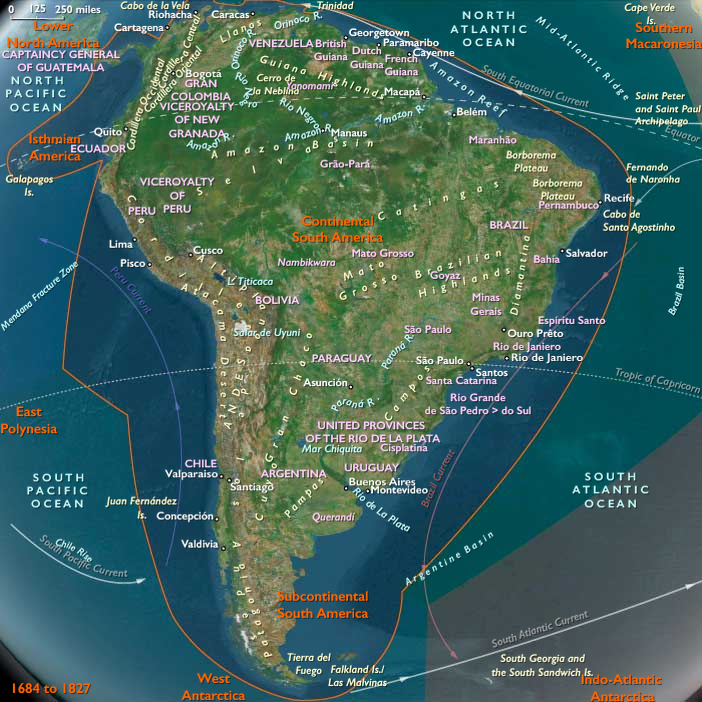
Subregions
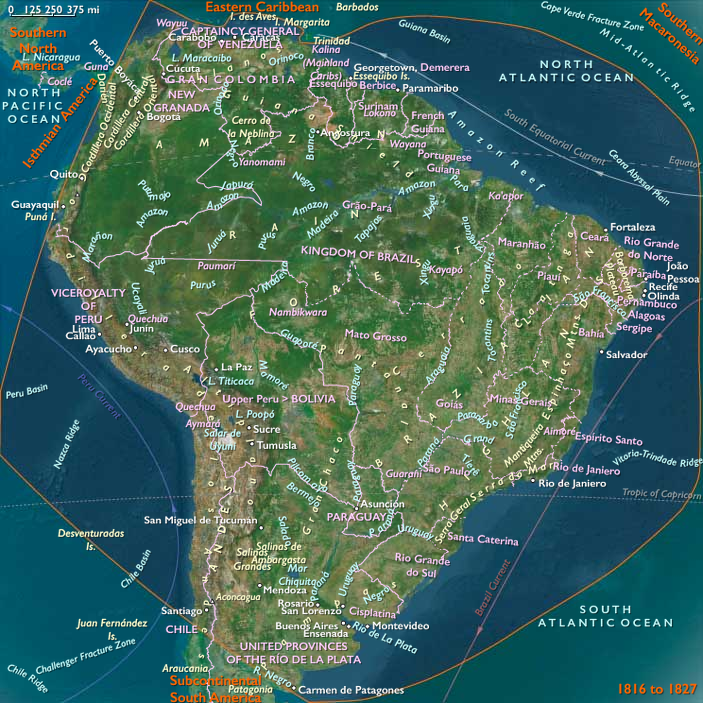
Related Events
Showing 10 events out of 30218 total
Years: 1684 - 1827
Locations
Groups
- Tairona
- Arawak peoples (Amerind tribe)
- Kalinago (Amerind tribe)
- Christians, Roman Catholic
- Muisca (Amerind tribe)
- Spaniards (Latins)
- Spain, Habsburg Kingdom of
- Granada, New Kingdom of (Spanish colony)
- Peru, Viceroyalty of
- Spain, Habsburg Kingdom of
- Quito, Real Audiencia of
- Bogotá, Audiencia de Santa Fe de (Captaincy General of New Granada)
- Venezuela Province
- New Granada, Viceroyalty of
- New Granada, Viceroyalty of
- Venezuela, Captaincy General of
Topics
- Post-Classic Stage (Peru)
- Colonization of the Americas, Spanish
- Encomienda system
- Industrial Revolution, First
Commodoties
- Gem materials
- Domestic animals
- Oils, gums, resins, and waxes
- Grains and produce
- Textiles
- Ceramics
- Strategic metals
- Slaves
- Sweeteners
- Beer, wine, and spirits
- Land
Subjects
Regions
Subregions