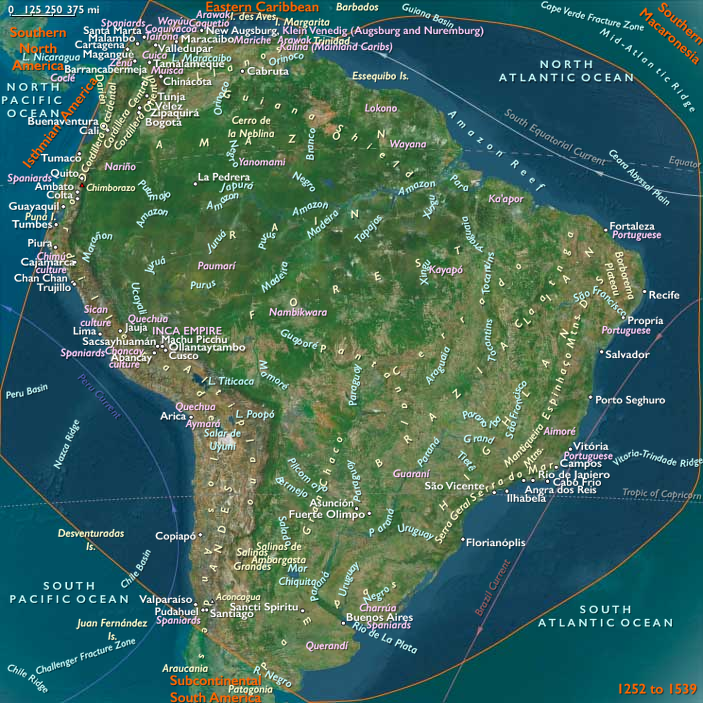
As the Inca empire flourished, Spain was…
1516 CE to 1527 CE
As the Inca empire flourished, Spain was beginning to rise to prominence in the Western world.
The political union of the several independent realms in the Iberian Peninsula and the final expulsion of the Moors after seven hundred years of intermittent warfare had instilled in Spaniards a sense of destiny and a militant religious zeal.
The encounter with the New World by Cristobal Colon (Christopher Columbus) in 1492 offered an outlet for the material, military, and religious ambitions of the newly united nation.
Francisco Pizarro, a hollow-cheeked, thinly bearded Extremaduran of modest hidalgo (lesser nobility) birth, is not only typical of the arriviste Spanish conquistadors who come to America, but also one of the most spectacularly successful.
Having participated in the indigenous wars and slave raids on Hispaniola, Spain's first outpost in the New World, the tough, shrewd, and audacious Spaniard had been with Vasco Nunez de Balboa when he first glimpsed the Pacific Ocean in 1513 and had been a leader in the conquest of Nicaragua (1522).
He later found his way to Panama, there becoming a wealthy encomendero and leading citizen.
Beginning in 1524, Pizarro proceeded to mount several expeditions, financed mainly from his own capital, from Panama south along the west coast of South America to coastal Peru.
Groups
Topics
Commodities
Subjects
Regions
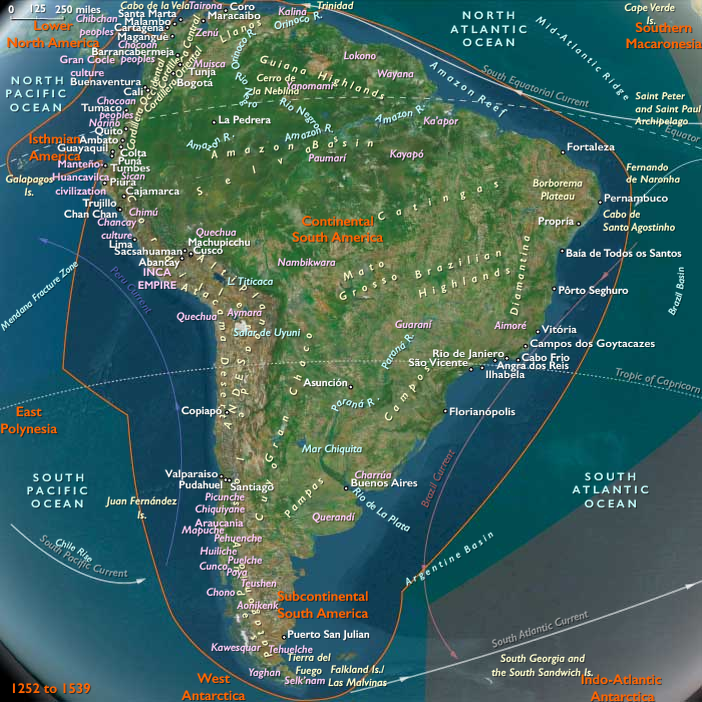
South America
View →Subregions