
Central Asia (388–531 CE): Nomadic Dominance, Hephthalite …
Years: 388 - 531
Central Asia (388–531 CE): Nomadic Dominance, Hephthalite Expansion, and the Peak of Sogdian Influence
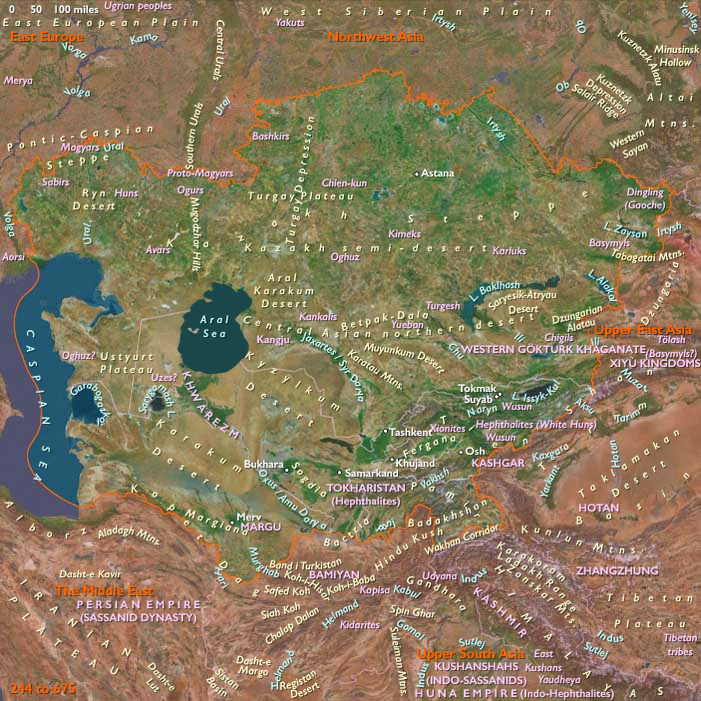
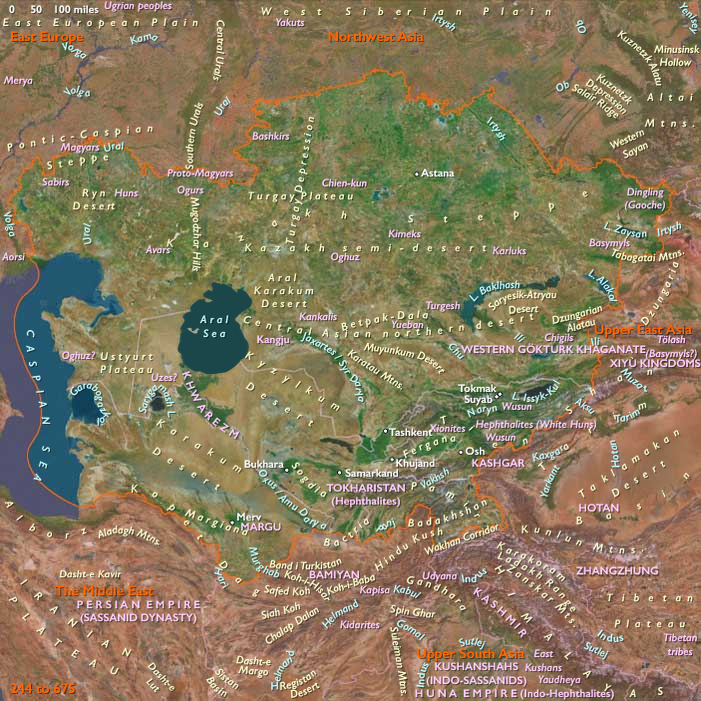
Between 388 and 531 CE, Central Asia—encompassing today's Kazakhstan, Kyrgyzstan, Uzbekistan, Tajikistan, and Turkmenistan—underwent transformative changes shaped by nomadic movements, the rise and dominance of the Hephthalite (White Hun) Empire, and the continued ascendancy of Sogdian merchant cities as key economic and cultural centers. This period witnessed the interplay of nomadic empires, flourishing urban economies, religious diversity, and cultural exchanges along the Silk Road, profoundly shaping the region's historical trajectory.
Political and Military Developments
Hephthalite Dominance and Expansion (Late 4th–Early 6th Centuries)
-
By the late 4th century, the Hephthalites, a powerful nomadic confederation of uncertain origin (likely a branch of Central Asian Huns), emerged as a dominant political force across Central Asia.
-
Rapidly expanding from the steppes north of the Oxus River (Amu Darya), the Hephthalites conquered large parts of modern Uzbekistan, Tajikistan, and Turkmenistan, including important cities such as Samarkand, Bukhara, and Merv.
-
The Hephthalite Empire reached its zenith around 480–520 CE, successfully challenging both the Sasanian Empire of Persia and the declining remnants of the Kushan states in Bactria.
Interaction and Conflict with Neighboring Empires
-
The Hephthalites posed a substantial threat to Persia, decisively defeating and capturing the Sasanian Emperor Peroz I in 484 CE, significantly weakening Persia’s eastern frontiers.
-
To the east, Hephthalite military expeditions occasionally threatened northern India, playing a crucial role in shaping South Asian politics.
Nomadic Movements in Northern Central Asia
-
In regions corresponding to modern-day Kazakhstan and Kyrgyzstan, Turkic-speaking nomadic groups—including early Turkic tribes—became increasingly influential, gradually replacing older nomadic cultures.
-
These Turkic groups formed confederations that interacted extensively, often in conflict or alliance, with sedentary peoples to the south, laying foundations for future Turkic dominance in Central Asia.
Economic Developments: The Sogdian Golden Age
Flourishing of Sogdian Merchant Cities
-
The vibrant economic landscape, centered on Sogdiana (modern Uzbekistan and Tajikistan), reached new heights during this era. Sogdian city-states such as Samarkand, Bukhara, and Panjakent became central nodes in Silk Road commerce, enjoying unprecedented prosperity.
-
Sogdian merchants further expanded their trading networks, establishing colonies across the Silk Road, from China’s Tang territories to Persia and even Byzantium, enhancing their wealth and prestige.
Urban Prosperity and Agricultural Innovations
-
Oasis cities thrived through advanced irrigation systems and agricultural innovation, producing surplus crops such as grains, fruits, and cotton, which supported both local populations and extensive trade networks.
-
Wealthy merchant families funded substantial urban infrastructure—public buildings, marketplaces, and fortifications—solidifying urban centers as major regional economic hubs.
Cultural and Religious Developments
Religious Pluralism and Tolerance
-
Central Asian urban centers exhibited remarkable religious diversity, coexisting with mutual tolerance. Buddhism, Zoroastrianism, Christianity (especially Nestorianism), and various indigenous Iranian and Turkic religious practices flourished alongside each other.
-
Cities like Termez and Samarkand hosted Buddhist monasteries; Zoroastrian temples were prominent in Bukhara, and Christian communities expanded in multiple cities, reflecting the cosmopolitan nature of Silk Road society.
Artistic and Cultural Renaissance
-
The Hephthalite period saw notable artistic and cultural achievements, synthesizing Hellenistic, Persian, Indian, and Central Asian nomadic elements into distinctive local art forms.
-
Architectural projects, murals, sculptures, pottery, and metalwork demonstrated a high level of sophistication and stylistic innovation, reflecting both local creativity and influences from across Eurasia.
Social and Urban Developments
Cosmopolitanism and Urban Expansion
-
The influx of merchants, artisans, religious scholars, and intellectuals created vibrant, diverse urban communities characterized by cosmopolitan attitudes and extensive cultural exchanges.
-
Major cities, notably Samarkand, underwent significant urban expansion, reflecting their economic growth and the prosperity generated by Silk Road commerce.
Interaction Between Nomadic and Sedentary Communities
-
Nomadic dominance facilitated intensified interactions between nomadic and settled populations. Cultural exchanges occurred through trade, marriage alliances, and shared religious practices, resulting in mutual influences and blended cultural traditions.
Long-Term Consequences and Historical Significance
The period from 388 to 531 CE was marked by pivotal developments in Central Asian history. Politically, the rise and dominance of the Hephthalites significantly reshaped regional power dynamics, challenging Persian and Indian spheres of influence. Economically, the era represented the pinnacle of Sogdian mercantile success, solidifying Central Asia’s role as an indispensable hub of global commerce. Culturally and religiously, the region thrived as a crossroads of civilizations, demonstrating exceptional religious pluralism and artistic synthesis.
By 531 CE, Central Asia had thus established a distinctive historical pattern: dynamic interplay between nomadic and sedentary societies, resilient economic prosperity despite political upheaval, and enduring cultural cosmopolitanism, laying crucial foundations for the region’s subsequent historical trajectory.
Groups
- Polytheism (“paganism”)
- Tajik people
- Tocharians
- Iranian peoples
- Persian people
- Scythians, or Sakas
- Zoroastrians
- Margiana
- Buddhism
- Sogdia
- Xiongnu (Hsiung-nu)
- Wusun
- Indo-Scythians
- Chinese Empire, Tung (Eastern) Han Dynasty
- Kushan Empire
- Buddhism, Mahayana
- Tokharistan (Kushan Bactria)
- Persian Empire, Sassanid, or Sasanid
- Kushano-Sasanid Kingdom
- Xionites
- Kidarites
- Hephthalite Empire
- Christians, Eastern (Diophysite, or “Nestorian”) (Church of the East)
Topics
Commodoties
- Weapons
- Hides and feathers
- Domestic animals
- Grains and produce
- Textiles
- Ceramics
- Strategic metals
- Manufactured goods
- Spices
Subjects
Regions
Subregions
Related Events
Showing 10 events out of 59517 total
Years: 388 - 531
Groups
- Polytheism (“paganism”)
- Tajik people
- Tocharians
- Iranian peoples
- Persian people
- Scythians, or Sakas
- Zoroastrians
- Margiana
- Buddhism
- Sogdia
- Xiongnu (Hsiung-nu)
- Wusun
- Indo-Scythians
- Chinese Empire, Tung (Eastern) Han Dynasty
- Kushan Empire
- Buddhism, Mahayana
- Tokharistan (Kushan Bactria)
- Persian Empire, Sassanid, or Sasanid
- Kushano-Sasanid Kingdom
- Xionites
- Kidarites
- Hephthalite Empire
- Christians, Eastern (Diophysite, or “Nestorian”) (Church of the East)
Topics
Commodoties
- Weapons
- Hides and feathers
- Domestic animals
- Grains and produce
- Textiles
- Ceramics
- Strategic metals
- Manufactured goods
- Spices
Subjects
Regions
Subregions