Central Asia (7,821 – 6,094 BCE): Early…
7821 BCE to 6094 BCE
Central Asia (7,821 – 6,094 BCE): Early Holocene — Broad-Spectrum Foraging and Piedmont Springs
Geographic and Environmental Context
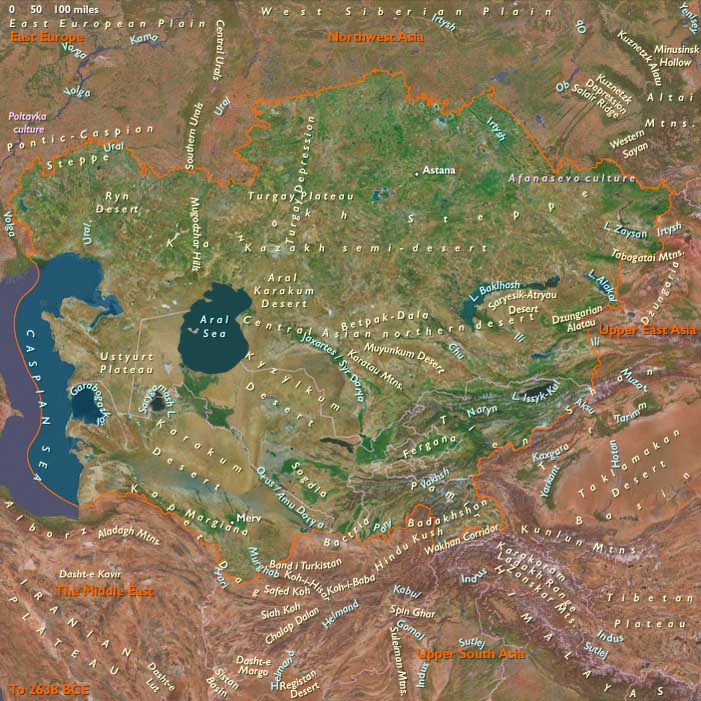
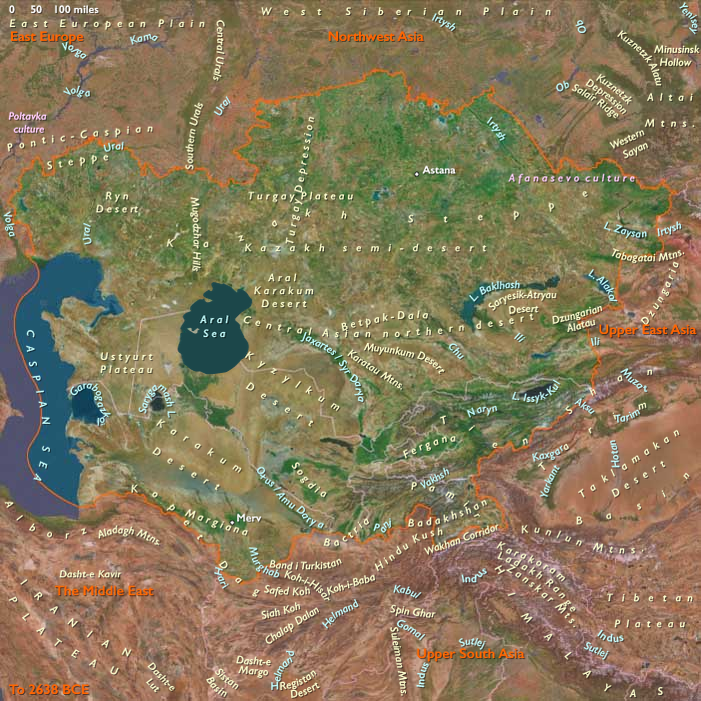
Central Asia includes the Syr Darya (Jaxartes) and Amu Darya (Oxus) basins (Transoxiana), Khwarazm and the Aral–Caspian lowlands, the Ferghana valley, the Merv oasis and Kopet Dag piedmont, the Kazakh steppe to the Aral littoral, and the Tian Shan–Pamir margins.
-
Anchors: Zeravshan–Samarkand benches, Syr–Chach oases, Merv–Murghab fans, Ferghana entryways, Tian Shan passes.
Climate & Environmental Shifts
-
Holocene thermal optimum: warmer, wetter; stable flows in piedmont fans; vegetation belts moved upslope.
Subsistence & Settlement
-
Mixed hunting–fishing–gathering: gazelle, wild onager, fish, pistachio/almond foraging in foothills; reedbeds along terminal lakes.
-
Seasonal macrocamps at springheads and fan-apex confluences.
Technology & Material Culture
-
Ground-stone for nut processing; microlith composites persisted; early fiber technologies (nets, bags).
-
Proto-storage pits and plastered hearths at favored springs.
Movement & Interaction Corridors
-
Murghab and Zeravshan fans tied upland to steppe; passes over Tian Shan hinted at inter-basin contact.
Cultural & Symbolic Expressions
-
Recurrent ritual at springs and rockshelters (hearth renewal, ochre); early petroglyphs likely in steppe margins.
Environmental Adaptation & Resilience
-
Spring-centered mobility with broad diet breadth insulated groups from seasonal scarcity.
Topics
Subjects
Regions
Central Asia
View →Subregions