
Central Asia (676–819 CE): Islamic Expansion, Turkic …
Years: 676 - 819
Central Asia (676–819 CE): Islamic Expansion, Turkic Fragmentation, and Cultural Syncretism
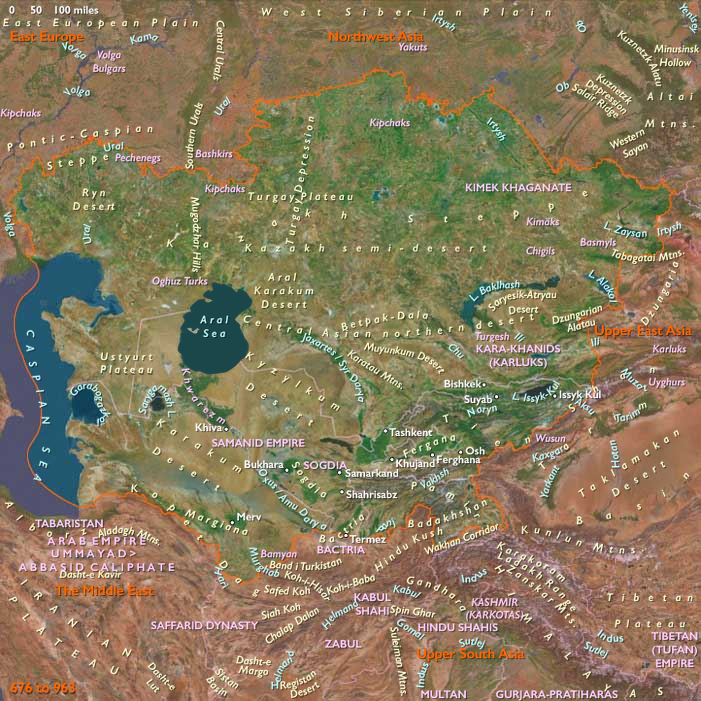
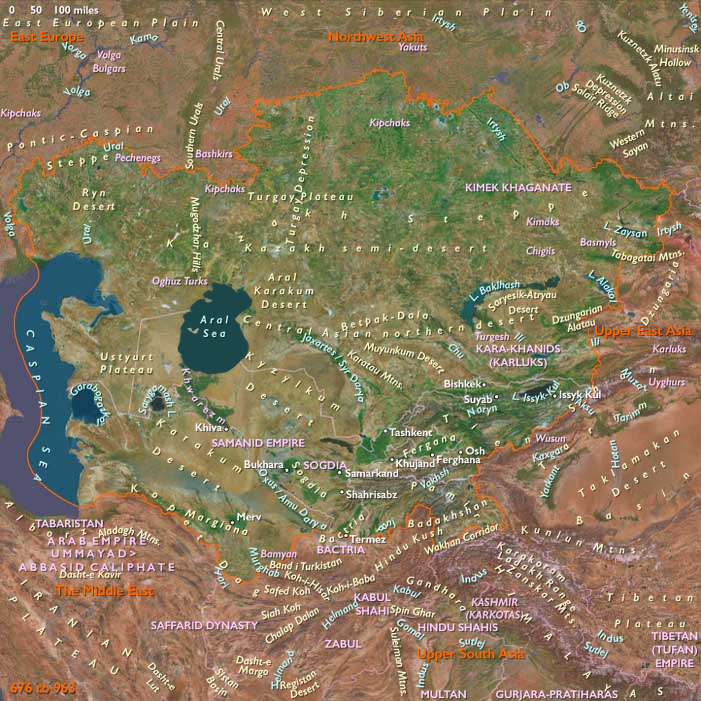
Between 676 and 819 CE, Central Asia—encompassing today's Kazakhstan, Kyrgyzstan, Uzbekistan, Tajikistan, and Turkmenistan—entered a dynamic era marked by the expansion of the Arab Caliphates, the fragmentation of Turkic Khaganates, and sustained Sogdian cultural and economic resilience. This period was pivotal in transitioning Central Asia into an increasingly Islamic cultural sphere, reshaping the region’s identity profoundly.
Political and Military Developments
Arab Conquests and Islamic Influence
Beginning in the early 8th century, Arab forces from the Umayyad Caliphate penetrated deep into Central Asia, capturing key cities such as Bukhara (709 CE) and Samarkand (712 CE). Despite local resistance, these conquests progressively integrated the region into the wider Islamic empire.
Turkic Khaganate Fragmentation and Decentralization
The powerful Western Turkic Khaganate fractured into smaller competing polities by the late 7th century, significantly weakening unified Turkic political control. These smaller khaganates and tribal confederations often shifted alliances between Arab, Chinese, and local powers.
Rise of the Türgesh Confederation
Emerging as a significant power in the early 8th century, the Türgesh Confederation temporarily united many Turkic tribes in western Central Asia, resisting Arab advances through a series of battles and diplomatic maneuvers, notably under the leadership of Suluk Khan (716–738 CE).
Economic Developments
Sogdian Economic Resilience
Despite political upheaval, Sogdian merchants continued to dominate Silk Road commerce. Cities like Samarkand, Bukhara, and Khujand remained critical economic hubs, facilitating trade between China, the Islamic Caliphate, and the Byzantine Empire.
Integration into the Islamic Economic Sphere
The incorporation of Central Asia into the Islamic empire fostered greater economic integration, enhancing trade networks that facilitated the circulation of goods such as silk, spices, gold, and precious metals across Eurasia, bolstering local prosperity.
Cultural and Religious Developments
Deepening Islamic Influence
Islamic religious and cultural influence significantly deepened following Arab conquests, especially among urban elites and merchant classes. Major cities saw the construction of mosques, religious schools (madrasas), and the introduction of Islamic jurisprudence.
Persistence of Religious Pluralism
Even as Islam expanded, Central Asia continued to exhibit remarkable religious diversity. Buddhism retained a significant presence, especially in areas like the Fergana Valley, while Nestorian Christian and Zoroastrian communities persisted within urban centers.
Cultural Syncretism and Artistic Innovation
This era witnessed vibrant cultural exchange and syncretism, blending Islamic, Turkic, Persian, and local Central Asian traditions. Artistic and architectural innovations included elaborate stucco decorations, vibrant mural paintings, and manuscript illumination, reflecting both Islamic and indigenous motifs.
Social and Urban Developments
Urban Transformation and Growth
Major cities underwent transformative developments reflecting Islamic architectural styles, urban planning, and public infrastructure investments. The introduction of Islamic institutions, such as mosques and marketplaces (bazaars), reshaped urban landscapes significantly.
Nomadic and Settled Integration
Interactions between nomadic Turkic tribes and sedentary populations continued to evolve, marked by deeper integration. Turkic languages and customs further integrated into settled communities, creating blended urban and rural societies rich in cultural diversity.
Long-Term Consequences and Historical Significance
The period from 676 to 819 CE decisively shaped Central Asia’s historical identity, anchoring it firmly within the Islamic world while maintaining its characteristic diversity. Politically fragmented yet economically dynamic, Central Asia emerged as a key region mediating cultural and commercial exchanges between East and West. The enduring influence of Turkic culture and the robust Sogdian economic presence underscored a historical legacy of adaptability and syncretism, preparing the ground for future empires and cultural developments.
People
Groups
- Polytheism (“paganism”)
- Tajik people
- Tocharians
- Iranian peoples
- Arab people
- Persian people
- Zoroastrians
- Margiana
- Buddhism
- Sogdia
- Buddhism, Mahayana
- Tokharistan (Kushan Bactria)
- Christians, Eastern (Diophysite, or “Nestorian”) (Church of the East)
- Eastern (Göktürk) Qaghans
- Western Turkic Khaganate
- Chinese Empire, Tang Dynasty
- Umayyad Caliphate (Damascus)
- Göktürk Khanate, Second
- Türgesh Kaganate
- Umayyad Caliphate (Harran)
Topics
Commodoties
- Weapons
- Hides and feathers
- Gem materials
- Domestic animals
- Grains and produce
- Textiles
- Ceramics
- Strategic metals
- Manufactured goods
- Spices
Subjects
Regions
Subregions
Years: 676 - 819
People
Groups
- Polytheism (“paganism”)
- Tajik people
- Tocharians
- Iranian peoples
- Arab people
- Persian people
- Zoroastrians
- Margiana
- Buddhism
- Sogdia
- Buddhism, Mahayana
- Tokharistan (Kushan Bactria)
- Christians, Eastern (Diophysite, or “Nestorian”) (Church of the East)
- Eastern (Göktürk) Qaghans
- Western Turkic Khaganate
- Chinese Empire, Tang Dynasty
- Umayyad Caliphate (Damascus)
- Göktürk Khanate, Second
- Türgesh Kaganate
- Umayyad Caliphate (Harran)
Topics
Commodoties
- Weapons
- Hides and feathers
- Gem materials
- Domestic animals
- Grains and produce
- Textiles
- Ceramics
- Strategic metals
- Manufactured goods
- Spices
Subjects
Regions
Subregions